High-Risk Utility - Why the Oukitel C57s Struggles Against Modern Value Standards
Overview
The Resale Death Spiral: Assessing the Oukitel C57s Asset Value
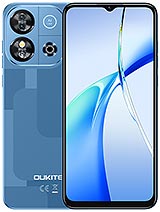
The Oukitel C57s is a budget smartphone featuring a 6.52-inch IPS LCD for basic media consumption and a Unisoc SC9863A chipset for entry-level tasks, aimed at ultra-cost-conscious buyers seeking modern software. Released in late 2024, it enters a market where competitors like the [Xiaomi Redmi A3](/style-meets-the-bottom-line-why-the-xiaomi-redmi-a3-changes-the-budget-narrative/) and [Infinix Smart 8](/why-the-infinix-smart-8-is-the-ultimate-budget-king-right-now/) have significantly raised the floor for entry-level performance. From a purely economic perspective, this device represents a high-depreciation asset. Its hardware foundations, specifically the 2GB RAM and 64GB storage, are already at the threshold of obsolescence upon arrival. We anticipate a resale value drop of nearly 70% within the first six months of ownership, as the market rapidly pivots toward 4GB and 6GB standards even in the sub-120 EUR tier.
Investing in a handset with these specifications requires an understanding of the trade-offs between upfront savings and long-term utility. While the inclusion of Android 14 (Go edition) provides a temporary reprieve for the limited memory, the underlying 28nm Unisoc SC9863A is a relic of a previous era. This chipset lacks the efficiency found in more modern 6nm or 12nm alternatives, leading to higher thermal output and faster battery degradation over sustained use. For those looking to preserve capital, this is not a device that will hold its value on the secondary market. It is a utility tool meant to be used until failure, rather than a tech investment.
Brand Reliability and the Oukitel Value Proposition
Oukitel has traditionally carved out a niche in the [rugged phone](/trend/best-rugged-phones-2026/) sector, but the 'C' series targets the mainstream budget consumer. Reliability here is a mixed bag. On one hand, the use of Corning Gorilla Glass 5 is a standout feature for a device at this price point. Most competitors utilize unbranded or weaker glass, making this model surprisingly resilient against screen fractures. This reduces the 'hidden' cost of ownership associated with repairs. However, the internal assembly relies on older component standards, such as Bluetooth 4.2 and Wi-Fi 4, which may struggle with interference in modern, congested wireless environments.
Our assessment of brand longevity suggests that software updates will be minimal. While it ships with the relatively current Android 14 Go, users should not expect a migration to Android 15. The value hunter must view this as a 'static' purchase—what you see on day one is likely the peak of its functional life. In a market where brands like Samsung are extending support even to their 'A' series, the lack of a clear update roadmap for the Oukitel C57s makes it a riskier bet for those planning to keep a phone for three or more years.
Visuals and Sonics: The Media Consumption Reality
The 6.52-inch IPS LCD offers a peak brightness of 400 nits, which is acceptable for indoor use but falls short under direct October sunlight. The resolution is the primary concern: at 576 x 1280 pixels, the pixel density sits at roughly 215 ppi. In our analysis, this leads to noticeable aliasing on text and icons. If you are a heavy reader of digital news or spreadsheets, the lack of sharpness will cause eye strain over long periods. It is essentially a sub-HD experience in an era where 720p is the bare minimum for comfort.
Audio performance is handled by a single bottom-firing loudspeaker. While it includes the much-appreciated 3.5mm headphone jack, the speaker itself lacks depth and distorts at volumes above 80%. It serves its purpose for voice calls and basic YouTube viewing, but it is not a pocket cinema. For the economist, the presence of the FM Radio is a small but notable bonus, providing free entertainment without consuming data—a key consideration for users on strict limited-bandwidth plans.
The Hardware Bottleneck: Navigating the 28nm Era
The heart of the Oukitel C57s is the Unisoc SC9863A. To put this in perspective, this is an octa-core CPU using Cortex-A55 cores, but it is manufactured on an antiquated 28nm process. Modern budget chips are typically 12nm or better. The result is a chip that consumes more power for every calculation than its rivals. During basic navigation, the device handles adequately, but the 2GB of RAM is a severe bottleneck. Even with Android Go's optimizations, background apps will be killed aggressively to free up memory. You should expect 'reloads' when switching between a browser and a messaging app.
Gaming is largely off the table for anything more complex than 2D puzzles or casual titles. The IMG8322 GPU is designed for UI rendering and video decoding, not high-fidelity 3D graphics. When we look at the performance-per-dollar ratio, the device falls behind the [Realme Note 50](/why-the-realme-note-50-is-the-ultimate-hand-me-down-champion/), which offers a much more capable Unisoc T612. The saving grace is the 64GB of internal storage, which is generous for this price tier and can be expanded via a dedicated microSDXC slot. This allows the device to function effectively as a dedicated music or offline video player, bypassing its processing limitations.
Connectivity and Signal Reliability
In terms of network support, the device covers a wide range of 4G LTE bands, including critical ones like Band 20 and Band 28. This ensures broad compatibility with European and global carriers. However, the older Wi-Fi 802.11 b/g/n standard means you won't benefit from the faster 5GHz bands found on most modern routers. In a home with multiple devices, this phone will be relegated to the more crowded 2.4GHz spectrum, leading to potential buffering during video streams.
Biometrics are notably absent—there is no fingerprint sensor listed in the hardware manifest. Users must rely on PIN, pattern, or basic 5MP selfie camera face unlock, which is less secure and struggles in low light. For the privacy-conscious value hunter, the lack of a hardware-level fingerprint scanner is a significant drawback that compromises both security and the speed of making digital payments or accessing banking apps.
Battery Life and Long-Term Efficiency
The 4300 mAh Li-Ion battery is decently sized for a 576p display, but its endurance is hampered by the inefficient chipset. In a standard workday, it should last from morning until night, but it lacks the multi-day stamina we often see in the rugged Oukitel lines. Charging via USB Type-C 2.0 is a modern touch, yet there is no mention of fast charging. Expect a full charge to take well over two hours. From an economist's view, the slower charging might actually extend the long-term health of the battery by reducing heat, but the daily inconvenience is undeniable.
Final Investment Tally: Is the Oukitel C57s Worth Your Capital?
The Oukitel C57s is a study in extreme cost-cutting. It offers the latest software in a durable, Gorilla Glass-protected shell, but it does so on a hardware foundation that is fundamentally outdated. If your goal is to find the absolute cheapest way to run Android 14 for basic WhatsApp and voice calls, it functions. However, if you can stretch your budget by even 20 EUR, the jump in performance and display quality from competitors is massive. This is a device for those who prioritize immediate cash flow over long-term device capability. It is a functional stop-gap, not a flagship-killer in disguise.
Technical Specifications
| LAUNCH | |
|---|---|
| Announced | 2024, October |
| Status | Available. Released 2024, October |
| PLATFORM | |
| OS | Android 14 (Go edition) |
| Chipset | Unisoc SC9863A (28 nm) |
| CPU | Octa-core (4x1.6 GHz Cortex-A55 & 4x1.2 GHz Cortex-A55) |
| GPU | IMG8322 |
| BODY | |
| Dimensions | 165.8 x 76.6 x 9.4 mm (6.53 x 3.02 x 0.37 in) |
| Weight | 215 g (7.58 oz) |
| SIM | Nano-SIM + Nano-SIM |
| DISPLAY | |
| Type | IPS LCD, 400 nits |
| Size | 6.52 inches, 102.6 cm2 (~80.8% screen-to-body ratio) |
| Resolution | 576 x 1280 pixels, 20:9 ratio (~215 ppi density) |
| Protection | Corning Gorilla Glass 5 |
| MEMORY | |
| Card slot | microSDXC (dedicated slot) |
| Internal | 64GB 2GB RAM |
| MAIN CAMERA | |
| Single | 13 MP, f/2.2, (wide), 1/3.06", AF |
| Features | LED flash, panorama |
| Video | 1080p@30fps |
| SELFIE CAMERA | |
| Single | 5 MP, f/2.2, (wide), 1/5.0" |
| Video | 720p@30fps |
| SOUND | |
| Loudspeaker | Yes |
| 3.5mm jack | Yes |
| COMMS | |
| WLAN | Wi-Fi 802.11 b/g/n |
| Bluetooth | 4.2, A2DP, LE |
| Positioning | GPS, GALILEO, GLONASS |
| NFC | No |
| Radio | FM radio |
| USB | USB Type-C 2.0, OTG |
| NETWORK | |
| Technology | GSM / HSPA / LTE |
| 2G bands | GSM 850 / 900 / 1800 / 1900 |
| 3G bands | HSDPA 850 / 900 / 1700(AWS) / 1900 / 2100 |
| 4G bands | 1, 2, 3, 4, 5, 7, 8, 12, 17, 19, 20, 25, 26, 28, 66 |
| Speed | HSPA, LTE |
| FEATURES | |
| Sensors | Accelerometer |
| BATTERY | |
| Type | Li-Ion 4300 mAh |
| MISC | |
| Display | 6.52-inch IPS LCD, 400 nits, Gorilla Glass 5 |
| Resolution | 576 x 1280 pixels (~215 ppi) |
| Chipset | Unisoc SC9863A (28 nm) Octa-core |
| Memory | 64GB Storage, 2GB RAM |
| OS | Android 14 (Go edition) |
| Main Camera | 13 MP, f/2.2, 1080p@30fps video |
| Selfie Camera | 5 MP, f/2.2, 720p@30fps video |
| Battery | 4300 mAh Li-Ion |
| Weight | 215 g |
| Connectivity | 4G LTE, Wi-Fi 4, Bluetooth 4.2, USB-C 2.0 |
| Audio | 3.5mm jack, FM Radio, Loudspeaker |
| Colors | Grey, Blue, Purple, Gold |
| Price | About 110 EUR |