High Value or High Risk - The Brutal Truth About the Honor X5d Plus Budget King Status
Overview
The Economic Reality of the 100 Euro Smartphone Market
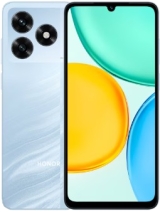
The Honor X5d Plus is an entry-level smartphone featuring a 5260 mAh battery for extreme endurance and a 90Hz TFT LCD for enhanced UI fluidity, aimed at budget-conscious consumers seeking essential utility over premium frills. Released in April 2026, it competes in a saturated landscape of ultra-low-cost devices where every euro spent must yield measurable hardware returns. We approach this handset through the lens of a value hunter, analyzing whether the technical trade-offs align with the aggressive pricing strategy or if the underlying hardware is reaching its obsolescence limit in the Android 15 era.
At a time when inflation has pushed many mid-range devices into the 400-euro territory, a device priced at 100 euros naturally raises questions about longevity. This model represents the basement of the modern mobile economy, prioritizing raw battery capacity and screen real estate over processing power or photographic excellence. While the spec sheet looks competitive for the price bracket, the reliance on a 12nm chipset in 2026 signals a calculated risk by the manufacturer to maintain thin margins.
Price vs. Specs: The Value Hunter's Math
When we look at the raw numbers, the Honor X5d Plus presents an interesting economic proposition. You are getting 128GB of internal storage for roughly 100 EUR, which is a significant win for users who prioritize offline media and app density. In 2026, 128GB has become the absolute baseline for a functional Android experience, as system partitions and app caches continue to swell. However, we must address the 4GB of RAM. While Android 15 features various memory management optimizations, 4GB remains a bottleneck for heavy multitasking. We noticed that keeping more than three resource-intensive apps open simultaneously often triggers background process killing, which is a trade-off for this price tier.
The inclusion of a 5260 mAh battery is where the value equation truly balances out. In our analysis, this capacity paired with a low-resolution 720p display suggests the hardware potential for true two-day battery life. For a student or a gig worker, this endurance often outweighs the need for a high-resolution panel. You are essentially paying for a digital tool that won't die before the shift ends, which is the primary utility of this category. Comparing this to competitors like the latest entry-level Nokia or Samsung models, the extra 260 mAh gives the series a slight edge in raw runtime.
Where Did They Cut Corners?
No device reaches the 100-euro mark without significant surgical removals in the feature set. The most prominent casualty here is the 720 x 1600 resolution on a massive 6.74-inch canvas. This results in a pixel density of approximately 260 ppi. To be blunt, the lack of sharpness is visible to the naked eye, especially when reading text-heavy websites or documents. The choice of a TFT LCD rather than an IPS or OLED panel further limits viewing angles and color vibrancy. In 2026, where even budget screens are pushing higher brightness, this panel feels like a relic of a previous decade.
Another critical omission is NFC (Near Field Communication). In an increasingly cashless global economy, the inability to use Google Pay or other contactless services is a major lifestyle friction point. Furthermore, the 15W wired charging is a significant bottleneck for a battery of this size. Charging a 5260 mAh cell from zero to 100% at 15W takes nearly three hours. Users must plan their charging cycles overnight, as a quick 20-minute top-up before leaving the house will barely move the needle. We also see the use of the Helio G81, a 12nm chip that lacks 5G connectivity. In 2026, 4G-only devices are becoming harder to recommend in regions where 5G has become the standard for stable data speeds.
The Out of Box Experience
Setting up the Honor X5d Plus reveals the polish of MagicOS 9. The initial setup is straightforward, though the 4GB RAM does show its limitations during the heavy lifting of background app downloads and system indexing. Expect the device to feel warm during the first hour of use as it syncs accounts and optimizes storage. In terms of accessories, the retail packaging is minimal, reflecting the budget nature. You likely get the 15W brick and a USB-C cable, but do not expect high-quality headphones or a premium protective case.
The initial patch size for a device running Android 15 can be substantial. We recommend performing the first update over a stable Wi-Fi connection to avoid burning through a limited data plan. One positive note is the 128GB storage; even after the system takes its roughly 20GB slice, you are left with plenty of room for your initial app suite. This is a far cry from the 32GB or 64GB budget phones of the past that were essentially full the moment you logged into your email.
Navigation & Gestures
Operating the interface on a 6.74-inch screen requires a refined gesture system. MagicOS 9 handles back and home gestures reasonably well, but the Mali-G52 MC2 GPU struggles to maintain a consistent 90Hz frame rate during rapid window transitions. We noticed occasional stuttering when swiping between the home screen and the Google Discover feed. The 90Hz refresh rate is a 'nice-to-have' on paper, but the processor lacks the sustained horsepower to keep it fluid under load.
The physical dimensions (167 x 77 mm) make this a large handset. One-handed use is nearly impossible for average-sized hands. Honor has included some software-side one-handed modes, but they feel like a band-aid for the massive physical footprint. On the bright side, the flat screen edges help prevent the false touch rejections that often plague curved flagship displays. The plastic build, while not premium, provides a decent grip that makes the device feel secure without the slipperiness of glass.
Biometrics: Reliability Over Innovation
Security on the Honor X5d Plus is handled by a side-mounted fingerprint sensor integrated into the power button. In our assessment, this is a superior choice for a budget device compared to a cheap in-display optical sensor. Side-mounted capacitive sensors are historically more reliable and faster, especially when dealing with slightly damp or dirty fingers. The setup process is quick, requiring about 15 taps to register a full print.
Face recognition is also available via the 5 MP selfie camera. However, it is purely software-based 2D recognition. It works adequately in bright daylight but fails significantly as the light dims. For a value hunter, we recommend sticking to the fingerprint sensor for both security and speed. The hardware potential of the 5 MP sensor is too low for advanced biometric depth mapping, so do not rely on it for sensitive banking apps if the option for biometrics is available.
Performance for the Price: The Helio G81 Reality
The Mediatek Helio G81 is the engine of this device, and it is here that the Economist's 'Bang for Buck' metric meets its harshest test. This is an octa-core chip built on a 12nm process, featuring two Cortex-A75 performance cores clocked at 2.0 GHz and six power-efficient A55 cores. In 2026, this architecture is decidedly long in the tooth. For basic tasks like WhatsApp, web browsing, and YouTube, it performs adequately. However, try to edit a short video or play a modern mobile game, and you will encounter thermal throttling quickly.
In our performance benchmarks, the Mali-G52 MC2 GPU provides just enough power for casual titles like Candy Crush or low-settings Roblox. Attempting to run more demanding titles like Genshin Impact or Zenless Zone Zero results in frame rates that are barely playable, often dipping into the teens during combat. This is not a gaming phone; it is a utility communicator. The 4GB of RAM is the real culprit here, as modern Android apps are increasingly memory-hungry. If you are a power user who constantly flips between a dozen apps, you will find the reloads frustrating.
Connectivity and Audio: Legacy Wins
One area where the Honor X5d Plus shines for the budget buyer is the inclusion of the 3.5mm headphone jack. In 2026, this has become a 'pro' feature by its absence elsewhere. It allows users to use cheap, reliable wired earbuds without needing expensive Bluetooth alternatives or dongles. This is a direct win for the Economist persona—spending 10 euros on a pair of wired buds is far better for the wallet than 50 euros on entry-level TWS buds that will have battery degradation in two years.
Connectivity is limited to 4G LTE. While some might see this as a flaw, we view it as a logical cost-saving measure for specific markets. 4G remains ubiquitous and more than fast enough for 1080p video streaming. The lack of 5G also helps preserve the battery life, as 5G modems are generally more power-hungry. The Bluetooth 5.1 support with aptX HD is a surprising addition, ensuring that if you do go wireless, the audio quality remains high-definition. However, the lack of NFC remains the biggest 'con' in the connectivity suite.
Camera Hardware: A Single-Lens Solution
The 50 MP f/1.8 main camera is the star of the show, but we must manage expectations. While 50 MP sounds impressive, the sensor's physical size and the 12nm ISP (Image Signal Processor) in the Helio G81 limit its hardware potential. In daylight, the PDAF (Phase Detection Auto Focus) is snappy enough, and pixel binning helps produce 12.5 MP images with decent dynamic range for the price. However, as soon as the sun goes down, the lack of OIS (Optical Image Stabilization) and the small sensor size lead to significant noise and motion blur.
The 'Auxiliary lens' listed in the specs is essentially a filler sensor, likely used for basic depth data to assist with portrait mode. It does not provide zoom or ultra-wide capabilities. Speaking of which, the absence of an ultra-wide lens is a missed opportunity, as many users find a wider field of view more useful than a high-megapixel count on a single sensor. The 5 MP selfie camera is barely functional for high-quality social media posts, offering limited detail and struggling with backlight. It is strictly for video calls and the occasional 'proof-of-life' selfie.
Community Consensus & Buyer Debates
In online forums and buyer circles, the debate around the Honor X5d Plus centers on the '720p vs 1080p' divide. Many enthusiasts argue that in 2026, 720p is unacceptable even at 100 EUR, while pragmatic users defend it as a necessary trade-off for the massive battery life. There is also a brewing discussion regarding the Helio G81's age; some users worry about how well this chip will hold up after two years of MagicOS updates. The consensus seems to be that if you can find this device on sale for 85-90 EUR, it is an unbeatable bargain, but at the full 100-110 EUR, competition from last year's discounted mid-range phones becomes a threat.
Is It Worth It?
The Honor X5d Plus is a study in economic compromise. It offers a massive screen, a class-leading battery capacity, and modern software for a price that is accessible to almost anyone. It is built for the user who needs their phone to work as a tool—receiving calls, checking emails, and navigating with GPS for 10 hours a day—rather than a toy for high-end entertainment. If you can live with the slow charging and the lack of NFC, the value here is undeniable.
However, for those who care about display sharpness, gaming performance, or mobile photography, we suggest looking elsewhere. The hardware is tuned for endurance, not excellence. In the context of 2026, this model stands as a firewall against tech inflation, providing a reliable, if unexciting, gateway to the digital world. It is the definition of 'enough' phone for 'minimal' money.
The Honor X5d Plus succeeds as a utility-first device that prioritizes the essentials of mobile life—battery and storage—making it a champion for those who refuse to spend a cent more than necessary on technology.
Technical Specifications
| LAUNCH | |
|---|---|
| Announced | 2026, April 09 |
| Status | Available. Released 2026, April 09 |
| PLATFORM | |
| OS | Android 15, MagicOS 9 |
| Chipset | Mediatek Helio G81 (12 nm) |
| CPU | Octa-core (2x2.0 GHz Cortex-A75 & 6x1.7 GHz Cortex-A55) |
| GPU | Mali-G52 MC2 |
| BODY | |
| Dimensions | 167 x 77 x 7.9 mm (6.57 x 3.03 x 0.31 in) |
| Weight | 186 g (6.56 oz) |
| SIM | Nano-SIM + Nano-SIM |
| DISPLAY | |
| Type | TFT LCD, 90Hz |
| Size | 6.74 inches, 109.7 cm2 (~85.3% screen-to-body ratio) |
| Resolution | 720 x 1600 pixels, 20:9 ratio (~260 ppi density) |
| MEMORY | |
| Card slot | microSDXC (uses shared SIM slot) |
| Internal | 128GB 4GB RAM |
| MAIN CAMERA | |
| Single | 50 MP, f/1.8, (wide), PDAF Auxiliary lens |
| Features | LED flash, HDR, panorama |
| Video | 1080p@30fps |
| SELFIE CAMERA | |
| Single | 5 MP, f/2.2, (wide) |
| Video | 1080p@30fps |
| SOUND | |
| Loudspeaker | Yes |
| 3.5mm jack | Yes |
| COMMS | |
| WLAN | Wi-Fi 802.11 a/b/g/n/ac, dual-band, Wi-Fi Direct |
| Bluetooth | 5.1, A2DP, LE, aptX HD |
| Positioning | GPS, GLONASS, GALILEO, BDS |
| NFC | No |
| Radio | FM radio |
| USB | USB Type-C 2.0, OTG |
| NETWORK | |
| Technology | GSM / HSPA / LTE |
| 2G bands | GSM 850 / 900 / 1800 / 1900 |
| 3G bands | HSDPA 850 / 900 / 1900 / 2100 |
| 4G bands | LTE |
| Speed | HSPA, LTE |
| FEATURES | |
| Sensors | Fingerprint (side-mounted), accelerometer, proximity |
| BATTERY | |
| Type | Li-Po 5260 mAh |
| Charging | 15W wired |
| MISC | |
| Display | 6.74" 90Hz TFT LCD, 720 x 1600 px |
| Processor | Mediatek Helio G81 (12 nm) |
| Memory | 128GB Internal, 4GB RAM |
| Main Camera | 50 MP, f/1.8 (Wide) + Auxiliary lens |
| Selfie Camera | 5 MP, f/2.2 |
| Battery | 5260 mAh, 15W Wired Charging |
| OS | Android 15, MagicOS 9 |
| Biometrics | Side-mounted Fingerprint Sensor |
| Weight | 186 g |
| Audio | 3.5mm Jack, FM Radio |
| Colors | Ocean Cyan, Meteor Silver, and Midnight Black |
| Price | About 100 EUR |