HMD 101 4G - The Rational Choice for Minimalist Digital Utility
Overview
The HMD 101 4G is a budget-tier feature phone featuring 4G VoLTE connectivity for high-quality voice calls and USB Type-C for modern charging compatibility, aimed at minimalist users and emergency backup needs. Released in September 2025, it competes with entry-level functional handsets by focusing on durability and essential communication without the distractions of modern smartphone ecosystems. This device serves as a bridge between traditional reliability and modern network requirements.
In the current market, carriers often attempt to lure customers with the promise of a "free" basic phone when signing up for long-term voice-only contracts. We should analyze this carefully. The HMD 101 4G carries a retail price of approximately 20 EUR. If a carrier requires a 24-month commitment at a rate even slightly higher than a standard prepaid SIM, the consumer loses money within the first quarter. This handset represents the peak of unbundled value. By purchasing the device outright and pairing it with a low-cost, contract-free 4G plan, users maintain total control over their monthly expenses.
Hardware costs have been slashed to the bone, yet the value proposition remains high. At 20 EUR, this is a disposable tool in name but a durable asset in practice. The inclusion of LTE support is not a luxury; it is a necessity as 2G and 3G networks continue their global sunset. Choosing an unlocked model prevents carrier bloatware and ensures the device can transition between different service providers if one raises prices or suffers from poor local coverage. Our assessment suggests that the upfront cost of this handset is the most efficient way to secure reliable communication.
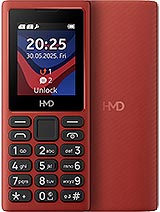
Construction focuses on utility rather than aesthetics. The plastic body measures 118.2 x 50.2 x 14.3 mm, making it substantially thicker than a smartphone but much easier to grip with one hand or while wearing gloves. A weight of 83.5 g makes it nearly imperceptible in a pocket. While the materials are basic, the device is dust protected and splash resistant. This rating implies it can survive a sudden rainstorm or a dusty construction site, scenarios where a glass-backed flagship would be at extreme risk.
Visual output relies on a 2.0-inch TFT panel. With a resolution of 120 x 160 pixels, users will see visible pixels and limited viewing angles. However, at this price point, the screen's primary job is legibility under sunlight, not color accuracy. The 4:3 aspect ratio is standard for T9-based interfaces. Below the screen, the physical keypad features large, separated buttons that offer tactile feedback. We expect these keys to withstand hundreds of thousands of presses, unlike the capacitive sensors on modern screens that fail after a single drop.
Internal components are led by the Unisoc 8910 FF-S chipset. This processor is specifically engineered for low-power 4G environments. It handles the VoLTE stack efficiently, ensuring that voice calls remain clear even in areas with fluctuating signal strength. The 24MB of internal memory is virtually non-existent by smartphone standards, but for a device that only stores text messages and contacts, it is sufficient. For any media use, the microSDHC slot is an essential addition to the bill of materials.
Unboxing this device reveals a refreshing lack of complexity. The packaging contains the handset, a 1000 mAh removable battery, and a charging cable. Unlike premium brands that have removed power adapters, HMD understands that users in this price bracket may not already own a drawer full of USB Type-C chargers. The setup process is near-instant. There are no cloud accounts to sync, no software licenses to sign, and no biometric data to harvest. You insert the Nano-SIM, drop in the battery, and the phone is ready for its first call in under sixty seconds.
Initial software patches are not a concern here. While smartphones often require a 2GB update the moment they are powered on, the firmware on this model is lightweight and pre-optimized. The simplicity of the operating system means there is no setup friction. The lack of WLAN means you aren't hunting for Wi-Fi passwords during the initial boot. It is a tool that respects the user's time. For those purchasing this for an elderly relative or as a secondary field device, this lack of friction is a primary selling point.
Forget about swiping or multi-touch gestures. Navigation is handled via a four-way directional pad and a central select button. This legacy interface remains the most efficient way to operate a screen of this size. There is no risk of accidental edge touches or ghost swipes because the screen is non-touch. The transition between menus is snappy, thanks to the Unisoc chip's focus on UI responsiveness over graphical flair. Users who have spent a decade on smartphones might find the return to T9 predictive text jarring at first, but the speed of physical buttons remains unmatched for quick, one-handed operations.
The software includes basic utilities like an MP3 player and an unspecified radio. The inclusion of a 3.5mm jack ensures that cheap, wired headphones work without adapters. While there are games included, they are simple time-wasters that highlight the efficiency of the chipset rather than pushing any graphical boundaries. The menu structure is flat and logical, preventing the user from getting lost in deep settings sub-menus.
There are no fingerprint scanners or facial recognition cameras on this device. Security is handled through a traditional PIN or keypad lock. While this may seem primitive, it offers a different kind of reliability. Physical keys don't fail because your fingers are wet or because you are wearing a mask. For a device intended for high-reliability environments, the absence of complex biometrics is actually a reduction in potential failure points. Security here is about preventing accidental pocket dials rather than protecting a vault of personal data.
The HMD 101 4G features Dual Nano-SIM slots, which is a massive win for international travelers or professionals who need to maintain two separate lines. Both slots support 4G LTE, allowing for a primary data/voice line and a secondary backup. The device is sold unlocked, meaning it can accept SIM cards from any GSM, HSPA, or LTE provider globally. For a 20 EUR device, this level of flexibility is extraordinary. It allows the user to swap carriers based on local signal strength—a critical feature for those in rural areas.
Storage expansion via microSDHC is the only way to make the device useful for media. Without a card, the 24MB of storage won't hold more than a few low-quality ringtones. However, adding a 32GB card turns this into a rugged MP3 player. This is a deliberate design choice to keep the base price low while allowing power users to expand as needed. The lack of a camera might be a dealbreaker for some, but for high-security environments where cameras are prohibited, this phone is one of the few modern 4G options available.
At 20 EUR, the question isn't whether the HMD 101 4G is a "good phone" in the traditional sense, but whether it provides 20 EUR worth of utility. The answer is a resounding yes. If you need a device that can survive a week on a single charge, handle a drop on a concrete floor, and make crystal-clear 4G calls, this is the most economical path. It is the antithesis of the modern smartphone—it is a tool that stays out of your way until you need it.
We recommend this for two specific demographics. First, the "Digital Detox" crowd who find themselves overwhelmed by the constant notifications of a smartphone. Second, the "Emergency Preparedness" group who needs a reliable communication device tucked away in a car's glove box or a hiking pack. With its USB Type-C port, you won't have to carry a special legacy cable just for this phone. It fits into your existing ecosystem while providing a level of physical and battery reliability that flagship phones simply cannot match. The HMD 101 4G is a masterclass in functional minimalism.
The 'Free' Trap
In the current market, carriers often attempt to lure customers with the promise of a "free" basic phone when signing up for long-term voice-only contracts. We should analyze this carefully. The HMD 101 4G carries a retail price of approximately 20 EUR. If a carrier requires a 24-month commitment at a rate even slightly higher than a standard prepaid SIM, the consumer loses money within the first quarter. This handset represents the peak of unbundled value. By purchasing the device outright and pairing it with a low-cost, contract-free 4G plan, users maintain total control over their monthly expenses.
Hardware costs have been slashed to the bone, yet the value proposition remains high. At 20 EUR, this is a disposable tool in name but a durable asset in practice. The inclusion of LTE support is not a luxury; it is a necessity as 2G and 3G networks continue their global sunset. Choosing an unlocked model prevents carrier bloatware and ensures the device can transition between different service providers if one raises prices or suffers from poor local coverage. Our assessment suggests that the upfront cost of this handset is the most efficient way to secure reliable communication.
Hardware Quality
Construction focuses on utility rather than aesthetics. The plastic body measures 118.2 x 50.2 x 14.3 mm, making it substantially thicker than a smartphone but much easier to grip with one hand or while wearing gloves. A weight of 83.5 g makes it nearly imperceptible in a pocket. While the materials are basic, the device is dust protected and splash resistant. This rating implies it can survive a sudden rainstorm or a dusty construction site, scenarios where a glass-backed flagship would be at extreme risk.
Visual output relies on a 2.0-inch TFT panel. With a resolution of 120 x 160 pixels, users will see visible pixels and limited viewing angles. However, at this price point, the screen's primary job is legibility under sunlight, not color accuracy. The 4:3 aspect ratio is standard for T9-based interfaces. Below the screen, the physical keypad features large, separated buttons that offer tactile feedback. We expect these keys to withstand hundreds of thousands of presses, unlike the capacitive sensors on modern screens that fail after a single drop.
Internal components are led by the Unisoc 8910 FF-S chipset. This processor is specifically engineered for low-power 4G environments. It handles the VoLTE stack efficiently, ensuring that voice calls remain clear even in areas with fluctuating signal strength. The 24MB of internal memory is virtually non-existent by smartphone standards, but for a device that only stores text messages and contacts, it is sufficient. For any media use, the microSDHC slot is an essential addition to the bill of materials.
The 'Out of Box' Experience
Unboxing this device reveals a refreshing lack of complexity. The packaging contains the handset, a 1000 mAh removable battery, and a charging cable. Unlike premium brands that have removed power adapters, HMD understands that users in this price bracket may not already own a drawer full of USB Type-C chargers. The setup process is near-instant. There are no cloud accounts to sync, no software licenses to sign, and no biometric data to harvest. You insert the Nano-SIM, drop in the battery, and the phone is ready for its first call in under sixty seconds.
Initial software patches are not a concern here. While smartphones often require a 2GB update the moment they are powered on, the firmware on this model is lightweight and pre-optimized. The simplicity of the operating system means there is no setup friction. The lack of WLAN means you aren't hunting for Wi-Fi passwords during the initial boot. It is a tool that respects the user's time. For those purchasing this for an elderly relative or as a secondary field device, this lack of friction is a primary selling point.
Navigation & Gestures
Forget about swiping or multi-touch gestures. Navigation is handled via a four-way directional pad and a central select button. This legacy interface remains the most efficient way to operate a screen of this size. There is no risk of accidental edge touches or ghost swipes because the screen is non-touch. The transition between menus is snappy, thanks to the Unisoc chip's focus on UI responsiveness over graphical flair. Users who have spent a decade on smartphones might find the return to T9 predictive text jarring at first, but the speed of physical buttons remains unmatched for quick, one-handed operations.
The software includes basic utilities like an MP3 player and an unspecified radio. The inclusion of a 3.5mm jack ensures that cheap, wired headphones work without adapters. While there are games included, they are simple time-wasters that highlight the efficiency of the chipset rather than pushing any graphical boundaries. The menu structure is flat and logical, preventing the user from getting lost in deep settings sub-menus.
Biometrics
There are no fingerprint scanners or facial recognition cameras on this device. Security is handled through a traditional PIN or keypad lock. While this may seem primitive, it offers a different kind of reliability. Physical keys don't fail because your fingers are wet or because you are wearing a mask. For a device intended for high-reliability environments, the absence of complex biometrics is actually a reduction in potential failure points. Security here is about preventing accidental pocket dials rather than protecting a vault of personal data.
Unlockability
The HMD 101 4G features Dual Nano-SIM slots, which is a massive win for international travelers or professionals who need to maintain two separate lines. Both slots support 4G LTE, allowing for a primary data/voice line and a secondary backup. The device is sold unlocked, meaning it can accept SIM cards from any GSM, HSPA, or LTE provider globally. For a 20 EUR device, this level of flexibility is extraordinary. It allows the user to swap carriers based on local signal strength—a critical feature for those in rural areas.
Storage expansion via microSDHC is the only way to make the device useful for media. Without a card, the 24MB of storage won't hold more than a few low-quality ringtones. However, adding a 32GB card turns this into a rugged MP3 player. This is a deliberate design choice to keep the base price low while allowing power users to expand as needed. The lack of a camera might be a dealbreaker for some, but for high-security environments where cameras are prohibited, this phone is one of the few modern 4G options available.
Buying Advice
At 20 EUR, the question isn't whether the HMD 101 4G is a "good phone" in the traditional sense, but whether it provides 20 EUR worth of utility. The answer is a resounding yes. If you need a device that can survive a week on a single charge, handle a drop on a concrete floor, and make crystal-clear 4G calls, this is the most economical path. It is the antithesis of the modern smartphone—it is a tool that stays out of your way until you need it.
We recommend this for two specific demographics. First, the "Digital Detox" crowd who find themselves overwhelmed by the constant notifications of a smartphone. Second, the "Emergency Preparedness" group who needs a reliable communication device tucked away in a car's glove box or a hiking pack. With its USB Type-C port, you won't have to carry a special legacy cable just for this phone. It fits into your existing ecosystem while providing a level of physical and battery reliability that flagship phones simply cannot match. The HMD 101 4G is a masterclass in functional minimalism.
Technical Specifications
| LAUNCH | |
|---|---|
| Announced | 2025, September 11 |
| Status | Available. Released 2025, September 11 |
| PLATFORM | |
| Chipset | Unisoc 8910 FF-S |
| BODY | |
| Dimensions | 118.2 x 50.2 x 14.3 mm (4.65 x 1.98 x 0.56 in) |
| Weight | 83.5 g (2.96 oz) |
| SIM | Nano-SIM + Nano-SIM |
| Info | Dust protected and splash resistant |
| DISPLAY | |
| Type | TFT |
| Size | 2.0 inches, 12.4 cm2 (~20.9% screen-to-body ratio) |
| Resolution | 120 x 160 pixels, 4:3 ratio (~100 ppi density) |
| MEMORY | |
| Card slot | microSDHC |
| Phonebook | Yes |
| Call records | Yes |
| Internal | 24MB |
| SOUND | |
| Loudspeaker | Yes |
| 3.5mm jack | Yes |
| COMMS | |
| WLAN | No |
| Bluetooth | 4.2 |
| Positioning | No |
| NFC | No |
| Radio | Unspecified |
| USB | USB Type-C |
| NETWORK | |
| Technology | GSM / HSPA / LTE |
| 2G bands | GSM 900 / 1800 |
| 3G bands | HSDPA 2100 |
| 4G bands | 1, 3, 5, 8, 28, 38, 39, 40, 41 |
| Speed | HSPA, LTE |
| FEATURES | |
| Messaging | SMS |
| Games | Yes |
| Java | No |
| Info | MP3 player |
| BATTERY | |
| Type | Li-Ion 1000 mAh, removable |
| MISC | |
| Dimensions | 118.2 x 50.2 x 14.3 mm |
| Weight | 83.5 g |
| Display | 2.0 inch TFT, 120 x 160 pixels |
| Network | 4G LTE, VoLTE supported |
| Chipset | Unisoc 8910 FF-S |
| Storage | 24MB internal, microSDHC slot |
| Battery | 1000 mAh Li-Ion, Removable |
| Charging | USB Type-C |
| Audio | 3.5mm jack, Loudspeaker, MP3 player |
| Durability | Dust protected and splash resistant |
| Colors | Dark Blue, Blue, Red |
| Price | About 20 EUR |