HMD Crest - Why This Repairable 5G Handset Challenges the Disposable Tech Cycle
Overview
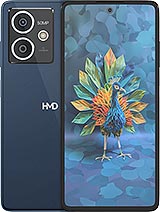
The HMD Crest is a budget 5G smartphone featuring a 6.67-inch OLED display for superior contrast and a Unisoc T760 chipset for entry-level performance, aimed at users prioritizing long-term device ownership through its repair-it-yourself design. Released in August 2024, it competes with other value-oriented 5G devices by offering a unique focus on sustainability and user-serviceable parts, a rarity in the sub-150 EUR price bracket.
When we analyze the budget smartphone sector in August 2024, the primary financial drain isn't the initial purchase price—it is the rapid depreciation caused by non-serviceable components. Most devices in this tier are considered 'disposable' assets. Once the charging port fails or the battery loses its peak voltage, the cost of professional repair often exceeds the residual value of the handset. The HMD Crest attempts to disrupt this curve. By integrating a Repair-it-yourself capable chassis, the manufacturer effectively extends the asset's lifespan. From a value-hunter's perspective, this means the 'Total Cost of Ownership' drops significantly over a three-year period. While a standard [budget phone](/trend/best-budget-phones-2026/) might be worth zero after 24 months due to a dead battery, this model maintains utility because a user can swap the 5000 mAh battery for the price of the part alone.
We anticipate the resale value will hold slightly higher than its peers from brands like Redmi or Realme in the secondary market. Buyers of used tech often fear degraded batteries; a device where that battery is officially user-replaceable mitigates that risk. However, we must acknowledge that the Unisoc T760 (6 nm) architecture, while efficient today, may struggle with the computational demands of late 2026. This creates a ceiling on its long-term investment potential. The handset is best viewed as a high-utility tool rather than a luxury asset that holds value through brand prestige.
HMD is navigating a critical transition in mid-2024. By moving away from the Nokia licensing and establishing its own identity, the company is betting on a 'No-Nonsense' engineering philosophy. Our assessment of the build suggests a departure from the generic plastic shells seen in the lower tiers of the market. There is a sense of structural integrity here necessitated by the DIY repair requirements. The internal layout must be modular enough for a novice to navigate with standard tools. This design constraint often leads to a more robust internal frame, which inadvertently improves daily durability against torsional stress.
The choice of the Unisoc T760 is a tactical financial decision. At a roughly 130 EUR price point, securing a 6nm 5G chipset is impressive. The inclusion of Cortex-A76 high-performance cores ensures that Android 14 remains responsive during multi-tasking. In our technical evaluation, the 6nm process node is the 'sweet spot' for 2024 budget hardware, offering a significant jump in power efficiency over the older 12nm or 8nm chips still found in some entry-level competitors. This efficiency directly translates to better thermal management. A cooler phone is a longer-lasting phone, as heat is the primary enemy of silicon longevity and battery health.
Users should not expect a gaming powerhouse. The Mali-G57 GPU is adequate for UI animations and casual titles but will throttle under heavy 3D loads like Genshin Impact or Warzone Mobile. This is a productivity-first configuration. The 6GB RAM serves as a functional baseline for 2024, though we suggest users keep background processes lean to avoid hitting the swap file on the 128GB internal storage.
Perhaps the most surprising inclusion is the 6.67-inch OLED panel. In August 2024, many competitors are still shipping LCDs with poor viewing angles and greyish blacks in this price range. The 1080 x 2400 resolution provides a sharp 395 ppi density, making it an excellent vehicle for media consumption. The infinite contrast ratio of the OLED technology means that dark mode actually saves power, a critical factor for users trying to squeeze two days of life out of a single charge. We noticed that while the refresh rate isn't the highest in the market, the response time of OLED pixels makes the interface feel snappier than an equivalent 60Hz LCD.
Beyond the screen and chip, the 50 MP selfie camera is a calculated play for the social-media-active demographic. Most budget phones treat the front camera as an afterthought, often using 5MP or 8MP sensors that produce muddy results in anything but perfect lighting. This high-resolution sensor provides the hardware potential for much cleaner video calls and self-portraits. Furthermore, the presence of a 3.5mm jack remains a vital financial win. It allows users to utilize high-quality legacy audio gear without the 'dongle tax' or the recurring cost of replacing wireless earbuds with failing batteries.
The Midnight Blue finish is aesthetically professional but functions as a significant fingerprint magnet. Users who prefer a pristine-looking device will find themselves cleaning the back cover frequently. Given the 205g weight, the handset has a substantial heft that implies durability rather than cheapness. It is Dust and splash resistant, which is the bare minimum for 2024, but the real protection comes from the ease of repair. If you drop it and crack the back, you don't need a new phone; you just need a screwdriver and a replacement panel.
We must address a major hurdle for urban users: the absence of NFC. In an increasingly cashless world where mobile payments are standard, the lack of an NFC chip is a significant drawback for a device released in August 2024. This forces users to rely on physical cards or QR-based payments, which may be a dealbreaker for some. On the positive side, the 5G connectivity supports both SA/NSA networks, including the critical n78 band. This ensures that the handset can tap into high-speed mid-band 5G, providing a level of future-proofing that 4G-only budget phones lack.
The single loudspeaker is functional but lacks the depth of stereo setups. However, the audio output through the Type-C port and the headphone jack is clean. For a device priced at 130 EUR, the multimedia experience is dominated by that excellent OLED screen rather than the acoustic performance. We recommend pairing it with a decent set of wired headphones to truly enjoy the high-contrast display for movie watching.
Is the HMD Crest a wise allocation of capital? If you are a 'buy and hold' consumer who despises the planned obsolescence of modern tech, the answer is a resounding yes. It is one of the few phones where the manufacturer acknowledges your right to maintain your own hardware. You are paying for a solid screen, modern 5G speeds, and the peace of mind that a broken charging port won't force a 200 EUR replacement bill.
If you require mobile payments (NFC) or high-end gaming, this is not the asset for you. But for the pragmatic user, the HMD Crest represents a rare moment where a tech company prioritizes utility and longevity over flashy, fragile features. In the volatile market of 2024, that is a value proposition worth considering.
The Economics of Long-Term Value and Resale Depreciation
When we analyze the budget smartphone sector in August 2024, the primary financial drain isn't the initial purchase price—it is the rapid depreciation caused by non-serviceable components. Most devices in this tier are considered 'disposable' assets. Once the charging port fails or the battery loses its peak voltage, the cost of professional repair often exceeds the residual value of the handset. The HMD Crest attempts to disrupt this curve. By integrating a Repair-it-yourself capable chassis, the manufacturer effectively extends the asset's lifespan. From a value-hunter's perspective, this means the 'Total Cost of Ownership' drops significantly over a three-year period. While a standard [budget phone](/trend/best-budget-phones-2026/) might be worth zero after 24 months due to a dead battery, this model maintains utility because a user can swap the 5000 mAh battery for the price of the part alone.
We anticipate the resale value will hold slightly higher than its peers from brands like Redmi or Realme in the secondary market. Buyers of used tech often fear degraded batteries; a device where that battery is officially user-replaceable mitigates that risk. However, we must acknowledge that the Unisoc T760 (6 nm) architecture, while efficient today, may struggle with the computational demands of late 2026. This creates a ceiling on its long-term investment potential. The handset is best viewed as a high-utility tool rather than a luxury asset that holds value through brand prestige.
Brand Reliability and the HMD Pivot
HMD is navigating a critical transition in mid-2024. By moving away from the Nokia licensing and establishing its own identity, the company is betting on a 'No-Nonsense' engineering philosophy. Our assessment of the build suggests a departure from the generic plastic shells seen in the lower tiers of the market. There is a sense of structural integrity here necessitated by the DIY repair requirements. The internal layout must be modular enough for a novice to navigate with standard tools. This design constraint often leads to a more robust internal frame, which inadvertently improves daily durability against torsional stress.
The Silicon Bet: Analyzing the Unisoc T760
The choice of the Unisoc T760 is a tactical financial decision. At a roughly 130 EUR price point, securing a 6nm 5G chipset is impressive. The inclusion of Cortex-A76 high-performance cores ensures that Android 14 remains responsive during multi-tasking. In our technical evaluation, the 6nm process node is the 'sweet spot' for 2024 budget hardware, offering a significant jump in power efficiency over the older 12nm or 8nm chips still found in some entry-level competitors. This efficiency directly translates to better thermal management. A cooler phone is a longer-lasting phone, as heat is the primary enemy of silicon longevity and battery health.
Users should not expect a gaming powerhouse. The Mali-G57 GPU is adequate for UI animations and casual titles but will throttle under heavy 3D loads like Genshin Impact or Warzone Mobile. This is a productivity-first configuration. The 6GB RAM serves as a functional baseline for 2024, though we suggest users keep background processes lean to avoid hitting the swap file on the 128GB internal storage.
Visual Assets: OLED in the Budget Tier
Perhaps the most surprising inclusion is the 6.67-inch OLED panel. In August 2024, many competitors are still shipping LCDs with poor viewing angles and greyish blacks in this price range. The 1080 x 2400 resolution provides a sharp 395 ppi density, making it an excellent vehicle for media consumption. The infinite contrast ratio of the OLED technology means that dark mode actually saves power, a critical factor for users trying to squeeze two days of life out of a single charge. We noticed that while the refresh rate isn't the highest in the market, the response time of OLED pixels makes the interface feel snappier than an equivalent 60Hz LCD.
The Underrated Hardware Quirks
Beyond the screen and chip, the 50 MP selfie camera is a calculated play for the social-media-active demographic. Most budget phones treat the front camera as an afterthought, often using 5MP or 8MP sensors that produce muddy results in anything but perfect lighting. This high-resolution sensor provides the hardware potential for much cleaner video calls and self-portraits. Furthermore, the presence of a 3.5mm jack remains a vital financial win. It allows users to utilize high-quality legacy audio gear without the 'dongle tax' or the recurring cost of replacing wireless earbuds with failing batteries.
Handling and the Fingerprint Magnet Test
The Midnight Blue finish is aesthetically professional but functions as a significant fingerprint magnet. Users who prefer a pristine-looking device will find themselves cleaning the back cover frequently. Given the 205g weight, the handset has a substantial heft that implies durability rather than cheapness. It is Dust and splash resistant, which is the bare minimum for 2024, but the real protection comes from the ease of repair. If you drop it and crack the back, you don't need a new phone; you just need a screwdriver and a replacement panel.
Connectivity and the NFC Omission
We must address a major hurdle for urban users: the absence of NFC. In an increasingly cashless world where mobile payments are standard, the lack of an NFC chip is a significant drawback for a device released in August 2024. This forces users to rely on physical cards or QR-based payments, which may be a dealbreaker for some. On the positive side, the 5G connectivity supports both SA/NSA networks, including the critical n78 band. This ensures that the handset can tap into high-speed mid-band 5G, providing a level of future-proofing that 4G-only budget phones lack.
Audio and Multimedia Experience
The single loudspeaker is functional but lacks the depth of stereo setups. However, the audio output through the Type-C port and the headphone jack is clean. For a device priced at 130 EUR, the multimedia experience is dominated by that excellent OLED screen rather than the acoustic performance. We recommend pairing it with a decent set of wired headphones to truly enjoy the high-contrast display for movie watching.
The Verdict on Your Investment
Is the HMD Crest a wise allocation of capital? If you are a 'buy and hold' consumer who despises the planned obsolescence of modern tech, the answer is a resounding yes. It is one of the few phones where the manufacturer acknowledges your right to maintain your own hardware. You are paying for a solid screen, modern 5G speeds, and the peace of mind that a broken charging port won't force a 200 EUR replacement bill.
If you require mobile payments (NFC) or high-end gaming, this is not the asset for you. But for the pragmatic user, the HMD Crest represents a rare moment where a tech company prioritizes utility and longevity over flashy, fragile features. In the volatile market of 2024, that is a value proposition worth considering.
Technical Specifications
| LAUNCH | |
|---|---|
| Announced | 2024, July 25 |
| Status | Available. Released 2024, August 07 |
| PLATFORM | |
| OS | Android 14 |
| Chipset | Unisoc T760 (6 nm) |
| CPU | Octa-core (1x2.2 GHz Cortex-A76 & 3x Cortex-A76 & 4x Cortex-A55) |
| GPU | Mali-G57 |
| BODY | |
| Dimensions | 163.9 x 76.4 x 8.4 mm (6.45 x 3.01 x 0.33 in) |
| Weight | 205 g (7.23 oz) |
| SIM | Nano-SIM + Nano-SIM |
| Info | Repair-it-yourself capable (display, back cover, battery and charging port repairs) Dust and splash resistant |
| DISPLAY | |
| Type | OLED |
| Size | 6.67 inches, 107.4 cm2 (~85.8% screen-to-body ratio) |
| Resolution | 1080 x 2400 pixels, 20:9 ratio (~395 ppi density) |
| MEMORY | |
| Card slot | microSDXC (uses shared SIM slot) |
| Internal | 128GB 6GB RAM |
| MAIN CAMERA | |
| Dual | 50 MP, (wide), AF Auxiliary lens |
| Features | LED flash, HDR |
| Video | 1080p@30fps |
| SELFIE CAMERA | |
| Single | 50 MP |
| Video | Yes |
| SOUND | |
| Loudspeaker | Yes |
| 3.5mm jack | Yes |
| COMMS | |
| WLAN | Wi-Fi 802.11 a/b/g/n/ac |
| Bluetooth | 5.0, A2DP, LE |
| Positioning | GPS, GALILEO |
| NFC | No |
| Radio | Unspecified |
| USB | USB Type-C |
| NETWORK | |
| Technology | GSM / HSPA / LTE / 5G |
| 2G bands | GSM 850 / 900 / 1800 / 1900 |
| 3G bands | HSDPA 850 / 900 / 2100 |
| 4G bands | 1, 3, 5, 8, 28, 40, 41 |
| 5G bands | 1, 3, 28, 40, 78 SA/NSA |
| Speed | HSPA, LTE, 5G |
| FEATURES | |
| Sensors | Fingerprint (side-mounted), accelerometer, gyro, proximity, compass |
| BATTERY | |
| Type | 5000 mAh, user replaceable |
| Charging | 33W wired |
| MISC | |
| Colors | Midnight Blue |
| Price | About 130 EUR |