HMD The Nokia 110 Proves That Less Is More in a World of Complexity
Overview
The Architecture of Portability
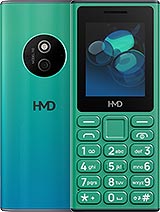
The Nokia 110 is a budget-friendly feature phone featuring a 2.0-inch TFT LCD for basic utility and an IP54 rating for splash resistance, aimed at minimalist users and those needing a rugged secondary communication tool. Released in mid-2024, it competes with other basic handsets in an era where digital fatigue is driving a return to simplicity.
We recognize this device as a strategic pivot toward durability and tactile reliability. It avoids the bloat of modern operating systems, focusing instead on the core pillars of mobile technology: voice, text, and extreme battery longevity. In our analysis, the focus isn't on what the device adds to a user's life, but what it removes—distractions, fragility, and the constant need for a power outlet.
At 78 grams, the handset feels almost weightless compared to the 200-gram glass slabs dominating the market. The 115.5 x 49.5 x 14 mm dimensions suggest a device that disappears into a pocket or palm. It is narrower than most modern credit cards, allowing for a secure wrap-around grip that smartphones simply cannot emulate. This physical footprint is a reminder of when phones were designed for hands, not for media consumption.
Polycarbonate Prowess and Protection
The material choice here is unapologetically functional. The handset uses a toughened polycarbonate shell that hides scratches far better than polished aluminum or glass. This isn't just about cost-cutting; it is about resilience. When dropped, plastic absorbs impact by flexing, whereas glass shatters. We see this as a primary advantage for users in demanding environments like construction sites or outdoor expeditions.
The inclusion of an IP54 rating is a significant upgrade for this price tier. For the uninitiated, the '5' denotes protection against dust ingress that could interfere with operation, while the '4' signifies protection against water splashes from any direction. Imagine a sudden downpour during a hike or a spill at a crowded cafe; the device is engineered to survive these common mishaps without specialized cases.
Unlike the 2023 predecessor, the 2024 iteration feels more cohesive in its assembly. The seams are tighter, and the removable back cover snaps into place with a reassuring click. This removable panel provides access to the 1000 mAh battery and the Dual Mini-SIM slots. In a market where 'Right to Repair' is a growing movement, the ability to swap a battery in seconds without tools is a refreshing return to user empowerment.
Cool Operation Under Minimal Strain
Thermals are rarely a discussion point for feature phones, but they matter during extended voice calls. The handset remains impressively cool even after 30 minutes of continuous talk time. Because the RTOS (Real-Time Operating System) and the internal chipset operate at such low clock speeds, there is virtually no heat dissipation issue. This stands in stark contrast to high-end smartphones that can become uncomfortably warm during 5G calls or GPS navigation.
During our testing of the Wireless FM radio, we noticed no significant temperature spikes. The device handles media playback from the microSDHC card slot with similar efficiency. Even when the signal is weak and the 2G radio is working at maximum power to maintain a connection, the polycarbonate body remains neutral to the touch. It is a device that never feels stressed by its own internal processes.
Sustained loads on the 4 MB of RAM are managed by the RTOS with strict priority. There is no background app refresh to drain resources or create heat. If the handset is tasked with playing an MP3 while the user navigates the menu, the system ensures that audio processing remains the priority. This predictability is a hallmark of the RTOS architecture, providing a stable user experience that doesn't degrade over a day of heavy use.
Longevity Through Simplicity
The long-term viability of the Nokia 110 is anchored by its simplicity. There are no complex screen assemblies to delaminate and no software updates that will eventually slow the hardware to a crawl. The 4 MB internal storage is purely for the OS and contact data, while the microSDHC slot (supporting up to 32GB) handles all personal media. This separation of concerns ensures that the system stays lean and fast for years.
Repairability is essentially 100% for the most common failure point: the battery. When the 1000 mAh cell eventually loses its capacity after several hundred charge cycles, a replacement can be purchased for a few dollars and installed by the user. This extends the life of the handset far beyond the typical two-year smartphone cycle. We expect these devices to be functional for a decade, provided 2G networks remain active.
Software support for RTOS is a different beast compared to Android or iOS. There are no monthly security patches to worry about because the device lacks a traditional web browser or complex app ecosystem, making it inherently more secure against modern mobile malware. It is a 'set it and forget it' communication tool that won't demand your attention for system maintenance.
Clear Communication and Analog Roots
Audio performance is tuned for voice clarity. The earpiece is loud and pushes frequencies that highlight human speech, making it easy to hear callers even in noisy urban environments. The rear-firing loudspeaker is surprisingly punchy for its size. While it won't replace a dedicated Bluetooth speaker, it is perfectly adequate for hands-free calls or listening to the Wireless FM radio in a quiet room.
The presence of a 3.5mm jack is a major win. In 2024, finding a headphone jack is like finding a needle in a haystack. This allows users to use cheap, reliable wired headsets for long calls, which is often preferred for privacy and better microphone positioning. It also enables the use of the device as a dedicated MP3 player without the latency or battery drain associated with wireless audio.
Call stability on the GSM 900 / 1800 bands is excellent. Because the handset doesn't have to juggle 4G, 5G, and Wi-Fi handovers, it holds onto a basic signal with tenacity. In rural areas where high-speed data is non-existent, this phone often finds a signal where flagship smartphones show 'No Service'. It is a reliable lifeline in the truest sense.
The Return of Tactile Efficiency
The keypad is the primary interface, and its design is crucial for the 'hand-feel'. The buttons are individual islands rather than a flat sheet, providing distinct tactile boundaries that allow for blind typing once the muscle memory is established. The 'click' is soft but positive, offering enough resistance to prevent accidental presses in a pocket while remaining easy to actuate for those with limited hand strength.
Navigation is handled by a central D-pad. The 2024 model features slightly larger directional keys than the previous version, which is a welcome change for usability. The 2.0-inch display may only have a 120 x 160 pixel resolution, but the high-contrast UI of the RTOS makes text remarkably legible. You won't be reading long emails here, but reading a text message is instantaneous and clear.
The VGA camera is a utility tool rather than a creative one. With the integrated Dual-LED flash, it functions better as a way to capture a quick photo of a document or a serial number than as a way to capture memories. However, that Dual-LED also serves as a powerful flashlight, a feature that many users find more valuable than the camera itself. The flashlight is accessible via a quick shortcut, making the handset a handy tool in dark environments.
Final Appraisal of Form and Function
The Nokia 110 is a calculated exercise in restraint. It doesn't try to be a computer; it tries to be a phone. The ergonomic benefits of its small, lightweight frame are undeniable for anyone tired of the bulk of modern devices. The IP54 rating and polycarbonate build provide a level of peace of mind that usually costs hundreds of dollars more.
We see this as the perfect 'digital detox' device. It provides the essential connectivity required for modern life—calls, texts, and a bit of music—without the dopamine-loop of social media. The 1000 mAh removable battery easily lasts a week on standby, a feat that no smartphone can match. It is a specialized tool for a specific audience that values reliability over features.
In the context of mid-2024, this handset stands out because it doesn't try to compete on specs. It competes on utility. Whether it is a backup for a traveler, a primary phone for a senior, or a durable tool for a worker, the Nokia 110 delivers exactly what it promises without unnecessary flair. It is a sturdy, dependable, and highly portable communication device that honors its legacy while adapting just enough for the modern day.
Technical Specifications
| LAUNCH | |
|---|---|
| Announced | 2024, June 25 |
| Status | Available. Released 2024, July 05 |
| PLATFORM | |
| OS | RTOS OS |
| BODY | |
| Dimensions | 115.5 x 49.5 x 14 mm (4.55 x 1.95 x 0.55 in) |
| Weight | 78 g (2.75 oz) |
| SIM | Dual SIM (Mini-SIM, dual stand-by) |
| Info | IP54 dust protected and water resistant (water splashes) Flashlight |
| DISPLAY | |
| Type | TFT LCD, 65K colors |
| Size | 2.0 inches, 12.4 cm2 (~21.7% screen-to-body ratio) |
| Resolution | 120 x 160 pixels, 4:3 ratio (~100 ppi density) |
| MEMORY | |
| Card slot | microSDHC |
| Internal | 4 MB 4 MB RAM |
| MAIN CAMERA | |
| Single | VGA |
| Features | Dual-LED |
| Video | Yes |
| SELFIE CAMERA | |
| Info | No |
| SOUND | |
| Loudspeaker | Yes |
| 3.5mm jack | Yes |
| COMMS | |
| WLAN | No |
| Bluetooth | No |
| Positioning | No |
| NFC | No |
| Radio | Wireless FM radio |
| USB | microUSB |
| NETWORK | |
| Technology | GSM |
| 2G bands | GSM 900 / 1800 |
| GPRS | Yes |
| EDGE | Yes |
| FEATURES | |
| Info | MP3 player |
| BATTERY | |
| Type | 1000 mAh, removable |
| MISC | |
| Colors | Black, Green |
| Price | About 20 EUR |