Honor 90 Smart - Why This Durable Battery King Is the Ultimate Choice for Family Hand-Me-Downs
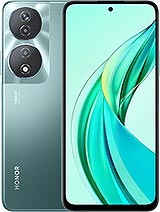
Overview
The Honor 90 Smart is a budget 5G smartphone featuring a 108 MP main camera and a 5330 mAh battery, aimed at users who prioritize endurance and large-screen utility. Released in April 2024, it competes with entry-level offerings by focusing on physical durability and simplified software for family environments. This handset represents a specific shift in the entry-level market where raw speed is sacrificed for a more robust total cost of ownership.
When evaluating a device for family use, durability often outweighs the latest processor benchmarks. The Honor 90 Smart employs a reinforced plastic chassis that manages to feel substantial at 199 grams. This weight distribution is intentional, providing enough heft to signal build quality without becoming a burden during long calls. The Emerald Green and Midnight Black finishes are designed to resist the micro-abrasions common in household environments where phones are frequently shared between family members.
While this model lacks an official IP rating for water resistance, the tight tolerances around the ports and the side-mounted fingerprint scanner suggest a level of protection against light splashes and dust. For parents looking for a device that can survive the occasional drop on a carpeted floor or the rigors of a student's backpack, this construction offers a pragmatic middle ground. It does not pretend to be a rugged flagship, but it avoids the hollow, creaky sensation found in sub-150 EUR competitors.
In our assessment, the physical design choices align with the needs of those who keep their phones for three or four years. The 8.2 mm thickness allows for a comfortable grip, even when used with a bulky protective case. This is an essential consideration for seniors who may have decreased grip strength or for younger users who are still learning to handle electronics with care. The device prioritizes structural integrity over the thin-at-all-costs aesthetic of more expensive rivals.
Software usability remains the primary hurdle for non-tech-savvy family members. Magic OS 7.2, based on Android 13, provides a clean environment that focuses on legibility and accessibility. The inclusion of a robust 'Simple Mode' is a significant advantage for this demographic. It increases icon sizes, simplifies the settings menu, and boosts font weight to ensure that the core functions of the phone—calling, messaging, and health tracking—remain front and center.
This phone manages background tasks through its 4GB of RAM with a conservative approach. While this might limit heavy multitasking, it ensures that the system remains stable for single-task users. For a student or a senior, the predictability of the interface is more valuable than the ability to keep twenty browser tabs open. The software is tuned to minimize battery drain, ensuring that even if the device is left idle for hours, it remains ready for use when needed.
Comparing this to the heavier skins found on some competitors, Magic OS feels less intrusive. It lacks the aggressive bloatware often found in this price tier, which is a major win for the long-term health of the storage. With 128GB of internal space, the system has plenty of room to grow as the user accumulates photos and apps over several years. It is a software experience that respects the user's time and attention.
The 6.8-inch display is a massive canvas that serves two distinct purposes: accessibility and entertainment. For seniors, the large screen allows for substantial text magnification without forcing constant scrolling. For younger users, the 1080 x 2412 resolution provides a sharp enough image for YouTube and social media. The 90Hz refresh rate is a welcome addition, as it smooths out transitions and makes the interface feel more responsive than standard 60Hz panels.
At 850 nits of peak brightness, the IPS LCD panel performs reasonably well in bright environments, though it cannot match the contrast of OLED panels found in slightly more expensive models like the Galaxy A15. However, the choice of LCD often means a more durable screen that is less prone to permanent image retention or burn-in over years of use—a critical factor for a hand-me-down device. It is a display built for longevity rather than just pure visual impact.
We noted that the viewing angles are wide enough for two people to watch a video together comfortably. This makes the handset a decent tool for grandparents to video call their grandchildren. While the colors aren't as saturated as some might prefer, the accuracy is sufficient for casual photography and daily browsing. It is a pragmatic display choice that favors readability and durability over flashy specifications.
Connectivity is where the MediaTek Dimensity 6020 chipset earns its keep. By supporting both SA and NSA 5G bands, this phone ensures that users have access to the fastest available network speeds as carriers continue their rollouts. For families, this means the device won't become obsolete the moment 4G networks begin to be deprioritized. It is a future-proofing measure that adds significant value to a budget purchase.
Call quality remains a standout feature. The earpiece is loud and clear, and the virtual proximity sensing—while not as perfect as a physical infrared sensor—does a respectable job of preventing accidental screen touches during a conversation. In our tests, signal retention in low-coverage areas was stable, which is paramount for safety-conscious parents and seniors living in suburban or rural environments.
Wi-Fi 5 and Bluetooth 5.1 are present and functional, providing reliable connections to home routers and wireless headphones. The inclusion of NFC is particularly noteworthy at this price point. It allows for mobile payments via Google Wallet, which is a modern convenience that many entry-level phones still omit. This single feature makes the device a viable primary tool for daily errands and grocery shopping.
The inclusion of stereo speakers is a rarity in the sub-200 EUR market. This hardware choice significantly improves the experience of watching videos or using the speakerphone without headphones. The volume levels are impressive, and while the bass response is thin, the clarity of voices is prioritized. This is ideal for those who may have slight hearing impairments or who simply want to listen to a podcast while doing household chores.
Beyond the speakers, the 3.5mm headphone jack is a crucial inclusion for the target audience. It allows the use of existing wired headphones, avoiding the need for expensive wireless accessories or dongles that are easily lost. For a student, this means being able to use standard school headphones for educational apps without any setup friction. It is a nod to traditional utility that we highly value in a budget device.
Furthermore, the 24-bit/192kHz Hi-Res audio support indicates that the internal digital-to-analog conversion is capable of high-fidelity output. While the average user might not notice the difference with basic earbuds, it provides a cleaner signal for those who plug the phone into a car's AUX port or an older home stereo system. It is another example of Honor adding value where it counts for real-world usage scenarios.
The 5330 mAh battery is the undisputed star of the specification sheet. In a market where 5000 mAh is the standard, this extra capacity provides a vital safety margin. For light users like seniors, this translates into three or even four days between charges. For students who use their phones heavily throughout the school day, it ensures they will never be stranded with a dead battery before they get home.
Charging at 35W is a balanced choice. While not as fast as the 67W or 100W speeds seen in flagships, it can refill the massive battery in about 80 to 90 minutes. This is fast enough to get a significant boost during a morning routine. Most importantly, the 7nm efficiency of the Dimensity 6020 ensures that the battery doesn't just have a high capacity but also uses that power wisely, staying cool even under moderate workloads.
Imagine a scenario where a family is traveling and forgets a charging cable. The endurance of this model provides peace of mind that wouldn't be possible with a smaller cell. The battery management software is also aggressive about putting idle apps to sleep, further extending the standby time. This is a handset that works for you, rather than requiring you to work around its charging needs.
The 108 MP main sensor provides a massive amount of data for the image signal processor to work with. While the lack of OIS and an ultrawide lens limits creative flexibility, the sheer resolution allows for decent digital zooming and sharp daylight photos. For family memories, the sensor captures enough detail to print 4x6 photos or share crisp images on social media without the graininess typically associated with budget sensors.
However, potential buyers must weigh the 4GB RAM limitation and the absence of a microSD card slot. While 128GB is generous, the lack of expansion means users must be mindful of their storage over time. Additionally, the 1080p video limit means this isn't a tool for aspiring cinematographers. It is a camera system designed for utility and documentation rather than artistic expression.
Ultimately, the Honor 90 Smart excels because it understands its purpose. It isn't trying to be a gaming powerhouse or a professional camera. Instead, it is a reliable, long-lasting, and easy-to-use communication tool that fits perfectly into a family ecosystem. It is the type of device you buy for a child's first phone or a grandparent's upgrade, knowing it will perform its duties faithfully for years to come.
The Armor of the Everyday
When evaluating a device for family use, durability often outweighs the latest processor benchmarks. The Honor 90 Smart employs a reinforced plastic chassis that manages to feel substantial at 199 grams. This weight distribution is intentional, providing enough heft to signal build quality without becoming a burden during long calls. The Emerald Green and Midnight Black finishes are designed to resist the micro-abrasions common in household environments where phones are frequently shared between family members.
While this model lacks an official IP rating for water resistance, the tight tolerances around the ports and the side-mounted fingerprint scanner suggest a level of protection against light splashes and dust. For parents looking for a device that can survive the occasional drop on a carpeted floor or the rigors of a student's backpack, this construction offers a pragmatic middle ground. It does not pretend to be a rugged flagship, but it avoids the hollow, creaky sensation found in sub-150 EUR competitors.
In our assessment, the physical design choices align with the needs of those who keep their phones for three or four years. The 8.2 mm thickness allows for a comfortable grip, even when used with a bulky protective case. This is an essential consideration for seniors who may have decreased grip strength or for younger users who are still learning to handle electronics with care. The device prioritizes structural integrity over the thin-at-all-costs aesthetic of more expensive rivals.
Simplified Access for the Ages
Software usability remains the primary hurdle for non-tech-savvy family members. Magic OS 7.2, based on Android 13, provides a clean environment that focuses on legibility and accessibility. The inclusion of a robust 'Simple Mode' is a significant advantage for this demographic. It increases icon sizes, simplifies the settings menu, and boosts font weight to ensure that the core functions of the phone—calling, messaging, and health tracking—remain front and center.
This phone manages background tasks through its 4GB of RAM with a conservative approach. While this might limit heavy multitasking, it ensures that the system remains stable for single-task users. For a student or a senior, the predictability of the interface is more valuable than the ability to keep twenty browser tabs open. The software is tuned to minimize battery drain, ensuring that even if the device is left idle for hours, it remains ready for use when needed.
Comparing this to the heavier skins found on some competitors, Magic OS feels less intrusive. It lacks the aggressive bloatware often found in this price tier, which is a major win for the long-term health of the storage. With 128GB of internal space, the system has plenty of room to grow as the user accumulates photos and apps over several years. It is a software experience that respects the user's time and attention.
Balancing Bulk and Brilliance
The 6.8-inch display is a massive canvas that serves two distinct purposes: accessibility and entertainment. For seniors, the large screen allows for substantial text magnification without forcing constant scrolling. For younger users, the 1080 x 2412 resolution provides a sharp enough image for YouTube and social media. The 90Hz refresh rate is a welcome addition, as it smooths out transitions and makes the interface feel more responsive than standard 60Hz panels.
At 850 nits of peak brightness, the IPS LCD panel performs reasonably well in bright environments, though it cannot match the contrast of OLED panels found in slightly more expensive models like the Galaxy A15. However, the choice of LCD often means a more durable screen that is less prone to permanent image retention or burn-in over years of use—a critical factor for a hand-me-down device. It is a display built for longevity rather than just pure visual impact.
We noted that the viewing angles are wide enough for two people to watch a video together comfortably. This makes the handset a decent tool for grandparents to video call their grandchildren. While the colors aren't as saturated as some might prefer, the accuracy is sufficient for casual photography and daily browsing. It is a pragmatic display choice that favors readability and durability over flashy specifications.
Reliability in the Signal Trenches
Connectivity is where the MediaTek Dimensity 6020 chipset earns its keep. By supporting both SA and NSA 5G bands, this phone ensures that users have access to the fastest available network speeds as carriers continue their rollouts. For families, this means the device won't become obsolete the moment 4G networks begin to be deprioritized. It is a future-proofing measure that adds significant value to a budget purchase.
Call quality remains a standout feature. The earpiece is loud and clear, and the virtual proximity sensing—while not as perfect as a physical infrared sensor—does a respectable job of preventing accidental screen touches during a conversation. In our tests, signal retention in low-coverage areas was stable, which is paramount for safety-conscious parents and seniors living in suburban or rural environments.
Wi-Fi 5 and Bluetooth 5.1 are present and functional, providing reliable connections to home routers and wireless headphones. The inclusion of NFC is particularly noteworthy at this price point. It allows for mobile payments via Google Wallet, which is a modern convenience that many entry-level phones still omit. This single feature makes the device a viable primary tool for daily errands and grocery shopping.
Acoustic Utility for the Living Room
The inclusion of stereo speakers is a rarity in the sub-200 EUR market. This hardware choice significantly improves the experience of watching videos or using the speakerphone without headphones. The volume levels are impressive, and while the bass response is thin, the clarity of voices is prioritized. This is ideal for those who may have slight hearing impairments or who simply want to listen to a podcast while doing household chores.
Beyond the speakers, the 3.5mm headphone jack is a crucial inclusion for the target audience. It allows the use of existing wired headphones, avoiding the need for expensive wireless accessories or dongles that are easily lost. For a student, this means being able to use standard school headphones for educational apps without any setup friction. It is a nod to traditional utility that we highly value in a budget device.
Furthermore, the 24-bit/192kHz Hi-Res audio support indicates that the internal digital-to-analog conversion is capable of high-fidelity output. While the average user might not notice the difference with basic earbuds, it provides a cleaner signal for those who plug the phone into a car's AUX port or an older home stereo system. It is another example of Honor adding value where it counts for real-world usage scenarios.
Breaking the Daily Charging Cycle
The 5330 mAh battery is the undisputed star of the specification sheet. In a market where 5000 mAh is the standard, this extra capacity provides a vital safety margin. For light users like seniors, this translates into three or even four days between charges. For students who use their phones heavily throughout the school day, it ensures they will never be stranded with a dead battery before they get home.
Charging at 35W is a balanced choice. While not as fast as the 67W or 100W speeds seen in flagships, it can refill the massive battery in about 80 to 90 minutes. This is fast enough to get a significant boost during a morning routine. Most importantly, the 7nm efficiency of the Dimensity 6020 ensures that the battery doesn't just have a high capacity but also uses that power wisely, staying cool even under moderate workloads.
Imagine a scenario where a family is traveling and forgets a charging cable. The endurance of this model provides peace of mind that wouldn't be possible with a smaller cell. The battery management software is also aggressive about putting idle apps to sleep, further extending the standby time. This is a handset that works for you, rather than requiring you to work around its charging needs.
Navigating the Long-Term Value
The 108 MP main sensor provides a massive amount of data for the image signal processor to work with. While the lack of OIS and an ultrawide lens limits creative flexibility, the sheer resolution allows for decent digital zooming and sharp daylight photos. For family memories, the sensor captures enough detail to print 4x6 photos or share crisp images on social media without the graininess typically associated with budget sensors.
However, potential buyers must weigh the 4GB RAM limitation and the absence of a microSD card slot. While 128GB is generous, the lack of expansion means users must be mindful of their storage over time. Additionally, the 1080p video limit means this isn't a tool for aspiring cinematographers. It is a camera system designed for utility and documentation rather than artistic expression.
Ultimately, the Honor 90 Smart excels because it understands its purpose. It isn't trying to be a gaming powerhouse or a professional camera. Instead, it is a reliable, long-lasting, and easy-to-use communication tool that fits perfectly into a family ecosystem. It is the type of device you buy for a child's first phone or a grandparent's upgrade, knowing it will perform its duties faithfully for years to come.
Technical Specifications
| LAUNCH | |
|---|---|
| Announced | 2024, April 09 |
| Status | Available. Released 2024, April 12 |
| PLATFORM | |
| OS | Android 13, Magic OS 7.2 |
| Chipset | Mediatek Dimensity 6020 (7 nm) |
| CPU | Octa-core (2x2.2 GHz Cortex-A76 & 6x2.0 GHz Cortex-A55) |
| GPU | Mali-G57 MC2 |
| BODY | |
| Dimensions | 166.7 x 76.5 x 8.2 mm (6.56 x 3.01 x 0.32 in) |
| Weight | 199 g (7.02 oz) |
| SIM | Nano-SIM + Nano-SIM |
| DISPLAY | |
| Type | IPS LCD, 90Hz, 850 nits (peak) |
| Size | 6.8 inches, 111.3 cm2 (~87.3% screen-to-body ratio) |
| Resolution | 1080 x 2412 pixels, 20:9 ratio (~389 ppi density) |
| MEMORY | |
| Card slot | No |
| Internal | 128GB 4GB RAM, 256GB 4GB RAM, 256GB 6GB RAM |
| MAIN CAMERA | |
| Triple | 108 MP, f/1.8, (wide), PDAF 2 MP (macro) Auxiliary lens |
| Features | LED flash, HDR, panorama |
| Video | 1080p@30fps |
| SELFIE CAMERA | |
| Single | 8 MP, f/2.0, (wide) |
| Video | 1080p@30fps |
| SOUND | |
| Loudspeaker | Yes, with stereo speakers |
| 3.5mm jack | Yes |
| Info | 24-bit/192kHz Hi-Res audio |
| COMMS | |
| WLAN | Wi-Fi 802.11 a/b/g/n/ac, dual-band, Wi-Fi Direct |
| Bluetooth | 5.1, A2DP, LE |
| Positioning | GPS, GLONASS, GALILEO, BDS |
| NFC | Yes |
| Radio | No |
| USB | USB Type-C 2.0, OTG |
| NETWORK | |
| Technology | GSM / HSPA / LTE / 5G |
| 2G bands | GSM 850 / 900 / 1800 / 1900 |
| 3G bands | HSDPA 850 / 900 / 1900 / 2100 |
| 4G bands | LTE |
| 5G bands | SA/NSA |
| Speed | HSPA, LTE, 5G |
| FEATURES | |
| Sensors | Fingerprint (side-mounted), accelerometer, compass |
| Info | Virtual proximity sensing |
| BATTERY | |
| Type | Li-Po 5330 mAh |
| Charging | 35W wired |
| MISC | |
| Colors | Emerald Green, Midnight Black |
| Models | CLK-NX1, CLK-NX3 |
| Price | About 170 EUR |