Honor Pad X9 Is the Most Sensible Secondary Screen for Content Hungry Households
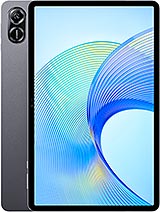
Overview
The Honor Pad X9 is a budget-oriented Android tablet featuring a 11.5-inch 120Hz TFT LCD for smooth visuals and a six-speaker system for immersive audio, aimed at users seeking a dedicated media consumption device or a reliable secondary screen. Released in July 2023, it competes directly with entry-level offerings from Samsung and Xiaomi, prioritizing display fluidity and build quality over raw processing power.
In a household where the primary smartphone is constantly tied up with work calls, banking, and high-stakes communication, the Honor Pad X9 serves as a crucial relief valve. We view this device not as a laptop replacement, but as a specialized tool for the 'lean-back' moments of digital life. When a primary phone battery is hovering at 10% after a long workday, having a dedicated 11.5-inch slate for streaming or light browsing is an economic victory for the user's workflow. It prevents the unnecessary wear and tear on more expensive flagship handsets.
This tablet fills the gap for those who need a large canvas for reading digital magazines or reviewing PDFs without the bulk of a full-sized laptop. Because it utilizes the Qualcomm Snapdragon 685 chipset, the device maintains a low thermal profile, making it an excellent companion for long reading sessions. While many budget tablets feel like disposable plastic toys, the aluminum construction here suggests a level of maturity that fits into a professional briefcase just as easily as a student's backpack. It is about utility per dollar, and the value proposition is immediately apparent.
Comparing this to the standard 60Hz panels found in many competitors at this price point, the move to a 120Hz refresh rate is a calculated gamble that pays off. The fluidity of scrolling through a news feed or a long document makes the hardware feel more expensive than the invoice suggests. For the budget-conscious economist, this is the 'secondary screen' sweet spot where specifications meet actual human perception.
Power management on the Honor Pad X9 is anchored by a 7250 mAh battery, which, in our analysis, is perfectly tuned for a device that might sit on a coffee table for days between uses. The Snapdragon 685 is built on a 6nm process, which is highly efficient for background tasks. This means the standby drain is minimal. You can leave it for forty-eight hours and return to find the battery percentage nearly identical to where you left it. This 'pick up and go' reliability is essential for a secondary device.
During active use, the hardware supports approximately 13 hours of continuous video playback. Imagine a scenario where a family is traveling across the country; this tablet can handle two full-length movies and several hours of casual gaming without needing a wall outlet. However, the 22.5W wired charging speed is a bottleneck. It requires patience, taking several hours to reach a full charge from zero. We recommend overnight charging cycles to mitigate this slow recovery time.
When we look at the energy-efficient Cortex-A53 and Cortex-A73 cores, it becomes clear that this tablet is designed for sustained, low-intensity tasks. It won't win a sprint against a flagship, but it is a marathon runner. For users who primarily stream from services like Netflix or YouTube, the battery capacity provides a safety net that smaller devices simply cannot match.
Setting up the device reveals a build quality that punches above its weight class. The aluminum back and frame provide a structural rigidity that plastic competitors lack. There is no noticeable flex when applying pressure to the center of the chassis, which is often a failure point in budget slates. The initial setup process in MagicOS 7.1 is relatively straightforward, though users should expect a few pre-installed applications that may need organizing or removal to clean up the interface.
Out of the box, the inclusion of a charging brick and cable is a welcome sight in an era where many manufacturers are stripping accessories to pad margins. The initial software update is typically around 1GB to 2GB, so ensure a stable Wi-Fi connection is available before the first boot. The tactile experience of the aluminum is cool to the touch, providing a premium sensation that aids in heat dissipation during longer sessions of video playback.
Weight distribution is handled well. Despite the large screen size, the 495g or 499g heft feels balanced. Holding the device in landscape mode feels natural, thanks to the symmetrical bezels that provide just enough room for thumbs to rest without triggering accidental touches on the screen. It feels like a tool designed for durability rather than a fragile piece of glass.
Navigation on the device is surprisingly snappy for a budget chipset. This is largely due to the high refresh rate of the display masking some of the underlying processing limitations. Home gestures and back-swipes feel immediate. When moving between the app drawer and the home screen, the animations stay consistent. The Adreno 610 GPU is not a powerhouse, but it is well-optimized for these system-level transitions.
False touch rejection is a critical factor for large-screen devices. While using the tablet for reading in bed, we noticed that the edges of the screen are sufficiently intelligent to ignore the palm or the base of the thumb. This prevents the frustrating 'jumpy' scrolling often seen on poorly optimized budget tablets. The 5:3 aspect ratio is slightly wider than the standard 16:9, offering more vertical space for web browsing in landscape mode.
There is a slight friction when multitasking heavily. With only 4GB of RAM, the system will aggressively close background apps to maintain the smoothness of the foreground task. If you are jumping between a heavy game and a web browser with twenty tabs open, expect a reload. This is a compromise made for the price point, reminding the user that this is a content consumption device first and a productivity powerhouse second.
Biometric options are rudimentary but functional. The device relies on face recognition via the 5 MP front camera or standard PIN/Pattern codes. In well-lit environments, the face unlock is quick enough to be convenient. However, in low-light scenarios, like a dark living room, the lack of an IR sensor or a fingerprint scanner means you will likely default to entering a code manually.
This lack of a fingerprint sensor is one of the few areas where the budget cuts are felt in daily use. A side-mounted sensor in the power button would have been a significant value add. Nevertheless, the face recognition setup is easy, and for a device that rarely leaves the house, the security trade-off is manageable for most users. It ensures that kids or guests can't easily access private data, even if it's not 'bank-grade' security.
The lack of an official IP rating for water and dust resistance means this tablet should stay far away from the pool or the bathtub. However, the aluminum frame provides excellent protection against the occasional bump or minor drop. The glass front is standard, so we highly recommend a screen protector to avoid micro-scratches over time. Since it is a larger surface area, the risk of impact damage is higher than on a smartphone.
From a repairability perspective, the unibody aluminum design is a double-edged sword. It is sturdy, but it makes battery replacements more difficult down the road compared to plastic-backed devices. For a secondary device, the durability goal is to last three to four years of casual use, and the materials used here suggest that is a realistic expectation. It doesn't feel like it will creak or rattle after six months of ownership.
Resale value for budget tablets is notoriously steep in its decline, but Honor's growing presence in the global market helps stabilize this somewhat. The software support for MagicOS 7.1 (based on Android 13) provides a modern foundation, but don't expect the five-year update cycles seen in the flagship space. This is a device to be bought, used until it can no longer run modern apps, and then perhaps passed down to a younger family member.
As a value-hunter, the play here is to look at the 'Cost Per Hour of Use'. If you spend two hours a night watching video on this screen instead of your $1,000 phone, the tablet pays for itself in about a year by preserving the longevity of your primary hardware. It is a strategic acquisition for any tech-heavy household. The Honor Pad X9 remains a top-tier recommendation for anyone needing a big, beautiful, and affordable window into their digital world.
A Strategic Asset for the Digital Overflow
In a household where the primary smartphone is constantly tied up with work calls, banking, and high-stakes communication, the Honor Pad X9 serves as a crucial relief valve. We view this device not as a laptop replacement, but as a specialized tool for the 'lean-back' moments of digital life. When a primary phone battery is hovering at 10% after a long workday, having a dedicated 11.5-inch slate for streaming or light browsing is an economic victory for the user's workflow. It prevents the unnecessary wear and tear on more expensive flagship handsets.
This tablet fills the gap for those who need a large canvas for reading digital magazines or reviewing PDFs without the bulk of a full-sized laptop. Because it utilizes the Qualcomm Snapdragon 685 chipset, the device maintains a low thermal profile, making it an excellent companion for long reading sessions. While many budget tablets feel like disposable plastic toys, the aluminum construction here suggests a level of maturity that fits into a professional briefcase just as easily as a student's backpack. It is about utility per dollar, and the value proposition is immediately apparent.
Comparing this to the standard 60Hz panels found in many competitors at this price point, the move to a 120Hz refresh rate is a calculated gamble that pays off. The fluidity of scrolling through a news feed or a long document makes the hardware feel more expensive than the invoice suggests. For the budget-conscious economist, this is the 'secondary screen' sweet spot where specifications meet actual human perception.
The Efficiency of Deep Sleep and Endurance
Power management on the Honor Pad X9 is anchored by a 7250 mAh battery, which, in our analysis, is perfectly tuned for a device that might sit on a coffee table for days between uses. The Snapdragon 685 is built on a 6nm process, which is highly efficient for background tasks. This means the standby drain is minimal. You can leave it for forty-eight hours and return to find the battery percentage nearly identical to where you left it. This 'pick up and go' reliability is essential for a secondary device.
During active use, the hardware supports approximately 13 hours of continuous video playback. Imagine a scenario where a family is traveling across the country; this tablet can handle two full-length movies and several hours of casual gaming without needing a wall outlet. However, the 22.5W wired charging speed is a bottleneck. It requires patience, taking several hours to reach a full charge from zero. We recommend overnight charging cycles to mitigate this slow recovery time.
When we look at the energy-efficient Cortex-A53 and Cortex-A73 cores, it becomes clear that this tablet is designed for sustained, low-intensity tasks. It won't win a sprint against a flagship, but it is a marathon runner. For users who primarily stream from services like Netflix or YouTube, the battery capacity provides a safety net that smaller devices simply cannot match.
Unboxing the Aluminum Frame Experience
Setting up the device reveals a build quality that punches above its weight class. The aluminum back and frame provide a structural rigidity that plastic competitors lack. There is no noticeable flex when applying pressure to the center of the chassis, which is often a failure point in budget slates. The initial setup process in MagicOS 7.1 is relatively straightforward, though users should expect a few pre-installed applications that may need organizing or removal to clean up the interface.
Out of the box, the inclusion of a charging brick and cable is a welcome sight in an era where many manufacturers are stripping accessories to pad margins. The initial software update is typically around 1GB to 2GB, so ensure a stable Wi-Fi connection is available before the first boot. The tactile experience of the aluminum is cool to the touch, providing a premium sensation that aids in heat dissipation during longer sessions of video playback.
Weight distribution is handled well. Despite the large screen size, the 495g or 499g heft feels balanced. Holding the device in landscape mode feels natural, thanks to the symmetrical bezels that provide just enough room for thumbs to rest without triggering accidental touches on the screen. It feels like a tool designed for durability rather than a fragile piece of glass.
Navigating the 120Hz Fluidity
Navigation on the device is surprisingly snappy for a budget chipset. This is largely due to the high refresh rate of the display masking some of the underlying processing limitations. Home gestures and back-swipes feel immediate. When moving between the app drawer and the home screen, the animations stay consistent. The Adreno 610 GPU is not a powerhouse, but it is well-optimized for these system-level transitions.
False touch rejection is a critical factor for large-screen devices. While using the tablet for reading in bed, we noticed that the edges of the screen are sufficiently intelligent to ignore the palm or the base of the thumb. This prevents the frustrating 'jumpy' scrolling often seen on poorly optimized budget tablets. The 5:3 aspect ratio is slightly wider than the standard 16:9, offering more vertical space for web browsing in landscape mode.
There is a slight friction when multitasking heavily. With only 4GB of RAM, the system will aggressively close background apps to maintain the smoothness of the foreground task. If you are jumping between a heavy game and a web browser with twenty tabs open, expect a reload. This is a compromise made for the price point, reminding the user that this is a content consumption device first and a productivity powerhouse second.
Security and Seamless Access
Biometric options are rudimentary but functional. The device relies on face recognition via the 5 MP front camera or standard PIN/Pattern codes. In well-lit environments, the face unlock is quick enough to be convenient. However, in low-light scenarios, like a dark living room, the lack of an IR sensor or a fingerprint scanner means you will likely default to entering a code manually.
This lack of a fingerprint sensor is one of the few areas where the budget cuts are felt in daily use. A side-mounted sensor in the power button would have been a significant value add. Nevertheless, the face recognition setup is easy, and for a device that rarely leaves the house, the security trade-off is manageable for most users. It ensures that kids or guests can't easily access private data, even if it's not 'bank-grade' security.
Durability and Long Term Outlook
The lack of an official IP rating for water and dust resistance means this tablet should stay far away from the pool or the bathtub. However, the aluminum frame provides excellent protection against the occasional bump or minor drop. The glass front is standard, so we highly recommend a screen protector to avoid micro-scratches over time. Since it is a larger surface area, the risk of impact damage is higher than on a smartphone.
From a repairability perspective, the unibody aluminum design is a double-edged sword. It is sturdy, but it makes battery replacements more difficult down the road compared to plastic-backed devices. For a secondary device, the durability goal is to last three to four years of casual use, and the materials used here suggest that is a realistic expectation. It doesn't feel like it will creak or rattle after six months of ownership.
Evaluating the Market Worth
Resale value for budget tablets is notoriously steep in its decline, but Honor's growing presence in the global market helps stabilize this somewhat. The software support for MagicOS 7.1 (based on Android 13) provides a modern foundation, but don't expect the five-year update cycles seen in the flagship space. This is a device to be bought, used until it can no longer run modern apps, and then perhaps passed down to a younger family member.
As a value-hunter, the play here is to look at the 'Cost Per Hour of Use'. If you spend two hours a night watching video on this screen instead of your $1,000 phone, the tablet pays for itself in about a year by preserving the longevity of your primary hardware. It is a strategic acquisition for any tech-heavy household. The Honor Pad X9 remains a top-tier recommendation for anyone needing a big, beautiful, and affordable window into their digital world.
Technical Specifications
| LAUNCH | |
|---|---|
| Announced | 2023, July 06 |
| Status | Available. Released 2023, July 06 |
| PLATFORM | |
| OS | Android 13, MagicOS 7.1 |
| Chipset | Qualcomm SM6225 Snapdragon 685 (6 nm) |
| CPU | Octa-core (4x2.8 GHz Cortex-A73 & 4x1.9 GHz Cortex-A53) |
| GPU | Adreno 610 |
| BODY | |
| Dimensions | 267.3 x 167.4 x 6.9 mm (10.52 x 6.59 x 0.27 in) |
| Weight | 495 g or 499 g (1.09 lb) |
| Build | Glass front, aluminum frame, aluminum back |
| SIM | Nano-SIM (cellular model only) |
| DISPLAY | |
| Type | TFT LCD, 120Hz |
| Size | 11.5 inches, 376.4 cm2 (~84.1% screen-to-body ratio) |
| Resolution | 1200 x 2000 pixels, 5:3 ratio (~203 ppi density) |
| MEMORY | |
| Card slot | No |
| Internal | 128GB 4GB RAM |
| MAIN CAMERA | |
| Single | 5 MP, f/2.2, AF |
| Features | HDR |
| Video | 1080p@30fps |
| SELFIE CAMERA | |
| Single | 5 MP, f/2.2 |
| Video | 1080p@30fps |
| SOUND | |
| Loudspeaker | Yes, with stereo speakers (6 speakers) |
| 3.5mm jack | No |
| COMMS | |
| WLAN | Wi-Fi 802.11 a/b/g/n/ac, dual-band |
| Bluetooth | 5.1, A2DP, LE |
| Positioning | GPS - cellular model only |
| NFC | No |
| Radio | No |
| USB | USB Type-C, OTG |
| NETWORK | |
| Technology | GSM / HSPA / LTE |
| 2G bands | GSM 850 / 900 / 1800 / 1900 |
| 3G bands | HSDPA 900 / 2100 |
| 4G bands | LTE |
| Speed | HSPA, LTE - cellular model only |
| FEATURES | |
| Sensors | Accelerometer |
| BATTERY | |
| Type | Li-Po 7250 mAh |
| Charging | 22.5W wired |
| MISC | |
| Display | 11.5-inch TFT LCD, 120Hz, 1200 x 2000 pixels |
| Chipset | Qualcomm Snapdragon 685 (6 nm) |
| Memory | 128GB Storage, 4GB RAM |
| Battery | 7250 mAh with 22.5W wired charging |
| Audio | 6 Stereo Speakers, -23.5 LUFS |
| Dimensions | 267.3 x 167.4 x 6.9 mm |
| Weight | 495g |
| Camera | 5 MP Main (f/2.2), 5 MP Selfie (f/2.2) |
| OS | Android 13, MagicOS 7.1 |
| Colors | Space Gray |
| Price | About 250 EUR |
| OUR TESTS | |
| Display | 1603:1 contrast ratio, 452 nits max brightness (measured) |
| Loudspeaker | -23.5 LUFS (Very good) |
| Battery | Active use score 13:17h |