Honor Watch X5 - The Health Tracker That Prioritizes Your Digital Life
Overview
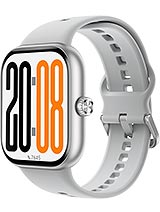
The Watch X5 is an accessible health-focused wearable featuring a 1.97-inch AMOLED display for clear data visualization and robust GPS, GLONASS, BDS, GALILEO, QZSS for precise activity tracking, aimed at budget-conscious fitness enthusiasts. Released in November 2025, it competes with entry-to-mid-range smartwatches like the Amazfit Bip 5 and older Fitbit models.
From a wearable tech perspective, the Watch X5 enters a crowded market segment where differentiation often comes down to specific feature sets and pricing. Its focus on core health monitoring and outdoor activity tracking at an approximate 60 EUR price point makes it an interesting proposition for those who prioritize function over extensive smart features. The device signals a clear intention to serve users who want reliable data without the complexity or cost of a full-fledged smartwatch ecosystem.
Once paired, the companion app guides users through essential configurations, including personal health metrics, notification preferences, and watch face customization. The absence of WLAN means all data synchronization and software updates occur over the Bluetooth connection, which can be slower for larger files but is generally sufficient for health data. This streamlined approach minimizes potential points of failure and simplifies the user experience, particularly for those less tech-savvy.
Compared to more complex Wear OS or watchOS devices, which often involve extensive account logins and multiple app permissions during setup, the Watch X5 offers a comparatively swift and straightforward onboarding. This simplicity is a hallmark of devices running a Proprietary OS, a custom-developed operating system built by a manufacturer for specific hardware, often used in low-power wearables or feature phones. It avoids the potential for bloatware or unnecessary background processes, contributing to the watch's overall efficiency.
This design choice means the Watch X5 does not offer standalone calling or direct internet access from the wrist, a feature found in higher-end smartwatches in late 2025. However, it does include NFC, enabling convenient contactless payments, a crucial feature for many users who appreciate leaving their wallet behind during a run or quick trip to the store. The integration of GPS, GLONASS, BDS, GALILEO, QZSS provides robust and accurate multi-GNSS positioning for outdoor activities, ensuring precise tracking of routes and distances even without a phone present.
Contrast this with the deep, seamless integration offered by devices like the Apple Watch within the iOS ecosystem or Samsung's Galaxy Watch with its Android counterparts. Those platforms allow for app installations directly on the watch, advanced communication, and often, cellular independence. The Watch X5, by design, focuses its integration on health data syncing and basic smartphone interactions, aiming for reliability and battery efficiency over expansive smart features. Its strength lies in being a consistent health companion rather than a miniature smartphone on the wrist.
Consumers should view the Watch X5 as a consumable item rather than an investment. Its value proposition is in its immediate utility and performance, not in its long-term asset retention. Depreciation will likely be steep within the first year, mirroring the trajectory of many budget-friendly electronics. The relatively basic 360 mAh Li-Ion battery and lack of advanced processing power further contribute to this expected depreciation, as battery health and performance are key factors in a wearable's perceived value over time.
For comparison, premium smartwatches from established brands like Apple or Samsung, often featuring more robust materials like titanium or sapphire glass and extensive software support, might retain 30-50% of their value after a year. The Watch X5, with its aluminum alloy frame and glass front combined with a plastic back, aims for a balance of durability and cost-effectiveness. However, this material choice, coupled with its aggressive pricing, places it firmly in the category of devices where the initial purchase price represents the bulk of its total value to the user.
Screen protectors for the 1.97-inch AMOLED display should also be readily available, given the watch's standard rectangular form factor and popular screen size. Protecting the glass front is crucial for maintaining readability and preventing scratches from daily wear. The absence of a 3.5mm jack or a universal USB port for accessories means that charging will rely on a proprietary cable, which is a common practice for water-resistant wearables to maintain their 5ATM water resistant and IP68 dust tight and water resistant ratings. 5ATM water resistant is a pressure rating signifying that a device can withstand pressure equivalent to being at a depth of 50 meters, making it suitable for swimming. IP68 further confirms its ability to be immersed up to 1.5m for 30 minutes.
This approach to accessories contrasts with some higher-end smartwatches that might feature proprietary strap connections or offer a wider range of first-party accessories. The Watch X5's design appears to embrace a more open, consumer-friendly strategy for customization, which is a significant advantage for budget-conscious buyers. However, the proprietary charging cable means users must be careful not to lose it, as replacements might not be as universally available as a standard USB-C cable.
The exclusion of a power adapter has become a standard practice across the consumer electronics industry by November 2025, even for budget devices, driven by environmental considerations and cost-saving measures. Users are expected to utilize existing USB power bricks or computer ports for charging. This streamlined packaging aligns with the device's value-oriented positioning, focusing resources on the core product rather than peripheral items.
Imagine unwrapping a compact, no-frills box that emphasizes the device itself. The focus is on getting the Watch X5 onto the user's wrist and connected as quickly as possible. This approach is typical for wearables in this category, where the primary goal is to deliver a functional product at an aggressive price point, rather than an elaborate unboxing spectacle. It reflects a practical understanding of what budget-conscious consumers prioritize.
Users can expect core functionalities such as detailed activity tracking (steps, calories, distance), various workout modes (running, cycling, swimming, etc.), continuous heart rate monitoring, sleep analysis, and blood oxygen (SpO2) tracking. The barometer, a hardware sensor that measures atmospheric pressure, is used to determine relative altitude and improve GPS positioning accuracy for navigation apps, enhancing outdoor activity tracking. Additional features might include stress monitoring, guided breathing exercises, and basic smart features like alarms, timers, and smartphone notifications.
This limited app selection is a deliberate trade-off. While it lacks the versatility of a full-fledged smartwatch, a proprietary OS often translates to better battery life and a more stable, less complex user experience. For individuals primarily interested in health and fitness data without the distraction of numerous third-party applications, this focused approach can be an advantage. It ensures that the device performs its core functions reliably and efficiently, without the potential for app-related bugs or excessive battery drain seen in more open ecosystems.
While the absence of cellular connectivity and WLAN means the Watch X5 isn't a standalone communication device, its Bluetooth 5.3, LE connection ensures efficient data syncing and reliable notification delivery from a paired smartphone. The inclusion of NFC for contactless payments adds a layer of modern convenience, allowing users to make quick transactions without needing their phone or wallet. This balance of advanced tracking capabilities and essential smart features makes it a compelling option for its price point.
Ultimately, the Watch X5 integrates seamlessly into the life of a user who prioritizes accurate health metrics and outdoor activity tracking over a vast app ecosystem or cellular independence. It functions as an excellent extension of a smartphone, providing critical data and notifications on the wrist. This focused integration makes it a strong contender for fitness enthusiasts, casual athletes, and anyone seeking a reliable, affordable health monitor without the complexities of a premium smartwatch. It delivers on its promise to be a capable digital companion for wellness.
From a wearable tech perspective, the Watch X5 enters a crowded market segment where differentiation often comes down to specific feature sets and pricing. Its focus on core health monitoring and outdoor activity tracking at an approximate 60 EUR price point makes it an interesting proposition for those who prioritize function over extensive smart features. The device signals a clear intention to serve users who want reliable data without the complexity or cost of a full-fledged smartwatch ecosystem.
Setting Up Your Digital Companion
Initial setup for the Watch X5 relies entirely on its Bluetooth 5.3, LE connectivity. Users connect the device to their smartphone via a companion application, a standard process for most wearables running a proprietary operating system. The low-energy Bluetooth standard ensures that the pairing process is efficient and consumes minimal power from both the watch's 360 mAh Li-Ion battery and the host phone.Once paired, the companion app guides users through essential configurations, including personal health metrics, notification preferences, and watch face customization. The absence of WLAN means all data synchronization and software updates occur over the Bluetooth connection, which can be slower for larger files but is generally sufficient for health data. This streamlined approach minimizes potential points of failure and simplifies the user experience, particularly for those less tech-savvy.
Compared to more complex Wear OS or watchOS devices, which often involve extensive account logins and multiple app permissions during setup, the Watch X5 offers a comparatively swift and straightforward onboarding. This simplicity is a hallmark of devices running a Proprietary OS, a custom-developed operating system built by a manufacturer for specific hardware, often used in low-power wearables or feature phones. It avoids the potential for bloatware or unnecessary background processes, contributing to the watch's overall efficiency.
Ecosystem Exclusive Features: A Question of Integration
The Watch X5's Proprietary OS dictates its ecosystem integration. Without dedicated cellular connectivity or WLAN, the device functions as a tethered extension of the smartphone. All notifications, weather updates, and more complex data processing are handled by the paired phone, then relayed to the watch via Bluetooth 5.3, LE.This design choice means the Watch X5 does not offer standalone calling or direct internet access from the wrist, a feature found in higher-end smartwatches in late 2025. However, it does include NFC, enabling convenient contactless payments, a crucial feature for many users who appreciate leaving their wallet behind during a run or quick trip to the store. The integration of GPS, GLONASS, BDS, GALILEO, QZSS provides robust and accurate multi-GNSS positioning for outdoor activities, ensuring precise tracking of routes and distances even without a phone present.
Contrast this with the deep, seamless integration offered by devices like the Apple Watch within the iOS ecosystem or Samsung's Galaxy Watch with its Android counterparts. Those platforms allow for app installations directly on the watch, advanced communication, and often, cellular independence. The Watch X5, by design, focuses its integration on health data syncing and basic smartphone interactions, aiming for reliability and battery efficiency over expansive smart features. Its strength lies in being a consistent health companion rather than a miniature smartphone on the wrist.
Resale Value Prediction: A Sunk Cost, Not an Investment
Devices in the 60 EUR price bracket, particularly those with a Proprietary OS and a plastic back construction, typically do not retain significant resale value. The rapid innovation cycle in wearable technology means that newer models with incremental improvements or more advanced sensor suites can quickly make previous generations seem outdated. The Watch X5, while offering solid features for its price, is unlikely to defy this trend.Consumers should view the Watch X5 as a consumable item rather than an investment. Its value proposition is in its immediate utility and performance, not in its long-term asset retention. Depreciation will likely be steep within the first year, mirroring the trajectory of many budget-friendly electronics. The relatively basic 360 mAh Li-Ion battery and lack of advanced processing power further contribute to this expected depreciation, as battery health and performance are key factors in a wearable's perceived value over time.
For comparison, premium smartwatches from established brands like Apple or Samsung, often featuring more robust materials like titanium or sapphire glass and extensive software support, might retain 30-50% of their value after a year. The Watch X5, with its aluminum alloy frame and glass front combined with a plastic back, aims for a balance of durability and cost-effectiveness. However, this material choice, coupled with its aggressive pricing, places it firmly in the category of devices where the initial purchase price represents the bulk of its total value to the user.
Accessory Compatibility: Standardized Simplicity
The Watch X5's physical dimensions of 45.7 x 40.2 x 10 mm and a lightweight 29 g suggest a design that allows for a good degree of accessory compatibility, particularly with straps. While the official specifications do not detail the strap mechanism, the commonality of quick-release pins in this segment implies that users will have a wide array of third-party strap options available. This allows for personalization and ensures that a broken strap doesn't render the device unusable.Screen protectors for the 1.97-inch AMOLED display should also be readily available, given the watch's standard rectangular form factor and popular screen size. Protecting the glass front is crucial for maintaining readability and preventing scratches from daily wear. The absence of a 3.5mm jack or a universal USB port for accessories means that charging will rely on a proprietary cable, which is a common practice for water-resistant wearables to maintain their 5ATM water resistant and IP68 dust tight and water resistant ratings. 5ATM water resistant is a pressure rating signifying that a device can withstand pressure equivalent to being at a depth of 50 meters, making it suitable for swimming. IP68 further confirms its ability to be immersed up to 1.5m for 30 minutes.
This approach to accessories contrasts with some higher-end smartwatches that might feature proprietary strap connections or offer a wider range of first-party accessories. The Watch X5's design appears to embrace a more open, consumer-friendly strategy for customization, which is a significant advantage for budget-conscious buyers. However, the proprietary charging cable means users must be careful not to lose it, as replacements might not be as universally available as a standard USB-C cable.
Unboxing Experience: The Essentials, Nothing More
Given the Watch X5's approximate 60 EUR price point, the unboxing experience is expected to be minimalist and functional. The package will almost certainly contain the Watch X5 unit itself, a proprietary charging cable, and a basic quick start guide or safety information. Users should not anticipate additional accessories like extra straps, screen protectors, or a power adapter.The exclusion of a power adapter has become a standard practice across the consumer electronics industry by November 2025, even for budget devices, driven by environmental considerations and cost-saving measures. Users are expected to utilize existing USB power bricks or computer ports for charging. This streamlined packaging aligns with the device's value-oriented positioning, focusing resources on the core product rather than peripheral items.
Imagine unwrapping a compact, no-frills box that emphasizes the device itself. The focus is on getting the Watch X5 onto the user's wrist and connected as quickly as possible. This approach is typical for wearables in this category, where the primary goal is to deliver a functional product at an aggressive price point, rather than an elaborate unboxing spectacle. It reflects a practical understanding of what budget-conscious consumers prioritize.
The App Store: A Curated, Limited Selection
The Watch X5's reliance on a Proprietary OS inherently defines its app ecosystem. Unlike Wear OS or watchOS devices that boast extensive third-party app stores, the Watch X5 will offer a curated selection of applications primarily developed by the manufacturer. These apps are tightly integrated with the watch's hardware, including its accelerometer, gyro, barometer, compass, heart rate, and SpO2 sensors.Users can expect core functionalities such as detailed activity tracking (steps, calories, distance), various workout modes (running, cycling, swimming, etc.), continuous heart rate monitoring, sleep analysis, and blood oxygen (SpO2) tracking. The barometer, a hardware sensor that measures atmospheric pressure, is used to determine relative altitude and improve GPS positioning accuracy for navigation apps, enhancing outdoor activity tracking. Additional features might include stress monitoring, guided breathing exercises, and basic smart features like alarms, timers, and smartphone notifications.
This limited app selection is a deliberate trade-off. While it lacks the versatility of a full-fledged smartwatch, a proprietary OS often translates to better battery life and a more stable, less complex user experience. For individuals primarily interested in health and fitness data without the distraction of numerous third-party applications, this focused approach can be an advantage. It ensures that the device performs its core functions reliably and efficiently, without the potential for app-related bugs or excessive battery drain seen in more open ecosystems.
Integration Conclusion: A Focused Companion
The Watch X5's integration strategy is clear: it excels as a dedicated health and fitness companion that intelligently leverages smartphone connectivity. Its robust suite of sensors—including accelerometer, gyro, barometer, compass, heart rate, and SpO2—combined with comprehensive multi-GNSS support (GPS, GLONASS, BDS, GALILEO, QZSS) positions it as a highly capable tracker for a wide range of activities. The 5ATM water resistant and IP68 dust tight and water resistant ratings further solidify its utility for active users, including swimmers.While the absence of cellular connectivity and WLAN means the Watch X5 isn't a standalone communication device, its Bluetooth 5.3, LE connection ensures efficient data syncing and reliable notification delivery from a paired smartphone. The inclusion of NFC for contactless payments adds a layer of modern convenience, allowing users to make quick transactions without needing their phone or wallet. This balance of advanced tracking capabilities and essential smart features makes it a compelling option for its price point.
Ultimately, the Watch X5 integrates seamlessly into the life of a user who prioritizes accurate health metrics and outdoor activity tracking over a vast app ecosystem or cellular independence. It functions as an excellent extension of a smartphone, providing critical data and notifications on the wrist. This focused integration makes it a strong contender for fitness enthusiasts, casual athletes, and anyone seeking a reliable, affordable health monitor without the complexities of a premium smartwatch. It delivers on its promise to be a capable digital companion for wellness.
Technical Specifications
| LAUNCH | |
|---|---|
| Announced | 2025, November 24 |
| Status | Available. Released 2025, November 24 |
| PLATFORM | |
| OS | Proprietary OS |
| BODY | |
| Dimensions | 45.7 x 40.2 x 10 mm (1.80 x 1.58 x 0.39 in) |
| Weight | 29 g (1.02 oz) |
| Build | Glass front, aluminum alloy frame, plastic back |
| SIM | No |
| Info | 5ATM water resistant IP68 dust tight and water resistant (immersible up to 1.5m for 30 min) |
| DISPLAY | |
| Type | AMOLED |
| Size | 1.97 inches |
| Resolution | 390 x 450 pixels (~302 ppi density) |
| MEMORY | |
| Card slot | No |
| SOUND | |
| Loudspeaker | Yes |
| 3.5mm jack | No |
| COMMS | |
| WLAN | No |
| Bluetooth | 5.3, LE |
| Positioning | GPS, GLONASS, BDS, GALILEO, QZSS |
| NFC | Yes |
| Radio | No |
| USB | No |
| NETWORK | |
| Technology | No cellular connectivity |
| 2G bands | N/A |
| 3G bands | N/A |
| 4G bands | N/A |
| Speed | No |
| GPRS | No |
| EDGE | No |
| FEATURES | |
| Sensors | Accelerometer, gyro, barometer, compass, heart rate, SpO2 |
| BATTERY | |
| Type | Li-Ion 360 mAh |
| MISC | |
| Display Type | AMOLED |
| Display Size | 1.97 inches |
| Resolution | 390 x 450 pixels (~302 ppi density) |
| Water Resistance | 5ATM water resistant, IP68 dust tight and water resistant (immersible up to 1.5m for 30 min) |
| Sensors | Accelerometer, gyro, barometer, compass, heart rate, SpO2 |
| Connectivity | Bluetooth 5.3, LE, GPS, GLONASS, BDS, GALILEO, QZSS, NFC |
| Battery | Li-Ion 360 mAh |
| Weight | 29 g (1.02 oz) |
| Operating System | Proprietary OS |
| Body Build | Glass front, aluminum alloy frame, plastic back |
| Colors | Black, White |
| Models | LWS-WB10 |
| Price | About 60 EUR |
| CAMERA | |
| Info | No |