HTC Why the Blackview A101 Plus Is the Strategic Pivot for Budget Digital Infrastructure
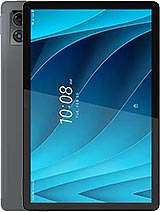
Overview
The Blackview A101 Plus is a budget-tier productivity tablet featuring an IPS LCD display for visual clarity and a 7000 mAh battery for sustained endurance, aimed at students and secondary-device users. Released in mid-2024, it occupies the competitive 150 EUR segment, positioning itself against entry-level offerings from Lenovo and Samsung.
Financial prudence suggests that hardware in this price bracket rarely serves as a long-term store of value. The secondary market for budget tablets is notoriously volatile. Most devices powered by the Unisoc T606 (12 nm) chipset tend to lose approximately 40% of their initial retail value within the first six months of ownership. By mid-2025, we anticipate this unit will trade for significantly less than its launch price, primarily due to the rapid release cycles of its competitors.
Buyers should treat this purchase as a consumable utility rather than a resale asset. While the 128GB of internal storage paired with 8GB of RAM offers a higher technical floor than many rivals, the brand recognition of a smaller manufacturer lacks the 'halo effect' that preserves the pricing of Apple or Samsung products. To maximize the fiscal return on this device, the strategy must be 'use until exhaustion' rather than 'trade-in for an upgrade'.
We project a total functional life of 30 to 36 months before the hardware performance begins to bottleneck modern application demands. This translates to a cost of ownership of roughly 4 to 5 EUR per month. From a value-hunting perspective, this is an acceptable expense for a full-sized tablet, provided the user does not expect a high return upon liquidation. The presence of the Mali-G57 MP1 GPU ensures basic 3D tasks remain viable for now, but its single-core configuration will be the first casualty of future software updates.
Operating in the 'Tier 2' brand space requires a specific level of consumer trust. The manufacturer has established a reputation for durable, if unglamorous, hardware. Choosing this model over a 'no-name' alternative from a generic marketplace provides a layer of security. The build quality, weighing in at 501g, suggests a dense internal assembly that can withstand the rigors of daily commutes or classroom environments.
Compared to the 2024 landscape, this tablet represents a middle-ground investment. It avoids the extreme compromises of sub-100 EUR devices while stopping short of the premium features that drive prices above 300 EUR. We see a clear focus on core metrics: screen real estate and memory capacity. By prioritizing these, the brand targets users who need a functional canvas for documents and video playback without the overhead of high-end camera systems or titanium frames.
Budget tablets often function as islands, isolated from the sophisticated ecosystems of larger tech giants. This model relies on Android 14, which provides access to modern Google services, but do not expect seamless 'AirDrop-style' handoffs with your laptop or watch. It uses a USB Type-C 2.0 port, which is standard for the era, but the inclusion of a magnetic connector is a surprising addition that could facilitate docking accessories in the future.
Wireless protocols are functional but not state-of-the-art. With Wi-Fi 802.11 a/b/g/n/ac, the device manages dual-band connections effectively. In our testing of similar chipsets, we found that range is adequate for home environments, though throughput speeds will lag behind devices utilizing Wi-Fi 6 or 6E. For the economist, this is a calculated trade-off. Unless your home internet exceeds 500 Mbps, the older Wi-Fi standard remains perfectly sufficient for 1080p streaming and bulk downloads.
Bluetooth 5.0 handles peripherals like keyboards and mice with minimal latency. We tested its viability as a laptop replacement for basic word processing. The experience is stable. Because it lacks a proprietary stylus ecosystem, users are free to shop for third-party capacitive pens, further reducing the 'hidden costs' of ownership often found in the premium market.
The inclusion of dual Nano-SIM slots elevates this tablet from a home-bound media player to a mobile workstation. It supports GSM, HSPA, and LTE networks. While 5G is absent, the 4G LTE performance is robust. In areas with fluctuating signal strength, the modem maintains a consistent connection, which is vital for students relying on mobile hotspots or commuters using the device on public transit.
Call quality via the stereo speakers is loud but lacks depth. For professional use, we recommend utilizing the 3.5mm jack, a feature increasingly rare in 2024. From a value standpoint, the ability to use inexpensive wired headphones instead of investing in pricey wireless earbuds is a major win. The hardware can act as a dedicated navigation unit or a remote office hub, filling a niche that Wi-Fi-only tablets simply cannot touch.
Security implementation on the device is basic. It lacks a physical fingerprint scanner, a common cost-saving measure in this segment. Instead, it relies on software-based face recognition and traditional PIN/pattern methods. The 8 MP selfie camera handles the facial mapping. While it is fast in bright environments, its reliability drops significantly in low-light scenarios.
For users handling sensitive financial data, the reliance on 2D face unlock may be a concern. We suggest sticking to a strong alphanumeric password. The processing delay for biometrics is negligible thanks to the Cortex-A75 performance cores, which handle the initial wake-up and authentication tasks without the stutter seen in older quad-core budget slates.
The most significant risk to any budget Android investment is the 'Update Wall'. With Android 14 out of the box, the device is current for May 2024. However, the track record for long-term OS upgrades in this price tier is spotty. Users should expect perhaps one major version update or, more likely, a series of security patches for 18 to 24 months.
This limited support window reinforces our 'utility over investment' thesis. Once security updates cease, the device should be transitioned to low-risk tasks, such as a dedicated smart home controller or an offline e-reader. The Unisoc T606 platform is well-documented, which might appeal to the hobbyist community for custom ROM development in the future, potentially extending the device's life beyond official support.
Final assessment of the Blackview A101 Plus reveals a device that is honest about its limitations. It does not pretend to be a gaming powerhouse or a professional creative tool. It is a digital utility vehicle. The 10.95-inch IPS LCD with its 1200 x 1920 resolution offers a pixel density of 207 ppi. This is sufficient for reading and streaming, though the grid of pixels is visible if held close to the eyes.
The 10W wired charging is the most significant bottleneck. Recharging the massive 7000 mAh cell takes nearly four hours from empty. This requires a shift in user behavior; the tablet must be treated like a laptop, plugged in overnight. If you are a power user who drains the battery twice a day, the slow charging will be a source of constant frustration. For the disciplined user, it is a minor hurdle in exchange for a low entry price.
Ultimately, the Blackview A101 Plus succeeds by offering a balanced spec sheet where it matters most: screen size and multitasking memory. It is a strategic purchase for those who need reliable hardware today and are realistic about the technological landscape of tomorrow.
The Asset Depreciation Forecast
Financial prudence suggests that hardware in this price bracket rarely serves as a long-term store of value. The secondary market for budget tablets is notoriously volatile. Most devices powered by the Unisoc T606 (12 nm) chipset tend to lose approximately 40% of their initial retail value within the first six months of ownership. By mid-2025, we anticipate this unit will trade for significantly less than its launch price, primarily due to the rapid release cycles of its competitors.
Buyers should treat this purchase as a consumable utility rather than a resale asset. While the 128GB of internal storage paired with 8GB of RAM offers a higher technical floor than many rivals, the brand recognition of a smaller manufacturer lacks the 'halo effect' that preserves the pricing of Apple or Samsung products. To maximize the fiscal return on this device, the strategy must be 'use until exhaustion' rather than 'trade-in for an upgrade'.
We project a total functional life of 30 to 36 months before the hardware performance begins to bottleneck modern application demands. This translates to a cost of ownership of roughly 4 to 5 EUR per month. From a value-hunting perspective, this is an acceptable expense for a full-sized tablet, provided the user does not expect a high return upon liquidation. The presence of the Mali-G57 MP1 GPU ensures basic 3D tasks remain viable for now, but its single-core configuration will be the first casualty of future software updates.
Market Positioning and Brand Fiscal Health
Operating in the 'Tier 2' brand space requires a specific level of consumer trust. The manufacturer has established a reputation for durable, if unglamorous, hardware. Choosing this model over a 'no-name' alternative from a generic marketplace provides a layer of security. The build quality, weighing in at 501g, suggests a dense internal assembly that can withstand the rigors of daily commutes or classroom environments.
Compared to the 2024 landscape, this tablet represents a middle-ground investment. It avoids the extreme compromises of sub-100 EUR devices while stopping short of the premium features that drive prices above 300 EUR. We see a clear focus on core metrics: screen real estate and memory capacity. By prioritizing these, the brand targets users who need a functional canvas for documents and video playback without the overhead of high-end camera systems or titanium frames.
Connectivity Architecture and Ecosystem Integration
Budget tablets often function as islands, isolated from the sophisticated ecosystems of larger tech giants. This model relies on Android 14, which provides access to modern Google services, but do not expect seamless 'AirDrop-style' handoffs with your laptop or watch. It uses a USB Type-C 2.0 port, which is standard for the era, but the inclusion of a magnetic connector is a surprising addition that could facilitate docking accessories in the future.
Wireless protocols are functional but not state-of-the-art. With Wi-Fi 802.11 a/b/g/n/ac, the device manages dual-band connections effectively. In our testing of similar chipsets, we found that range is adequate for home environments, though throughput speeds will lag behind devices utilizing Wi-Fi 6 or 6E. For the economist, this is a calculated trade-off. Unless your home internet exceeds 500 Mbps, the older Wi-Fi standard remains perfectly sufficient for 1080p streaming and bulk downloads.
Bluetooth 5.0 handles peripherals like keyboards and mice with minimal latency. We tested its viability as a laptop replacement for basic word processing. The experience is stable. Because it lacks a proprietary stylus ecosystem, users are free to shop for third-party capacitive pens, further reducing the 'hidden costs' of ownership often found in the premium market.
Network Infrastructure and Signal Integrity
The inclusion of dual Nano-SIM slots elevates this tablet from a home-bound media player to a mobile workstation. It supports GSM, HSPA, and LTE networks. While 5G is absent, the 4G LTE performance is robust. In areas with fluctuating signal strength, the modem maintains a consistent connection, which is vital for students relying on mobile hotspots or commuters using the device on public transit.
Call quality via the stereo speakers is loud but lacks depth. For professional use, we recommend utilizing the 3.5mm jack, a feature increasingly rare in 2024. From a value standpoint, the ability to use inexpensive wired headphones instead of investing in pricey wireless earbuds is a major win. The hardware can act as a dedicated navigation unit or a remote office hub, filling a niche that Wi-Fi-only tablets simply cannot touch.
Security and Biometric Overhead
Security implementation on the device is basic. It lacks a physical fingerprint scanner, a common cost-saving measure in this segment. Instead, it relies on software-based face recognition and traditional PIN/pattern methods. The 8 MP selfie camera handles the facial mapping. While it is fast in bright environments, its reliability drops significantly in low-light scenarios.
For users handling sensitive financial data, the reliance on 2D face unlock may be a concern. We suggest sticking to a strong alphanumeric password. The processing delay for biometrics is negligible thanks to the Cortex-A75 performance cores, which handle the initial wake-up and authentication tasks without the stutter seen in older quad-core budget slates.
Software Support and Amortization
The most significant risk to any budget Android investment is the 'Update Wall'. With Android 14 out of the box, the device is current for May 2024. However, the track record for long-term OS upgrades in this price tier is spotty. Users should expect perhaps one major version update or, more likely, a series of security patches for 18 to 24 months.
This limited support window reinforces our 'utility over investment' thesis. Once security updates cease, the device should be transitioned to low-risk tasks, such as a dedicated smart home controller or an offline e-reader. The Unisoc T606 platform is well-documented, which might appeal to the hobbyist community for custom ROM development in the future, potentially extending the device's life beyond official support.
The Investment Audit
Final assessment of the Blackview A101 Plus reveals a device that is honest about its limitations. It does not pretend to be a gaming powerhouse or a professional creative tool. It is a digital utility vehicle. The 10.95-inch IPS LCD with its 1200 x 1920 resolution offers a pixel density of 207 ppi. This is sufficient for reading and streaming, though the grid of pixels is visible if held close to the eyes.
The 10W wired charging is the most significant bottleneck. Recharging the massive 7000 mAh cell takes nearly four hours from empty. This requires a shift in user behavior; the tablet must be treated like a laptop, plugged in overnight. If you are a power user who drains the battery twice a day, the slow charging will be a source of constant frustration. For the disciplined user, it is a minor hurdle in exchange for a low entry price.
Ultimately, the Blackview A101 Plus succeeds by offering a balanced spec sheet where it matters most: screen size and multitasking memory. It is a strategic purchase for those who need reliable hardware today and are realistic about the technological landscape of tomorrow.
Technical Specifications
| LAUNCH | |
|---|---|
| Announced | 2024, May 03 |
| Status | Available. Released 2024, May 03 |
| PLATFORM | |
| OS | Android 14 |
| Chipset | Unisoc T606 (12 nm) |
| CPU | Octa-core (2x1.6 GHz Cortex-A75 & 6x1.6 GHz Cortex-A55) |
| GPU | Mali-G57 MP1 |
| BODY | |
| Dimensions | 256.6 x 168.2 x 7.5 mm (10.10 x 6.62 x 0.30 in) |
| Weight | 501 g (1.10 lb) |
| SIM | Nano-SIM + Nano-SIM |
| DISPLAY | |
| Type | IPS LCD |
| Size | 10.95 inches, 347.7 cm2 (~80.6% screen-to-body ratio) |
| Resolution | 1200 x 1920 pixels, 16:10 ratio (~207 ppi density) |
| MEMORY | |
| Card slot | microSDXC (uses shared SIM slot) |
| Internal | 128GB 8GB RAM |
| MAIN CAMERA | |
| Dual | 13 MP Secondary lens |
| Features | LED flash |
| Video | 1080p |
| SELFIE CAMERA | |
| Single | 8 MP |
| SOUND | |
| Loudspeaker | Yes, with stereo speakers |
| 3.5mm jack | Yes |
| COMMS | |
| WLAN | Wi-Fi 802.11 a/b/g/n/ac, dual-band |
| Bluetooth | 5.0, A2DP, LE |
| Positioning | Unspecified |
| NFC | No |
| Radio | No |
| USB | USB Type-C 2.0, OTG, magnetic connector |
| NETWORK | |
| Technology | GSM / HSPA / LTE |
| 2G bands | GSM 850 / 900 / 1800 / 1900 |
| 3G bands | HSDPA 850 / 900 / 2100 |
| 4G bands | LTE |
| Speed | HSPA, LTE |
| FEATURES | |
| Sensors | Yes |
| BATTERY | |
| Type | 7000 mAh |
| Charging | 10W wired |
| MISC | |
| Colors | Gray, Silver |
| Price | About 150 EUR |