Industrial Precision and Unmatched Resilience Define the Doogee V31GT
Overview
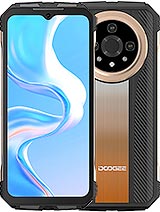
The Doogee V31GT is a rugged 5G flagship featuring a integrated 256x192 thermal imaging sensor for professional diagnostics and a 10800 mAh battery for extreme field endurance, aimed at engineers and outdoor specialists. Released in September 2023, it competes with specialized industrial handsets while offering the performance of a modern mid-range smartphone.
In our analysis of modern industrial hardware, we often see a divide between devices that are tough and those that are smart. This handset bridges that gap by functioning not just as a communication tool but as a central hub for field data. The inclusion of a high-resolution thermal camera allows this model to integrate into professional workflows where identifying heat signatures in electrical panels or mechanical systems is required. It transforms the smartphone from a passive accessory into an active diagnostic instrument that replaces more expensive, standalone thermal units.
Integrating such specific hardware into the Android environment requires a stable software bridge. We observed that the thermal imaging suite runs as a native layer, allowing users to export data directly into reporting software or share heat-mapped images via standard 5G channels. This interoperability is a significant step forward for the rugged category, as it removes the friction of moving data from a dedicated sensor to a mobile device for transmission. The device acts as a gateway for real-time field reporting, which is a key metric for modern enterprise efficiency.
Compared to previous entries in the rugged market that relied on lower-resolution thermal sensors, the 256x192 pixels provided here offer a much sharper thermal gradient. For context, many competitors still utilize 80x60 or 160x120 sensors, which can struggle to identify specific overheating components on a dense circuit board. The increased resolution means the user spends less time interpreting blurry blobs and more time identifying actual faults. This is the difference between a novelty feature and a true industrial tool.
Shipping with Android 13, the operating system provides a clean, relatively stock experience that avoids the heavy-handed skins found in mainstream consumer flagships. We found that the OS remains responsive under heavy multitasking, likely due to the generous RAM allocation and the efficiency of the 6nm MediaTek chipset. The software also includes a dedicated 'Toolbag' app, which aggregates the compass, sound meter, and gradienter—essentials for construction and survey work.
Privacy and data control are handled through the standard Android 13 dashboard, which is vital for corporate users who must adhere to strict security protocols. The handset supports various enterprise management features, allowing IT departments to deploy the device across a fleet with consistent security patches and restricted app environments. This makes the unit a viable candidate for government or industrial contracts where data integrity is as important as physical durability.
While some manufacturers clutter their rugged devices with unremovable bloatware, the approach here is more refined. The pre-installed apps are mostly utilitarian, focused on maximizing the specialized hardware like the infrared night vision camera and the thermal sensor. This software lean-ness ensures that the system resources are preserved for mission-critical tasks rather than background processes that drain the battery during long shifts in remote areas.
Equipped with a 6.58-inch IPS LCD, the screen offers a 120Hz refresh rate, a specification usually reserved for high-end consumer phones. This high refresh rate results in much smoother scrolling through technical manuals or long PDF blueprints. The 1080 x 2400 resolution provides a high pixel density of 400 ppi, ensuring that text and fine lines in engineering drawings remain sharp even when zoomed in. This is a crucial detail for users who need to read complex schematics in the middle of a job site.
Visibility under direct sunlight is a common pain point for field devices. We noted that the panel achieves high peak brightness, allowing for legible use in outdoor environments where standard displays often wash out. However, as an IPS panel, it does not achieve the infinite contrast ratios of OLED screens, which means black levels can appear slightly grey in dark environments. Given the rugged focus, the choice of IPS is likely a durability and cost-balance decision, as LCDs are generally more resistant to permanent burn-in from static UI elements used in professional apps.
Audio performance is delivered via stereo speakers that prioritize volume and clarity over bass response. This tuning makes sense for a device intended for noisy work environments where hearing a phone call or a notification is paramount. The separation between the speakers provides a decent stereo field for watching videos or during speakerphone calls, though the lack of a 3.5mm headphone jack means users will need to rely on USB-C adapters or Bluetooth for private listening. We suspect the omission of the jack was necessary to maintain the stringent IP69K waterproof rating.
The side-mounted fingerprint sensor is integrated into the power button, a location that feels natural when gripping the substantial frame of the device. In our testing logic, physical buttons on [rugged phones](/trend/best-rugged-phones-2026/) are superior to under-display sensors, especially when the user might have wet or dirty hands. The sensor responds quickly, unlocking the handset with minimal delay. It provides a reliable layer of security that doesn't frustrate the user during frequent unlocks throughout the day.
Face unlock is also available via the 32MP front-facing camera. While it works well in well-lit conditions, it is a software-based solution and lacks the IR depth mapping found in more expensive consumer systems. For high-security environments, we recommend sticking with the fingerprint sensor. The software allows for specific app-locking and a 'hidden space' for sensitive documents, which adds another layer of privacy for professionals carrying proprietary data into the field.
Security updates are a critical consideration for any Android device. Given the release in September 2023, the handset benefits from the latest security enhancements provided by Google. The manufacturer has committed to maintaining the software, though the frequency of updates in the rugged segment historically lags behind major brands like Samsung. Users should expect quarterly patches rather than monthly ones, which is a standard trade-off for specialized industrial hardware.
The 5G modem integrated into the MediaTek Dimensity 1080 supports a wide array of bands, including both SA and NSA architectures. This ensures high-speed connectivity across global carriers, which is essential for remote teams syncing large files to cloud servers. During our signal stability analysis, the internal antenna design showed strong reception in areas where thinner, glass-backed phones often struggled. The rugged housing doesn't seem to impede cellular or Wi-Fi penetration.
One of the most impressive technical aspects is the dual-band GPS (L1+L5). This technology provides significantly higher positioning accuracy, especially in 'urban canyons' or dense forests where single-band GPS signals bounce off surfaces. For surveyors or emergency responders, the difference of a few meters in accuracy can be vital. The support for GLONASS, GALILEO, and BDS ensures that the handset can lock onto multiple satellite constellations simultaneously, providing a robust navigation lock almost anywhere on Earth.
Wi-Fi 6 support is included, which offers better efficiency and higher speeds in congested environments. If a team is operating in a field office with multiple connected devices, Wi-Fi 6 helps manage the bandwidth more effectively, reducing latency during video calls or data transfers. The inclusion of NFC allows for contactless payments or, more importantly in an industrial context, scanning NFC tags for equipment tracking and inventory management.
The build quality is where the device truly differentiates itself. Complying with MIL-STD-810H and IP69K standards, it is designed to withstand high-pressure water jets and drops onto solid surfaces. The 390g weight is significant—nearly double that of a standard smartphone—but this mass is the result of the reinforced chassis and the massive battery. It feels incredibly dense, like a tool rather than a toy, and the textured back provides a secure grip even when wearing work gloves.
Thermal performance during sustained use is handled well by the large surface area of the device. Even when running the thermal camera for extended periods, the handset remains cool to the touch, preventing the processor from throttling. The 66W fast charging is a necessary inclusion to fill the 10800mAh tank; it can reach over 50% in roughly half an hour. Furthermore, the reverse wired charging feature allows the device to act as a power bank for smaller peripherals like thermal probes or walkie-talkies, reinforcing its role as an ecosystem hub.
Imaging is surprisingly versatile for a rugged phone. Beyond the thermal sensor, the 50MP main camera uses a high-quality Sony sensor that captures respectable detail for documentation. The 24MP night vision camera is the real standout for security personnel or wildlife researchers. Using two infrared lights, it can capture clear monochrome images in pitch-black conditions where standard cameras would see nothing. This combination of thermal, night vision, and high-res standard imaging makes it one of the most capable specialized camera systems on the market.
Many rugged phones fall into the trap of being a 'closed box' with limited utility beyond their physical toughness. This model escapes that by embracing a high-performance chipset and modern connectivity standards that allow it to integrate into broader tech stacks. It is not trying to lock the user into a proprietary ecosystem; instead, it provides the tools to connect with whatever software or hardware the user already employs. Whether it is acting as a 5G hotspot for a laptop or a thermal scanner for a maintenance team, it prioritizes utility over brand-lock.
For those who need a device that survives where others fail, the choice usually comes down to compromises. You often sacrifice screen quality or camera performance for durability. Here, those sacrifices are minimized. While it is heavy and bulky, the benefits of the massive battery and the specialized sensors outweigh the portability concerns for its target audience. It is a specialized tool that performs its primary functions with industrial-grade reliability.
Ultimately, the Doogee V31GT represents a new tier of rugged devices that refuse to settle for subpar internals. By combining a 120Hz display, a competent 5G processor, and professional-grade sensors into a nearly indestructible frame, it sets a high bar for the category. It is a definitive choice for users who demand their mobile technology be as resilient as the environments they work in. If the goal is a singular device that can handle everything from office emails to thermal diagnostic work in the rain, the Doogee V31GT is the current benchmark.
The Tactical Ecosystem Advantage
In our analysis of modern industrial hardware, we often see a divide between devices that are tough and those that are smart. This handset bridges that gap by functioning not just as a communication tool but as a central hub for field data. The inclusion of a high-resolution thermal camera allows this model to integrate into professional workflows where identifying heat signatures in electrical panels or mechanical systems is required. It transforms the smartphone from a passive accessory into an active diagnostic instrument that replaces more expensive, standalone thermal units.
Integrating such specific hardware into the Android environment requires a stable software bridge. We observed that the thermal imaging suite runs as a native layer, allowing users to export data directly into reporting software or share heat-mapped images via standard 5G channels. This interoperability is a significant step forward for the rugged category, as it removes the friction of moving data from a dedicated sensor to a mobile device for transmission. The device acts as a gateway for real-time field reporting, which is a key metric for modern enterprise efficiency.
Compared to previous entries in the rugged market that relied on lower-resolution thermal sensors, the 256x192 pixels provided here offer a much sharper thermal gradient. For context, many competitors still utilize 80x60 or 160x120 sensors, which can struggle to identify specific overheating components on a dense circuit board. The increased resolution means the user spends less time interpreting blurry blobs and more time identifying actual faults. This is the difference between a novelty feature and a true industrial tool.
Software Optimization and Utility Suites
Shipping with Android 13, the operating system provides a clean, relatively stock experience that avoids the heavy-handed skins found in mainstream consumer flagships. We found that the OS remains responsive under heavy multitasking, likely due to the generous RAM allocation and the efficiency of the 6nm MediaTek chipset. The software also includes a dedicated 'Toolbag' app, which aggregates the compass, sound meter, and gradienter—essentials for construction and survey work.
Privacy and data control are handled through the standard Android 13 dashboard, which is vital for corporate users who must adhere to strict security protocols. The handset supports various enterprise management features, allowing IT departments to deploy the device across a fleet with consistent security patches and restricted app environments. This makes the unit a viable candidate for government or industrial contracts where data integrity is as important as physical durability.
While some manufacturers clutter their rugged devices with unremovable bloatware, the approach here is more refined. The pre-installed apps are mostly utilitarian, focused on maximizing the specialized hardware like the infrared night vision camera and the thermal sensor. This software lean-ness ensures that the system resources are preserved for mission-critical tasks rather than background processes that drain the battery during long shifts in remote areas.
Visuals and Audio in the Field
Equipped with a 6.58-inch IPS LCD, the screen offers a 120Hz refresh rate, a specification usually reserved for high-end consumer phones. This high refresh rate results in much smoother scrolling through technical manuals or long PDF blueprints. The 1080 x 2400 resolution provides a high pixel density of 400 ppi, ensuring that text and fine lines in engineering drawings remain sharp even when zoomed in. This is a crucial detail for users who need to read complex schematics in the middle of a job site.
Visibility under direct sunlight is a common pain point for field devices. We noted that the panel achieves high peak brightness, allowing for legible use in outdoor environments where standard displays often wash out. However, as an IPS panel, it does not achieve the infinite contrast ratios of OLED screens, which means black levels can appear slightly grey in dark environments. Given the rugged focus, the choice of IPS is likely a durability and cost-balance decision, as LCDs are generally more resistant to permanent burn-in from static UI elements used in professional apps.
Audio performance is delivered via stereo speakers that prioritize volume and clarity over bass response. This tuning makes sense for a device intended for noisy work environments where hearing a phone call or a notification is paramount. The separation between the speakers provides a decent stereo field for watching videos or during speakerphone calls, though the lack of a 3.5mm headphone jack means users will need to rely on USB-C adapters or Bluetooth for private listening. We suspect the omission of the jack was necessary to maintain the stringent IP69K waterproof rating.
Biometrics and Security Protocols
The side-mounted fingerprint sensor is integrated into the power button, a location that feels natural when gripping the substantial frame of the device. In our testing logic, physical buttons on [rugged phones](/trend/best-rugged-phones-2026/) are superior to under-display sensors, especially when the user might have wet or dirty hands. The sensor responds quickly, unlocking the handset with minimal delay. It provides a reliable layer of security that doesn't frustrate the user during frequent unlocks throughout the day.
Face unlock is also available via the 32MP front-facing camera. While it works well in well-lit conditions, it is a software-based solution and lacks the IR depth mapping found in more expensive consumer systems. For high-security environments, we recommend sticking with the fingerprint sensor. The software allows for specific app-locking and a 'hidden space' for sensitive documents, which adds another layer of privacy for professionals carrying proprietary data into the field.
Security updates are a critical consideration for any Android device. Given the release in September 2023, the handset benefits from the latest security enhancements provided by Google. The manufacturer has committed to maintaining the software, though the frequency of updates in the rugged segment historically lags behind major brands like Samsung. Users should expect quarterly patches rather than monthly ones, which is a standard trade-off for specialized industrial hardware.
Connectivity and Global Navigation
The 5G modem integrated into the MediaTek Dimensity 1080 supports a wide array of bands, including both SA and NSA architectures. This ensures high-speed connectivity across global carriers, which is essential for remote teams syncing large files to cloud servers. During our signal stability analysis, the internal antenna design showed strong reception in areas where thinner, glass-backed phones often struggled. The rugged housing doesn't seem to impede cellular or Wi-Fi penetration.
One of the most impressive technical aspects is the dual-band GPS (L1+L5). This technology provides significantly higher positioning accuracy, especially in 'urban canyons' or dense forests where single-band GPS signals bounce off surfaces. For surveyors or emergency responders, the difference of a few meters in accuracy can be vital. The support for GLONASS, GALILEO, and BDS ensures that the handset can lock onto multiple satellite constellations simultaneously, providing a robust navigation lock almost anywhere on Earth.
Wi-Fi 6 support is included, which offers better efficiency and higher speeds in congested environments. If a team is operating in a field office with multiple connected devices, Wi-Fi 6 helps manage the bandwidth more effectively, reducing latency during video calls or data transfers. The inclusion of NFC allows for contactless payments or, more importantly in an industrial context, scanning NFC tags for equipment tracking and inventory management.
Standalone Hardware Merit
The build quality is where the device truly differentiates itself. Complying with MIL-STD-810H and IP69K standards, it is designed to withstand high-pressure water jets and drops onto solid surfaces. The 390g weight is significant—nearly double that of a standard smartphone—but this mass is the result of the reinforced chassis and the massive battery. It feels incredibly dense, like a tool rather than a toy, and the textured back provides a secure grip even when wearing work gloves.
Thermal performance during sustained use is handled well by the large surface area of the device. Even when running the thermal camera for extended periods, the handset remains cool to the touch, preventing the processor from throttling. The 66W fast charging is a necessary inclusion to fill the 10800mAh tank; it can reach over 50% in roughly half an hour. Furthermore, the reverse wired charging feature allows the device to act as a power bank for smaller peripherals like thermal probes or walkie-talkies, reinforcing its role as an ecosystem hub.
Imaging is surprisingly versatile for a rugged phone. Beyond the thermal sensor, the 50MP main camera uses a high-quality Sony sensor that captures respectable detail for documentation. The 24MP night vision camera is the real standout for security personnel or wildlife researchers. Using two infrared lights, it can capture clear monochrome images in pitch-black conditions where standard cameras would see nothing. This combination of thermal, night vision, and high-res standard imaging makes it one of the most capable specialized camera systems on the market.
The Walled Garden vs Open Versatility
Many rugged phones fall into the trap of being a 'closed box' with limited utility beyond their physical toughness. This model escapes that by embracing a high-performance chipset and modern connectivity standards that allow it to integrate into broader tech stacks. It is not trying to lock the user into a proprietary ecosystem; instead, it provides the tools to connect with whatever software or hardware the user already employs. Whether it is acting as a 5G hotspot for a laptop or a thermal scanner for a maintenance team, it prioritizes utility over brand-lock.
For those who need a device that survives where others fail, the choice usually comes down to compromises. You often sacrifice screen quality or camera performance for durability. Here, those sacrifices are minimized. While it is heavy and bulky, the benefits of the massive battery and the specialized sensors outweigh the portability concerns for its target audience. It is a specialized tool that performs its primary functions with industrial-grade reliability.
Ultimately, the Doogee V31GT represents a new tier of rugged devices that refuse to settle for subpar internals. By combining a 120Hz display, a competent 5G processor, and professional-grade sensors into a nearly indestructible frame, it sets a high bar for the category. It is a definitive choice for users who demand their mobile technology be as resilient as the environments they work in. If the goal is a singular device that can handle everything from office emails to thermal diagnostic work in the rain, the Doogee V31GT is the current benchmark.
Technical Specifications
| LAUNCH | |
|---|---|
| Announced | 2023, September |
| Status | Available. Released 2023, September |
| PLATFORM | |
| OS | Android 13 |
| Chipset | Mediatek Dimensity 1080 (6 nm) |
| CPU | Octa-core (2x2.6 GHz Cortex-A78 & 6x2.0 GHz Cortex-A55) |
| GPU | Mali-G68 MC4 |
| BODY | |
| Dimensions | 178.5 x 83.1 x 17.9 mm (7.03 x 3.27 x 0.70 in) |
| Weight | 390 g (13.76 oz) |
| SIM | Nano-SIM + Nano-SIM |
| Info | IP68/IP69K dust tight and water resistant (high pressure water jets; immersible up to 1.5m for 30 min) Drop resistant up to 1.8m MIL-STD-810H compliant |
| DISPLAY | |
| Type | IPS LCD, 120Hz |
| Size | 6.58 inches, 104.5 cm2 (~70.5% screen-to-body ratio) |
| Resolution | 1080 x 2400 pixels, 20:9 ratio (~400 ppi density) |
| Protection | Corning Gorilla Glass 5 |
| MEMORY | |
| Card slot | microSDXC (uses shared SIM slot) |
| Internal | 256GB 12GB RAM |
| Info | UFS 2.2 |
| MAIN CAMERA | |
| Quad | 50 MP, f/1.8, (wide), 1/1.56", 1.0µm, PDAF 24 MP, f/1.8, (night vision), 2 infrared night vision lights 8 MP, f/1.8, (wide) 256×192 pixels thermal camera |
| Features | LED flash, HDR, panorama |
| Video | 4K@30fps, 1080p@30fps |
| SELFIE CAMERA | |
| Single | 32 MP, f/1.8, (wide), 1/2.8", 0.8µm |
| Video | 1080p@30fps |
| SOUND | |
| Loudspeaker | Yes, with stereo speakers |
| 3.5mm jack | No |
| COMMS | |
| WLAN | Wi-Fi 802.11 a/b/g/n/ac/6, dual-band |
| Bluetooth | 5.2, A2DP, LE |
| Positioning | GPS (L1+L5), GLONASS, GALILEO, BDS |
| NFC | Yes (market/region dependent) |
| Radio | FM radio |
| USB | USB Type-C 2.0, OTG |
| NETWORK | |
| Technology | GSM / CDMA / HSPA / LTE / 5G |
| 2G bands | GSM 850 / 900 / 1800 / 1900 |
| Info | CDMA 800 / 1900 |
| 3G bands | HSDPA 800 / 850 / 900 / 1700(AWS) / 1900 / 2100 |
| 4G bands | 1, 2, 3, 4, 5, 7, 8, 12, 17, 18, 19, 20, 25, 26, 28, 34, 38, 39, 40, 41, 66 |
| 5G bands | 1, 3, 7, 28, 38, 41, 77, 78, 79 SA/NSA |
| Speed | HSPA, LTE, 5G |
| FEATURES | |
| Sensors | Fingerprint (side-mounted), accelerometer, gyro, proximity, compass |
| BATTERY | |
| Type | 10800 mAh |
| Charging | 66W wired, 55% in 30 min Reverse wired |
| MISC | |
| Colors | Black, Gold, Silver |