Inflation Busting Value - Why the Oscal Flat 2 Dominates the Entry Level Segment
Overview
The Oscal Flat 2 is a budget smartphone designed for cost-conscious consumers featuring 128GB or 256GB of internal storage for massive file capacity and a 90Hz refresh rate display for smoother scrolling, aimed at students and essential workers. Released in early 2025, it competes with the likes of the Redmi A series and Infinix Smart lineup by prioritizing physical durability and long-term battery health over raw processing speed.
When we look at the spec sheet, the storage configuration immediately stands out as an anomaly in the sub-$150 market. Offering up to 256GB of storage paired with 6GB of RAM suggests that this device targets longevity through capacity. While many rivals still linger at 64GB or 128GB, this handset provides enough headroom for years of photos and apps without requiring constant cache clearing. It is a strategic move that addresses the primary pain point of budget users: the dreaded 'storage full' notification.
The display choice reflects a similar calculated trade-off. We find an IPS LCD panel with a 90Hz refresh rate, which is a significant step up from the standard 60Hz found in ultra-cheap models. However, the resolution sits at 720 x 1612 pixels. From a value hunter's perspective, this lower resolution is actually a benefit for the Unisoc T606 chipset, as it requires fewer resources to drive the screen, leading to a snappier interface despite the modest processor. The 450 nits peak brightness is sufficient for indoor use, though users will find themselves squinting under direct January sunlight.
Comparing this to previous entry-level models, the inclusion of a high refresh rate at this price floor is a win for the user experience. It masks some of the micro-stutters inherent in budget silicon. While the pixel density of 269 ppi won't win any awards for sharpness, the color reproduction on this LCD is respectable for social media and video streaming.
No device reaches this price point without significant compromises, and here, the charging speed is the most glaring bottleneck. The 5000 mAh battery is generous, but the 10W wired charging is archaic by 2025 standards. In our analysis, a full charge will likely take over three hours. For a user who forgets to plug in overnight, this slow intake becomes a major logistical hurdle. It is clear that Oscal prioritized battery longevity (rated for 1100 cycles) over daily convenience.
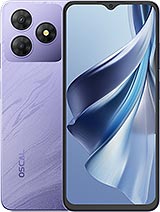
We also see a reduction in secondary camera hardware. The back of the handset features a layout that mimics modern triple-camera setups, but the reality is a single 13 MP wide sensor. The other 'lenses' are largely decorative or low-res auxiliary sensors that add little to the actual photographic utility. This is a common industry tactic to maintain a 'premium' look while keeping costs low. Similarly, the lack of NFC means no contactless payments, a feature increasingly standard even in mid-range [budget phones](/trend/best-budget-phones-2026/).
Finally, the 12nm manufacturing process of the Unisoc T606 is dated. While efficient enough for basic tasks, it lacks the power efficiency of newer 6nm or 4nm chips found in slightly more expensive alternatives. This means the phone will work harder—and consume more power—during heavy multi-tasking compared to a more modern SoC. However, for a user whose daily routine consists of WhatsApp, YouTube, and light browsing, this remains a secondary concern.
One of the most surprising inclusions is the EU Label Free-fall Class A rating, indicating the device survived 270 falls during testing. This level of structural integrity is rare in the budget space, where plastic frames often crack under minimal stress. The handset utilizes a Mohs level 5 screen protection, suggesting it can withstand scratches from common metal objects like keys or coins better than standard glass. For a budget buyer, this durability translates directly to a longer lifecycle and less money spent on screen repairs.
The repairability of the device is rated as Class B, which is commendable. This suggests a modular internal layout where the battery and screen can be replaced with standard tools. In an era of glued-shut flagships, this accessibility is a breath of fresh air for those who prefer to maintain their hardware rather than replace it. The 1100-cycle battery rating further supports this 'buy once, use long' philosophy, as the cell retains 80% capacity for nearly three years of daily charging.
Users should feel confident using the phone without a bulky case, given the tested drop resistance. The ripple patterns on the back provide a tactile grip that feels more secure than the slippery glass surfaces of more expensive phones. It is a practical design for a practical user.
Thermal management is often overlooked in the budget tier, but it is critical for longevity. The Unisoc T606 features two Cortex-A75 performance cores and six Cortex-A55 efficiency cores. Because these cores are clocked at a modest 1.6 GHz, they generate very little heat during operation. Even during extended 1080p video playback or light gaming, the handset remains cool to the touch. This prevents thermal throttling, ensuring that performance doesn't degrade over an hour of use.
During the charging process, the 10W limit actually acts as a thermal safeguard. Rapid charging generates significant heat, which degrades lithium-ion cells. By capping the intake at 10W, the internal temperature stays low, protecting the battery's chemistry. While frustrating for the user's schedule, this slow-and-steady approach is the secret behind the 1100-cycle longevity claim.
In our assessment, even during summer months or in warmer climates, this device is unlikely to overheat during GPS navigation. The low-power display and conservative CPU clocks are perfectly balanced to keep the chassis temperature well within comfortable limits.
The audio experience is functional but uninspiring. The device features a single bottom-firing loudspeaker that is loud enough for ringtones and voice calls but lacks the depth required for an immersive movie experience. However, the inclusion of a 3.5mm headphone jack is a major victory for budget economists. It allows the use of inexpensive wired earbuds, saving the user the cost of buying (and charging) wireless alternatives.
Signal stability is a strong point for this chipset. The modem supports a wide array of 4G bands, including Bands 1, 3, 7, 8, and 20, ensuring reliable coverage across most European and Asian networks. The Wi-Fi 5 (ac) support provides decent indoor speeds, though it won't take advantage of the latest Wi-Fi 6 or 7 routers. For a 4G-only device, the connection speeds are consistent and sufficient for streaming high-definition content without buffering.
Bluetooth 5.0 is present for connecting accessories, and the FM Radio function is a nice legacy feature for those who want to listen to local broadcasts without using data. It's a complete, if basic, communication package that covers all the essentials without the 5G premium tax.
Performance for the price is where the Oscal Flat 2 makes its case. The Mali-G57 MP1 GPU is entry-level but capable of handling casual titles like *Subway Surfers* or *Candy Crush* with ease. When paired with 6GB of physical RAM, the handset holds more apps in the background than its 4GB competitors, reducing the frequency of app reloads when switching between a browser and a messaging app.
Running on Android 14 with DokeOS 4.0, the software is reasonably modern. Oscal has optimized the skin to be less resource-intensive, which helps the Cortex-A75 cores feel more responsive. While you shouldn't expect to run *Genshin Impact* at high settings, the day-to-day fluidity is surprisingly good. The side-mounted fingerprint sensor is fast and reliable, providing a better security experience than the sluggish in-display sensors found on some [mid-range phones](/trend/best-mid-range-phones-2026/).
For a student or a senior, the performance is exactly what is needed: predictable and stable. There are no fancy AI features to drain the battery, just a straightforward Android experience that does exactly what you tell it to do, provided you don't ask it to do ten things at once.
The Oscal Flat 2 is a masterclass in compromise. By sacrificing charging speed and screen resolution, the manufacturer managed to provide industrial-grade durability, massive storage, and a display refresh rate that makes the device feel more expensive than it is. It is a phone built for the user who values a device that lasts three years over one that charges in thirty minutes.
If you are looking for a secondary device, a first phone for a child, or a reliable tool for work that won't shatter if dropped on a warehouse floor, this is an excellent investment. It avoids the 'planned obsolescence' trap by using a high-cycle battery and offering enough storage to remain relevant for years. In the 2025 economy, this is exactly the kind of smart spending we recommend.
The Oscal Flat 2 proves that you don't need a flagship budget to get a device that respects your time and your data storage needs.
Balancing the Ledger: Price vs. Hardware Potential
When we look at the spec sheet, the storage configuration immediately stands out as an anomaly in the sub-$150 market. Offering up to 256GB of storage paired with 6GB of RAM suggests that this device targets longevity through capacity. While many rivals still linger at 64GB or 128GB, this handset provides enough headroom for years of photos and apps without requiring constant cache clearing. It is a strategic move that addresses the primary pain point of budget users: the dreaded 'storage full' notification.
The display choice reflects a similar calculated trade-off. We find an IPS LCD panel with a 90Hz refresh rate, which is a significant step up from the standard 60Hz found in ultra-cheap models. However, the resolution sits at 720 x 1612 pixels. From a value hunter's perspective, this lower resolution is actually a benefit for the Unisoc T606 chipset, as it requires fewer resources to drive the screen, leading to a snappier interface despite the modest processor. The 450 nits peak brightness is sufficient for indoor use, though users will find themselves squinting under direct January sunlight.
Comparing this to previous entry-level models, the inclusion of a high refresh rate at this price floor is a win for the user experience. It masks some of the micro-stutters inherent in budget silicon. While the pixel density of 269 ppi won't win any awards for sharpness, the color reproduction on this LCD is respectable for social media and video streaming.
Identifying the Cost Saving Measures
No device reaches this price point without significant compromises, and here, the charging speed is the most glaring bottleneck. The 5000 mAh battery is generous, but the 10W wired charging is archaic by 2025 standards. In our analysis, a full charge will likely take over three hours. For a user who forgets to plug in overnight, this slow intake becomes a major logistical hurdle. It is clear that Oscal prioritized battery longevity (rated for 1100 cycles) over daily convenience.
We also see a reduction in secondary camera hardware. The back of the handset features a layout that mimics modern triple-camera setups, but the reality is a single 13 MP wide sensor. The other 'lenses' are largely decorative or low-res auxiliary sensors that add little to the actual photographic utility. This is a common industry tactic to maintain a 'premium' look while keeping costs low. Similarly, the lack of NFC means no contactless payments, a feature increasingly standard even in mid-range [budget phones](/trend/best-budget-phones-2026/).
Finally, the 12nm manufacturing process of the Unisoc T606 is dated. While efficient enough for basic tasks, it lacks the power efficiency of newer 6nm or 4nm chips found in slightly more expensive alternatives. This means the phone will work harder—and consume more power—during heavy multi-tasking compared to a more modern SoC. However, for a user whose daily routine consists of WhatsApp, YouTube, and light browsing, this remains a secondary concern.
Industrial Grade Durability and Repairability
One of the most surprising inclusions is the EU Label Free-fall Class A rating, indicating the device survived 270 falls during testing. This level of structural integrity is rare in the budget space, where plastic frames often crack under minimal stress. The handset utilizes a Mohs level 5 screen protection, suggesting it can withstand scratches from common metal objects like keys or coins better than standard glass. For a budget buyer, this durability translates directly to a longer lifecycle and less money spent on screen repairs.
The repairability of the device is rated as Class B, which is commendable. This suggests a modular internal layout where the battery and screen can be replaced with standard tools. In an era of glued-shut flagships, this accessibility is a breath of fresh air for those who prefer to maintain their hardware rather than replace it. The 1100-cycle battery rating further supports this 'buy once, use long' philosophy, as the cell retains 80% capacity for nearly three years of daily charging.
Users should feel confident using the phone without a bulky case, given the tested drop resistance. The ripple patterns on the back provide a tactile grip that feels more secure than the slippery glass surfaces of more expensive phones. It is a practical design for a practical user.
Thermal Performance and Sustained Usage
Thermal management is often overlooked in the budget tier, but it is critical for longevity. The Unisoc T606 features two Cortex-A75 performance cores and six Cortex-A55 efficiency cores. Because these cores are clocked at a modest 1.6 GHz, they generate very little heat during operation. Even during extended 1080p video playback or light gaming, the handset remains cool to the touch. This prevents thermal throttling, ensuring that performance doesn't degrade over an hour of use.
During the charging process, the 10W limit actually acts as a thermal safeguard. Rapid charging generates significant heat, which degrades lithium-ion cells. By capping the intake at 10W, the internal temperature stays low, protecting the battery's chemistry. While frustrating for the user's schedule, this slow-and-steady approach is the secret behind the 1100-cycle longevity claim.
In our assessment, even during summer months or in warmer climates, this device is unlikely to overheat during GPS navigation. The low-power display and conservative CPU clocks are perfectly balanced to keep the chassis temperature well within comfortable limits.
Audio Architecture and Connection Stability
The audio experience is functional but uninspiring. The device features a single bottom-firing loudspeaker that is loud enough for ringtones and voice calls but lacks the depth required for an immersive movie experience. However, the inclusion of a 3.5mm headphone jack is a major victory for budget economists. It allows the use of inexpensive wired earbuds, saving the user the cost of buying (and charging) wireless alternatives.
Signal stability is a strong point for this chipset. The modem supports a wide array of 4G bands, including Bands 1, 3, 7, 8, and 20, ensuring reliable coverage across most European and Asian networks. The Wi-Fi 5 (ac) support provides decent indoor speeds, though it won't take advantage of the latest Wi-Fi 6 or 7 routers. For a 4G-only device, the connection speeds are consistent and sufficient for streaming high-definition content without buffering.
Bluetooth 5.0 is present for connecting accessories, and the FM Radio function is a nice legacy feature for those who want to listen to local broadcasts without using data. It's a complete, if basic, communication package that covers all the essentials without the 5G premium tax.
Calculating the Performance Value Prop
Performance for the price is where the Oscal Flat 2 makes its case. The Mali-G57 MP1 GPU is entry-level but capable of handling casual titles like *Subway Surfers* or *Candy Crush* with ease. When paired with 6GB of physical RAM, the handset holds more apps in the background than its 4GB competitors, reducing the frequency of app reloads when switching between a browser and a messaging app.
Running on Android 14 with DokeOS 4.0, the software is reasonably modern. Oscal has optimized the skin to be less resource-intensive, which helps the Cortex-A75 cores feel more responsive. While you shouldn't expect to run *Genshin Impact* at high settings, the day-to-day fluidity is surprisingly good. The side-mounted fingerprint sensor is fast and reliable, providing a better security experience than the sluggish in-display sensors found on some [mid-range phones](/trend/best-mid-range-phones-2026/).
For a student or a senior, the performance is exactly what is needed: predictable and stable. There are no fancy AI features to drain the battery, just a straightforward Android experience that does exactly what you tell it to do, provided you don't ask it to do ten things at once.
The Final Balance Sheet: Is It Worth It?
The Oscal Flat 2 is a masterclass in compromise. By sacrificing charging speed and screen resolution, the manufacturer managed to provide industrial-grade durability, massive storage, and a display refresh rate that makes the device feel more expensive than it is. It is a phone built for the user who values a device that lasts three years over one that charges in thirty minutes.
If you are looking for a secondary device, a first phone for a child, or a reliable tool for work that won't shatter if dropped on a warehouse floor, this is an excellent investment. It avoids the 'planned obsolescence' trap by using a high-cycle battery and offering enough storage to remain relevant for years. In the 2025 economy, this is exactly the kind of smart spending we recommend.
The Oscal Flat 2 proves that you don't need a flagship budget to get a device that respects your time and your data storage needs.
Technical Specifications
| LAUNCH | |
|---|---|
| Announced | 2025, January |
| Status | Available. Released 2025, January |
| PLATFORM | |
| OS | Android 14, DokeOS 4.0 |
| Chipset | Unisoc T606 (12 nm) |
| CPU | Octa-core (2x1.6 GHz Cortex-A75 & 6x1.6 GHz Cortex-A55) |
| GPU | Mali-G57 MP1 |
| BODY | |
| Dimensions | 163.2 x 75.2 x 8.8 mm (6.43 x 2.96 x 0.35 in) |
| Weight | 192 g (6.77 oz) |
| SIM | Nano-SIM + Nano-SIM |
| DISPLAY | |
| Type | IPS LCD, 90Hz, 450 nits |
| Size | 6.56 inches, 103.4 cm2 (~84.2% screen-to-body ratio) |
| Resolution | 720 x 1612 pixels, 20:9 ratio (~269 ppi density) |
| Protection | Mohs level 5 |
| MEMORY | |
| Card slot | microSDXC (uses shared SIM slot) |
| Internal | 128GB 4GB RAM, 256GB 4GB RAM, 256GB 6GB RAM |
| MAIN CAMERA | |
| Single | 13 MP, (wide), 1/4.0", 1.12 μm |
| Features | LED flash, HDR, panorama |
| Video | 1080p@30fps |
| SELFIE CAMERA | |
| Single | 8 MP, (wide), 1/5.0" |
| Features | HDR |
| Video | 1080p@30fps |
| SOUND | |
| Loudspeaker | Yes |
| 3.5mm jack | Yes |
| COMMS | |
| WLAN | Wi-Fi 802.11 a/b/g/n/ac, dual-band |
| Bluetooth | 5.0, A2DP, LE |
| Positioning | GPS, GLONASS, GALILEO, BDS |
| NFC | No |
| Radio | FM radio |
| USB | USB Type-C, OTG |
| NETWORK | |
| Technology | GSM / HSPA / LTE |
| 2G bands | GSM 850 / 900 / 1800 / 1900 |
| 3G bands | HSDPA 900 / 2100 |
| 4G bands | 1, 3, 7, 8, 19, 20, 38, 40, 41 |
| Speed | HSPA, LTE |
| FEATURES | |
| Sensors | Fingerprint (side-mounted), accelerometer, proximity |
| BATTERY | |
| Type | 5000 mAh |
| Charging | 10W wired |
| MISC | |
| Display | 6.56-inch IPS LCD, 90Hz, 720 x 1612 pixels |
| Processor | Unisoc T606 (12 nm), Octa-core up to 1.6GHz |
| Memory | Up to 256GB Storage, 6GB RAM |
| Main Camera | 13 MP, f/2.2, (wide), 1080p@30fps video |
| Selfie Camera | 8 MP, 1080p@30fps video |
| Battery | 5000 mAh, 10W Wired Charging |
| Durability | Mohs level 5 glass, Class A 270-fall rating |
| OS | Android 14 with DokeOS 4.0 |
| Ports | USB Type-C, 3.5mm Headphone Jack |
| Colors | Phantom Black, Ripple Blue, Sky Purple |
| SAR | 0.70 W/kg (head) 1.40 W/kg (body) |
| EU LABEL | |
| Energy | Class B |
| Battery | 51:52h endurance, 1100 cycles |
| Free fall | Class A (270 falls) |
| Repairability | Class B |