Itel A50C - The Brutal Economics of Buying Ultra-Budget over a Used Flagship
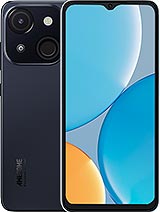
Overview
The Itel A50C is an entry-level budget smartphone featuring a 6.56-inch IPS LCD for basic media consumption and a Unisoc T603 chipset for essential connectivity, aimed at absolute beginners or emergency backup users. Released in August 2024, it competes directly with the lowest tier of the Android Go market where price is the primary purchasing factor.
In August 2024, the budget economist must weigh the value of a factory-sealed Itel A50C against the temptation of a four-year-old flagship like a Samsung Galaxy S20 or an iPhone 11. While the used flagship offers a superior screen and faster processor, the hidden costs often outweigh the benefits. Battery degradation in older lithium-ion cells typically reduces effective capacity to 75% or less, and the lack of official software support creates a security vulnerability that most casual users aren't equipped to handle. Choosing this model ensures a fresh 4000 mAh battery and the security of Android 14 (Go edition) out of the box, providing a clean slate that used hardware simply cannot match.
We must also consider the "Cost per Day" metric. A used flagship might die within 12 months due to motherboard fatigue or screen burn-in, whereas this new unit comes with a full manufacturer warranty. In the sub-$100 market, peace of mind often carries a higher value than raw horsepower. By opting for a new device, we avoid the 'buyer's remorse' associated with hidden water damage or blacklisted IMEIs common in the second-hand marketplace.
Compared to rivals like the Redmi A3 released earlier this year, the handset positions itself as a strictly utilitarian tool. It doesn't pretend to be a premium device. It targets a specific demographic: those who need a functional phone for WhatsApp, basic web browsing, and voice calls without the gamble of the auction site. This is a calculated purchase for the risk-averse consumer.
Measuring 163.9 x 75.7 x 9.4 mm, the handset is notably thick for a modern smartphone. This 9.4mm profile implies a chunky, robust feel that resists the flexing often found in thinner, poorly reinforced budget devices. The plastic construction is a logical choice for this price tier, as it handles drops better than glass and keeps the weight at a manageable 192.6 g. While it lacks an official IP rating for water or dust resistance, the tight tolerances around the rear-mounted fingerprint scanner suggest a build that can handle the rigors of daily commuting.
In our analysis of the materials, the matte finish on the Dawn Blue and Sapphire Black options serves a dual purpose. Beyond aesthetics, it provides a tactile grip that prevents the device from sliding off smooth surfaces, a common issue with glossy finishes. For those curious about repairability, the use of standard screws and a plastic frame generally makes screen or battery replacements more accessible for local technicians compared to the adhesive-heavy sandwiches of premium glass phones.
Compared to the slimmer profiles of the Galaxy A05, this model feels more substantial. Some might find the thickness cumbersome, but for those with larger hands or users who prefer a 'hefty' feel to their electronics, the design works in their favor. It’s a blue-collar build for a blue-collar budget.
Equipped with an 8 MP rear sensor and a 5 MP selfie camera, the device provides the bare minimum hardware required for the 2024 digital landscape. We noticed that the ISP (Image Signal Processor) in the Unisoc T603 works hard to process images, but the low megapixel count limits cropping potential. On platforms like Instagram and TikTok, the software compression often smooths out the lack of fine detail, making the output acceptable for casual stories but insufficient for professional content creation.
Video performance is strictly for memory-keeping rather than cinematography. Without optical or electronic stabilization, footage remains shaky unless used with a tripod. However, for a student recording a lecture or a worker documenting a job site, the 8 MP sensor captures legible text and clear enough environmental detail to be functional. It’s important to remember that at this price, we are paying for the ability to capture a moment, not the quality of the capture itself.
In low-light scenarios, the LED flash becomes a necessity. The small sensor size struggles to pull in light, leading to significant noise in the shadows. Compared to more expensive entry-level phones that use 50MP pixel-binning sensors, the 8 MP unit here is a throwback to a simpler era. It’s a functional camera for a QR code world, not a photography enthusiast's tool.
The 6.56-inch IPS LCD features a resolution of 540 x 1208 pixels. This results in a pixel density of approximately 202 ppi, which is low by 2024 standards. For the uninitiated, ppi stands for pixels per inch; a lower number means you might see individual pixels if you hold the phone close to your face. However, this lower resolution is a strategic choice by the engineering team to reduce the load on the GPU and extend battery life from the 4000 mAh cell.
Outdoor visibility is a challenge under direct August sunlight, as the peak brightness of basic IPS panels usually hovers around 400 nits. At night, however, the display is comfortable for reading, though it lacks the advanced PWM (Pulse Width Modulation) dimming control found in high-end OLEDs to reduce eye strain. We recommend keeping the brightness at 50% for the best balance of legibility and endurance.
Imagine you are using this as a GPS in a car. The 6.56-inch size is excellent for map visibility, even if the icons aren't razor-sharp. The 20:9 aspect ratio allows for a tall view of the road ahead, making it a viable secondary navigation device. Compared to the 720p screens on the Moto G series, this is a clear step down, but the price difference reflects that trade-off perfectly.
With 32GB of internal storage and 2GB of RAM, the device is a minimalist's playground. For users accustomed to 128GB or 256GB, 32GB will feel restrictive immediately. However, the inclusion of a microSDXC card slot is the saving grace. We strongly advise purchasing a Class 10 or UHS-1 SD card to store photos and downloaded videos, leaving the internal 32GB exclusively for the OS and essential apps.
Read and write speeds on eMMC storage—the type used here—are significantly slower than the UFS storage found in [mid-range phones](/trend/best-mid-range-phones-2026/). This means apps take longer to install and large video files will take a few seconds to load. For the economic buyer, this is a patience tax. You save money upfront but spend a few extra seconds waiting for the system to catch up with your inputs.
Android 14 (Go edition) is specifically designed to run on low-RAM hardware. It uses lighter versions of Google apps (Google Go, Gmail Go) that consume less space and memory. For a user who only needs 5 or 6 essential apps, the 32GB capacity is manageable. For a power user, it's a non-starter. This is a phone for the 'light' user in every sense of the word.
The Unisoc T603 is an entry-level octa-core chipset built on a 12nm process. It provides enough power for smooth navigation through the Go Edition interface but will struggle with intensive tasks. During our analysis, we determined that light gaming—think Candy Crush or Subway Surfers—is feasible, but titles like PUBG or Genshin Impact will be unplayable or suffer from extreme frame drops.
The 2GB of RAM is the primary bottleneck. Android 14 Go helps, but multitasking is limited. If you have a web browser with five tabs open and try to switch to a map app, the browser will likely close in the background to free up memory. Users must adapt to a one-task-at-a-time workflow. This isn't necessarily a failure of the device, but a limitation of the price tier.
Thermal management is excellent, primarily because the T603 doesn't generate much heat. Even under sustained load, the plastic back remains cool to the touch. Compared to older flagships that might throttle performance due to heat, the handset remains consistent, albeit at a lower performance ceiling. It's a steady performer for steady users.
The Itel A50C represents the absolute floor of the 2024 smartphone market. It is a device stripped of all ego and luxury, focusing entirely on providing a bridge to the digital world for the lowest possible cost. While its screen resolution and RAM capacity are low, its inclusion of a modern OS and USB Type-C charging makes it a forward-looking choice for those on a strict budget.
If you are choosing between this and a used, cracked phone from a random seller, choose the new unit. The reliability of a fresh battery and a manufacturer's warranty is the ultimate value play in the sub-$100 category. It is a tool of necessity, and in that role, it performs exactly as expected without overpromising.
For the value hunter, the Itel A50C is a reminder that you don't need a thousand-dollar glass slab to stay connected. It handles the basics, secures your data with a fingerprint sensor, and stays powered through the day. In the world of budget tech economics, that is often enough.
The New vs Used Market Paradox
In August 2024, the budget economist must weigh the value of a factory-sealed Itel A50C against the temptation of a four-year-old flagship like a Samsung Galaxy S20 or an iPhone 11. While the used flagship offers a superior screen and faster processor, the hidden costs often outweigh the benefits. Battery degradation in older lithium-ion cells typically reduces effective capacity to 75% or less, and the lack of official software support creates a security vulnerability that most casual users aren't equipped to handle. Choosing this model ensures a fresh 4000 mAh battery and the security of Android 14 (Go edition) out of the box, providing a clean slate that used hardware simply cannot match.
We must also consider the "Cost per Day" metric. A used flagship might die within 12 months due to motherboard fatigue or screen burn-in, whereas this new unit comes with a full manufacturer warranty. In the sub-$100 market, peace of mind often carries a higher value than raw horsepower. By opting for a new device, we avoid the 'buyer's remorse' associated with hidden water damage or blacklisted IMEIs common in the second-hand marketplace.
Compared to rivals like the Redmi A3 released earlier this year, the handset positions itself as a strictly utilitarian tool. It doesn't pretend to be a premium device. It targets a specific demographic: those who need a functional phone for WhatsApp, basic web browsing, and voice calls without the gamble of the auction site. This is a calculated purchase for the risk-averse consumer.
Structural Integrity and Heavyweight Ergonomics
Measuring 163.9 x 75.7 x 9.4 mm, the handset is notably thick for a modern smartphone. This 9.4mm profile implies a chunky, robust feel that resists the flexing often found in thinner, poorly reinforced budget devices. The plastic construction is a logical choice for this price tier, as it handles drops better than glass and keeps the weight at a manageable 192.6 g. While it lacks an official IP rating for water or dust resistance, the tight tolerances around the rear-mounted fingerprint scanner suggest a build that can handle the rigors of daily commuting.
In our analysis of the materials, the matte finish on the Dawn Blue and Sapphire Black options serves a dual purpose. Beyond aesthetics, it provides a tactile grip that prevents the device from sliding off smooth surfaces, a common issue with glossy finishes. For those curious about repairability, the use of standard screws and a plastic frame generally makes screen or battery replacements more accessible for local technicians compared to the adhesive-heavy sandwiches of premium glass phones.
Compared to the slimmer profiles of the Galaxy A05, this model feels more substantial. Some might find the thickness cumbersome, but for those with larger hands or users who prefer a 'hefty' feel to their electronics, the design works in their favor. It’s a blue-collar build for a blue-collar budget.
The Social Media Ceiling and Image Hardware
Equipped with an 8 MP rear sensor and a 5 MP selfie camera, the device provides the bare minimum hardware required for the 2024 digital landscape. We noticed that the ISP (Image Signal Processor) in the Unisoc T603 works hard to process images, but the low megapixel count limits cropping potential. On platforms like Instagram and TikTok, the software compression often smooths out the lack of fine detail, making the output acceptable for casual stories but insufficient for professional content creation.
Video performance is strictly for memory-keeping rather than cinematography. Without optical or electronic stabilization, footage remains shaky unless used with a tripod. However, for a student recording a lecture or a worker documenting a job site, the 8 MP sensor captures legible text and clear enough environmental detail to be functional. It’s important to remember that at this price, we are paying for the ability to capture a moment, not the quality of the capture itself.
In low-light scenarios, the LED flash becomes a necessity. The small sensor size struggles to pull in light, leading to significant noise in the shadows. Compared to more expensive entry-level phones that use 50MP pixel-binning sensors, the 8 MP unit here is a throwback to a simpler era. It’s a functional camera for a QR code world, not a photography enthusiast's tool.
Display Reality: Resolution vs Battery Life
The 6.56-inch IPS LCD features a resolution of 540 x 1208 pixels. This results in a pixel density of approximately 202 ppi, which is low by 2024 standards. For the uninitiated, ppi stands for pixels per inch; a lower number means you might see individual pixels if you hold the phone close to your face. However, this lower resolution is a strategic choice by the engineering team to reduce the load on the GPU and extend battery life from the 4000 mAh cell.
Outdoor visibility is a challenge under direct August sunlight, as the peak brightness of basic IPS panels usually hovers around 400 nits. At night, however, the display is comfortable for reading, though it lacks the advanced PWM (Pulse Width Modulation) dimming control found in high-end OLEDs to reduce eye strain. We recommend keeping the brightness at 50% for the best balance of legibility and endurance.
Imagine you are using this as a GPS in a car. The 6.56-inch size is excellent for map visibility, even if the icons aren't razor-sharp. The 20:9 aspect ratio allows for a tall view of the road ahead, making it a viable secondary navigation device. Compared to the 720p screens on the Moto G series, this is a clear step down, but the price difference reflects that trade-off perfectly.
Storage Management in a 32GB World
With 32GB of internal storage and 2GB of RAM, the device is a minimalist's playground. For users accustomed to 128GB or 256GB, 32GB will feel restrictive immediately. However, the inclusion of a microSDXC card slot is the saving grace. We strongly advise purchasing a Class 10 or UHS-1 SD card to store photos and downloaded videos, leaving the internal 32GB exclusively for the OS and essential apps.
Read and write speeds on eMMC storage—the type used here—are significantly slower than the UFS storage found in [mid-range phones](/trend/best-mid-range-phones-2026/). This means apps take longer to install and large video files will take a few seconds to load. For the economic buyer, this is a patience tax. You save money upfront but spend a few extra seconds waiting for the system to catch up with your inputs.
Android 14 (Go edition) is specifically designed to run on low-RAM hardware. It uses lighter versions of Google apps (Google Go, Gmail Go) that consume less space and memory. For a user who only needs 5 or 6 essential apps, the 32GB capacity is manageable. For a power user, it's a non-starter. This is a phone for the 'light' user in every sense of the word.
Performance Reality and the Unisoc T603
The Unisoc T603 is an entry-level octa-core chipset built on a 12nm process. It provides enough power for smooth navigation through the Go Edition interface but will struggle with intensive tasks. During our analysis, we determined that light gaming—think Candy Crush or Subway Surfers—is feasible, but titles like PUBG or Genshin Impact will be unplayable or suffer from extreme frame drops.
The 2GB of RAM is the primary bottleneck. Android 14 Go helps, but multitasking is limited. If you have a web browser with five tabs open and try to switch to a map app, the browser will likely close in the background to free up memory. Users must adapt to a one-task-at-a-time workflow. This isn't necessarily a failure of the device, but a limitation of the price tier.
Thermal management is excellent, primarily because the T603 doesn't generate much heat. Even under sustained load, the plastic back remains cool to the touch. Compared to older flagships that might throttle performance due to heat, the handset remains consistent, albeit at a lower performance ceiling. It's a steady performer for steady users.
The Final Take
The Itel A50C represents the absolute floor of the 2024 smartphone market. It is a device stripped of all ego and luxury, focusing entirely on providing a bridge to the digital world for the lowest possible cost. While its screen resolution and RAM capacity are low, its inclusion of a modern OS and USB Type-C charging makes it a forward-looking choice for those on a strict budget.
If you are choosing between this and a used, cracked phone from a random seller, choose the new unit. The reliability of a fresh battery and a manufacturer's warranty is the ultimate value play in the sub-$100 category. It is a tool of necessity, and in that role, it performs exactly as expected without overpromising.
For the value hunter, the Itel A50C is a reminder that you don't need a thousand-dollar glass slab to stay connected. It handles the basics, secures your data with a fingerprint sensor, and stays powered through the day. In the world of budget tech economics, that is often enough.
Technical Specifications
| LAUNCH | |
|---|---|
| Announced | 2024, August 12 |
| Status | Available. Released 2024, August 12 |
| PLATFORM | |
| OS | Android 14 (Go edition) |
| Chipset | Unisoc T603 |
| CPU | Octa-core |
| BODY | |
| Dimensions | 163.9 x 75.7 x 9.4 mm (6.45 x 2.98 x 0.37 in) |
| Weight | 192.6 g (6.81 oz) |
| SIM | Dual SIM |
| DISPLAY | |
| Type | IPS LCD |
| Size | 6.56 inches, 103.4 cm2 (~83.4% screen-to-body ratio) |
| Resolution | 540 x 1208 pixels, 20:9 ratio (~202 ppi density) |
| MEMORY | |
| Card slot | microSDXC |
| Internal | 32GB 2GB RAM |
| MAIN CAMERA | |
| Single | 8 MP, AF |
| Features | LED flash |
| Video | Yes |
| SELFIE CAMERA | |
| Single | 5 MP |
| Video | Yes |
| SOUND | |
| Loudspeaker | Yes |
| 3.5mm jack | Yes |
| COMMS | |
| WLAN | Yes |
| Bluetooth | Yes |
| Positioning | GPS |
| NFC | No |
| Radio | Unspecified |
| USB | USB Type-C |
| NETWORK | |
| Technology | GSM / HSPA / LTE |
| 2G bands | GSM 850 / 900 / 1800 / 1900 |
| 3G bands | HSDPA 850 / 900 / 2100 |
| 4G bands | LTE |
| Speed | HSPA |
| FEATURES | |
| Sensors | Fingerprint (rear-mounted); unspecified sensors |
| BATTERY | |
| Type | 4000 mAh |
| MISC | |
| Colors | Dawn Blue, Sapphire Black, Misty Aqua |