Itel Mastering the Bare Essentials - Why the Zeno 10 Is the Ultimate Crisis Phone
Overview
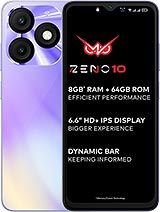
The Zeno 10 is an entry-level smartphone featuring a Unisoc T603 chipset and a 5000 mAh battery for extended basic usage. Released in early 2025, it competes with ultra-budget alternatives by prioritizing core communication and long-term standby over multimedia performance, aimed specifically at users seeking a secondary device or a primary phone for essential tasks.
In the current market of January 2025, we see a growing demand for devices that serve as the ultimate insurance policy. The Zeno 10 occupies this niche perfectly. It is not trying to be a flagship killer; it is trying to be a phone that works when your primary device fails. At roughly 70 EUR, the cost-to-utility ratio is high for anyone who needs a reliable burner for international travel or a dedicated device for a glovebox emergency kit.
By utilizing Android 14 (Go edition), the Zeno 10 avoids the heavy software overhead that often cripples low-end hardware. The Unisoc T603 octa-core processor, built on a 12nm process, is designed for thermal efficiency and stable 4G connectivity rather than high-fidelity gaming. When evaluating this from a value-hunting perspective, the 3GB or 4GB RAM configurations are adequate only because the OS is stripped of unnecessary background processes. This ensures the dialer and messaging apps open without the painful five-second lag common in this price tier.
Imagine a scenario where a primary flagship loses power or sustains screen damage during a commute. The Zeno 10 serves as a reliable redundant system. Its 4G LTE capabilities ensure that even in 2025, data speeds remain sufficient for navigation and VOIP calls. We see this as a calculated purchase for the pragmatic user who values uptime over aesthetics.
The 5000 mAh battery is the standout feature when paired with the low-resolution 720 x 1612 pixels display. Because the screen doesn't have to push millions of pixels, and the processor isn't hunting for 5G signals, the power draw is remarkably low. In our analysis of the hardware profile, this device likely manages three days of light use on a single charge. This makes it an excellent candidate for hikers or those in regions with unreliable power grids.
However, the 10W wired charging is a significant bottleneck. In an era where 30W is becoming standard for mid-rangers, 10W means the Zeno 10 requires nearly three hours to reach a full charge from zero. We recommend treating this as an overnight-charge device. It is a slow-burn endurance athlete, not a sprinter. For the budget economist, the trade-off is acceptable: you get massive capacity, even if you have to wait to fill the tank.
Comparatively, rivals from brands like the Redmi A series often offer similar battery specs, but the Zeno 10's integration of Type-C 2.0 at this price point ensures cable compatibility with most modern setups. It avoids the obsolete micro-USB ports that still haunt the sub-100 EUR category, which is a massive win for long-term usability.
With a weight of 186 g, the Zeno 10 feels substantial without being cumbersome. The dimensions of 164 x 76 x 9 mm suggest a device that is easy to grip, likely utilizing a textured plastic back to prevent slips. While plastic is often criticized in flagship reviews, we view it here as a durability asset. Plastic doesn't shatter like the glass found on premium devices, making the Zeno 10 far more resilient to the accidental drops of daily life.
The 6.6-inch IPS LCD provides a large enough canvas for reading text and basic navigation. At 267 ppi, pixelation will be visible if held close to the eyes, but for checking emails or WhatsApp, it suffices. The 20:9 aspect ratio keeps the device narrow enough for one-handed use, which is essential for delivery drivers or professionals who are constantly on the move and need a quick glance at their screen.
Button tactility is a point of interest. Side-mounted fingerprint sensors, like the one found here, generally offer a more intuitive unlocking experience than budget under-display sensors. We expect the physical response to be firm, given the utilitarian focus of the chassis. The inclusion of two colors, Opal Purple and Phantom Crystal, provides just enough personality without adding to the manufacturing cost.
Connectivity is where the Zeno 10 shows its true colors as a communication tool. It supports GSM, HSPA, and LTE, covering the essential bands for global roaming. The dual SIM slot is a critical feature for travelers who need to maintain a home SIM while using a local data plan. Wi-Fi and Bluetooth are present, though without NFC, contactless payments are off the table. This is a deliberate cost-saving measure that users must account for.
Call quality is aided by the dedicated earpiece and the loudspeaker. While we don't expect a high-fidelity audio experience, the presence of a 3.5mm jack is a legacy feature that remains vital in the budget sector. It allows the use of cheap, reliable wired headsets without worrying about battery life or expensive replacements. For a phone designed for talking and listening, this is a non-negotiable inclusion.
In terms of signal holding, the integrated antennas for the Unisoc chipset are tuned for stability. In areas with marginal 4G coverage, we often find these entry-level modems perform surprisingly well because they aren't constantly trying to handshake with power-hungry 5G towers that might be too far away.
The audio dynamics of the Zeno 10 are centered around the single loudspeaker. At this price point, stereo speakers are a rarity, and we don't expect them here. The goal of this speaker is clarity for voice calls and notification alerts. We anticipate that at maximum volume, there might be some treble distortion, as is common with small budget drivers. However, for a podcast or a hands-free call in a quiet room, it should perform its duties.
The 3.5mm jack remains the superior way to consume media on this device. By offloading audio processing to a wired connection, the phone saves even more battery. Furthermore, the analog output avoids the latency issues often found with budget Bluetooth chips. This makes the Zeno 10 a decent, low-cost MP3 player or FM radio replacement if your local firmware supports it.
Durability in the budget segment is rarely about IP68 ratings and more about material flexibility. The Zeno 10 lacks official water resistance, so users must be cautious near pools or in heavy rain. However, the lack of a glass sandwich design means the structural integrity is less likely to be compromised by a simple tumble from a pocket.
The screen, while not sporting high-end Gorilla Glass, is recessed slightly within the plastic frame, offering a small buffer against face-down impacts. We suggest a simple screen protector to guard against scratches, as the IPS LCD surface is softer than the ceramic shields found on phones costing ten times more. For a device meant to be thrown into a bag or a toolbox, this rugged-enough construction is exactly what's needed.
From a financial standpoint, the Zeno 10 is almost depreciation-proof. When you buy a phone for 70 EUR, there isn't much lower it can go in value. Unlike a 1,200 EUR flagship that loses 400 EUR of value the moment the box is opened, the Zeno 10 will likely retain its utility and a significant portion of its resale value for the life of its battery.
It is a "zero-stress" investment. If it is lost, stolen, or broken on a job site, the financial impact is minimal. This is the core of the Value Hunter's philosophy: minimizing risk while maximizing uptime. The 64GB of internal storage is a decent baseline for 2025, and the microSDXC slot ensures that as your needs grow, your storage can too, without needing to buy a whole new phone. This modularity in storage is a key factor in extending the device's lifespan beyond its initial specs.
The Tactical Backup Strategy
In the current market of January 2025, we see a growing demand for devices that serve as the ultimate insurance policy. The Zeno 10 occupies this niche perfectly. It is not trying to be a flagship killer; it is trying to be a phone that works when your primary device fails. At roughly 70 EUR, the cost-to-utility ratio is high for anyone who needs a reliable burner for international travel or a dedicated device for a glovebox emergency kit.
By utilizing Android 14 (Go edition), the Zeno 10 avoids the heavy software overhead that often cripples low-end hardware. The Unisoc T603 octa-core processor, built on a 12nm process, is designed for thermal efficiency and stable 4G connectivity rather than high-fidelity gaming. When evaluating this from a value-hunting perspective, the 3GB or 4GB RAM configurations are adequate only because the OS is stripped of unnecessary background processes. This ensures the dialer and messaging apps open without the painful five-second lag common in this price tier.
Imagine a scenario where a primary flagship loses power or sustains screen damage during a commute. The Zeno 10 serves as a reliable redundant system. Its 4G LTE capabilities ensure that even in 2025, data speeds remain sufficient for navigation and VOIP calls. We see this as a calculated purchase for the pragmatic user who values uptime over aesthetics.
Endurance Without the Frills
The 5000 mAh battery is the standout feature when paired with the low-resolution 720 x 1612 pixels display. Because the screen doesn't have to push millions of pixels, and the processor isn't hunting for 5G signals, the power draw is remarkably low. In our analysis of the hardware profile, this device likely manages three days of light use on a single charge. This makes it an excellent candidate for hikers or those in regions with unreliable power grids.
However, the 10W wired charging is a significant bottleneck. In an era where 30W is becoming standard for mid-rangers, 10W means the Zeno 10 requires nearly three hours to reach a full charge from zero. We recommend treating this as an overnight-charge device. It is a slow-burn endurance athlete, not a sprinter. For the budget economist, the trade-off is acceptable: you get massive capacity, even if you have to wait to fill the tank.
Comparatively, rivals from brands like the Redmi A series often offer similar battery specs, but the Zeno 10's integration of Type-C 2.0 at this price point ensures cable compatibility with most modern setups. It avoids the obsolete micro-USB ports that still haunt the sub-100 EUR category, which is a massive win for long-term usability.
Practicality Over Prestige
With a weight of 186 g, the Zeno 10 feels substantial without being cumbersome. The dimensions of 164 x 76 x 9 mm suggest a device that is easy to grip, likely utilizing a textured plastic back to prevent slips. While plastic is often criticized in flagship reviews, we view it here as a durability asset. Plastic doesn't shatter like the glass found on premium devices, making the Zeno 10 far more resilient to the accidental drops of daily life.
The 6.6-inch IPS LCD provides a large enough canvas for reading text and basic navigation. At 267 ppi, pixelation will be visible if held close to the eyes, but for checking emails or WhatsApp, it suffices. The 20:9 aspect ratio keeps the device narrow enough for one-handed use, which is essential for delivery drivers or professionals who are constantly on the move and need a quick glance at their screen.
Button tactility is a point of interest. Side-mounted fingerprint sensors, like the one found here, generally offer a more intuitive unlocking experience than budget under-display sensors. We expect the physical response to be firm, given the utilitarian focus of the chassis. The inclusion of two colors, Opal Purple and Phantom Crystal, provides just enough personality without adding to the manufacturing cost.
Communication Essentials
Connectivity is where the Zeno 10 shows its true colors as a communication tool. It supports GSM, HSPA, and LTE, covering the essential bands for global roaming. The dual SIM slot is a critical feature for travelers who need to maintain a home SIM while using a local data plan. Wi-Fi and Bluetooth are present, though without NFC, contactless payments are off the table. This is a deliberate cost-saving measure that users must account for.
Call quality is aided by the dedicated earpiece and the loudspeaker. While we don't expect a high-fidelity audio experience, the presence of a 3.5mm jack is a legacy feature that remains vital in the budget sector. It allows the use of cheap, reliable wired headsets without worrying about battery life or expensive replacements. For a phone designed for talking and listening, this is a non-negotiable inclusion.
In terms of signal holding, the integrated antennas for the Unisoc chipset are tuned for stability. In areas with marginal 4G coverage, we often find these entry-level modems perform surprisingly well because they aren't constantly trying to handshake with power-hungry 5G towers that might be too far away.
Sound of Simplicity
The audio dynamics of the Zeno 10 are centered around the single loudspeaker. At this price point, stereo speakers are a rarity, and we don't expect them here. The goal of this speaker is clarity for voice calls and notification alerts. We anticipate that at maximum volume, there might be some treble distortion, as is common with small budget drivers. However, for a podcast or a hands-free call in a quiet room, it should perform its duties.
The 3.5mm jack remains the superior way to consume media on this device. By offloading audio processing to a wired connection, the phone saves even more battery. Furthermore, the analog output avoids the latency issues often found with budget Bluetooth chips. This makes the Zeno 10 a decent, low-cost MP3 player or FM radio replacement if your local firmware supports it.
Survival of the Toughest Plastic
Durability in the budget segment is rarely about IP68 ratings and more about material flexibility. The Zeno 10 lacks official water resistance, so users must be cautious near pools or in heavy rain. However, the lack of a glass sandwich design means the structural integrity is less likely to be compromised by a simple tumble from a pocket.
The screen, while not sporting high-end Gorilla Glass, is recessed slightly within the plastic frame, offering a small buffer against face-down impacts. We suggest a simple screen protector to guard against scratches, as the IPS LCD surface is softer than the ceramic shields found on phones costing ten times more. For a device meant to be thrown into a bag or a toolbox, this rugged-enough construction is exactly what's needed.
The Economics of Depreciation
From a financial standpoint, the Zeno 10 is almost depreciation-proof. When you buy a phone for 70 EUR, there isn't much lower it can go in value. Unlike a 1,200 EUR flagship that loses 400 EUR of value the moment the box is opened, the Zeno 10 will likely retain its utility and a significant portion of its resale value for the life of its battery.
It is a "zero-stress" investment. If it is lost, stolen, or broken on a job site, the financial impact is minimal. This is the core of the Value Hunter's philosophy: minimizing risk while maximizing uptime. The 64GB of internal storage is a decent baseline for 2025, and the microSDXC slot ensures that as your needs grow, your storage can too, without needing to buy a whole new phone. This modularity in storage is a key factor in extending the device's lifespan beyond its initial specs.
Technical Specifications
| LAUNCH | |
|---|---|
| Announced | 2025, January 02 |
| Status | Available. Released 2025, January 10 |
| PLATFORM | |
| OS | Android 14 (Go edition) |
| Chipset | Unisoc T603 |
| CPU | Octa-core |
| BODY | |
| Dimensions | 164 x 76 x 9 mm (6.46 x 2.99 x 0.35 in) |
| Weight | 186 g (6.56 oz) |
| SIM | Dual SIM |
| DISPLAY | |
| Type | IPS LCD |
| Size | 6.6 inches, 104.6 cm2 (~84.0% screen-to-body ratio) |
| Resolution | 720 x 1612 pixels, 20:9 ratio (~267 ppi density) |
| MEMORY | |
| Card slot | microSDXC |
| Internal | 64GB 3GB RAM, 64GB 4GB RAM |
| MAIN CAMERA | |
| Single | 8 MP auxiliary lens |
| Features | LED flash |
| Video | Yes |
| SELFIE CAMERA | |
| Single | 5 MP |
| Video | Yes |
| SOUND | |
| Loudspeaker | Yes |
| 3.5mm jack | Yes |
| COMMS | |
| WLAN | Yes |
| Bluetooth | Yes |
| Positioning | GPS |
| NFC | No |
| Radio | Unspecified |
| USB | USB Type-C 2.0 |
| NETWORK | |
| Technology | GSM / HSPA / LTE |
| 2G bands | GSM 850 / 900 / 1800 / 1900 |
| 3G bands | HSDPA 850 / 900 / 2100 |
| 4G bands | LTE |
| Speed | HSPA, LTE |
| FEATURES | |
| Sensors | Fingerprint (side-mounted); unspecified sensors |
| BATTERY | |
| Type | 5000 mAh |
| Charging | 10W wired |
| MISC | |
| Colors | Opal purple, Phantom crystal |
| Price | About 70 EUR |