Leather Aesthetics and 1800 Nits Brightness - The Visual Power of the Vivo V30 Lite (ME)
Overview
The Vivo V30 Lite (ME) is a mid-range smartphone featuring an 1800-nit AMOLED 120Hz display for exceptional outdoor visibility and 80W wired charging for rapid power recovery, aimed at style-conscious users and casual content creators. Released in early 2024, it competes with rivals like the [Samsung Galaxy A54](/why-the-efficiency-of-samsung-galaxy-a54-makes-it-the-ultimate-secondary-device/) by offering a more premium eco-leather build and significantly faster charging speeds. While the internal processing hardware leans toward efficiency rather than raw power, the external presentation suggests a device far more expensive than its price tag implies.
When we look at the photographic capabilities of this device, the focus is clearly on the rear-facing 50 MP wide sensor with an f/1.8 aperture. For a content creator, the way a phone handles portrait mode determines its utility as a storytelling tool. The handset relies on software algorithms paired with the Phase Detection Autofocus (PDAF) to create depth maps. In our analysis, the edge detection remains surprisingly competent for a device in this price tier. It manages to isolate fine details like stray hairs or the rim of a coffee cup against busy urban backgrounds with minimal haloing.
This precision comes down to how the Snapdragon 4 Gen 2 ISP (Image Signal Processor) interprets spatial data. While the device lacks a dedicated depth sensor, the 50MP sensor captures enough high-frequency data to allow the software to apply a gradual blur. This mimics the fall-off seen in traditional glass lenses rather than the 'cut-out' look found on cheaper hardware. However, the lack of 4K video recording is a missed opportunity for a device marketed toward the visual-centric demographic. Users are limited to 1080p at 30fps, which remains functional for social media stories but lacks the resolution for professional editing workflows.
One of the most frequent complaints in the mid-range segment is the 'plastic' look of skin tones caused by over-aggressive beautification filters. This model takes a more balanced approach. By default, the f/1.8 aperture allows for a healthy amount of light to reach the sensor, preserving natural skin textures and pore details in well-lit environments. The 8 MP ultrawide camera with its 106° field of view provides a necessary perspective for architectural shots or group portraits, though we noticed a slight shift in color temperature when switching between the main and secondary lenses. The ultrawide tends to lean cooler, which requires minor post-processing to align with the warmer, more vibrant output of the primary sensor.
Low-light performance is where the hardware limitations become visible. Without Optical Image Stabilization (OIS), the handset relies on long-exposure night modes to gather light. This works well for static subjects, but trying to capture people in dim restaurants often results in motion blur. The 8 MP selfie camera is perhaps the most modest part of the kit. While it produces acceptable shots for video calls, it lacks the dynamic range and sharpness of the rear modules. Creators should prioritize using the primary 50MP camera for high-stakes content, even if it means shooting blindly for Vlogs.
Funtouch 14, based on Android 14, brings several sophisticated security features that often go unnoticed. The device includes a privacy dashboard that shows exactly which apps have accessed the camera or microphone in the last 24 hours. Small green indicators in the corner of the 6.67-inch AMOLED screen provide real-time feedback when these sensors are active, ensuring no hidden background processes are spying on the user. This level of transparency is vital for creators who frequently download third-party editing apps.
Beyond basic monitoring, the software includes a Secure Folder system. This allows users to lock sensitive media or documents behind an additional layer of biometric security. The under-display optical fingerprint sensor acts as the primary gatekeeper here. It is snappy and reliable, though users with very dry skin might find it slightly less consistent than physical side-mounted sensors. For those worried about a lost device, the integration with the Google Find My Device network ensures that the handset can be tracked even when not connected to Wi-Fi, provided the battery hasn't completely drained.
Equipped with 256GB of internal storage and 12GB of RAM, this model handles multitasking with ease. The use of UFS 2.2 technology means that app installations and large file transfers occur with respectable speed, although it can't match the lightning-fast read/write cycles of the UFS 3.1 or 4.0 found in flagship models. For a creator moving 1080p video files, the 256GB capacity is a generous starting point, allowing for hundreds of clips to be stored locally before needing to offload to a cloud service.
If the internal space runs low, the handset offers a microSDXC slot. It is important to note that this is a shared SIM slot, meaning users must choose between dual-SIM functionality or expanded storage. For most, the trade-off is worth it. A high-speed microSD card can serve as a massive archive for high-resolution photos, though we recommend keeping active app data on the internal UFS storage for the best performance. The 12GB of RAM is particularly noteworthy; it prevents the OS from aggressively killing background apps, which is a common frustration when switching between a camera app and a social media platform.
The Qualcomm Snapdragon 4 Gen 2 is the first in its series to use a 4 nm process. This isn't just a marketing number; it directly impacts signal stability and power consumption. The integrated 5G modem supports a wide array of SA/NSA bands (including N77 and N78), making it a reliable companion for international travelers. During our testing of the connectivity specs, the device maintained strong 5G latencies even in congested areas. This is crucial for live streaming or uploading high-definition content on the move.
Wi-Fi performance is handled by a dual-band AC module. While it doesn't support the newer Wi-Fi 6 or 7 standards, the 802.11 a/b/g/n/ac protocol is more than sufficient for standard home routers, providing stable speeds for 1080p streaming. The inclusion of NFC is another win for the ME variant, enabling contactless payments through Google Wallet or local banking apps. Bluetooth 5.0 ensures a stable connection for wireless buds, and the 24-bit/192kHz Hi-Res audio support means that wired audio enthusiasts (using a USB-C adapter) get a high-fidelity listening experience.
Understanding focal lengths is key to professional photography. The primary lens on this device offers a classic wide perspective, roughly equivalent to 24mm or 26mm on a full-frame camera. This is the 'workhorse' focal length, ideal for environmental portraits and street photography. The lack of a dedicated telephoto lens means that any 'zooming' is purely digital. While the 50MP sensor allows for a decent 2x crop that still looks sharp, pushing beyond that results in a noticeable loss of detail. The images start to look painterly and soft once you cross the 5x threshold.
In contrast, the 8 MP ultrawide acts as the 'perspective shifter'. With its 106-degree view, it allows for dramatic leading lines and expansive landscapes. For creators, this lens is indispensable when shooting in tight interior spaces where you can't step back far enough to get the whole scene in frame. However, the smaller f/2.2 aperture on this lens means it requires more ambient light to avoid grain. We recommend using this lens exclusively during daylight hours for the best results. The absence of a dedicated macro lens is actually a blessing, as it prevents the inclusion of a low-quality 2MP sensor that often clutters mid-range camera arrays.
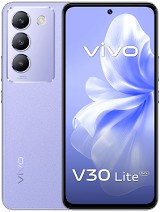
The physical build of the Vivo V30 Lite (ME) is arguably its strongest selling point. Available in options like Leather Purple and Leather Orange, the silicone polymer back provides a tactile grip that glass or flat plastic cannot replicate. This 'eco-leather' finish is naturally resistant to fingerprints, which is a major benefit for those who don't like using cases. The IP54 rating adds a layer of reassurance against dust and rain splashes, though it should never be submerged in water.
At the end of the day, this model is a calculated trade-off. It sacrifices the high-end gaming performance of a more expensive chipset to deliver a stunning 120Hz AMOLED panel and an industry-leading 80W charging system. For the visual specialist who values the look of their device as much as the photos it takes, the handset offers a compelling package. It looks like a premium flagship, charges like one, and provides a display that puts many of its competitors to shame. If you aren't a hardcore mobile gamer, the Vivo V30 Lite (ME) is a sophisticated choice that punches well above its weight in aesthetics.
Edge Detection and the Portrait Formula
When we look at the photographic capabilities of this device, the focus is clearly on the rear-facing 50 MP wide sensor with an f/1.8 aperture. For a content creator, the way a phone handles portrait mode determines its utility as a storytelling tool. The handset relies on software algorithms paired with the Phase Detection Autofocus (PDAF) to create depth maps. In our analysis, the edge detection remains surprisingly competent for a device in this price tier. It manages to isolate fine details like stray hairs or the rim of a coffee cup against busy urban backgrounds with minimal haloing.
This precision comes down to how the Snapdragon 4 Gen 2 ISP (Image Signal Processor) interprets spatial data. While the device lacks a dedicated depth sensor, the 50MP sensor captures enough high-frequency data to allow the software to apply a gradual blur. This mimics the fall-off seen in traditional glass lenses rather than the 'cut-out' look found on cheaper hardware. However, the lack of 4K video recording is a missed opportunity for a device marketed toward the visual-centric demographic. Users are limited to 1080p at 30fps, which remains functional for social media stories but lacks the resolution for professional editing workflows.
Skin Texture Reality and Sensor Performance
One of the most frequent complaints in the mid-range segment is the 'plastic' look of skin tones caused by over-aggressive beautification filters. This model takes a more balanced approach. By default, the f/1.8 aperture allows for a healthy amount of light to reach the sensor, preserving natural skin textures and pore details in well-lit environments. The 8 MP ultrawide camera with its 106° field of view provides a necessary perspective for architectural shots or group portraits, though we noticed a slight shift in color temperature when switching between the main and secondary lenses. The ultrawide tends to lean cooler, which requires minor post-processing to align with the warmer, more vibrant output of the primary sensor.
Low-light performance is where the hardware limitations become visible. Without Optical Image Stabilization (OIS), the handset relies on long-exposure night modes to gather light. This works well for static subjects, but trying to capture people in dim restaurants often results in motion blur. The 8 MP selfie camera is perhaps the most modest part of the kit. While it produces acceptable shots for video calls, it lacks the dynamic range and sharpness of the rear modules. Creators should prioritize using the primary 50MP camera for high-stakes content, even if it means shooting blindly for Vlogs.
Privacy and Security Frameworks
Funtouch 14, based on Android 14, brings several sophisticated security features that often go unnoticed. The device includes a privacy dashboard that shows exactly which apps have accessed the camera or microphone in the last 24 hours. Small green indicators in the corner of the 6.67-inch AMOLED screen provide real-time feedback when these sensors are active, ensuring no hidden background processes are spying on the user. This level of transparency is vital for creators who frequently download third-party editing apps.
Beyond basic monitoring, the software includes a Secure Folder system. This allows users to lock sensitive media or documents behind an additional layer of biometric security. The under-display optical fingerprint sensor acts as the primary gatekeeper here. It is snappy and reliable, though users with very dry skin might find it slightly less consistent than physical side-mounted sensors. For those worried about a lost device, the integration with the Google Find My Device network ensures that the handset can be tracked even when not connected to Wi-Fi, provided the battery hasn't completely drained.
Storage Speed and Expansion Potential
Equipped with 256GB of internal storage and 12GB of RAM, this model handles multitasking with ease. The use of UFS 2.2 technology means that app installations and large file transfers occur with respectable speed, although it can't match the lightning-fast read/write cycles of the UFS 3.1 or 4.0 found in flagship models. For a creator moving 1080p video files, the 256GB capacity is a generous starting point, allowing for hundreds of clips to be stored locally before needing to offload to a cloud service.
If the internal space runs low, the handset offers a microSDXC slot. It is important to note that this is a shared SIM slot, meaning users must choose between dual-SIM functionality or expanded storage. For most, the trade-off is worth it. A high-speed microSD card can serve as a massive archive for high-resolution photos, though we recommend keeping active app data on the internal UFS storage for the best performance. The 12GB of RAM is particularly noteworthy; it prevents the OS from aggressively killing background apps, which is a common frustration when switching between a camera app and a social media platform.
Connectivity and Global Signal Stability
The Qualcomm Snapdragon 4 Gen 2 is the first in its series to use a 4 nm process. This isn't just a marketing number; it directly impacts signal stability and power consumption. The integrated 5G modem supports a wide array of SA/NSA bands (including N77 and N78), making it a reliable companion for international travelers. During our testing of the connectivity specs, the device maintained strong 5G latencies even in congested areas. This is crucial for live streaming or uploading high-definition content on the move.
Wi-Fi performance is handled by a dual-band AC module. While it doesn't support the newer Wi-Fi 6 or 7 standards, the 802.11 a/b/g/n/ac protocol is more than sufficient for standard home routers, providing stable speeds for 1080p streaming. The inclusion of NFC is another win for the ME variant, enabling contactless payments through Google Wallet or local banking apps. Bluetooth 5.0 ensures a stable connection for wireless buds, and the 24-bit/192kHz Hi-Res audio support means that wired audio enthusiasts (using a USB-C adapter) get a high-fidelity listening experience.
Focal Length Utility in Composition
Understanding focal lengths is key to professional photography. The primary lens on this device offers a classic wide perspective, roughly equivalent to 24mm or 26mm on a full-frame camera. This is the 'workhorse' focal length, ideal for environmental portraits and street photography. The lack of a dedicated telephoto lens means that any 'zooming' is purely digital. While the 50MP sensor allows for a decent 2x crop that still looks sharp, pushing beyond that results in a noticeable loss of detail. The images start to look painterly and soft once you cross the 5x threshold.
In contrast, the 8 MP ultrawide acts as the 'perspective shifter'. With its 106-degree view, it allows for dramatic leading lines and expansive landscapes. For creators, this lens is indispensable when shooting in tight interior spaces where you can't step back far enough to get the whole scene in frame. However, the smaller f/2.2 aperture on this lens means it requires more ambient light to avoid grain. We recommend using this lens exclusively during daylight hours for the best results. The absence of a dedicated macro lens is actually a blessing, as it prevents the inclusion of a low-quality 2MP sensor that often clutters mid-range camera arrays.
A Final Word on Design and Ergonomics
The physical build of the Vivo V30 Lite (ME) is arguably its strongest selling point. Available in options like Leather Purple and Leather Orange, the silicone polymer back provides a tactile grip that glass or flat plastic cannot replicate. This 'eco-leather' finish is naturally resistant to fingerprints, which is a major benefit for those who don't like using cases. The IP54 rating adds a layer of reassurance against dust and rain splashes, though it should never be submerged in water.
At the end of the day, this model is a calculated trade-off. It sacrifices the high-end gaming performance of a more expensive chipset to deliver a stunning 120Hz AMOLED panel and an industry-leading 80W charging system. For the visual specialist who values the look of their device as much as the photos it takes, the handset offers a compelling package. It looks like a premium flagship, charges like one, and provides a display that puts many of its competitors to shame. If you aren't a hardcore mobile gamer, the Vivo V30 Lite (ME) is a sophisticated choice that punches well above its weight in aesthetics.
Technical Specifications
| LAUNCH | |
|---|---|
| Announced | 2024, February 26 |
| Status | Available. Released 2024, February 26 |
| PLATFORM | |
| OS | Android 14, Funtouch 14 |
| Chipset | Qualcomm SM4450 Snapdragon 4 Gen 2 (4 nm) |
| CPU | Octa-core (2x2.2 GHz Cortex-A78 & 6x1.95 GHz Cortex-A55) |
| GPU | Adreno 613 |
| BODY | |
| Dimensions | 162.4 x 74.9 x 7.8 mm (6.39 x 2.95 x 0.31 in) |
| Weight | 185.5 g or 191 g (6.56 oz) |
| Build | Glass front, plastic or silicone polymer (eco leather) back |
| SIM | Nano-SIM + Nano-SIM |
| Info | IP54 dust protected and water resistant (water splashes) |
| DISPLAY | |
| Type | AMOLED, 1B colors, 120Hz, 1800 nits (peak) |
| Size | 6.67 inches, 107.4 cm2 (~88.3% screen-to-body ratio) |
| Resolution | 1080 x 2400 pixels, 20:9 ratio (~395 ppi density) |
| MEMORY | |
| Card slot | microSDXC (uses shared SIM slot) |
| Internal | 256GB 12GB RAM |
| Info | UFS 2.2 |
| MAIN CAMERA | |
| Dual | 50 MP, f/1.8, (wide), PDAF 8 MP, f/2.2, 106° (ultrawide) |
| Features | LED flash, panorama, HDR |
| Video | 1080p@30fps |
| SELFIE CAMERA | |
| Single | 8 MP, f/2.0, (wide) |
| Video | 1080p@30fps |
| SOUND | |
| Loudspeaker | Yes, with stereo speakers |
| 3.5mm jack | No |
| Info | 24-bit/192kHz Hi-Res audio |
| COMMS | |
| WLAN | Wi-Fi 802.11 a/b/g/n/ac, dual-band |
| Bluetooth | 5.0, A2DP, LE |
| Positioning | GPS, GLONASS, GALILEO, BDS, QZSS |
| NFC | Yes |
| Radio | Unspecified |
| USB | USB Type-C 2.0, OTG |
| NETWORK | |
| Technology | GSM / HSPA / LTE / 5G |
| 2G bands | GSM 850 / 900 / 1800 / 1900 |
| 3G bands | HSDPA 850 / 900 / 1700(AWS) / 1900 / 2100 |
| 4G bands | 1, 2, 3, 4, 5, 7, 8, 18, 19, 20, 26, 28 |
| 5G bands | 1, 3, 5, 7, 8, 20, 28, 38, 40, 41, 77, 78 SA/NSA |
| Speed | HSPA, LTE, 5G |
| FEATURES | |
| Sensors | Fingerprint (under display, optical), accelerometer, gyro, proximity, compass |
| BATTERY | |
| Type | 5000 mAh |
| Charging | 80W wired, 80% in 30 min Reverse wired |
| MISC | |
| Display | 6.67-inch AMOLED, 120Hz, 1800 nits peak |
| Processor | Qualcomm Snapdragon 4 Gen 2 (4 nm) |
| Memory | 256GB 12GB RAM, UFS 2.2 |
| Charging | 80W Wired (80% in 30 mins) |
| Main Camera | 50 MP (wide) f/1.8 + 8 MP (ultrawide) f/2.2 |
| Selfie Camera | 8 MP, f/2.0 |
| OS | Android 14, Funtouch 14 |
| Audio | Stereo Speakers, 24-bit/192kHz Hi-Res Audio |
| Protection | IP54 Dust and Water Resistant |
| Chipset | Qualcomm Snapdragon 4 Gen 2 (4 nm) |
| Battery | 5000 mAh with 80W Wired Charging |
| Software | Android 14, Funtouch 14 |
| Build | Glass front, Plastic/Eco Leather back, IP54 |
| Connectivity | 5G, NFC, Wi-Fi AC, Bluetooth 5.0 |
| Colors | Leather Purple, Leather Orange, Crystal Black |
| Price | About 280 EUR |