Lighting Up the Toughest Sites - The Blackview BV8100 Redefines the Industrial Handheld Standard
Overview
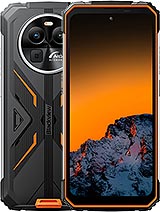
The Blackview BV8100 is a rugged mid-range smartphone featuring an 8800 mAh battery for multi-day endurance and a top-mounted dedicated high-power flashlight for professional utility, designed for field operations. Released in May 2024, it competes directly with enterprise-grade handhelds and other reinforced devices in the sub-300 EUR market.
Design choices on this handset prioritize survival over aesthetics. With dimensions of 175.8 x 81.2 x 18.1 mm and a weight of 360 g, this is not a device meant for a suit pocket. It is a tool meant for a holster or a tool belt. The physical construction utilizes a combination of reinforced rubberized corners and metallic side rails to absorb kinetic energy during impacts. The MIL-STD-810H compliance ensures the internal circuitry remains shielded from vibration and thermal shock, conditions frequently encountered on heavy machinery or in extreme climates.
Unlike traditional consumer phones, the chassis here is built to withstand more than just a light drizzle. The IP68 and IP69K ratings certify that the device is protected against high-pressure water jets and high-temperature steam cleaning. For those unaware, IP69K is a rigorous standard often found in food processing or heavy industrial environments where equipment must be sanitized with heat and pressure. The 1.2m drop resistance provides a safety net for accidental slips on concrete or steel scaffolding, making it a viable alternative to significantly more expensive dedicated scanners.
The loudspeaker performance is tuned for high-ambient-noise environments. In a factory setting or near active construction, a standard smartphone speaker often fails to cut through the din. This model pushes higher decibel levels to ensure that alarms and notifications are audible. While it lacks a 3.5mm jack—a common trend even in rugged sectors—the USB Type-C port handles audio duties and OTG data transfers for external peripherals like thermal cameras or specialized sensors.
Connectivity is handled by the Mediatek Helio G99 chipset, which limits the handset to 4G LTE. While some may view the lack of 5G as a drawback in May 2024, for many remote field operations, stable 4G bands are often more reliable than the shorter-range 5G signals. The network support is extensive, covering 23 global 4G bands, which ensures that teams operating in rural or international locations maintain consistent data uplinks. This makes it a reliable choice for logistics and long-haul transport where roaming across various frequency bands is necessary.
Visibility is a critical factor for any device used outdoors. The 6.5-inch IPS LCD offers a 120Hz refresh rate, which provides a smooth user experience when scrolling through complex schematics or logistics manifests. The resolution of 1080 x 2400 pixels keeps text sharp and legible. However, the peak brightness of 440 nits presents a challenge. In direct, high-noon sunlight, the screen may struggle to remain fully readable, requiring users to find shade or tilt the device to avoid glare.
Protection is provided by Corning Gorilla Glass 5. This material is designed to resist scratches from keys, tools, or grit. While it is durable, users operating in environments with fine abrasive dust or metal shavings might still consider a sacrificial screen protector. The polarization of the LCD panel appears standard, meaning it should be viewable in portrait or landscape while wearing most non-polarized safety glasses, though polarized sunglasses may cause some darkening at certain angles.
The haptic motor in the device is functional but lacks the pinpoint precision found in flagship vibration motors. It provides a noticeable buzz for notifications, which is helpful when the phone is in a heavy jacket pocket. However, it does not offer the subtle 'click' sensation for typing that higher-end X-axis linear motors provide. This is a minor compromise for a device where durability and battery take precedence.
GPS performance is a highlight for field technicians. It utilizes a quad-constellation setup involving GPS, GLONASS, GALILEO, and BDS. In our analysis of the hardware capabilities, this configuration allows for faster time-to-first-fix (TTFF) and better accuracy under tree cover or near tall buildings—a phenomenon known as the 'urban canyon' effect. For surveyors or emergency responders, the reliability of the location data is often as important as the physical toughness of the phone itself.
The 8800 mAh battery is the heart of the operational utility for the device. While standard phones typically hover around 5000 mAh, this extra capacity allows for approximately 48 to 72 hours of moderate usage without needing a charger. This is vital for workers on remote sites where power access is limited. The 45W wired charging is a necessary addition; given the massive capacity, a slower charger would take nearly a full night to replenish the cell. The 45W system can bring the device back to operational levels in a reasonable timeframe during a lunch break or shift change.
Additionally, the handset supports 5W reverse wired charging. This feature allows the device to function as a power bank for smaller accessories like Bluetooth headsets, smartwatches, or even a teammate's phone in an emergency. The Helio G99 chipset, built on a 6nm process, is known for its thermal efficiency. It manages power consumption effectively, ensuring that background tasks do not drain the battery prematurely during long periods of standby.
The primary 50 MP sensor offers the hardware potential for detailed documentation of work progress. In well-lit environments, it captures clear images of serial numbers, structural cracks, or wiring diagrams. The 13 MP ultrawide lens with autofocus is particularly useful for capturing small rooms or large equipment from a short distance. While it won't replace a DSLR for artistic photography, the PDAF (Phase Detection Auto Focus) on the main sensor ensures that focus is locked quickly, reducing the chance of blurry 'memos' from the field.
Perhaps the most practical hardware addition is the dedicated top-mounted flashlight. Unlike the small LED flashes used on standard smartphones, this high-power beam is designed for illumination. Whether inspecting dark crawlspaces, navigating unlit warehouses, or signaling during nighttime operations, this feature transforms the phone into a multi-tool. Having a dedicated physical control or easy access for this light means users do not have to fumble with the screen while wearing gloves.
Inside, the 8GB of RAM and 256GB of UFS 2.1 storage provide a responsive environment for Android 14. UFS 2.1 is an older but reliable storage standard that uses a command queue to prioritize data flow, ensuring that enterprise apps and database queries load without significant lag. For those requiring even more space for offline maps or documentation, the microSDXC slot allows for substantial expansion, though it does share a slot with the second SIM card.
The Blackview BV8100 stands as a formidable specialized tool. It does not try to be a slim flagship; it tries to be a reliable partner in environments that break standard electronics. For the foreman, the long-haul driver, or the field engineer, the trade-off in weight and thickness is more than justified by the peace of mind provided by the reinforced build and the massive battery life.
Armored Engineering and Structural Integrity
Design choices on this handset prioritize survival over aesthetics. With dimensions of 175.8 x 81.2 x 18.1 mm and a weight of 360 g, this is not a device meant for a suit pocket. It is a tool meant for a holster or a tool belt. The physical construction utilizes a combination of reinforced rubberized corners and metallic side rails to absorb kinetic energy during impacts. The MIL-STD-810H compliance ensures the internal circuitry remains shielded from vibration and thermal shock, conditions frequently encountered on heavy machinery or in extreme climates.
Unlike traditional consumer phones, the chassis here is built to withstand more than just a light drizzle. The IP68 and IP69K ratings certify that the device is protected against high-pressure water jets and high-temperature steam cleaning. For those unaware, IP69K is a rigorous standard often found in food processing or heavy industrial environments where equipment must be sanitized with heat and pressure. The 1.2m drop resistance provides a safety net for accidental slips on concrete or steel scaffolding, making it a viable alternative to significantly more expensive dedicated scanners.
Sonic Presence and Site Communications
The loudspeaker performance is tuned for high-ambient-noise environments. In a factory setting or near active construction, a standard smartphone speaker often fails to cut through the din. This model pushes higher decibel levels to ensure that alarms and notifications are audible. While it lacks a 3.5mm jack—a common trend even in rugged sectors—the USB Type-C port handles audio duties and OTG data transfers for external peripherals like thermal cameras or specialized sensors.
Connectivity is handled by the Mediatek Helio G99 chipset, which limits the handset to 4G LTE. While some may view the lack of 5G as a drawback in May 2024, for many remote field operations, stable 4G bands are often more reliable than the shorter-range 5G signals. The network support is extensive, covering 23 global 4G bands, which ensures that teams operating in rural or international locations maintain consistent data uplinks. This makes it a reliable choice for logistics and long-haul transport where roaming across various frequency bands is necessary.
The Sunlight Paradox
Visibility is a critical factor for any device used outdoors. The 6.5-inch IPS LCD offers a 120Hz refresh rate, which provides a smooth user experience when scrolling through complex schematics or logistics manifests. The resolution of 1080 x 2400 pixels keeps text sharp and legible. However, the peak brightness of 440 nits presents a challenge. In direct, high-noon sunlight, the screen may struggle to remain fully readable, requiring users to find shade or tilt the device to avoid glare.
Protection is provided by Corning Gorilla Glass 5. This material is designed to resist scratches from keys, tools, or grit. While it is durable, users operating in environments with fine abrasive dust or metal shavings might still consider a sacrificial screen protector. The polarization of the LCD panel appears standard, meaning it should be viewable in portrait or landscape while wearing most non-polarized safety glasses, though polarized sunglasses may cause some darkening at certain angles.
Tactile Feedback and Precise Navigation
The haptic motor in the device is functional but lacks the pinpoint precision found in flagship vibration motors. It provides a noticeable buzz for notifications, which is helpful when the phone is in a heavy jacket pocket. However, it does not offer the subtle 'click' sensation for typing that higher-end X-axis linear motors provide. This is a minor compromise for a device where durability and battery take precedence.
GPS performance is a highlight for field technicians. It utilizes a quad-constellation setup involving GPS, GLONASS, GALILEO, and BDS. In our analysis of the hardware capabilities, this configuration allows for faster time-to-first-fix (TTFF) and better accuracy under tree cover or near tall buildings—a phenomenon known as the 'urban canyon' effect. For surveyors or emergency responders, the reliability of the location data is often as important as the physical toughness of the phone itself.
Powering the Double Shift
The 8800 mAh battery is the heart of the operational utility for the device. While standard phones typically hover around 5000 mAh, this extra capacity allows for approximately 48 to 72 hours of moderate usage without needing a charger. This is vital for workers on remote sites where power access is limited. The 45W wired charging is a necessary addition; given the massive capacity, a slower charger would take nearly a full night to replenish the cell. The 45W system can bring the device back to operational levels in a reasonable timeframe during a lunch break or shift change.
Additionally, the handset supports 5W reverse wired charging. This feature allows the device to function as a power bank for smaller accessories like Bluetooth headsets, smartwatches, or even a teammate's phone in an emergency. The Helio G99 chipset, built on a 6nm process, is known for its thermal efficiency. It manages power consumption effectively, ensuring that background tasks do not drain the battery prematurely during long periods of standby.
Professional Optics and The Flashlight
The primary 50 MP sensor offers the hardware potential for detailed documentation of work progress. In well-lit environments, it captures clear images of serial numbers, structural cracks, or wiring diagrams. The 13 MP ultrawide lens with autofocus is particularly useful for capturing small rooms or large equipment from a short distance. While it won't replace a DSLR for artistic photography, the PDAF (Phase Detection Auto Focus) on the main sensor ensures that focus is locked quickly, reducing the chance of blurry 'memos' from the field.
Perhaps the most practical hardware addition is the dedicated top-mounted flashlight. Unlike the small LED flashes used on standard smartphones, this high-power beam is designed for illumination. Whether inspecting dark crawlspaces, navigating unlit warehouses, or signaling during nighttime operations, this feature transforms the phone into a multi-tool. Having a dedicated physical control or easy access for this light means users do not have to fumble with the screen while wearing gloves.
Technical Utility and Worksite Conclusion
Inside, the 8GB of RAM and 256GB of UFS 2.1 storage provide a responsive environment for Android 14. UFS 2.1 is an older but reliable storage standard that uses a command queue to prioritize data flow, ensuring that enterprise apps and database queries load without significant lag. For those requiring even more space for offline maps or documentation, the microSDXC slot allows for substantial expansion, though it does share a slot with the second SIM card.
The Blackview BV8100 stands as a formidable specialized tool. It does not try to be a slim flagship; it tries to be a reliable partner in environments that break standard electronics. For the foreman, the long-haul driver, or the field engineer, the trade-off in weight and thickness is more than justified by the peace of mind provided by the reinforced build and the massive battery life.
Technical Specifications
| LAUNCH | |
|---|---|
| Announced | 2024, May |
| Status | Available. Released 2024, May |
| PLATFORM | |
| OS | Android 14 |
| Chipset | Mediatek Helio G99 (6 nm) |
| CPU | Octa-core (2x2.2 GHz Cortex-A76 & 6x2.0 GHz Cortex-A55) |
| GPU | Mali-G57 MC2 |
| BODY | |
| Dimensions | 175.8 x 81.2 x 18.1 mm (6.92 x 3.20 x 0.71 in) |
| Weight | 360 g (12.70 oz) |
| SIM | Nano-SIM + Nano-SIM |
| Info | IP68/IP69K dust tight and water resistant (high pressure water jets; immersible up to 1.5m for 30 min) Drop resistant up to 1.2m MIL-STD-810H compliant Dedicated flashlight (top mounted) |
| DISPLAY | |
| Type | IPS LCD, 120Hz, 440 nits |
| Size | 6.5 inches, 102.0 cm2 (~71.5% screen-to-body ratio) |
| Resolution | 1080 x 2400 pixels, 20:9 ratio (~405 ppi density) |
| Protection | Corning Gorilla Glass 5 |
| MEMORY | |
| Card slot | microSDXC (uses shared SIM slot) |
| Internal | 256GB 8GB RAM |
| Info | UFS 2.1 |
| MAIN CAMERA | |
| Dual | 50 MP, f/1.8, (wide), 1/1.57", PDAF 13 MP, f/2.2, 120˚, (ultrawide), AF |
| Features | Dual-LED flash, HDR, panorama |
| Video | 1440p@30fps, 1080p@30fps |
| SELFIE CAMERA | |
| Single | 32 MP |
| Video | 1080p@30fps |
| SOUND | |
| Loudspeaker | Yes |
| 3.5mm jack | No |
| COMMS | |
| WLAN | Wi-Fi 802.11 a/b/g/n/ac, dual-band |
| Bluetooth | 5.0, A2DP, LE |
| Positioning | GPS, GLONASS, GALILEO, BDS |
| NFC | Yes |
| Radio | FM radio |
| USB | USB Type-C, OTG |
| NETWORK | |
| Technology | GSM / CDMA / HSPA / LTE |
| 2G bands | GSM 850 / 900 / 1800 / 1900 |
| Info | CDMA 800 / 1900 |
| 3G bands | HSDPA 850 / 900 / 1700(AWS) / 1900 / 2100 |
| 4G bands | 1, 2, 3, 4, 5, 7, 8, 12, 13, 17, 18, 19, 20, 25, 26, 28, 30, 34, 38, 39, 40, 41, 66 |
| Speed | HSPA, LTE |
| FEATURES | |
| Sensors | Fingerprint (side-mounted), accelerometer, gyro, proximity, compass |
| BATTERY | |
| Type | 8800 mAh |
| Charging | 45W wired 5W reverse wired |
| MISC | |
| Dimensions | 175.8 x 81.2 x 18.1 mm |
| Weight | 360 g |
| Display | 6.5-inch IPS LCD, 120Hz, 1080 x 2400 pixels |
| Chipset | Mediatek Helio G99 (6nm) |
| RAM/Storage | 8GB / 256GB UFS 2.1 |
| Battery | 8800 mAh, 45W Fast Charging |
| Main Camera | 50 MP Wide (PDAF), 13 MP Ultrawide (AF) |
| Selfie Camera | 32 MP |
| Durability | IP68/IP69K, MIL-STD-810H, Drop-resistant (1.2m) |
| OS | Android 14 |
| Protection | Corning Gorilla Glass 5 |
| Special Feature | Dedicated top-mounted high-power flashlight |
| Processor | Mediatek Helio G99 (6nm) |
| Memory | 8GB RAM / 256GB UFS 2.1 Storage |
| Colors | Black, Green, Orange |
| Price | About 270 EUR |