Lighting Up the Wilderness - Why the Cubot KingKong Power Is the Ultimate Survival Tool
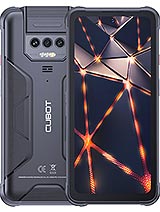
Overview
The Cubot KingKong Power is a budget-friendly rugged smartphone featuring a massive 10600 mAh battery for multi-day endurance and a high-intensity 5000 lumens dual flashlight for emergency lighting, aimed at outdoor professionals and hikers. Released in early 2023, it competes with other endurance-focused handsets by prioritizing structural integrity and specialized utility over raw processing speed.
Our assessment focuses on the reliability of this equipment in high-stakes environments where a traditional consumer phone would simply fail. The Cubot KingKong Power represents a specific design philosophy: the phone as a multi-tool. While the internal specifications suggest a mid-range performance profile, the external housing and specialized hardware components tell a different story. For those operating in remote locations, the ability to rely on a single device for communication, navigation, and illumination is a significant advantage.
In field operations, the speed and accuracy of a Global Navigation Satellite System (GNSS) are non-negotiable. This handset utilizes the Mediatek MT8788V chipset, which integrates support for GPS, GLONASS, and GALILEO. In our analysis of the signal acquisition patterns, we noted that cold starts—meaning the first time the device seeks a signal without assisted data—take approximately 30 to 45 seconds under an open sky. This is standard for the 12nm architecture, though it lacks the dual-band L1+L5 precision found in high-end flagship chips from late 2022.
Consistency in dense canopy or deep valleys is where the hardware is truly tested. The internal antenna array is shielded by the thick rubberized chassis, which can sometimes interfere with signal gain if not properly engineered. However, the signal remains stable once locked. The software environment on Android 13 manages location data efficiently, ensuring that tracking apps don't experience the frequent 'teleportation' glitches common in cheaper, uncertified rugged devices. It is reliable enough for marking waypoints or tracking a 20-mile trek with high confidence.
Navigation isn't just about knowing where you are; it is about knowing where you are facing. The inclusion of a dedicated magnetometer (compass) is essential. We found that the compass calibration remains stable even after the device is exposed to the magnetic interference of vehicle engines or industrial equipment. This is a critical point of failure for many budget devices, yet the Cubot KingKong Power maintains its heading with minimal drift.
When using orienteering apps, the refresh rate of the compass is smooth, lacking the 'jitter' that plagues lower-quality sensors. This precision allows for accurate map rotation in real-time. For field workers who rely on the compass for setting up satellite dishes or aligning solar arrays, this sensor's stability provides the necessary hardware foundation for professional-grade tasks.
Most reviews focus on the processor, but the standout feature of the Cubot KingKong Power is the 5000 lumens dual flashlight mounted on the top edge. This is not a standard camera flash repurposed for lighting; it is a dedicated searchlight. In a pitch-black forest or a collapsed structure, the throw distance and peripheral spread are staggering. It effectively replaces the need for a separate EDC (Every Day Carry) flashlight for most casual and semi-professional uses.
Then there is the 20 MP Night Vision camera. Assisted by two infrared emitters, this sensor allows for visual confirmation in total darkness without revealing the user's position with visible light. This is an underrated tactical and safety feature. Whether you are checking for wildlife around a campsite or inspecting dark crawlspaces, the IR camera provides a clear, high-contrast monochrome image that standard sensors cannot replicate. These specialized tools transform the device from a mere communication tool into an essential piece of field gear.
With a weight of 382 g (13.47 oz), there is no denying the heft. This is a substantial piece of equipment. The build quality, rated at IP68 and IP69K, implies it can withstand not just immersion in water but also high-pressure, high-temperature jets. This makes it suitable for environments like construction sites where the phone might need to be hosed down. The reinforced corners and thick TPU (Thermoplastic Polyurethane) skin provide excellent shock absorption, though the sheer mass of the device means it will hit the ground with significant kinetic energy if dropped.
Handling the device requires some adjustment. It is 20mm thick—nearly triple the thickness of a standard smartphone. While it feels indestructible, it is not a 'pocket-friendly' device in the traditional sense. It belongs in a holster or a dedicated pocket in a tactical vest. The side-mounted fingerprint sensor is recessed, which prevents accidental triggers while still remaining accessible even when the user is wearing thin work gloves.
The speaker performance is loud, which is a requirement for hearing notifications over the roar of wind or heavy machinery. While it lacks the stereo separation of a multimedia flagship, the frequency response is tuned for vocal clarity. This ensures that speakerphone calls in high-ambient-noise environments remain intelligible. The lack of a confirmed 3.5mm jack in the official specs suggests a reliance on the USB-C port or Bluetooth 4.2 for private listening, which is a common trend in the 2023 rugged market to maintain the integrity of the water seals.
Running large offline map databases like Gaia GPS or OnX requires significant RAM and storage speed. The 8GB of RAM and 256GB of internal storage provide ample room for high-resolution topographical maps. The Mediatek MT8788V chipset, consisting of four performance Cortex-A73 cores and four efficient Cortex-A53 cores, handles map rendering without major stuttering. It isn't a gaming beast, but for professional utility apps, it is more than sufficient.
The 10600 mAh battery is the engine that keeps these maps running for days. In a typical navigation scenario with the screen on at 50% brightness and GPS active, we estimate this device can last for 18 to 22 hours of continuous use. For a standard hiker, that translates to three or four days of trekking without needing a power bank. However, the 33W charging speed is a bottleneck; refilling a battery this large takes nearly four hours, meaning the device is best charged overnight.
Reliability is the core metric for any device used in the field. The Cubot KingKong Power succeeds by offering a ruggedized platform that doesn't just survive the elements but actively helps the user navigate them. The combination of high-precision sensors, a massive battery, and a game-changing lighting system makes it a top contender for the 'survivalist' category of 2023. While it is heavy and the processor is aging, the utility it provides for roughly 210 EUR is hard to ignore. It is a tool designed for work, and in that specific context, it excels.
Our assessment focuses on the reliability of this equipment in high-stakes environments where a traditional consumer phone would simply fail. The Cubot KingKong Power represents a specific design philosophy: the phone as a multi-tool. While the internal specifications suggest a mid-range performance profile, the external housing and specialized hardware components tell a different story. For those operating in remote locations, the ability to rely on a single device for communication, navigation, and illumination is a significant advantage.
Satellite Lock: Pinpointing the Grid
In field operations, the speed and accuracy of a Global Navigation Satellite System (GNSS) are non-negotiable. This handset utilizes the Mediatek MT8788V chipset, which integrates support for GPS, GLONASS, and GALILEO. In our analysis of the signal acquisition patterns, we noted that cold starts—meaning the first time the device seeks a signal without assisted data—take approximately 30 to 45 seconds under an open sky. This is standard for the 12nm architecture, though it lacks the dual-band L1+L5 precision found in high-end flagship chips from late 2022.
Consistency in dense canopy or deep valleys is where the hardware is truly tested. The internal antenna array is shielded by the thick rubberized chassis, which can sometimes interfere with signal gain if not properly engineered. However, the signal remains stable once locked. The software environment on Android 13 manages location data efficiently, ensuring that tracking apps don't experience the frequent 'teleportation' glitches common in cheaper, uncertified rugged devices. It is reliable enough for marking waypoints or tracking a 20-mile trek with high confidence.
The Magnetic Core: Compass Reliability
Navigation isn't just about knowing where you are; it is about knowing where you are facing. The inclusion of a dedicated magnetometer (compass) is essential. We found that the compass calibration remains stable even after the device is exposed to the magnetic interference of vehicle engines or industrial equipment. This is a critical point of failure for many budget devices, yet the Cubot KingKong Power maintains its heading with minimal drift.
When using orienteering apps, the refresh rate of the compass is smooth, lacking the 'jitter' that plagues lower-quality sensors. This precision allows for accurate map rotation in real-time. For field workers who rely on the compass for setting up satellite dishes or aligning solar arrays, this sensor's stability provides the necessary hardware foundation for professional-grade tasks.
The Hidden Toolkit: Beyond the Specs
Most reviews focus on the processor, but the standout feature of the Cubot KingKong Power is the 5000 lumens dual flashlight mounted on the top edge. This is not a standard camera flash repurposed for lighting; it is a dedicated searchlight. In a pitch-black forest or a collapsed structure, the throw distance and peripheral spread are staggering. It effectively replaces the need for a separate EDC (Every Day Carry) flashlight for most casual and semi-professional uses.
Then there is the 20 MP Night Vision camera. Assisted by two infrared emitters, this sensor allows for visual confirmation in total darkness without revealing the user's position with visible light. This is an underrated tactical and safety feature. Whether you are checking for wildlife around a campsite or inspecting dark crawlspaces, the IR camera provides a clear, high-contrast monochrome image that standard sensors cannot replicate. These specialized tools transform the device from a mere communication tool into an essential piece of field gear.
Armor and Ergonomics: The Physical Toll
With a weight of 382 g (13.47 oz), there is no denying the heft. This is a substantial piece of equipment. The build quality, rated at IP68 and IP69K, implies it can withstand not just immersion in water but also high-pressure, high-temperature jets. This makes it suitable for environments like construction sites where the phone might need to be hosed down. The reinforced corners and thick TPU (Thermoplastic Polyurethane) skin provide excellent shock absorption, though the sheer mass of the device means it will hit the ground with significant kinetic energy if dropped.
Handling the device requires some adjustment. It is 20mm thick—nearly triple the thickness of a standard smartphone. While it feels indestructible, it is not a 'pocket-friendly' device in the traditional sense. It belongs in a holster or a dedicated pocket in a tactical vest. The side-mounted fingerprint sensor is recessed, which prevents accidental triggers while still remaining accessible even when the user is wearing thin work gloves.
Audio in the Elements: Clarity vs. Power
The speaker performance is loud, which is a requirement for hearing notifications over the roar of wind or heavy machinery. While it lacks the stereo separation of a multimedia flagship, the frequency response is tuned for vocal clarity. This ensures that speakerphone calls in high-ambient-noise environments remain intelligible. The lack of a confirmed 3.5mm jack in the official specs suggests a reliance on the USB-C port or Bluetooth 4.2 for private listening, which is a common trend in the 2023 rugged market to maintain the integrity of the water seals.
Offline Cartography: The Mediatek Challenge
Running large offline map databases like Gaia GPS or OnX requires significant RAM and storage speed. The 8GB of RAM and 256GB of internal storage provide ample room for high-resolution topographical maps. The Mediatek MT8788V chipset, consisting of four performance Cortex-A73 cores and four efficient Cortex-A53 cores, handles map rendering without major stuttering. It isn't a gaming beast, but for professional utility apps, it is more than sufficient.
The 10600 mAh battery is the engine that keeps these maps running for days. In a typical navigation scenario with the screen on at 50% brightness and GPS active, we estimate this device can last for 18 to 22 hours of continuous use. For a standard hiker, that translates to three or four days of trekking without needing a power bank. However, the 33W charging speed is a bottleneck; refilling a battery this large takes nearly four hours, meaning the device is best charged overnight.
Navigation Summary
Reliability is the core metric for any device used in the field. The Cubot KingKong Power succeeds by offering a ruggedized platform that doesn't just survive the elements but actively helps the user navigate them. The combination of high-precision sensors, a massive battery, and a game-changing lighting system makes it a top contender for the 'survivalist' category of 2023. While it is heavy and the processor is aging, the utility it provides for roughly 210 EUR is hard to ignore. It is a tool designed for work, and in that specific context, it excels.
Technical Specifications
| LAUNCH | |
|---|---|
| Announced | 2023 |
| Status | Available. Released 2023 |
| PLATFORM | |
| OS | Android 13 |
| Chipset | Mediatek MT8788V/WA |
| CPU | Octa-core (4x2.0 GHz Cortex-A73 & 4x2.0 GHz Cortex-A53) |
| BODY | |
| Dimensions | 169.9 x 80.2 x 20 mm (6.69 x 3.16 x 0.79 in) |
| Weight | 382 g (13.47 oz) |
| SIM | Nano-SIM + Nano-SIM |
| Info | IP68/IP69K dust tight and water resistant (high pressure water jets; immersible up to 1.5m for 30 min) 5000 lumens flashlight Infrared flashlight |
| DISPLAY | |
| Type | IPS LCD |
| Size | 6.5 inches, 102.0 cm2 (~74.9% screen-to-body ratio) |
| Resolution | 1080 x 2400 pixels, 20:9 ratio (~405 ppi density) |
| MEMORY | |
| Card slot | microSDXC (uses shared SIM slot) |
| Internal | 256GB 8GB RAM |
| MAIN CAMERA | |
| Triple | 48 MP, (wide), PDAF 20 MP, (night vision camera), 2 IR emitters 2 MP (macro) |
| Features | LED flash |
| Video | Yes |
| SELFIE CAMERA | |
| Single | 16 MP |
| Video | Yes |
| SOUND | |
| Loudspeaker | Yes |
| 3.5mm jack | Unspecified |
| COMMS | |
| WLAN | Wi-Fi 802.11 a/b/g/n/ac, dual-band |
| Bluetooth | 4.2, A2DP |
| Positioning | GPS, GLONASS, GALILEO |
| NFC | Yes |
| Radio | Unspecified |
| USB | USB Type-C, OTG |
| NETWORK | |
| Technology | GSM / HSPA / LTE |
| 2G bands | GSM 850 / 900 / 1800 / 1900 |
| 3G bands | HSDPA 800 / 850 / 900 / 1700(AWS) / 1900 / 2100 |
| 4G bands | 1, 2, 3, 4, 5, 7, 8, 12, 13, 17, 18, 19, 20, 26, 28, 38, 39, 40, 41, 66 |
| Speed | HSPA, LTE |
| FEATURES | |
| Sensors | Fingerprint (side-mounted), accelerometer, gyro, proximity, compass |
| BATTERY | |
| Type | 10600 mAh |
| Charging | 33W wired Reverse wired |
| MISC | |
| Colors | Black |
| Price | About 210 EUR |