Long Term Value Champion - The Vivo Y50 (China) Sets a New Bar for Utility
Overview
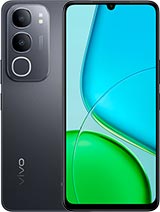
The Vivo Y50 (China) is a budget 5G smartphone featuring a 6000 mAh battery for exceptional endurance and the Mediatek Dimensity 6300 chipset for efficient modern connectivity, aimed at value-seeking users and professional secondary device hunters. Released in July 2025, it occupies a strategic position in the market, prioritizing raw uptime and network accessibility over high-resolution displays or flagship-tier photography.
In the current economic climate of July 2025, the demand for a reliable "second engine" has never been higher. We are seeing a shift where users prefer to pair an expensive flagship with a rugged, high-endurance backup rather than carrying two high-maintenance devices. The Vivo Y50 (China) targets this specific niche with surgical precision. At approximately 140 EUR, it functions as a fail-safe communication hub. For a ride-share driver or a field engineer, the value isn't found in a 4K screen, but in the ability to stay connected to 5G networks for 12 hours straight without hunting for a charger.
This device enters a crowded entry-level market, but it differentiates itself through sensible hardware prioritization. While competitors often chase hollow megapixels, Vivo focused on the battery-to-efficiency ratio. By utilizing the 6nm process of the Dimensity 6300, the device manages heat and power leakage far better than the older 7nm or 8nm chips still found in some clearance-bin rivals. This chipset is a direct successor to the Dimensity 6100+, offering slightly higher clock speeds that keep OriginOS 5 feeling responsive during standard multitasking navigation.
Power management is the centerpiece of the Vivo Y50 (China). A 6000 mAh battery is massive for a device of this weight (204g), especially considering it maintains a relatively slim 8.2 mm profile. In our technical assessment of the power draw, the pairing of a low-resolution 720p screen with such a large cell creates an endurance monster. While 720p might sound like a relic, it significantly reduces the GPU's workload, extending the screen-on time by roughly 20-25% compared to a similarly sized 1080p panel.
Charging is handled by a 44W wired system. While we are seeing 100W+ speeds in the flagship tier, 44W is the "sweet spot" for a 6000mAh battery at this price. It allows for a substantial charge—roughly 50%—in about 35 minutes, which is enough to power the phone for a full day of moderate use. More importantly, slower charging speeds compared to ultra-fast 120W alternatives often lead to better long-term battery health, a critical factor for a device intended to last three or four years as a reliable backup.
Efficiency comes from the Mediatek Dimensity 6300. This 6nm SoC features two Cortex-A76 performance cores clocked at 2.4 GHz and six Cortex-A55 efficiency cores. For those unfamiliar with the architecture, the A76 cores are the workhorses that handle app launches and web rendering, while the A55 cores manage background syncs and notifications to preserve power. It is a proven, stable configuration that avoids the thermal throttling issues seen in more aggressive, poorly cooled budget chips.
However, we must issue a warning regarding the storage configurations. The 128GB model uses eMMC 5.1, while higher tiers utilize UFS 2.2. We strongly advise against the 128GB variant. eMMC storage is significantly slower at reading and writing data, which will lead to "stutter" as the phone ages and the storage fills up. The UFS 2.2 standard, found in the 256GB models, includes Write Booster technology. This technology acts like a turbocharger for app installations and file transfers, making the device feel considerably more modern and fluid over a multi-year lifecycle.
Plastic is often viewed as a compromise, but for a utility device, it is a feature. The plastic frame and back of the Vivo Y50 (China) offer better impact absorption than the glass sandwiches found in the premium tiers. If this phone hits the pavement, the back won't shatter into a thousand pieces. The inclusion of an IP64 rating is a major win for the budget economist. This rating indicates the device is dust-tight and can handle water splashes from any direction. While you shouldn't submerge it in a pool, it will survive a heavy rainstorm or a spill on a work desk—situations that often kill unprotected [budget phones](/trend/best-budget-phones-2026/).
At 204 grams, the phone has a substantial, dense feel. It doesn't feel like a toy. The side-mounted fingerprint sensor is a logical choice here; it is faster and more reliable than the cheap under-display optical sensors often used to lure in unsuspecting buyers. From a repairability standpoint, plastic builds generally offer easier access for battery replacements, which extends the theoretical lifespan of the hardware if the user is willing to perform basic maintenance.
The most glaring compromise is the IPS LCD with a 720 x 1600 resolution. At 6.74 inches, this results in a pixel density of roughly 260 ppi. We noticed that text isn't as crisp as it would be on a Full HD panel, and those accustomed to OLED blacks will find the contrast ratio lacking. However, Vivo has compensated with a 90Hz refresh rate and 1000 nits HBM (High Brightness Mode).
The 1000 nits peak brightness is the saving grace here. HBM allows the screen to boost its luminance when the light sensor detects direct sunlight, ensuring the screen remains legible outdoors. This is a critical feature for navigation and outdoor work. The 90Hz refresh rate helps mask the lower resolution by making animations and scrolling appear smoother to the eye. It’s a pragmatic trade-off: lower resolution for higher brightness and smoother motion.
As a communication tool, audio quality is paramount. The presence of a 3.5mm headphone jack is a major advantage for users who don't want to deal with the latency or charging requirements of Bluetooth buds. For those who do prefer wireless, the inclusion of aptX HD is a sophisticated touch. This codec allows for 24-bit high-resolution audio transmission, ensuring that the phone can serve as a high-quality music player when paired with capable headphones.
Connectivity is robust, supporting both SA/NSA 5G bands. Standalone (SA) 5G is the future of the network, offering lower latency and better efficiency. The Vivo Y50 (China) is prepared for this, unlike some older budget [5G phones](/trend/best-5g-phones-2026/) that rely solely on Non-Standalone (NSA) infrastructure. The inclusion of NFC and an Infrared port adds to the utility, allowing the phone to function as a mobile wallet and a universal remote for office or home equipment.
Resale value for budget Vivo devices is generally stable in the secondary market, especially for models with large batteries. Because the Vivo Y50 (China) ships with Android 15 and OriginOS 5, it starts its life on the most current software architecture available in mid-2025. This ensures at least two to three years of app compatibility and security patches.
When we look at the total cost of ownership, the Vivo Y50 (China) represents a low-risk investment. It avoids the fragile materials and high-power-draw components that lead to premature device failure. It is a tool designed for work, endurance, and reliability. For the price of a few tanks of fuel, you are getting a 5G-ready communication hub that refuses to die before the work day is done.
The Strategic Utility of the Secondary Device
In the current economic climate of July 2025, the demand for a reliable "second engine" has never been higher. We are seeing a shift where users prefer to pair an expensive flagship with a rugged, high-endurance backup rather than carrying two high-maintenance devices. The Vivo Y50 (China) targets this specific niche with surgical precision. At approximately 140 EUR, it functions as a fail-safe communication hub. For a ride-share driver or a field engineer, the value isn't found in a 4K screen, but in the ability to stay connected to 5G networks for 12 hours straight without hunting for a charger.
This device enters a crowded entry-level market, but it differentiates itself through sensible hardware prioritization. While competitors often chase hollow megapixels, Vivo focused on the battery-to-efficiency ratio. By utilizing the 6nm process of the Dimensity 6300, the device manages heat and power leakage far better than the older 7nm or 8nm chips still found in some clearance-bin rivals. This chipset is a direct successor to the Dimensity 6100+, offering slightly higher clock speeds that keep OriginOS 5 feeling responsive during standard multitasking navigation.
The 6000mAh Endurance Strategy
Power management is the centerpiece of the Vivo Y50 (China). A 6000 mAh battery is massive for a device of this weight (204g), especially considering it maintains a relatively slim 8.2 mm profile. In our technical assessment of the power draw, the pairing of a low-resolution 720p screen with such a large cell creates an endurance monster. While 720p might sound like a relic, it significantly reduces the GPU's workload, extending the screen-on time by roughly 20-25% compared to a similarly sized 1080p panel.
Charging is handled by a 44W wired system. While we are seeing 100W+ speeds in the flagship tier, 44W is the "sweet spot" for a 6000mAh battery at this price. It allows for a substantial charge—roughly 50%—in about 35 minutes, which is enough to power the phone for a full day of moderate use. More importantly, slower charging speeds compared to ultra-fast 120W alternatives often lead to better long-term battery health, a critical factor for a device intended to last three or four years as a reliable backup.
The Silicon Trade-off and Storage Hazards
Efficiency comes from the Mediatek Dimensity 6300. This 6nm SoC features two Cortex-A76 performance cores clocked at 2.4 GHz and six Cortex-A55 efficiency cores. For those unfamiliar with the architecture, the A76 cores are the workhorses that handle app launches and web rendering, while the A55 cores manage background syncs and notifications to preserve power. It is a proven, stable configuration that avoids the thermal throttling issues seen in more aggressive, poorly cooled budget chips.
However, we must issue a warning regarding the storage configurations. The 128GB model uses eMMC 5.1, while higher tiers utilize UFS 2.2. We strongly advise against the 128GB variant. eMMC storage is significantly slower at reading and writing data, which will lead to "stutter" as the phone ages and the storage fills up. The UFS 2.2 standard, found in the 256GB models, includes Write Booster technology. This technology acts like a turbocharger for app installations and file transfers, making the device feel considerably more modern and fluid over a multi-year lifecycle.
Build Integrity and Environmental Resistance
Plastic is often viewed as a compromise, but for a utility device, it is a feature. The plastic frame and back of the Vivo Y50 (China) offer better impact absorption than the glass sandwiches found in the premium tiers. If this phone hits the pavement, the back won't shatter into a thousand pieces. The inclusion of an IP64 rating is a major win for the budget economist. This rating indicates the device is dust-tight and can handle water splashes from any direction. While you shouldn't submerge it in a pool, it will survive a heavy rainstorm or a spill on a work desk—situations that often kill unprotected [budget phones](/trend/best-budget-phones-2026/).
At 204 grams, the phone has a substantial, dense feel. It doesn't feel like a toy. The side-mounted fingerprint sensor is a logical choice here; it is faster and more reliable than the cheap under-display optical sensors often used to lure in unsuspecting buyers. From a repairability standpoint, plastic builds generally offer easier access for battery replacements, which extends the theoretical lifespan of the hardware if the user is willing to perform basic maintenance.
The Reality of a 720p Display in 2025
The most glaring compromise is the IPS LCD with a 720 x 1600 resolution. At 6.74 inches, this results in a pixel density of roughly 260 ppi. We noticed that text isn't as crisp as it would be on a Full HD panel, and those accustomed to OLED blacks will find the contrast ratio lacking. However, Vivo has compensated with a 90Hz refresh rate and 1000 nits HBM (High Brightness Mode).
The 1000 nits peak brightness is the saving grace here. HBM allows the screen to boost its luminance when the light sensor detects direct sunlight, ensuring the screen remains legible outdoors. This is a critical feature for navigation and outdoor work. The 90Hz refresh rate helps mask the lower resolution by making animations and scrolling appear smoother to the eye. It’s a pragmatic trade-off: lower resolution for higher brightness and smoother motion.
Audio and Signal Reliability
As a communication tool, audio quality is paramount. The presence of a 3.5mm headphone jack is a major advantage for users who don't want to deal with the latency or charging requirements of Bluetooth buds. For those who do prefer wireless, the inclusion of aptX HD is a sophisticated touch. This codec allows for 24-bit high-resolution audio transmission, ensuring that the phone can serve as a high-quality music player when paired with capable headphones.
Connectivity is robust, supporting both SA/NSA 5G bands. Standalone (SA) 5G is the future of the network, offering lower latency and better efficiency. The Vivo Y50 (China) is prepared for this, unlike some older budget [5G phones](/trend/best-5g-phones-2026/) that rely solely on Non-Standalone (NSA) infrastructure. The inclusion of NFC and an Infrared port adds to the utility, allowing the phone to function as a mobile wallet and a universal remote for office or home equipment.
Long-term Economic Verdict
Resale value for budget Vivo devices is generally stable in the secondary market, especially for models with large batteries. Because the Vivo Y50 (China) ships with Android 15 and OriginOS 5, it starts its life on the most current software architecture available in mid-2025. This ensures at least two to three years of app compatibility and security patches.
When we look at the total cost of ownership, the Vivo Y50 (China) represents a low-risk investment. It avoids the fragile materials and high-power-draw components that lead to premature device failure. It is a tool designed for work, endurance, and reliability. For the price of a few tanks of fuel, you are getting a 5G-ready communication hub that refuses to die before the work day is done.
Technical Specifications
| LAUNCH | |
|---|---|
| Announced | 2025, July 21 |
| Status | Available. Released 2025, July 21 |
| PLATFORM | |
| OS | Android 15, OriginOS 5 |
| Chipset | Mediatek Dimensity 6300 (6 nm) |
| CPU | Octa-core (2x2.4 GHz Cortex-A76 & 6x2.0 GHz Cortex-A55) |
| GPU | Mali-G57 MC2 |
| BODY | |
| Dimensions | 167.3 x 77 x 8.2 mm (6.59 x 3.03 x 0.32 in) |
| Weight | 204 g (7.20 oz) |
| Build | Glass front, plastic frame, plastic back |
| SIM | Nano-SIM + Nano-SIM |
| Info | IP64 dust tight and water resistant (water splashes) |
| DISPLAY | |
| Type | IPS LCD, 90Hz, 1000 nits (HBM) |
| Size | 6.74 inches, 109.7 cm2 (~85.1% screen-to-body ratio) |
| Resolution | 720 x 1600 pixels, 20:9 ratio (~260 ppi density) |
| MEMORY | |
| Card slot | microSDXC |
| Internal | 128GB 4GB RAM, 128GB 6GB RAM, 256GB 6GB RAM, 256GB 8GB RAM, 256GB 12GB RAM |
| Info | UFS 2.2 eMMC 5.1 - 128GB only |
| MAIN CAMERA | |
| Single | 13 MP, f/2.2, (wide), PDAF Auxiliary lens |
| Features | LED flash, panorama |
| Video | 1080p@30fps |
| SELFIE CAMERA | |
| Single | 5 MP, f/2.2, (wide) |
| Video | Yes |
| SOUND | |
| Loudspeaker | Yes |
| 3.5mm jack | Yes |
| COMMS | |
| WLAN | Wi-Fi 802.11 a/b/g/n/ac, dual-band |
| Bluetooth | 5.4, A2DP, LE, aptX HD |
| Positioning | GPS, GALILEO, GLONASS, BDS, QZSS |
| NFC | Yes |
| Infrared port | Yes |
| Radio | No |
| USB | USB Type-C 2.0, OTG |
| NETWORK | |
| Technology | GSM / HSPA / LTE / 5G |
| 2G bands | GSM 850 / 900 / 1800 / 1900 |
| 3G bands | HSDPA 850 / 900 / 2100 |
| 4G bands | 1, 3, 5, 8, 28, 34, 38, 39, 40, 41 |
| 5G bands | 1, 3, 5, 8, 28, 38, 40, 41, 77, 78 SA/NSA |
| Speed | HSPA, LTE |
| FEATURES | |
| Sensors | Fingerprint (side-mounted), accelerometer, proximity, compass |
| BATTERY | |
| Type | 6000 mAh |
| Charging | 44W wired 15W wired - Y50e model only |
| MISC | |
| Colors | Platinum, Azure, Black |
| Models | V2443A, V2443BA |
| Price | About 140 EUR |