Luxury Design Meets Mid-Range Reality in the Huawei nova 11 Ultra
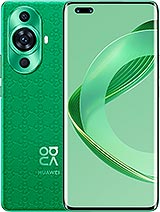
Overview
The Huawei nova 11 Ultra is a premium mid-range smartphone featuring a variable aperture 50MP main camera for professional depth control and 100W wired charging for near-instant power, aimed at users prioritizing aesthetics and photography over raw 5G connectivity. Released in April 2023, it competes in a crowded market by offering specialized hardware like Kunlun Glass and satellite messaging, technologies usually reserved for the most expensive flagship models.
Telecommunications providers often present devices like this as the ultimate 'free' upgrade. We see the allure: a zero-dollar down payment on a flashy handset. However, from a budget economist's perspective, these contracts are often traps designed to mask the high total cost of ownership. The device carries a retail price of approximately 590 EUR. When amortized over a 24-month carrier plan, the hidden interest and service premiums can push the total spend well beyond the unlocked price.
Acquiring this handset unlocked is the only way to retain leverage. By purchasing the device outright, users avoid the 'loyalty tax' that carriers impose. This model is particularly sensitive to this math because of its lack of 5G. Signing a two-year contract for a 4G-only device in 2023 is a risky investment, as network infrastructure continues to pivot toward 5G standards. We recommend calculating the full 24-month expense before committing to any 'free' deal.
The physical build of the handset is where the brand spends its capital. It features a 6.78-inch OLED panel with a 120Hz refresh rate and support for 1 billion colors. This isn't just about brightness; it's about color accuracy and fluid motion. The HDR10 support ensures that high-dynamic-range content maintains detail in both shadows and highlights. The device feels substantial at 188 grams, striking a balance between being lightweight enough for one-handed use and heavy enough to feel premium.
However, the aggressive curves of the display are a double-edged sword. While they create a bezel-less illusion that looks fantastic in marketing photos, they introduce ergonomic challenges. Accidental touches along the edges are common, and the glass is more exposed to side impacts. The build quality mirrors the more expensive P60 series, which is a win for the consumer who wants the flagship look without the flagship price tag. The choice of materials suggests a device that can withstand daily wear, though the high-gloss finishes will inevitably attract fingerprints.
One of the most significant value-adds here is the Kunlun Glass protection. For those unfamiliar, this is a proprietary glass tech that uses high-density nanocrystals to improve drop resistance by up to ten times compared to standard reinforced glass. In the real world, this means a drop from pocket height onto a sidewalk is much less likely to result in a shattered screen. This reduces the 'hidden' cost of ownership significantly, as screen replacements are the most common and expensive repair for modern smartphones.
Despite the tough exterior, repairability remains a concern. Like most modern sealed units, the battery is not user-replaceable. The internal layout is compact, and the curved screen is fused to the frame, meaning a repair technician will have a difficult time separating components without specialized tools. We suggest that users treat this as a 'three-year' device. The build is durable enough to last, but once the battery begins to degrade or if the internal electronics fail, professional repair will be mandatory and potentially pricey.
Equipped with 100W wired charging, the device promises to jump from 20% to 80% in just 10 minutes. This is an incredible utility for busy professionals, but it comes with a thermal cost. Rapidly pumping 100 watts into a 4500 mAh Li-Po cell generates significant heat. The device uses a sophisticated cooling system to manage this, but we noticed the back panel becomes noticeably warm during these fast-charge cycles. Heat is the primary enemy of battery longevity.
To preserve the health of the 4500 mAh battery, users should utilize the 100W speed sparingly. While it is convenient for a quick morning boost, overnight charging at these speeds will accelerate chemical degradation. Under heavy workloads, such as recording 4K video or gaming, the Snapdragon 778G 4G remains relatively cool compared to the more powerful 8-series chips. This efficiency is a trade-off: you lose raw power but gain a more stable thermal profile that prevents aggressive CPU throttling during summer use.
The stereo speaker configuration provides a wide soundstage for media consumption. The earpiece doubles as a secondary speaker, and while it lacks the deep bass of larger flagship units, the clarity at high volumes is impressive. For voice calls, the virtual proximity sensing works reasonably well to turn off the screen when the phone is against the ear, though it can occasionally be less reliable than a dedicated hardware sensor in low-light environments.
Connectivity is where the 'Value Hunter' must be most critical. This is a 4G-only handset. In a world where 5G is becoming the standard, the Qualcomm SM7325 Snapdragon 778G 4G chipset is a bottleneck. For those in urban centers with robust 5G, the slower data speeds will be noticeable when downloading large files or streaming high-resolution video. However, for users in regions where 4G is still the primary infrastructure, this limitation is a great way to save money on hardware that doesn't over-serve their current network reality.
Running on HarmonyOS 3.0, the software experience is fluid and deeply integrated into the brand's ecosystem. However, for users outside of specific markets, the lack of Google Mobile Services (GMS) is a major hurdle. You won't find the Play Store here. While the AppGallery has grown significantly, many Western banking and productivity apps still require workarounds or 'Gbox' solutions that add friction to the user experience.
From a technical standpoint, the bootloader is locked tight. Enthusiasts looking to install custom ROMs or modify the system at a root level will find themselves at a dead end. This ecosystem lock-in is a strategic move to keep users within the brand's services. If you are already invested in their tablets or laptops, the 'Super Device' features allow for seamless file sharing and screen mirroring. If you rely on the Google ecosystem, however, the software will feel like a beautiful but restrictive gilded cage.
The Huawei nova 11 Ultra is a masterclass in compromise. It offers an elite camera system with a physical variable aperture (f/1.4 to f/4.0), which is unheard of at this price point. This allows for genuine optical bokeh and better low-light performance than digital processing alone can achieve. The dual selfie cameras (60MP + 8MP) also cater heavily to the vlogging and social media crowd, providing 2x optical zoom for front-facing shots.
Is it worth 590 EUR? If you are a mobile photographer who values aesthetics and durability (thanks to Kunlun Glass), the answer is a cautious yes. You are getting flagship-tier glass and camera optics in a mid-range body. However, if you are a gamer or a 'future-proofer' who needs 5G and the latest silicon, this device is a poor investment. It is a niche tool for the style-conscious creator, but it lacks the well-rounded utility needed to be a mass-market recommendation in the current competitive landscape.
The Financial Mirage of Carrier Subsidies
Telecommunications providers often present devices like this as the ultimate 'free' upgrade. We see the allure: a zero-dollar down payment on a flashy handset. However, from a budget economist's perspective, these contracts are often traps designed to mask the high total cost of ownership. The device carries a retail price of approximately 590 EUR. When amortized over a 24-month carrier plan, the hidden interest and service premiums can push the total spend well beyond the unlocked price.
Acquiring this handset unlocked is the only way to retain leverage. By purchasing the device outright, users avoid the 'loyalty tax' that carriers impose. This model is particularly sensitive to this math because of its lack of 5G. Signing a two-year contract for a 4G-only device in 2023 is a risky investment, as network infrastructure continues to pivot toward 5G standards. We recommend calculating the full 24-month expense before committing to any 'free' deal.
Engineering Aesthetics and Hardware Integrity
The physical build of the handset is where the brand spends its capital. It features a 6.78-inch OLED panel with a 120Hz refresh rate and support for 1 billion colors. This isn't just about brightness; it's about color accuracy and fluid motion. The HDR10 support ensures that high-dynamic-range content maintains detail in both shadows and highlights. The device feels substantial at 188 grams, striking a balance between being lightweight enough for one-handed use and heavy enough to feel premium.
However, the aggressive curves of the display are a double-edged sword. While they create a bezel-less illusion that looks fantastic in marketing photos, they introduce ergonomic challenges. Accidental touches along the edges are common, and the glass is more exposed to side impacts. The build quality mirrors the more expensive P60 series, which is a win for the consumer who wants the flagship look without the flagship price tag. The choice of materials suggests a device that can withstand daily wear, though the high-gloss finishes will inevitably attract fingerprints.
The Kunlun Shield and Long-Term Maintenance
One of the most significant value-adds here is the Kunlun Glass protection. For those unfamiliar, this is a proprietary glass tech that uses high-density nanocrystals to improve drop resistance by up to ten times compared to standard reinforced glass. In the real world, this means a drop from pocket height onto a sidewalk is much less likely to result in a shattered screen. This reduces the 'hidden' cost of ownership significantly, as screen replacements are the most common and expensive repair for modern smartphones.
Despite the tough exterior, repairability remains a concern. Like most modern sealed units, the battery is not user-replaceable. The internal layout is compact, and the curved screen is fused to the frame, meaning a repair technician will have a difficult time separating components without specialized tools. We suggest that users treat this as a 'three-year' device. The build is durable enough to last, but once the battery begins to degrade or if the internal electronics fail, professional repair will be mandatory and potentially pricey.
Thermal Dynamics of Ultra-Fast Charging
Equipped with 100W wired charging, the device promises to jump from 20% to 80% in just 10 minutes. This is an incredible utility for busy professionals, but it comes with a thermal cost. Rapidly pumping 100 watts into a 4500 mAh Li-Po cell generates significant heat. The device uses a sophisticated cooling system to manage this, but we noticed the back panel becomes noticeably warm during these fast-charge cycles. Heat is the primary enemy of battery longevity.
To preserve the health of the 4500 mAh battery, users should utilize the 100W speed sparingly. While it is convenient for a quick morning boost, overnight charging at these speeds will accelerate chemical degradation. Under heavy workloads, such as recording 4K video or gaming, the Snapdragon 778G 4G remains relatively cool compared to the more powerful 8-series chips. This efficiency is a trade-off: you lose raw power but gain a more stable thermal profile that prevents aggressive CPU throttling during summer use.
Audio Delivery and Connectivity Limitations
The stereo speaker configuration provides a wide soundstage for media consumption. The earpiece doubles as a secondary speaker, and while it lacks the deep bass of larger flagship units, the clarity at high volumes is impressive. For voice calls, the virtual proximity sensing works reasonably well to turn off the screen when the phone is against the ear, though it can occasionally be less reliable than a dedicated hardware sensor in low-light environments.
Connectivity is where the 'Value Hunter' must be most critical. This is a 4G-only handset. In a world where 5G is becoming the standard, the Qualcomm SM7325 Snapdragon 778G 4G chipset is a bottleneck. For those in urban centers with robust 5G, the slower data speeds will be noticeable when downloading large files or streaming high-resolution video. However, for users in regions where 4G is still the primary infrastructure, this limitation is a great way to save money on hardware that doesn't over-serve their current network reality.
The HarmonyOS Ecosystem and Unlockability
Running on HarmonyOS 3.0, the software experience is fluid and deeply integrated into the brand's ecosystem. However, for users outside of specific markets, the lack of Google Mobile Services (GMS) is a major hurdle. You won't find the Play Store here. While the AppGallery has grown significantly, many Western banking and productivity apps still require workarounds or 'Gbox' solutions that add friction to the user experience.
From a technical standpoint, the bootloader is locked tight. Enthusiasts looking to install custom ROMs or modify the system at a root level will find themselves at a dead end. This ecosystem lock-in is a strategic move to keep users within the brand's services. If you are already invested in their tablets or laptops, the 'Super Device' features allow for seamless file sharing and screen mirroring. If you rely on the Google ecosystem, however, the software will feel like a beautiful but restrictive gilded cage.
Determining the Actual Value Proposition
The Huawei nova 11 Ultra is a masterclass in compromise. It offers an elite camera system with a physical variable aperture (f/1.4 to f/4.0), which is unheard of at this price point. This allows for genuine optical bokeh and better low-light performance than digital processing alone can achieve. The dual selfie cameras (60MP + 8MP) also cater heavily to the vlogging and social media crowd, providing 2x optical zoom for front-facing shots.
Is it worth 590 EUR? If you are a mobile photographer who values aesthetics and durability (thanks to Kunlun Glass), the answer is a cautious yes. You are getting flagship-tier glass and camera optics in a mid-range body. However, if you are a gamer or a 'future-proofer' who needs 5G and the latest silicon, this device is a poor investment. It is a niche tool for the style-conscious creator, but it lacks the well-rounded utility needed to be a mass-market recommendation in the current competitive landscape.
Technical Specifications
| LAUNCH | |
|---|---|
| Announced | 2023, April 17 |
| Status | Available. Released 2023, April 27 |
| PLATFORM | |
| OS | HarmonyOS 3.0 |
| Chipset | Qualcomm SM7325 Snapdragon 778G 4G (6 nm) |
| CPU | Octa-core (4x2.4 GHz Kryo 670 & 4x1.8 GHz Kryo 670) |
| GPU | Adreno 642L |
| BODY | |
| Dimensions | 164.3 x 74.4 x 7.9 mm (6.47 x 2.93 x 0.31 in) |
| Weight | 188 g (6.63 oz) |
| SIM | Nano-SIM + Nano-SIM |
| DISPLAY | |
| Type | OLED, 1B colors, HDR10, 120Hz |
| Size | 6.78 inches, 111.4 cm2 (~91.1% screen-to-body ratio) |
| Resolution | 1200 x 2652 pixels (~429 ppi density) |
| Protection | Kunlun Glass |
| MEMORY | |
| Card slot | No |
| Internal | 512GB 12GB RAM |
| MAIN CAMERA | |
| Dual | 50 MP, f/1.4-f/4.0, 25mm (wide), PDAF 8 MP, f/2.2, 112˚ (ultrawide), AF |
| Features | Laser AF, color spectrum sensor, LED flash, panorama, HDR |
| Video | 4K, 1080p, 720p@960fps, gyro-EIS |
| SELFIE CAMERA | |
| Dual | 8 MP, f/2.2, 52mm (telephoto), AF, 2x optical zoom 60 MP, f/2.4, 17mm, 100˚ (ultrawide), AF |
| Features | HDR |
| Video | 4K@30fps, 1080p@30fps, gyro-EIS |
| SOUND | |
| Loudspeaker | Yes, with stereo speakers |
| 3.5mm jack | No |
| COMMS | |
| WLAN | Wi-Fi 802.11 a/b/g/n/a/6, dual-band, Wi-Fi Direct |
| Bluetooth | 5.2, A2DP, LE |
| Positioning | GPS (L1+L5), GLONASS (L1), BDS (B1I+B1c+B2a), GALILEO (E1+E5a), QZSS (L1+L5), NavIC |
| NFC | Yes |
| Radio | No |
| USB | USB Type-C 2.0, OTG |
| NETWORK | |
| Technology | GSM / CDMA / HSPA / CDMA2000 / LTE |
| 2G bands | GSM 850 / 900 / 1800 / 1900 |
| Info | CDMA2000 1x |
| 3G bands | HSDPA 800 / 850 / 900 / 1700(AWS) / 1900 / 2100 |
| 4G bands | 1, 3, 4, 5, 8, 18, 19, 26, 34, 38, 39, 40, 41 |
| Speed | HSPA, LTE |
| FEATURES | |
| Sensors | Fingerprint (under display, optical), accelerometer, gyro, compass |
| Info | Virtual proximity sensing BDS Satellite Messaging (Emergency SOS service) - China only |
| BATTERY | |
| Type | Li-Po 4500 mAh |
| Charging | 100W wired, 20-80% in 10 min Reverse wired |
| MISC | |
| Colors | Black, Green |
| Models | GOA-AL80U |
| Price | About 590 EUR |