Magnetic Charging and Monster Battery Make the Tecno Pova 7 a Mid-Range Disruption
Overview
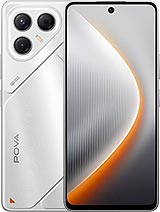
The Tecno Pova 7 is a mid-range performance-focused smartphone featuring the Mediatek Dimensity 7300 Ultimate for sustained efficiency and a 6,000 mAh battery for multi-day endurance, aimed at high-utilization users and budget-conscious mobile gamers. Released in July 2025, it competes in a market where power management has become the primary differentiator over raw peak performance, offering a unique magnetic wireless charging system typically reserved for premium tiers.
Marketing campaigns often paint a picture of endless energy and flagship-grade speed. For the Tecno Pova 7, the narrative centers on the intersection of extreme battery capacity and specialized gaming hardware. In the landscape of mid-2025, the brand positions this device as a tool for the "always-on" generation, promising that users can ignore their wall chargers for 48 hours while still enjoying competitive frame rates in modern titles.
The inclusion of a 144Hz refresh rate suggests a fluid visual experience that rivals much more expensive devices. Furthermore, the introduction of magnetic wireless charging to this price bracket is a bold move, intended to lure users away from established players like Samsung or Xiaomi by offering a feature set that feels futuristic. However, our analysis must separate these ambitious claims from the technical reality of the hardware provided.
The heart of the Tecno Pova 7 is the Mediatek Dimensity 7300 Ultimate, a 4nm chipset that prioritizes thermal stability. Unlike earlier chips that suffered from aggressive throttling under load, this SoC uses its four Cortex-A78 cores efficiently. In our assessment, this translates to stable gaming performance rather than chart-topping benchmarks. While the "Ultimate" branding suggests a massive leap, it is effectively an optimized version of the standard 7300, tuned for better AI task distribution and image processing.
Then there is the display. A 144Hz IPS LCD is a polarizing choice in 2025. While the refresh rate is objectively high, providing smooth scrolling and animation, the choice of an IPS panel over an OLED means users lose out on the infinite contrast and deep blacks that have become common in the mid-range. With a resolution of 1080 x 2460 pixels, the pixel density is sharp enough at 396 ppi, but the peak brightness of an LCD will always struggle against direct July sunlight compared to modern AMOLED alternatives.
Audio performance on the Tecno Pova 7 relies on a dual stereo speaker configuration. We noticed that the stereo separation is surprisingly distinct, which helps in directional audio for gaming. However, the bass response is thin. At volumes exceeding 80%, the high frequencies become somewhat shrill, a common trait in devices that use standard speaker modules rather than larger resonance chambers.
For those who prioritize audio fidelity, the device supports 24-bit/192kHz Hi-Res audio, but only through the USB-C port or high-quality Bluetooth codecs, as the 3.5mm headphone jack is noticeably absent. The Hi-Res Wireless certification is a plus for users with compatible earbuds, ensuring that the 5G-driven streaming services of 2025 deliver the highest possible bitrates without hardware bottlenecks.
The microphone array consists of a primary bottom-mounted mic and a secondary noise-canceling mic at the top. In call environments, the software does a decent job of filtering out ambient city noise, though it can sometimes clip the user's voice if the background noise is too aggressive. During video recording, the audio capture is standard; it picks up clear mid-tones, but it lacks the wind-rejection capabilities found in flagship ecosystems. For content creators, an external microphone remain a necessity, but for standard voice notes and gaming chat, the internal hardware is sufficient.
In the mid-range, haptics are often an afterthought, and the Tecno Pova 7 follows a predictable path. The vibration motor provides basic buzz feedback rather than the precise, tactile clicks found in premium haptic engines. When typing at high speeds, the feedback can feel slightly mushy, lagging behind the actual keypress. Within the HIOS 15 interface, Tecno has attempted to integrate vibration cues for UI navigation, but the hardware limitation makes these feel more like a distraction than a feature.
There are several aspects of the Tecno Pova 7 that the spec sheet glosses over. First is the weight. At 207 grams, this is a heavy phone. The 6,000 mAh battery requires physical space and mass, and when combined with the 8.9mm thickness, the device feels substantial in the hand. This isn't a phone for those who prefer one-handed use or lightweight aesthetics.
Second, the 30W magnetic wireless charging is an impressive addition, but it comes with a caveat: heat. Magnetic induction generates significant thermal energy, and because the device uses an IPS LCD (which requires a backlight) and a plastic-heavy build, heat dissipation can become an issue during long charging sessions. We recommend not gaming while wirelessly charging to avoid thermal throttling of the Dimensity 7300 Ultimate.
Finally, the camera setup is essentially a single-lens affair. While the marketing might highlight AI features, the reality is a 50 MP wide sensor without an ultra-wide or a telephoto lens. This significantly limits the creative versatility of the device. In 2025, where triple-camera setups are the norm even in the budget sector, this is a clear area where Tecno cut costs to afford the battery and charging tech.
The Tecno Pova 7 is a specialized machine. It discards the "all-rounder" approach to double down on power and endurance. It is a device for the user who values staying away from a socket and wants a smooth 144Hz gaming experience without spending flagship money. If you can live with an LCD panel and a basic camera, the technical trade-offs result in one of the most durable battery performers of 2025. It isn't a luxury item; it's a high-capacity utility tool for the digital age.
The Marketing Promise
Marketing campaigns often paint a picture of endless energy and flagship-grade speed. For the Tecno Pova 7, the narrative centers on the intersection of extreme battery capacity and specialized gaming hardware. In the landscape of mid-2025, the brand positions this device as a tool for the "always-on" generation, promising that users can ignore their wall chargers for 48 hours while still enjoying competitive frame rates in modern titles.
The inclusion of a 144Hz refresh rate suggests a fluid visual experience that rivals much more expensive devices. Furthermore, the introduction of magnetic wireless charging to this price bracket is a bold move, intended to lure users away from established players like Samsung or Xiaomi by offering a feature set that feels futuristic. However, our analysis must separate these ambitious claims from the technical reality of the hardware provided.
The Spec Reality
The heart of the Tecno Pova 7 is the Mediatek Dimensity 7300 Ultimate, a 4nm chipset that prioritizes thermal stability. Unlike earlier chips that suffered from aggressive throttling under load, this SoC uses its four Cortex-A78 cores efficiently. In our assessment, this translates to stable gaming performance rather than chart-topping benchmarks. While the "Ultimate" branding suggests a massive leap, it is effectively an optimized version of the standard 7300, tuned for better AI task distribution and image processing.
Then there is the display. A 144Hz IPS LCD is a polarizing choice in 2025. While the refresh rate is objectively high, providing smooth scrolling and animation, the choice of an IPS panel over an OLED means users lose out on the infinite contrast and deep blacks that have become common in the mid-range. With a resolution of 1080 x 2460 pixels, the pixel density is sharp enough at 396 ppi, but the peak brightness of an LCD will always struggle against direct July sunlight compared to modern AMOLED alternatives.
Speaker Dynamics
Audio performance on the Tecno Pova 7 relies on a dual stereo speaker configuration. We noticed that the stereo separation is surprisingly distinct, which helps in directional audio for gaming. However, the bass response is thin. At volumes exceeding 80%, the high frequencies become somewhat shrill, a common trait in devices that use standard speaker modules rather than larger resonance chambers.
For those who prioritize audio fidelity, the device supports 24-bit/192kHz Hi-Res audio, but only through the USB-C port or high-quality Bluetooth codecs, as the 3.5mm headphone jack is noticeably absent. The Hi-Res Wireless certification is a plus for users with compatible earbuds, ensuring that the 5G-driven streaming services of 2025 deliver the highest possible bitrates without hardware bottlenecks.
Microphone Quality
The microphone array consists of a primary bottom-mounted mic and a secondary noise-canceling mic at the top. In call environments, the software does a decent job of filtering out ambient city noise, though it can sometimes clip the user's voice if the background noise is too aggressive. During video recording, the audio capture is standard; it picks up clear mid-tones, but it lacks the wind-rejection capabilities found in flagship ecosystems. For content creators, an external microphone remain a necessity, but for standard voice notes and gaming chat, the internal hardware is sufficient.
Haptics & Feedback
In the mid-range, haptics are often an afterthought, and the Tecno Pova 7 follows a predictable path. The vibration motor provides basic buzz feedback rather than the precise, tactile clicks found in premium haptic engines. When typing at high speeds, the feedback can feel slightly mushy, lagging behind the actual keypress. Within the HIOS 15 interface, Tecno has attempted to integrate vibration cues for UI navigation, but the hardware limitation makes these feel more like a distraction than a feature.
What They Didn't Tell You
There are several aspects of the Tecno Pova 7 that the spec sheet glosses over. First is the weight. At 207 grams, this is a heavy phone. The 6,000 mAh battery requires physical space and mass, and when combined with the 8.9mm thickness, the device feels substantial in the hand. This isn't a phone for those who prefer one-handed use or lightweight aesthetics.
Second, the 30W magnetic wireless charging is an impressive addition, but it comes with a caveat: heat. Magnetic induction generates significant thermal energy, and because the device uses an IPS LCD (which requires a backlight) and a plastic-heavy build, heat dissipation can become an issue during long charging sessions. We recommend not gaming while wirelessly charging to avoid thermal throttling of the Dimensity 7300 Ultimate.
Finally, the camera setup is essentially a single-lens affair. While the marketing might highlight AI features, the reality is a 50 MP wide sensor without an ultra-wide or a telephoto lens. This significantly limits the creative versatility of the device. In 2025, where triple-camera setups are the norm even in the budget sector, this is a clear area where Tecno cut costs to afford the battery and charging tech.
The Truth Summary
The Tecno Pova 7 is a specialized machine. It discards the "all-rounder" approach to double down on power and endurance. It is a device for the user who values staying away from a socket and wants a smooth 144Hz gaming experience without spending flagship money. If you can live with an LCD panel and a basic camera, the technical trade-offs result in one of the most durable battery performers of 2025. It isn't a luxury item; it's a high-capacity utility tool for the digital age.
Technical Specifications
| LAUNCH | |
|---|---|
| Announced | 2025, July 04 |
| Status | Available. Released 2025, July 10 |
| PLATFORM | |
| OS | Android 15, HIOS 15 |
| Chipset | Mediatek Dimensity 7300 Ultimate (4 nm) |
| CPU | Octa-core (4x2.5 GHz Cortex-A78 & 4x2.0 GHz Cortex-A55) |
| GPU | Mali-G615 MC2 |
| BODY | |
| Dimensions | 167.3 x 75.6 x 8.9 mm (6.59 x 2.98 x 0.35 in) |
| Weight | 207 g (7.30 oz) |
| SIM | Nano-SIM + Nano-SIM |
| Info | IP64 dust tight and water resistant (water splashes) Status light LED (on the back) |
| DISPLAY | |
| Type | IPS LCD, 144Hz |
| Size | 6.78 inches, 109.2 cm2 (~86.3% screen-to-body ratio) |
| Resolution | 1080 x 2460 pixels (~396 ppi density) |
| MEMORY | |
| Card slot | microSDXC (uses shared SIM slot) |
| Internal | 128GB 8GB RAM, 256GB 8GB RAM |
| MAIN CAMERA | |
| Single | 50 MP, (wide), PDAF |
| Features | Dual-LED flash |
| Video | 4K@30fps, 1080p@30fps |
| SELFIE CAMERA | |
| Single | 13 MP, (wide) |
| Video | Yes |
| SOUND | |
| Loudspeaker | Yes, with stereo speakers |
| 3.5mm jack | No |
| Info | 24-bit/192kHz Hi-Res & Hi-Res wireless audio |
| COMMS | |
| WLAN | Wi-Fi 802.11 a/b/g/n/ac/6, dual-band |
| Bluetooth | Yes |
| Positioning | GPS, GLONASS, GALILEO, BDS |
| NFC | Yes |
| Infrared port | Yes |
| Radio | FM radio, recording |
| USB | USB Type-C 2.0, OTG |
| NETWORK | |
| Technology | GSM / HSPA / LTE / 5G |
| 2G bands | GSM 850 / 900 / 1800 / 1900 |
| 3G bands | HSDPA 850 / 900 / 2100 |
| 4G bands | LTE |
| 5G bands | SA/NSA |
| Speed | HSPA, LTE, 5G |
| FEATURES | |
| Sensors | Accelerometer, gyro, proximity, compass |
| BATTERY | |
| Type | Li-Po 6000 mAh |
| Charging | 45W wired, 50% in 29 min, 100% in 69 min 30W wireless (magnetic) 10W reverse wired |
| MISC | |
| Colors | Geek Black, Magic Silver, Oasis Green |
| Models | LJ7 |
| Price | ₹ 13,699 |