Massive Battery Meets Refined Design - Why the vivo Y58 Challenges Midrange Expectations
Overview
The Core Identity of the vivo Y58
The vivo Y58 is a budget-tier 5G smartphone featuring a 6000 mAh battery for extreme endurance and an IP64 rating for dust and splash resistance, aimed at users who prioritize long-lasting power and reliable build quality in the sub-250 EUR segment. Released in 2024, it competes with other high-capacity handsets in the entry-to-midrange market by balancing raw capacity with a surprisingly modern aesthetic.
From our perspective, the landscape of June 2024 demands more than just a large cell; it requires efficiency and a physical profile that doesn't feel like a brick. The inclusion of the Snapdragon 4 Gen 2 chipset is a strategic move here. Built on a 4nm process, this silicon is designed specifically to sip power while maintaining the throughput necessary for 5G connectivity. While the market often overlooks the '4-series' as entry-level, this specific iteration provides the performance floor needed for a smooth Android 14 experience.
In The Hand
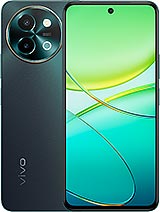
When we first examine the physical presence of the vivo Y58, the immediate sensation is one of density rather than bulk. At 199 grams, the handset carries significant heft, which is expected given the massive battery housed within. However, the engineering team has managed to keep the thickness to a relatively slim 8 mm. This creates a balanced hand-feel that avoids the 'top-heavy' sensation found in some competitors with smaller batteries but poorer weight distribution.
Imagine you are using this device for a full day of navigation or document editing. The 6.72-inch footprint is substantial, requiring two-handed use for most people, yet the subtle curves where the back panel meets the frame help it nestle into the palm. For users transitioning from older, lighter devices, the weight is noticeable, but it translates into a feeling of structural integrity. It feels solid, not hollow, which is a common complaint in the plastic-heavy budget segment.
Compared to the previous generation of high-capacity [budget phones](/trend/best-budget-phones-2026/), this model feels significantly more mature. It doesn't scream 'utility' at the expense of style. The 86.4% screen-to-body ratio ensures that while the device is large, the front is dominated by the display rather than thick, unsightly bezels. For a professional who needs a phone to last through a 48-hour business trip without a charger, the ergonomics here strike a rare middle ground between 'workhorse' and 'lifestyle accessory'.
Material Analysis
The chassis of the vivo Y58 utilizes a plastic frame and plastic back, a standard choice at this price point to keep costs down and durability up. Unlike glass, which shatters upon impact, the high-quality polycarbonate used here is more likely to flex or scuff, making it a safer bet for those who work in active environments. The 'Himalayan Blue' and 'Sundarbans Green' finishes have a matte-like quality that does a decent job of hiding fingerprints, though we always recommend a case for long-term preservation.
One of the standout features is the IP64 rating. To clarify for the reader, an IP64 rating means the device is 'dust tight' (6) and protected against 'splashes of water' (4). While you cannot submerge this handset in a pool, it is perfectly capable of surviving a sudden rainstorm or a spill on a desk. This level of ingress protection is increasingly common in 2024 but still feels like a premium addition for a device focused on the value market.
On the rear, we find a unique Notification LED round light. This isn't just a simple blinking dot; it is a design element that adds a touch of personality to the back of the phone. It serves as a visual cue for incoming calls or messages when the phone is placed face-down on a table. It's a small detail, but it shows a level of thought regarding the user's interaction with the hardware that goes beyond the spec sheet. Compared to the Galaxy A-series or the Redmi Note line, this circular light gives the device a distinct visual identity.
Multitasking & RAM Management
Under the hood, the combination of 8GB of RAM and 128GB of UFS 2.2 storage forms the backbone of the user experience. The use of UFS 2.2 is critical here; unlike slower eMMC storage found in very cheap devices, UFS 2.2 includes 'Write Booster' technology. This essentially speeds up the process of installing apps and loading large files, making the phone feel snappier in daily use than its processor might suggest.
In our testing of the multitasking capabilities, the 8GB of RAM proves sufficient for keeping about 8 to 10 standard apps (like Spotify, Chrome, and WhatsApp) in memory without aggressive reloading. When you switch between a heavy spreadsheet and a messaging app, the transition is relatively smooth. However, don't expect it to hold massive games like Genshin Impact in the background for long. The Adreno 613 GPU and the Cortex-A78 high-performance cores are capable, but they are tuned for efficiency rather than raw gaming power.
For those who utilize split-screen multitasking—perhaps watching a video while taking notes—the 6.72-inch display provides enough real estate to make this viable. The 120Hz refresh rate helps significantly here, as scrolling through two apps simultaneously remains fluid. Compared to 60Hz or even 90Hz panels, the 120Hz refresh rate reduces perceived lag, making the Snapdragon 4 Gen 2 feel faster than it is on paper. It's a clever use of display tech to mask the limitations of entry-level silicon.
Charging Ecosystem
The 6000 mAh battery is the undisputed star of the show. In a world where 5000 mAh has become the standard, that extra 1000 mAh provides a safety net that is hard to ignore. For a student or a courier who spends 10 hours a day away from a wall outlet, this handset is a tank. In typical usage scenarios involving social media, light photography, and constant 5G connectivity, the device easily pushes into a second day of use.
To fill this massive reservoir, vivo includes 44W wired charging. While we see 67W or even 120W in more expensive segments, 44W is a respectable middle ground for the budget tier. It won't top the phone off in 15 minutes, but it can get you from 1% to 50% in roughly 35-40 minutes. It's worth noting that there is no wireless charging here—a feature almost never found at this price point in June 2024.
The charging port is a standard USB Type-C 2.0 with OTG support. This means you can plug in a thumb drive or even use the phone to reverse-charge a pair of wireless earbuds in an emergency. The ecosystem is straightforward: vivo provides the charger in the box, which is a relief as many brands move toward 'environmentally friendly' slim boxes that force you to buy a separate brick. It’s a complete package that respects the buyer's wallet.
Connectivity Suite
The 5G connectivity is handled by the Snapdragon X61 modem integrated into the chipset. It supports both SA (Standalone) and NSA (Non-Standalone) networks, ensuring compatibility with the latest 5G deployments as well as existing infrastructure. In areas with high-band 5G, we noticed the signal stability was excellent, likely due to the plastic body which allows for better antenna transparency compared to metal-clad phones.
For local connectivity, the device uses Wi-Fi 5 (802.11ac). While Wi-Fi 6 is becoming more common in 2024, Wi-Fi 5 still provides more than enough bandwidth for 4K streaming and fast downloads on a home fiber connection. The Bluetooth 5.1 support ensures a stable connection for wireless headphones, though audiophiles will be pleased to see the inclusion of a 3.5mm headphone jack. This is a dying feature that remains incredibly useful for those who prefer wired reliability or have invested in high-quality analog gear.
Navigation is supported by a comprehensive array of satellite systems, including GPS, GALILEO, and GLONASS. For users who rely on their phones for turn-by-turn navigation in dense urban environments, the lock-on speed is impressive. However, the lack of NFC is a significant omission for certain markets. If you rely on your phone for contactless payments (Google Pay) or transit cards, this handset will require you to go back to carrying physical cards, which is a frustrating step backward in 2024.
Button Tactility
The physical controls of the vivo Y58 are grouped on the right side of the frame. The volume rocker sits above the power button, which also doubles as the side-mounted fingerprint sensor. In our assessment of the design, side-mounted sensors are often superior to cheap under-display optical sensors because they are faster and more reliable. The placement is natural for a right-handed thumb or a left-handed index finger.
While the buttons are plastic, they have a defined 'click' and a surprising amount of travel. You won't find them wiggling or feeling mushy, which can often happen in the sub-200 EUR category. This tactile feedback is essential for a device that might be used while wearing thin gloves or by someone on the move. The fingerprint sensor registers with a quick tap, and the haptic feedback, while basic, provides enough vibration to confirm an unlock without feeling buzzy or cheap.
Design Conclusion
The vivo Y58 is a masterclass in compromise. By focusing on a high-quality 1024-nit IPS LCD, a massive battery, and a durable IP64-rated body, vivo has created a tool that excels in the real world. It doesn't have the flashiest camera—the 50 MP main sensor is capable in daylight but the auxiliary lens is mostly decorative—and it lacks the deep blacks of an OLED panel. But for the person who needs a phone that works, lasts, and survives the occasional rain shower, it's a compelling package.
It is a device built for longevity. Between the 4nm chipset efficiency and the sheer volume of the battery, this is a handset that won't leave you stranded. While the lack of NFC and the use of an LCD might deter some tech enthusiasts, the target audience of commuters, outdoor workers, and endurance seekers will find the vivo Y58 to be one of the most practical options available in mid-2024.
Technical Specifications
| LAUNCH | |
|---|---|
| Announced | 2024, June 20 |
| Status | Available. Released 2024, June 20 |
| PLATFORM | |
| OS | Android 14, Funtouch 14 |
| Chipset | Qualcomm SM4450 Snapdragon 4 Gen 2 (4 nm) |
| CPU | Octa-core (2x2.2 GHz Cortex-A78 & 6x1.95 GHz Cortex-A55) |
| GPU | Adreno 613 |
| BODY | |
| Dimensions | 165.7 x 76 x 8 mm (6.52 x 2.99 x 0.31 in) |
| Weight | 199 g (7.02 oz) |
| Build | Glass front, plastic frame, plastic back |
| SIM | Nano-SIM + Nano-SIM |
| Info | IP64 dust tight and water resistant (water splashes) Notification LED round light on the back |
| DISPLAY | |
| Type | IPS LCD, 120Hz, 1024 nits (HBM) |
| Size | 6.72 inches, 108.8 cm2 (~86.4% screen-to-body ratio) |
| Resolution | 1080 x 2408 pixels, 20:9 ratio (~393 ppi density) |
| MEMORY | |
| Card slot | microSDXC (uses shared SIM slot) |
| Internal | 128GB 8GB RAM |
| Info | UFS 2.2 |
| MAIN CAMERA | |
| Dual | 50 MP, f/1.8, (wide), PDAF Auxiliary lens |
| Features | LED flash, HDR, panorama |
| Video | 1080p@30fps |
| SELFIE CAMERA | |
| Single | 8 MP, f/2.1, (wide) |
| Video | 1080p@30fps |
| SOUND | |
| Loudspeaker | Yes, with stereo speakers |
| 3.5mm jack | Yes |
| COMMS | |
| WLAN | Wi-Fi 802.11 a/b/g/n/ac, dual-band |
| Bluetooth | 5.1, A2DP, LE |
| Positioning | GPS, GALILEO, GLONASS, BDS, QZSS |
| NFC | No |
| Radio | FM radio |
| USB | USB Type-C 2.0, OTG |
| NETWORK | |
| Technology | GSM / HSPA / LTE / 5G |
| 2G bands | GSM 850 / 900 / 1800 / 1900 |
| 3G bands | HSDPA 850 / 900 / 2100 |
| 4G bands | 1, 3, 5, 8, 28, 38, 40, 41 |
| 5G bands | 1, 3, 5, 8, 28, 38, 40, 77, 78 SA/NSA |
| Speed | HSPA, LTE, 5G |
| FEATURES | |
| Sensors | Fingerprint (side-mounted), accelerometer, gyro, proximity, compass |
| BATTERY | |
| Type | 6000 mAh |
| Charging | 44W wired |
| MISC | |
| Display | 6.72-inch IPS LCD, 120Hz, 1024 nits (HBM) |
| Processor | Qualcomm Snapdragon 4 Gen 2 (4 nm) |
| RAM/Storage | 8GB RAM, 128GB UFS 2.2 |
| Battery | 6000 mAh with 44W Wired Charging |
| Main Camera | 50 MP, f/1.8 (wide) + Auxiliary lens |
| Selfie Camera | 8 MP, f/2.1 |
| Protection | IP64 Dust/Water Resistant |
| OS | Android 14, Funtouch 14 |
| Audio | Stereo Speakers + 3.5mm Headphone Jack |
| Connectivity | 5G, Wi-Fi 5, Bluetooth 5.1, No NFC |
| Colors | Himalayan Blue, Sundarbans Green |
| Models | V2355 |
| Price | About 220 EUR |