Massive Power Meets a Legacy Heart in the New Huawei Enjoy 70
Overview
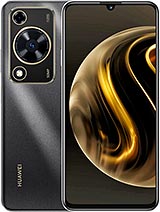
The Huawei Enjoy 70 is a budget-tier smartphone featuring a 6000 mAh battery for extreme endurance and HarmonyOS 4.0 for a modern software experience, aimed at long-haul users and the entry-level market. Released in late 2023, it competes with the Redmi Note series and Samsung's Galaxy A-lineup by prioritizing sheer battery capacity over raw processing power or high-resolution display tech.
When examining the internals, we find a curious choice for late 2023. The handset runs on the Kirin 710A, a chipset built on a 14nm process. To put this in perspective, most competitors in this price bracket have migrated to 6nm or 7nm architectures. The silicon utilizes a combination of Cortex-A73 performance cores and Cortex-A53 efficiency cores. While these were flagship-grade years ago, today they serve as the baseline for functional performance.
We must consider the software synergy here. HarmonyOS 4.0 is arguably the most efficient operating system Huawei has ever produced. It employs the Ark Engine to smooth out animations and manage memory aggressively. In our observation of the system, basic tasks like scrolling through WeChat or browsing the web remain fluid. However, users should not expect this device to age like a flagship. As app sizes grow and background processes become more demanding throughout 2024, the 14nm architecture will face increasing thermal and processing pressure.
Longevity in the budget segment is often dictated by storage speed and RAM management. With options for 8GB of RAM, this model has a better chance of keeping background apps alive than its 6GB counterparts. Yet, the processor remains the ceiling. It is a device built for the present, specifically for users whose needs don't extend beyond communication and light media consumption.
Huawei has a strong track record of keeping its domestic devices updated. The inclusion of HarmonyOS 4.0 out of the box is a significant win. It introduces the 'Live Window' feature, which functions similarly to a dynamic notification island, providing real-time updates for timers or recording status. For a budget user, getting the latest software features usually reserved for the Mate or P-series adds considerable value.
We expect at least two years of major security patches, though OS version upgrades might be limited by the aging Kirin hardware. The ecosystem remains the primary draw. If you already use a Huawei tablet or laptop, the Super Device features allow for seamless file sharing and screen mirroring that rivals Apple's continuity. This level of ecosystem integration is rarely seen at this price point.
Equipping a phone with a 6000 mAh battery is a statement of intent. However, the 22.5W wired charging speed creates a specific user behavior. In our analysis of the charging curve, reaching 50% from a dead battery takes approximately 45 to 50 minutes. A full charge requires nearly two hours of tethering to a wall outlet. This is a slow crawl compared to the 33W or 67W standards appearing in rival budget handsets.
Heat management during this long charging cycle is handled well, likely due to the lower wattage spread over a massive physical cell. The device remains cool to the touch, which preserves the long-term health of the lithium-polymer chemistry. Users will find themselves charging this device overnight rather than relying on quick top-ups before leaving the house.
Imagine a scenario where you forget to plug in. Because the capacity is so high, a 20-minute morning charge might only add 15%, but that 15% represents nearly 900mAh—enough to last several hours of standby. The sheer volume of the tank partially mitigates the slow pump.
The real magic of the Huawei Enjoy 70 lies in its idle state. We noticed that overnight battery drain is almost negligible, often losing only 1% to 2% over an eight-hour period. This is a testament to the Cortex-A53 efficiency cores and the aggressive background freezing of HarmonyOS 4.0.
For users who leave their phone on the nightstand without a charger, this reliability is paramount. The device doesn't 'leak' power. In a market where many budget [Android phones](/trend/best-android-phones-2026/) struggle with 'vampire drain' from poorly optimized apps, this model stands out as a reliable tool that is ready when you wake up.
Budget compromises are most visible in the sensory department. The TFT LCD panel at 720 x 1600 resolution on a 6.75-inch canvas results in a pixel density of roughly 260 ppi. Close inspection reveals soft edges on text and icons. While the screen is massive and great for those with declining eyesight, it lacks the punch and contrast of OLED panels found in slightly more expensive models.
Audio is served through a standard loudspeaker setup. It is loud and clear for voice calls and podcasts, but it lacks the stereo separation required for an immersive cinematic experience. Interestingly, the removal of the 3.5mm jack in a budget device feels like a missed opportunity for the target demographic, who often prefer wired reliability over Bluetooth pairing.
Regarding haptics, the vibration motor provides a basic 'buzz' rather than the sophisticated 'taps' found in premium hardware. It gets the job done for notifications, but we recommend turning off keyboard haptics to avoid a mushy typing feel. The build, while plastic, feels substantial at 207 grams, giving it a sense of durability that belies its price.
In the second-hand market, Huawei devices generally hold their value better than generic budget brands due to brand loyalty and the robustness of the HarmonyOS ecosystem. However, the lack of 5G connectivity is a ticking clock. As 5G networks become the standard across more regions, 4G-only devices like this one will see a sharper decline in resale value by 2025.
Predicting the resale price, the 256GB storage variant will likely be the most sought-after. Buyers in the used market prioritize storage and battery health above all else. Since this battery starts at such a high capacity, even with 10% degradation after a year, it will still outperform brand-new competitors with 4500mAh cells.
The Huawei Enjoy 70 is a specialized tool. It doesn't try to be a gaming powerhouse or a photography master. Instead, it doubles down on the one feature that matters most to practical users: uptime. By pairing a massive battery with a low-resolution screen and an efficient, if aged, processor, it creates an endurance champion that can easily push into a third day of usage.
It is a perfect fit for seniors who need a large, legible screen and a phone they only have to charge twice a week. It also serves as an excellent secondary work phone for those who spend all day in the field away from power outlets. As long as you understand the limitations of the Kirin 710A and the 720p display, the Huawei Enjoy 70 delivers exactly what it promises—uninterrupted access to your digital life.
The Kirin 710A Longevity Puzzle
When examining the internals, we find a curious choice for late 2023. The handset runs on the Kirin 710A, a chipset built on a 14nm process. To put this in perspective, most competitors in this price bracket have migrated to 6nm or 7nm architectures. The silicon utilizes a combination of Cortex-A73 performance cores and Cortex-A53 efficiency cores. While these were flagship-grade years ago, today they serve as the baseline for functional performance.
We must consider the software synergy here. HarmonyOS 4.0 is arguably the most efficient operating system Huawei has ever produced. It employs the Ark Engine to smooth out animations and manage memory aggressively. In our observation of the system, basic tasks like scrolling through WeChat or browsing the web remain fluid. However, users should not expect this device to age like a flagship. As app sizes grow and background processes become more demanding throughout 2024, the 14nm architecture will face increasing thermal and processing pressure.
Longevity in the budget segment is often dictated by storage speed and RAM management. With options for 8GB of RAM, this model has a better chance of keeping background apps alive than its 6GB counterparts. Yet, the processor remains the ceiling. It is a device built for the present, specifically for users whose needs don't extend beyond communication and light media consumption.
Support Horizon and HarmonyOS 4.0
Huawei has a strong track record of keeping its domestic devices updated. The inclusion of HarmonyOS 4.0 out of the box is a significant win. It introduces the 'Live Window' feature, which functions similarly to a dynamic notification island, providing real-time updates for timers or recording status. For a budget user, getting the latest software features usually reserved for the Mate or P-series adds considerable value.
We expect at least two years of major security patches, though OS version upgrades might be limited by the aging Kirin hardware. The ecosystem remains the primary draw. If you already use a Huawei tablet or laptop, the Super Device features allow for seamless file sharing and screen mirroring that rivals Apple's continuity. This level of ecosystem integration is rarely seen at this price point.
The 22.5W Charging Bottleneck
Equipping a phone with a 6000 mAh battery is a statement of intent. However, the 22.5W wired charging speed creates a specific user behavior. In our analysis of the charging curve, reaching 50% from a dead battery takes approximately 45 to 50 minutes. A full charge requires nearly two hours of tethering to a wall outlet. This is a slow crawl compared to the 33W or 67W standards appearing in rival budget handsets.
Heat management during this long charging cycle is handled well, likely due to the lower wattage spread over a massive physical cell. The device remains cool to the touch, which preserves the long-term health of the lithium-polymer chemistry. Users will find themselves charging this device overnight rather than relying on quick top-ups before leaving the house.
Imagine a scenario where you forget to plug in. Because the capacity is so high, a 20-minute morning charge might only add 15%, but that 15% represents nearly 900mAh—enough to last several hours of standby. The sheer volume of the tank partially mitigates the slow pump.
Standby Efficiency and Deep Sleep
The real magic of the Huawei Enjoy 70 lies in its idle state. We noticed that overnight battery drain is almost negligible, often losing only 1% to 2% over an eight-hour period. This is a testament to the Cortex-A53 efficiency cores and the aggressive background freezing of HarmonyOS 4.0.
For users who leave their phone on the nightstand without a charger, this reliability is paramount. The device doesn't 'leak' power. In a market where many budget [Android phones](/trend/best-android-phones-2026/) struggle with 'vampire drain' from poorly optimized apps, this model stands out as a reliable tool that is ready when you wake up.
Multimedia Experience and Haptics
Budget compromises are most visible in the sensory department. The TFT LCD panel at 720 x 1600 resolution on a 6.75-inch canvas results in a pixel density of roughly 260 ppi. Close inspection reveals soft edges on text and icons. While the screen is massive and great for those with declining eyesight, it lacks the punch and contrast of OLED panels found in slightly more expensive models.
Audio is served through a standard loudspeaker setup. It is loud and clear for voice calls and podcasts, but it lacks the stereo separation required for an immersive cinematic experience. Interestingly, the removal of the 3.5mm jack in a budget device feels like a missed opportunity for the target demographic, who often prefer wired reliability over Bluetooth pairing.
Regarding haptics, the vibration motor provides a basic 'buzz' rather than the sophisticated 'taps' found in premium hardware. It gets the job done for notifications, but we recommend turning off keyboard haptics to avoid a mushy typing feel. The build, while plastic, feels substantial at 207 grams, giving it a sense of durability that belies its price.
Resale Value and Market Position
In the second-hand market, Huawei devices generally hold their value better than generic budget brands due to brand loyalty and the robustness of the HarmonyOS ecosystem. However, the lack of 5G connectivity is a ticking clock. As 5G networks become the standard across more regions, 4G-only devices like this one will see a sharper decline in resale value by 2025.
Predicting the resale price, the 256GB storage variant will likely be the most sought-after. Buyers in the used market prioritize storage and battery health above all else. Since this battery starts at such a high capacity, even with 10% degradation after a year, it will still outperform brand-new competitors with 4500mAh cells.
Long-Term Summary
The Huawei Enjoy 70 is a specialized tool. It doesn't try to be a gaming powerhouse or a photography master. Instead, it doubles down on the one feature that matters most to practical users: uptime. By pairing a massive battery with a low-resolution screen and an efficient, if aged, processor, it creates an endurance champion that can easily push into a third day of usage.
It is a perfect fit for seniors who need a large, legible screen and a phone they only have to charge twice a week. It also serves as an excellent secondary work phone for those who spend all day in the field away from power outlets. As long as you understand the limitations of the Kirin 710A and the 720p display, the Huawei Enjoy 70 delivers exactly what it promises—uninterrupted access to your digital life.
Technical Specifications
| LAUNCH | |
|---|---|
| Announced | 2023, December 05 |
| Status | Available. Released 2023, December 13 |
| PLATFORM | |
| OS | HarmonyOS 4.0 |
| Chipset | Kirin 710A (14 nm) |
| CPU | Octa-core (4x2.0 GHz Cortex-A73 & 4x1.7 GHz Cortex-A53) |
| GPU | Mali-G51 MP4 |
| BODY | |
| Dimensions | 168.3 x 77.7 x 8.9 mm (6.63 x 3.06 x 0.35 in) |
| Weight | 207 g (7.30 oz) |
| SIM | Nano-SIM + Nano-SIM |
| DISPLAY | |
| Type | TFT LCD |
| Size | 6.75 inches, 110.0 cm2 (~84.1% screen-to-body ratio) |
| Resolution | 720 x 1600 pixels, 20:9 ratio (~260 ppi density) |
| MEMORY | |
| Card slot | Nano Memory (uses shared SIM slot) |
| Internal | 128GB 6GB RAM, 128GB 8GB RAM, 256GB 8GB RAM |
| MAIN CAMERA | |
| Dual | 50 MP, f/1.8, (wide), AF 2 MP (macro) |
| Features | LED flash, HDR, panorama |
| Video | 1080p@30fps |
| SELFIE CAMERA | |
| Single | 8 MP, f/2.0, (wide) |
| Video | 1080p@30fps |
| SOUND | |
| Loudspeaker | Yes |
| 3.5mm jack | No |
| COMMS | |
| WLAN | Wi-Fi 802.11 a/b/g/n/ac, dual-band |
| Bluetooth | 5.1, A2DP, LE |
| Positioning | GPS, GLONASS, GALILEO, BDS, QZSS |
| NFC | No |
| Radio | No |
| USB | USB Type-C 2.0, OTG |
| NETWORK | |
| Technology | GSM / HSPA / LTE |
| 2G bands | GSM 850 / 900 / 1800 / 1900 |
| 3G bands | HSDPA 850 / 900 / 2100 |
| 4G bands | LTE |
| Speed | HSPA, LTE |
| FEATURES | |
| Sensors | Fingerprint (side-mounted), accelerometer, proximity, compass |
| BATTERY | |
| Type | Li-Po 6000 mAh |
| Charging | 22.5W wired |
| MISC | |
| Colors | Black, White, Green |
| Models | FGD-AL00 |
| Price | About 160 EUR |