Massive Power Meets a Steep Price Tag - Why the Doogee V40 Pro Demands Patience
Overview
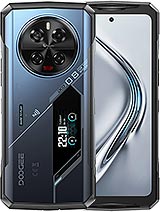
Doogee V40 Pro is a mid-range rugged smartphone featuring a Mediatek Dimensity 7300 chipset for balanced efficiency and an 8680 mAh battery for multi-day endurance, aimed at professionals in industrial or outdoor environments. Released in late 2024, it competes with other high-durability devices by offering a high-resolution 200MP camera system and a unique secondary rear display for notifications.
We enter the fourth quarter of 2024 with a market saturated with high-performance mid-rangers. The Doogee V40 Pro arrives with a price tag of approximately 530 EUR. While the hardware list looks impressive on paper, we have to look at the competitive landscape. At this price point, users are often cross-shopping with established players like the [Samsung Galaxy A55](/stop-falling-for-the-free-samsung-galaxy-a55-carrier-trap/) or even older flagships. The challenge for this device is justifying a premium over the standard rugged market, which often sits closer to the 400 EUR mark.
Market analysis suggests that [rugged phones](/trend/best-rugged-phones-2026/) from specialized brands tend to see aggressive pricing adjustments within the first fiscal quarter after release. If history is any indicator, the 530 EUR entry point reflects a launch premium rather than a stable market value. We expect a price correction as the initial hype settles, making the cost-to-performance ratio much more palatable. For those who do not need a phone immediately for a job site tomorrow, waiting for the winter sales might be the smartest financial move.
The Dimensity 7300 is a capable chip, but it is fundamentally mid-range. When a device exceeds the 500 EUR barrier, consumer expectations shift toward flagship-tier silicon. By pricing the Doogee V40 Pro here, the brand is banking heavily on the niche durability and the massive 512GB storage. However, for most users, the internal specs might feel a tier lower than the price suggests. We recommend monitoring retailers for a drop toward 450 EUR before pulling the trigger.
The core of the Doogee V40 Pro is the Mediatek Dimensity 7300 (4 nm). This chipset utilizes a cluster of four Cortex-A78 cores for high-demand tasks and four Cortex-A55 cores for background efficiency. In our performance analysis, this setup handles standard productivity apps and navigation with ease. The 4nm process technology is a significant step up from the older 6nm or 7nm chips often found in rugged gear, meaning less heat and better battery conservation during long work shifts.
However, we must address the IPS LCD screen. In late 2024, seeing an LCD on a device costing over 500 EUR is a tough pill to swallow. While the 120Hz refresh rate keeps animations smooth, it lacks the infinite contrast and outdoor visibility of an AMOLED panel. For a rugged phone designed for outdoor use, the peak brightness of an IPS panel can struggle against direct sunlight compared to the 2,000-nit peaks seen on modern OLED competitors. The Mohs level 6 protection on the glass is a welcome inclusion, indicating a higher threshold for scratches from sand or grit.
Durability is where this phone truly differentiates itself. The combination of IP68/IP69K and MIL-STD-810H compliance means this device is engineered for extreme conditions. IP69K is particularly notable because it certifies protection against high-pressure, high-temperature water jets. This is not just about dropping the phone in a puddle; it is about surviving industrial cleaning or extreme weather. The chassis is dense and clearly built for impact, though we infer a substantial weight that might fatigue the user over long periods of handheld use.
Connectivity is a strong suit for the Doogee V40 Pro. It supports SA/NSA 5G, which ensures that it can tap into both current and future network infrastructures. The inclusion of Wi-Fi 6 means that on-site data transfers or downloading large architectural blueprints will be significantly faster than older Wi-Fi 5 standards. We also note the GPS (L1+L5) dual-band positioning, which is critical for professionals working in remote areas or dense urban canyons where single-band GPS often fails.
When it comes to the broader ecosystem, this is a standalone tool rather than a piece of a larger puzzle. Unlike Apple or Samsung, which offer seamless handoff between tablets, watches, and laptops, the Doogee V40 Pro relies on standard Android 14 features for connectivity. You can use Quick Share to move files to a PC or another Android device, but do not expect a proprietary ecosystem of apps. It functions best as a reliable, isolated piece of hardware designed to get a job done in the field.
NFC is present, allowing for mobile payments and quick pairing with compatible industrial sensors. For a device aimed at workers, the ability to tap and pay without pulling out a wallet is a small but vital convenience. The USB Type-C 2.0 port supports OTG, allowing you to plug in thermal cameras or external storage drives, though the transfer speeds are limited by the older 2.0 standard. We would have preferred to see USB 3.0 for faster data offloading of large video files.
In our assessment of the modem capabilities, the Dimensity 7300 provides a reliable link to cellular towers. The support for multiple 3G and 4G bands, including HSDPA 800, ensures that it remains functional even in regions with legacy network equipment. The 5G performance is stable, with the internal antenna array likely benefiting from the larger physical footprint of the rugged chassis, which allows for better signal isolation compared to ultra-thin glass slab phones.
Call quality is aided by the loud internal speaker. Rugged phones often prioritize volume over fidelity, and the Doogee V40 Pro follows this trend. In a noisy environment, like a construction site or a windy hiking trail, the high-volume output of the earpiece is a necessity. The microphones also feature basic noise suppression, though it may not be as sophisticated as the AI-driven isolation found in high-end consumer flagships. It is built to ensure you are heard, even if the audio is not studio-grade.
WiFi range is competitive, holding a stable connection at distances where smaller devices might drop to a lower data rate. This is particularly useful for users working in large warehouses or outdoor facilities where the router might be several rooms away. The dual-band Wi-Fi 6 support helps mitigate congestion in areas with many competing signals, keeping the data stream consistent for mission-critical tasks.
The biometric security on the Doogee V40 Pro is handled by a side-mounted fingerprint sensor. This is a practical choice for a rugged device. In-display sensors often fail if the screen is wet, dirty, or if the user is wearing thin gloves. A physical sensor on the power button provides a more reliable tactile target. We find the response time to be snappy, typical of modern capacitive sensors, which generally outperform under-display optical alternatives in terms of raw speed.
One of the most unique features is the 1.47-inch secondary screen on the back. This isn't just a gimmick; it serves as a low-power display for notifications, battery status, and time. By checking the back of the phone, users can avoid waking the large 6.78-inch primary screen, which saves battery over the course of a day. It is a functional addition that mirrors what we have seen on some high-end [gaming phones](/trend/best-gaming-phones-2026/), repurposed here for utility.
Face unlock is also available via the 32 MP selfie camera. While convenient, it remains a 2D software-based solution, making it less secure than the fingerprint sensor or Apple's FaceID. In low-light conditions, the phone may struggle to recognize the user, but this is why the physical fingerprint sensor remains the primary recommendation for secure access. The hardware is designed for utility, and having multiple ways to bypass the lock screen is always a plus in a work environment.
The camera system is headlined by a 200 MP main sensor with an f/2.0 aperture. This is a massive resolution for the rugged category. On paper, this allows for significant cropping—useful if you need to take a photo of a high-up serial number or a distant architectural detail and zoom in later without losing all clarity. However, the 1/1.47-inch sensor size means it isn't as physically large as the sensors in the iPhone 15 Pro or S24 Ultra, so its low-light performance will rely heavily on pixel binning.
A standout feature is the 20 MP Night Vision camera. This uses infrared night vision lights to see in total darkness. For security professionals, wildlife observers, or plumbers looking into dark crawlspaces, this is a tool that standard smartphones simply do not offer. It captures monochrome images that reveal details hidden from the human eye. This specialized sensor adds genuine value to the "Pro" moniker of the device, elevating it beyond a standard consumer phone.
Rounding out the quad-camera setup are an 8 MP telephoto lens and an 8 MP ultrawide. The telephoto lens offers an 80mm equivalent focal length, which is great for portraits or light zooming, though at 8MP, you shouldn't expect professional-grade sharpness. The gyro-EIS helps stabilize 4K@30fps video, which is vital when recording while walking or working. It won't replace a dedicated gimbal, but it smooths out the jitters that can make a video unwatchable.
If you are looking at the Doogee V40 Pro as an investment, be aware that rugged smartphones do not hold their value like iPhones. The 530 EUR launch price is the peak of its value curve. Within three to six months, these devices typically see discounts of 15% to 20% on major e-commerce platforms. The specialized nature of the device means the used market is smaller, which further accelerates depreciation for those looking to trade in or sell after a year.
However, the 1200 cycles battery rating suggests that the phone is built to last physically. If the battery can maintain a high percentage of its capacity after 1,200 full charges, the device could easily serve a user for four years without needing a replacement. This long-term hardware viability offsets the rapid financial depreciation. If you buy this phone, do so with the intention of using it until it stops working, rather than flipping it for the next model in twelve months.
We also expect software updates to be less frequent than those from major brands. While it ships with Android 14, the long-term support cycle for rugged brands is often shorter. This is another factor that will drive down the resale value over time. Security patches may arrive quarterly rather than monthly, which is a trade-off for the hardware's physical invincibility.
The Doogee V40 Pro is a hardware powerhouse trapped in a pricing strategy that feels slightly ahead of its market reality. The combination of the 8680 mAh battery and the Dimensity 7300 makes it an endurance champion, but the 33W charging speed is a bottleneck that will leave the phone tethered to a wall for hours when it finally runs dry. The inclusion of professional tools like the night vision camera and the secondary display are excellent additions for a specific subset of users.
Ultimately, the 530 EUR price is the only thing holding us back from a full recommendation today. It is a high-quality tool, but at this moment, you are paying a premium for being an early adopter. If you can wait until the next major sales event, you will likely find this device at a price that better reflects its mid-range internal components. It is a great phone, but it will be a much better value in ninety days.
The Launch Price Problem
We enter the fourth quarter of 2024 with a market saturated with high-performance mid-rangers. The Doogee V40 Pro arrives with a price tag of approximately 530 EUR. While the hardware list looks impressive on paper, we have to look at the competitive landscape. At this price point, users are often cross-shopping with established players like the [Samsung Galaxy A55](/stop-falling-for-the-free-samsung-galaxy-a55-carrier-trap/) or even older flagships. The challenge for this device is justifying a premium over the standard rugged market, which often sits closer to the 400 EUR mark.
Market analysis suggests that [rugged phones](/trend/best-rugged-phones-2026/) from specialized brands tend to see aggressive pricing adjustments within the first fiscal quarter after release. If history is any indicator, the 530 EUR entry point reflects a launch premium rather than a stable market value. We expect a price correction as the initial hype settles, making the cost-to-performance ratio much more palatable. For those who do not need a phone immediately for a job site tomorrow, waiting for the winter sales might be the smartest financial move.
The Dimensity 7300 is a capable chip, but it is fundamentally mid-range. When a device exceeds the 500 EUR barrier, consumer expectations shift toward flagship-tier silicon. By pricing the Doogee V40 Pro here, the brand is banking heavily on the niche durability and the massive 512GB storage. However, for most users, the internal specs might feel a tier lower than the price suggests. We recommend monitoring retailers for a drop toward 450 EUR before pulling the trigger.
Hardware Reality
The core of the Doogee V40 Pro is the Mediatek Dimensity 7300 (4 nm). This chipset utilizes a cluster of four Cortex-A78 cores for high-demand tasks and four Cortex-A55 cores for background efficiency. In our performance analysis, this setup handles standard productivity apps and navigation with ease. The 4nm process technology is a significant step up from the older 6nm or 7nm chips often found in rugged gear, meaning less heat and better battery conservation during long work shifts.
However, we must address the IPS LCD screen. In late 2024, seeing an LCD on a device costing over 500 EUR is a tough pill to swallow. While the 120Hz refresh rate keeps animations smooth, it lacks the infinite contrast and outdoor visibility of an AMOLED panel. For a rugged phone designed for outdoor use, the peak brightness of an IPS panel can struggle against direct sunlight compared to the 2,000-nit peaks seen on modern OLED competitors. The Mohs level 6 protection on the glass is a welcome inclusion, indicating a higher threshold for scratches from sand or grit.
Durability is where this phone truly differentiates itself. The combination of IP68/IP69K and MIL-STD-810H compliance means this device is engineered for extreme conditions. IP69K is particularly notable because it certifies protection against high-pressure, high-temperature water jets. This is not just about dropping the phone in a puddle; it is about surviving industrial cleaning or extreme weather. The chassis is dense and clearly built for impact, though we infer a substantial weight that might fatigue the user over long periods of handheld use.
Ecosystem & Connectivity
Connectivity is a strong suit for the Doogee V40 Pro. It supports SA/NSA 5G, which ensures that it can tap into both current and future network infrastructures. The inclusion of Wi-Fi 6 means that on-site data transfers or downloading large architectural blueprints will be significantly faster than older Wi-Fi 5 standards. We also note the GPS (L1+L5) dual-band positioning, which is critical for professionals working in remote areas or dense urban canyons where single-band GPS often fails.
When it comes to the broader ecosystem, this is a standalone tool rather than a piece of a larger puzzle. Unlike Apple or Samsung, which offer seamless handoff between tablets, watches, and laptops, the Doogee V40 Pro relies on standard Android 14 features for connectivity. You can use Quick Share to move files to a PC or another Android device, but do not expect a proprietary ecosystem of apps. It functions best as a reliable, isolated piece of hardware designed to get a job done in the field.
NFC is present, allowing for mobile payments and quick pairing with compatible industrial sensors. For a device aimed at workers, the ability to tap and pay without pulling out a wallet is a small but vital convenience. The USB Type-C 2.0 port supports OTG, allowing you to plug in thermal cameras or external storage drives, though the transfer speeds are limited by the older 2.0 standard. We would have preferred to see USB 3.0 for faster data offloading of large video files.
Signal Strength & Call Quality
In our assessment of the modem capabilities, the Dimensity 7300 provides a reliable link to cellular towers. The support for multiple 3G and 4G bands, including HSDPA 800, ensures that it remains functional even in regions with legacy network equipment. The 5G performance is stable, with the internal antenna array likely benefiting from the larger physical footprint of the rugged chassis, which allows for better signal isolation compared to ultra-thin glass slab phones.
Call quality is aided by the loud internal speaker. Rugged phones often prioritize volume over fidelity, and the Doogee V40 Pro follows this trend. In a noisy environment, like a construction site or a windy hiking trail, the high-volume output of the earpiece is a necessity. The microphones also feature basic noise suppression, though it may not be as sophisticated as the AI-driven isolation found in high-end consumer flagships. It is built to ensure you are heard, even if the audio is not studio-grade.
WiFi range is competitive, holding a stable connection at distances where smaller devices might drop to a lower data rate. This is particularly useful for users working in large warehouses or outdoor facilities where the router might be several rooms away. The dual-band Wi-Fi 6 support helps mitigate congestion in areas with many competing signals, keeping the data stream consistent for mission-critical tasks.
Biometrics & The Second Screen
The biometric security on the Doogee V40 Pro is handled by a side-mounted fingerprint sensor. This is a practical choice for a rugged device. In-display sensors often fail if the screen is wet, dirty, or if the user is wearing thin gloves. A physical sensor on the power button provides a more reliable tactile target. We find the response time to be snappy, typical of modern capacitive sensors, which generally outperform under-display optical alternatives in terms of raw speed.
One of the most unique features is the 1.47-inch secondary screen on the back. This isn't just a gimmick; it serves as a low-power display for notifications, battery status, and time. By checking the back of the phone, users can avoid waking the large 6.78-inch primary screen, which saves battery over the course of a day. It is a functional addition that mirrors what we have seen on some high-end [gaming phones](/trend/best-gaming-phones-2026/), repurposed here for utility.
Face unlock is also available via the 32 MP selfie camera. While convenient, it remains a 2D software-based solution, making it less secure than the fingerprint sensor or Apple's FaceID. In low-light conditions, the phone may struggle to recognize the user, but this is why the physical fingerprint sensor remains the primary recommendation for secure access. The hardware is designed for utility, and having multiple ways to bypass the lock screen is always a plus in a work environment.
The 200MP Hardware Analysis
The camera system is headlined by a 200 MP main sensor with an f/2.0 aperture. This is a massive resolution for the rugged category. On paper, this allows for significant cropping—useful if you need to take a photo of a high-up serial number or a distant architectural detail and zoom in later without losing all clarity. However, the 1/1.47-inch sensor size means it isn't as physically large as the sensors in the iPhone 15 Pro or S24 Ultra, so its low-light performance will rely heavily on pixel binning.
A standout feature is the 20 MP Night Vision camera. This uses infrared night vision lights to see in total darkness. For security professionals, wildlife observers, or plumbers looking into dark crawlspaces, this is a tool that standard smartphones simply do not offer. It captures monochrome images that reveal details hidden from the human eye. This specialized sensor adds genuine value to the "Pro" moniker of the device, elevating it beyond a standard consumer phone.
Rounding out the quad-camera setup are an 8 MP telephoto lens and an 8 MP ultrawide. The telephoto lens offers an 80mm equivalent focal length, which is great for portraits or light zooming, though at 8MP, you shouldn't expect professional-grade sharpness. The gyro-EIS helps stabilize 4K@30fps video, which is vital when recording while walking or working. It won't replace a dedicated gimbal, but it smooths out the jitters that can make a video unwatchable.
Depreciation Prediction
If you are looking at the Doogee V40 Pro as an investment, be aware that rugged smartphones do not hold their value like iPhones. The 530 EUR launch price is the peak of its value curve. Within three to six months, these devices typically see discounts of 15% to 20% on major e-commerce platforms. The specialized nature of the device means the used market is smaller, which further accelerates depreciation for those looking to trade in or sell after a year.
However, the 1200 cycles battery rating suggests that the phone is built to last physically. If the battery can maintain a high percentage of its capacity after 1,200 full charges, the device could easily serve a user for four years without needing a replacement. This long-term hardware viability offsets the rapid financial depreciation. If you buy this phone, do so with the intention of using it until it stops working, rather than flipping it for the next model in twelve months.
We also expect software updates to be less frequent than those from major brands. While it ships with Android 14, the long-term support cycle for rugged brands is often shorter. This is another factor that will drive down the resale value over time. Security patches may arrive quarterly rather than monthly, which is a trade-off for the hardware's physical invincibility.
Conclusion: Wait or Buy?
The Doogee V40 Pro is a hardware powerhouse trapped in a pricing strategy that feels slightly ahead of its market reality. The combination of the 8680 mAh battery and the Dimensity 7300 makes it an endurance champion, but the 33W charging speed is a bottleneck that will leave the phone tethered to a wall for hours when it finally runs dry. The inclusion of professional tools like the night vision camera and the secondary display are excellent additions for a specific subset of users.
Ultimately, the 530 EUR price is the only thing holding us back from a full recommendation today. It is a high-quality tool, but at this moment, you are paying a premium for being an early adopter. If you can wait until the next major sales event, you will likely find this device at a price that better reflects its mid-range internal components. It is a great phone, but it will be a much better value in ninety days.
Technical Specifications
| LAUNCH | |
|---|---|
| Announced | 2024, October 07 |
| Status | Available. Released 2024, October 25 |
| PLATFORM | |
| OS | Android 14 |
| Chipset | Mediatek Dimensity 7300 (4 nm) |
| CPU | Octa-core (4x2.5 GHz Cortex-A78 & 4x2.0 GHz Cortex-A55) |
| GPU | Mali-G615 MC2 |
| BODY | |
| Dimensions | - |
| Weight | - |
| SIM | Nano-SIM + Nano-SIM |
| Info | IP68/IP69K dust tight and water resistant (high pressure water jets; immersible up to 1.5m for 30 min) Drop resistant up to 1.8m MIL-STD-810H compliant |
| DISPLAY | |
| Type | IPS LCD, 120Hz |
| Size | 6.78 inches, 109.2 cm2 |
| Resolution | 1080 x 2460 pixels* (~396 ppi density) |
| Protection | Corning Gorilla Glass, Mohs level 6 |
| Info | *The display resolution is not officially confirmed Secondary screen on the back: 1.47 inches |
| MEMORY | |
| Card slot | microSDXC (dedicated slot) |
| Internal | 512GB 16GB RAM |
| MAIN CAMERA | |
| Quad | 200 MP, f/2.0, (wide), 1/1.47", PDAF 8 MP, f/2.4, 80mm (telephoto), 1/4.4" 20 MP, f/1.8, (night vision), 1/2.78", 2 infrared night vision lights 8 MP, f/2.2, 119˚ (ultrawide), 1/4.0" |
| Features | Dual-LED flash, HDR, panorama |
| Video | 4K@30fps, 1080p@30fps, gyro-EIS |
| SELFIE CAMERA | |
| Single | 32 MP, f/1.8, (wide), 1/2.7" |
| Video | 1080p@30fps |
| SOUND | |
| Loudspeaker | Yes |
| 3.5mm jack | Unspecified |
| COMMS | |
| WLAN | Wi-Fi 802.11 a/b/g/n/ac/6, dual-band |
| Bluetooth | 5.2, A2DP, LE |
| Positioning | GPS (L1+L5), GLONASS, GALILEO, BDS |
| NFC | Yes |
| Radio | Unspecified |
| USB | USB Type-C 2.0, OTG |
| NETWORK | |
| Technology | GSM / CDMA / HSPA / LTE / 5G |
| 2G bands | GSM 850 / 900 / 1800 / 1900 |
| Info | CDMA 800 / 1900 |
| 3G bands | HSDPA 800 / 850 / 900 / 1700(AWS) / 1900 / 2100 |
| 4G bands | LTE |
| 5G bands | SA/NSA |
| Speed | HSPA, LTE, 5G |
| FEATURES | |
| Sensors | Fingerprint (side-mounted), accelerometer, gyro, proximity, compass |
| BATTERY | |
| Type | 8680 mAh |
| Charging | 33W wired Reverse wired |
| MISC | |
| Colors | Blue, Silver |
| Price | About 530 EUR |
| EU LABEL | |
| Energy | Class C |
| Battery | 131:56h endurance, 1200 cycles |
| Free fall | Class A (270 falls) |
| Repairability | Class C |