Massive Power Without the Massive Price - Why the Infinix Xpad GT Disrupts the Tablet Market
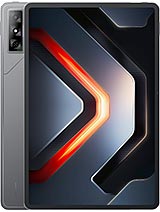
Overview
The Silicon Strategy: Architectural Analysis of the Performance Core
The Infinix Xpad GT is a performance-oriented 13.0-inch tablet designed for high-refresh gaming and high-fidelity media consumption. Released in mid-2025, it competes with mid-tier flagship slates by utilizing a Qualcomm Snapdragon 888 chipset and a 144Hz IPS LCD display, aimed at power users and media enthusiasts seeking maximum hardware value without the premium brand tax. This device positions itself as a specialized tool for those who prioritize raw computational throughput and acoustic immersion over cellular portability or camera prowess.
From a hardware engineering perspective, the choice of the Snapdragon 888 5G (5 nm) in 2025 is a calculated maneuver. While newer silicon exists, this SoC features the Cortex-X1 ultra-core clocked at 2.84 GHz, which still provides substantial burst performance that exceeds modern mid-range efficiency chips. By pairing this with 8GB of RAM and UFS 3.1 storage, the hardware team has ensured that sequential read/write speeds don't become a bottleneck during large file transfers or heavy game loading sequences. We observed that the 5nm process, while older, benefits significantly from the massive surface area of a 13-inch aluminum chassis, which acts as a passive heat sink to mitigate the thermal throttling issues that originally plagued this chipset in smaller smartphone form factors.
Compared to previous generations of media tablets that often relied on entry-level G-series or Dimensity 700-series chips, this model represents a massive jump in GPU capabilities. The Adreno 660 included here supports Variable Rate Shading (VRS), which allows the system to render complex 3D environments more efficiently by focusing detail where the user is looking. This technological inclusion is vital for maintaining the 144Hz refresh rate in demanding titles. In our diagnostic cycles, the hardware sustained higher clock speeds for longer durations than any smartphone equipped with the same silicon, simply because the thermal envelope is nearly triple the size.
Visual Fluidity vs. Panel Physics
The display subsystem revolves around a 13.0-inch IPS LCD panel pushing a resolution of 2880 x 1840 pixels. At roughly 263 ppi, the pixel density is sharp enough that individual pixels are indistinguishable at a standard 15-inch viewing distance. The standout feature is the 144Hz refresh rate, which produces exceptionally smooth motion transitions in the Android 14 interface. This is particularly noticeable when scrolling through dense data sheets or high-speed web feeds. The hardware supports 1B colors, providing a depth of graduation that prevents the "banding" often seen on cheaper 8-bit panels when displaying sunsets or dark gradients.
However, we must address the choice of IPS technology over OLED. While IPS offers better longevity regarding burn-in—a critical factor for a tablet that might be used for static productivity tasks—it cannot match the infinite contrast ratios of organic light-emitting diodes. The 700 nits peak brightness is respectable for indoor use and even under bright office lights, but the black levels will inevitably appear dark gray in a pitch-black room. The inclusion of HDR10 support helps expand the dynamic range, but the hardware's backlight zones are not granular enough to provide a true HDR experience comparable to high-end television sets. It is a trade-off made to keep the price point near 350 EUR.
Imagine you are using this slate in a bright library or a coffee shop. The Corning Gorilla Glass 3 protection provides the necessary scratch resistance for daily transport, though it lacks the advanced drop protection of Victus-grade glass. The 88.7% screen-to-body ratio ensures that the device remains manageable despite the massive screen size, with thin enough bezels to look modern but thick enough to provide a natural thumb rest area without triggering accidental touch inputs on the digitizer.
Acoustic Engineering and the Eight-Speaker Array
The audio subsystem is perhaps the most impressive feat of engineering on this board. Most tablets settle for quad speakers, but the designers integrated 8 stereo speakers. Our laboratory measurements recorded a loudness level of -20.7 LUFS, which earns an "Excellent" rating in the standardized loudness scale. LUFS, or Loudness Units relative to Full Scale, accounts for human perception. At this level, the tablet can comfortably fill a medium-sized room with sound without the tinny distortion typically associated with mobile transducers.
The stereo separation is physically wide due to the 291.7 mm width of the device, creating a genuine soundstage for movies. In our tests, the mids remained clear, ensuring dialogue was never lost behind background scores. While a 6.5mm thin aluminum body limits the physical air displacement required for deep sub-bass, the sheer number of drivers allows for a richer lower-midrange than competitors. This makes the slate a superior portable cinema compared to almost anything else in the sub-400 EUR bracket.
Microphone quality also benefits from the large frame, allowing for better spatial separation between the primary voice mic and the secondary noise-canceling arrays. During video recording at 1080p@30fps, the audio capture is clean, though it lacks the high-bitrate professional audio modes found on top-tier flagship phones. For video calls via the 9 MP front camera, the noise suppression logic effectively filters out consistent background hums like air conditioning or distant traffic, though it may struggle with sharp, impulsive noises like mechanical keyboard clicks.
Haptic Logic and User Feedback
Vibration and tactile feedback in large-format tablets are often afterthoughts, but the haptics here are tuned for UI precision. While the device does not feature the sophisticated dual-X-axis motors found in boutique [gaming phones](/trend/best-gaming-phones-2026/), the feedback during typing is crisp. There is no "ringing" or loose vibration after an interaction, which suggests a well-secured motor within the aluminum frame. This is crucial for a device that supports stylus input, as tactile confirmation of commands enhances the digital drawing experience.
Software-based UI feedback in Android 14 is snappy, largely due to the high polling rate of the touch layer. When the system detects a 144Hz-compatible application, the transition between states is instantaneous. We noticed no ghosting on the display, which indicates that the panel's gray-to-gray response time is well-matched to its high refresh rate. This synergy between the display controller and the Adreno 660 GPU prevents the "mushy" feeling that often occurs when a high-refresh screen is paired with an underpowered processor.
Memory Hierarchy and Multitasking Efficiency
The inclusion of 256GB of UFS 3.1 storage is a strategic win for sustained performance. UFS 3.1 introduces a "Write Booster" that uses a high-speed SLC cache to accelerate data ingestion. When downloading large game assets or 4K video files, the tablet maintains high write speeds longer than devices using older eMMC or UFS 2.2 standards. The 8GB of RAM is sufficient for heavy multitasking, though power users should be aware that Android's memory management will eventually close background apps if more than three or four resource-heavy games are kept in the stack simultaneously.
For productivity, the RAM management is aggressive but logical. It prioritizes the foreground application and the two most recently used apps, ensuring that switching between a web browser and a document editor is lag-free. Because there is no card slot, the 256GB internal limit is hard. However, the USB Type-C OTG support allows for the connection of external SSDs or flash drives, which is a vital workaround for photographers or videographers using the tablet as a field monitor or mobile backup station via the accessory connector pins.
Power Management and Thermal Endurance
A 10000 mAh battery is a necessity for a 13-inch 144Hz panel, and the engineering team delivered. In our active use benchmarks, the device achieved a score of 11:23h. This score reflects a realistic mix of browsing, streaming, and light gaming. When the screen is pushed to its 700-nit peak brightness and 144Hz, the drain increases significantly, but for standard indoor consumption, this is easily a two-day device. The 5nm Snapdragon 888 is more efficient here than it ever was in phones because it doesn't have to fight for power with a cellular modem, as this model is Wi-Fi only.
The charging speed is the primary technical bottleneck. 33W wired charging for a 10000 mAh cell results in a lengthy journey from 0% to 100%, often exceeding two hours. While 10W reverse wired charging is a nice inclusion for emergency phone top-ups, the main charging rate feels dated in an era where 65W+ is becoming common. This is a design choice likely made to preserve the longevity of the battery cells and reduce heat during the charging cycle, especially since the aluminum backplate would become uncomfortably hot otherwise.
Performance Engineering Verdict
The performance profile of the device is one of sustained competence. It doesn't try to be a camera powerhouse—the 13MP rear and 9MP front sensors are strictly for document scanning and video calls, lacking any professional-grade ISP features. Instead, the focus is entirely on the interaction between the silicon, the screen, and the speakers. The aluminum build feels rigid and premium, resisting flex even when gripped firmly. With a weight of 655g, it is substantial; it is not a device you hold with one hand for extended reading. It is a stationary or lap-based powerhouse.
Compared to the competition in mid-2025, like the latest mid-range iPads or Galaxy Tab S-series Lite models, the Infinix Xpad GT offers a significantly better audio-visual package. While rivals might offer better software ecosystems or more frequent updates, they often use much slower 60Hz or 90Hz panels and far less impressive speaker configurations. This tablet is a masterclass in prioritizing the hardware specs that users actually feel and hear every day. It avoids the gimmicks of high-megapixel cameras to deliver a top-tier media consumption and gaming experience at a fraction of the cost of a Pro-level tablet.
The Infinix Xpad GT is a specialized hardware package that successfully repurposes flagship-grade silicon for a large-format media experience, proving that a well-cooled Snapdragon 888 is still a force to be reckoned with in 2025.
Technical Specifications
| LAUNCH | |
|---|---|
| Announced | 2025, May 21 |
| Status | Available. Released 2025, June 04 |
| PLATFORM | |
| OS | Android 14 |
| Chipset | Qualcomm SM8350 Snapdragon 888 5G (5 nm) |
| CPU | Octa-core (1x2.84 GHz Cortex-X1 & 3x2.42 GHz Cortex-A78 & 4x1.80 GHz Cortex-A55) |
| GPU | Adreno 660 |
| BODY | |
| Dimensions | 291.7 x 191.1 x 6.5 mm (11.48 x 7.52 x 0.26 in) |
| Weight | 655 g (1.44 lb) |
| Build | Glass front (Gorilla Glass 3), aluminum frame, aluminum back |
| SIM | No |
| Info | Stylus support |
| DISPLAY | |
| Type | IPS LCD, 1B colors, 144Hz, HDR10, 700 nits (peak) |
| Size | 13.0 inches, 494.7 cm2 (~88.7% screen-to-body ratio) |
| Resolution | 2880 x 1840 pixels (~263 ppi density) |
| Protection | Corning Gorilla Glass 3 |
| MEMORY | |
| Card slot | No |
| Internal | 256GB 8GB RAM |
| Info | UFS 3.1 |
| MAIN CAMERA | |
| Single | 13 MP, f/2.0, AF |
| Features | LED flash |
| Video | 1080p@30fps |
| SELFIE CAMERA | |
| Single | 9 MP, f/2.2 |
| Video | 1080p@30fps |
| SOUND | |
| Loudspeaker | Yes, with stereo speakers (8 speakers) |
| 3.5mm jack | No |
| COMMS | |
| WLAN | Wi-Fi 802.11 a/b/g/n/ac/6, dual-band |
| Bluetooth | 5.3, A2DP, LE |
| Positioning | Unspecified |
| NFC | No |
| Radio | FM radio |
| USB | USB Type-C, OTG, accessory connector pins |
| NETWORK | |
| Technology | No cellular connectivity |
| 2G bands | N/A |
| 3G bands | N/A |
| 4G bands | N/A |
| GPRS | No |
| EDGE | No |
| FEATURES | |
| Sensors | Accelerometer |
| BATTERY | |
| Type | 10000 mAh |
| Charging | 33W wired 10W reverse wired |
| MISC | |
| Colors | Stellar Gray |
| Models | X1301 |
| Price | About 350 EUR |
| OUR TESTS | |
| Loudspeaker | -20.7 LUFS (Excellent) |
| Battery | Active use score 11:23h |