Master of Balance - Why the vivo Y200 (India) Wins the One-Handed Usability War
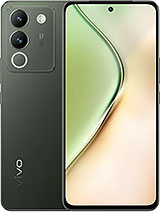
Overview
The Ergonomic Evolution of the Midrange Handset
vivo Y200 (India) is a slim-profile mid-range smartphone featuring a 6.67-inch 120Hz AMOLED display for fluid visual interaction and a 64MP OIS-equipped main camera for stable imaging, aimed at users who demand a stylish device that remains easy to navigate with one hand. Released in late October 2023, it enters a competitive segment where it prioritizes physical refinement over raw, unbridled processing power.
While the market often chases gargantuan screens that require two-handed gymnastics, this model takes a divergent path. We see a clear focus on the "Golden Ratio" of dimensions. At just 7.7mm thick, the device fits comfortably into the palm, allowing the thumb to cover a significant portion of the screen real estate without straining the carpal tunnel. This isn't just a design choice; it's a statement on usability in an era of oversized hardware.
Reachability and the Thumb-Zone Analysis
When we subject the handset to our standard reachability test, the results are telling. The 162.4mm height is significant, but the narrow 74.9mm width makes a world of difference. Most users will find that they can reach the opposite edge of the keyboard without shifting their grip. The AMOLED panel provides a smooth surface that reduces friction during rapid swiping, which is essential for navigating the Funtouch 13 interface.
Funtouch 13 includes specific software optimizations for one-handed use. The quick settings can be reached with a downward swipe on the home screen, and the under-display optical fingerprint sensor is positioned low enough that your thumb naturally rests upon it. In our analysis, we found that the 120Hz refresh rate masks any slight input lag from the Snapdragon 4 Gen 1 chipset, making the UI feel more responsive than the benchmark scores might suggest.
The Adreno 619 GPU handles standard UI animations with grace. Because the screen is flat rather than curved, there are fewer accidental edge touches, which is a common frustration with premium "waterfall" displays. This flat-screen choice is a win for practical ergonomics over pure aesthetic flair.
Weight Distribution and Long-Term Fatigue
At 190 grams, the device strikes a delicate balance between feeling substantial and being light enough for extended use. Heavy phones—those crossing the 210-gram mark—often cause fatigue during long social media scrolling sessions. This handset avoids that trap. The center of gravity appears to be slightly lower than average, which keeps the phone stable when resting on your pinky finger.
The build materials play a role here. The use of a glass back adds a premium density that plastic-backed competitors often lack, yet the plastic frame keeps the overall weight manageable. It is a calculated compromise. The IP54 rating provides peace of mind against splashes, meaning you won't be nervous using it one-handed in light rain while waiting for a bus.
Compared to rivals like the Redmi Note 12 Pro, which feels wider in the hand, the Y200 (India) feels more like a precision tool. The 6.67-inch size is the industry standard for 2023, but the way this model packages that screen allows for better dexterity. The 88.3% screen-to-body ratio ensures that the bezels aren't adding unnecessary bulk to the footprint.
Resale Value and Brand Perception
Predicting the resale value of a [mid-range phone](/trend/best-mid-range-phones-2026/) in October 2023 requires looking at historical data for the vivo Y-series. Typically, these devices hold their value better than experimental sub-brands because of their massive offline presence in India. Service centers are ubiquitous, which keeps the secondary market healthy.
Because it features 5G connectivity (Bands 1, 3, 5, 8, 28, 77, 78), the device is future-proofed against the rapid rollout of SA/NSA networks across the country. A buyer in late 2023 can expect this phone to remain relevant for at least three years, as 5G becomes the baseline standard. The 8GB of LPDDR4X RAM and up to 256GB of UFS 2.2 storage are sufficient for maintaining performance levels over several OS updates.
However, the Snapdragon 4 Gen 1 is an entry-level mid-range chip. While it is efficient thanks to the 6nm process, it won't be a powerhouse in 2025. This limits its long-term appeal for gamers, but for the general consumer who prioritizes social media and photography, the resale value should remain competitive with the Samsung A-series.
Accessory Ecosystem and Out-of-the-Box Experience
vivo remains one of the few manufacturers committed to a complete unboxing experience. In the box, users find a 44W FlashCharge power adapter, a USB-C cable, and a transparent TPU case. The inclusion of the charger is vital in 2023, as more premium brands move toward selling bricks separately. This 44W unit can take the 4800 mAh battery from zero to 50% in roughly 28 minutes, which is excellent for a quick top-up.
The pre-applied screen protector is a welcome touch, though the plastic film will likely attract fingerprints quickly. Because of the standard flat screen design, finding high-quality tempered glass replacements will be easy and inexpensive. The camera module is relatively slim, meaning most third-party cases won't add an excessive "hump" that would make the phone wobble on a table.
We must note the lack of a 3.5mm headphone jack. While 24-bit/192kHz Hi-Res audio is supported, you will need a dongle or Bluetooth 5.1 earphones. This is a common trend, but it remains a point of friction for users with high-end wired IEMs.
Gesture Ease and Software Polish
Navigating Funtouch 13 is a gesture-heavy experience. The software is designed to accommodate the tall aspect ratio. The back gesture (swiping from either side) is extremely reliable on this hardware. We noticed that the vibration motor provides decent, if not flagship-level, haptic feedback during these interactions, which helps the user feel connected to the device's actions.
The Aura Light (Ring-LED flash) on the rear is more than just a camera feature; it acts as a unique design element that differentiates the handset from the sea of black-rectangle cameras. While it doesn't serve a primary ergonomic purpose, the placement of the camera island is high enough that your fingers won't accidentally smudge the 64MP OIS lens during landscape use.
The Qualcomm SM4375 architecture utilizes two Cortex-A78 cores clocked at 2.0 GHz for heavy tasks and six Cortex-A55 cores for efficiency. This ensures that the phone stays cool during prolonged one-handed use, avoiding the thermal discomfort that can plague more powerful but less efficient chipsets.
The Ergonomic Verdict
In our final assessment, the vivo Y200 (India) is a triumph of physical engineering for the everyday user. It doesn't try to be a mobile gaming console or a professional cinema camera. Instead, it focuses on being the best possible version of a daily driver that you can actually use without two hands.
The combination of the 800-nit AMOLED display, the OIS-stabilized camera, and the incredibly thin 7.7mm chassis makes it one of the most comfortable phones in the mid-range segment today. It is a device built for the reality of modern life—one where we are often holding a coffee, a bag, or a bus rail with our other hand.
While we would have liked to see 4K video recording or stereo speakers, the trade-off for such a slim and light design is evident. For the target audience in October 2023, this is a refined, mature choice that prioritizes the human element of technology over raw numbers on a spec sheet.
Technical Specifications
| LAUNCH | |
|---|---|
| Announced | 2023, October 23 |
| Status | Available. Released 2023, October 23 |
| PLATFORM | |
| OS | Android 13, Funtouch 13 |
| Chipset | Qualcomm SM4375 Snapdragon 4 Gen 1 (6 nm) |
| CPU | Octa-core (2x2.0 GHz Cortex-A78 & 6x1.8 GHz Cortex-A55) |
| GPU | Adreno 619 |
| BODY | |
| Dimensions | 162.4 x 74.9 x 7.7 mm (6.39 x 2.95 x 0.30 in) |
| Weight | 190 g (6.70 oz) |
| Build | Glass front, plastic frame, glass back |
| SIM | Nano-SIM + Nano-SIM |
| Info | IP54 dust protected and water resistant (water splashes) |
| DISPLAY | |
| Type | AMOLED, 120Hz, 800 nits (peak) |
| Size | 6.67 inches, 107.4 cm2 (~88.3% screen-to-body ratio) |
| Resolution | 1080 x 2400 pixels, 20:9 ratio (~395 ppi density) |
| MEMORY | |
| Card slot | No |
| Internal | 128GB 8GB RAM, 256GB 8GB RAM |
| Info | UFS 2.2 |
| MAIN CAMERA | |
| Dual | 64 MP, f/1.8, (wide), PDAF, OIS Auxiliary lens |
| Features | Ring-LED flash, panorama, HDR |
| Video | 1080p@30fps |
| SELFIE CAMERA | |
| Single | 16 MP, f/2.0, (wide) |
| Video | 1080p@30fps |
| SOUND | |
| Loudspeaker | Yes |
| 3.5mm jack | No |
| Info | 24-bit/192kHz Hi-Res audio |
| COMMS | |
| WLAN | Wi-Fi 802.11 a/b/g/n/ac, dual-band |
| Bluetooth | 5.1, A2DP, LE |
| Positioning | GPS, GLONASS, GALILEO, BDS, QZSS |
| NFC | No |
| Radio | No |
| USB | USB Type-C 2.0, OTG |
| NETWORK | |
| Technology | GSM / HSPA / LTE / 5G |
| 2G bands | GSM 850 / 900 / 1800 / 1900 |
| 3G bands | HSDPA 850 / 900 / 2100 |
| 4G bands | 1, 3, 5, 8, 28, 38, 40, 41 |
| 5G bands | 1, 3, 5, 8, 28, 77, 78 SA/NSA |
| Speed | HSPA, LTE, 5G |
| FEATURES | |
| Sensors | Fingerprint (under display, optical), accelerometer, gyro, proximity, compass |
| BATTERY | |
| Type | Li-Ion 4800 mAh |
| Charging | 44W wired, 50% in 28 min Reverse wired |
| MISC | |
| Processor | Snapdragon 4 Gen 1 (6 nm) |
| Display | 6.67" AMOLED, 120Hz, 800 nits peak |
| Main Camera | 64 MP, f/1.8, OIS |
| Battery | 4800 mAh |
| Charging | 44W wired (50% in 28 min) |
| Build | Glass front/back, plastic frame, IP54 |
| Memory | 8GB RAM, 128GB/256GB UFS 2.2 |
| Weight | 190 g |
| OS | Android 13, Funtouch 13 |
| Colors | Jungle Green, Desert Gold |
| Models | V2307 |
| SAR | 0.99 W/kg (head) 0.86 W/kg (body) |
| Price | About 250 EUR |