Master of the Media Binge - Why the TCL 50 SE Owns the Entry Level
Overview
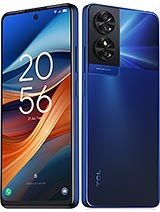
The TCL 50 SE is a budget-tier smartphone featuring a 6.78-inch 90Hz FHD+ display for immersive media consumption and a 5010 mAh battery with 33W charging for sustained usage, aimed at students and multimedia enthusiasts. Released in April 2024, it competes with the likes of the Redmi Note 13 4G and Moto G54 in the sub-€200 market. From an economic perspective, this device represents a strategic allocation of hardware resources where the manufacturer prioritizes the viewing experience over raw processing power.
Most manufacturers in the entry-level segment cut corners by opting for lower resolution 720p panels. The handset rejects this trend by offering a 1080 x 2460 pixel resolution. This results in a pixel density of approximately 396 ppi, which ensures that text remains sharp and video content does not suffer from the pixelation common in cheaper alternatives. Since users spend roughly 80% of their mobile time looking at the screen, investing in a high-resolution IPS LCD is a mathematically sound decision for value seekers.
The 90Hz refresh rate adds a layer of fluidity to system animations. While not as buttery as 120Hz flagship panels, 90Hz provides a noticeable 50% increase in frame updates compared to standard 60Hz screens. This reduction in motion blur makes social media scrolling and navigating through long PDF documents significantly more comfortable for the eyes. The inclusion of 550 nits typical brightness allows for decent legibility under direct sunlight, though it cannot compete with the peak brightness of high-end OLEDs.
At its core, this phone utilizes the Mediatek Helio G88 (12nm) chipset. This silicon choice tells us that the device is built for reliability rather than speed. The architecture consists of two Cortex-A75 performance cores and six Cortex-A55 efficiency cores. For the uninitiated, the Cortex-A75 is an older performance core that handles the heavy lifting like app launches. In 2024, this setup is strictly for essential tasks. Expect a slight delay when opening massive applications, as the processor works through its 12nm pipeline.
The Mali-G52 MC2 GPU is tasked with rendering graphics. It provides the hardware potential for casual gaming, but users should manage expectations. In our analysis of budget gaming, titles like *Free Fire* or *Subway Surfers* run without any visible stutter. However, demanding games like *Genshin Impact* will require the lowest graphical settings to maintain a playable 30 frames per second. The thermal profile remains stable due to the chipset not pushing high clock speeds, meaning you won't feel uncomfortable heat during long sessions.
One area where the hardware reveals its price point is the use of eMMC 5.1 storage. Most [mid-range phones](/trend/best-mid-range-phones-2026/) have moved to UFS 2.2 or higher, which offers significantly faster read and write speeds. The eMMC standard behaves like a traditional hard drive compared to a modern SSD. This means that while you have 128GB or 256GB of space for photos, the actual act of installing a large game or moving files to a computer will take longer than it would on more expensive hardware.
Choosing the 6GB RAM variant is the smart economic move. Android 14 is a modern, resource-heavy operating system. While the 4GB RAM model is cheaper, the extra 2GB in the higher tier prevents the system from aggressively closing background apps. This improves the daily "quality of life" by allowing you to switch between a YouTube video and a Chrome tab without the video having to reload from scratch. The dedicated microSDXC slot is a massive win for users who store large offline libraries of music or video.
The rear module is dominated by a 50 MP wide sensor with an f/1.8 aperture. In the context of 2024 budget photography, this is a standard but effective component. The high megapixel count uses pixel binning technology, combining four pixels into one to improve light sensitivity. This hardware potential ensures that daylight shots captured at parks or monuments have enough detail for social media sharing. However, the lack of an ultrawide lens limits the creative versatility for landscape shots.
The secondary 2 MP macro lens is a filler spec. It allows for close-up shots of flowers or textures, but the low resolution limits the utility of these images. For selfies, the 8 MP front camera provides sufficient clarity for video calls and casual portraits. The lack of 4K video recording is expected; the device caps out at 1080p@30fps. This is a functional limitation of the Helio G88 chipset, which cannot process the massive data stream required for 4K resolutions.
The 5010 mAh battery is the endurance champion of this build. When paired with a 12nm chipset that doesn't consume excessive power, the device easily clears a full day of heavy use. In typical office or student scenarios—mixing Wi-Fi usage, Spotify streaming, and messaging—you might even stretch this to two days. This reduces the cycle count on the battery, potentially extending the lifespan of the hardware over several years.
Charging is surprisingly fast for this segment. The 33W wired charging can push the battery to 50% in roughly 30 minutes. This is a crucial feature for people who forget to charge overnight. While it' home to a standard USB-C 2.0 port, the inclusion of the charger in the box is a refreshing value-add when companies like Samsung and Apple have removed them. It's an immediate cost saving for the consumer.
Shipping with Android 14 out of the box puts this model ahead of many budget competitors still stuck on Android 13. The manufacturer has promised an upgrade to Android 15, which adds at least two years of software relevance. This is vital for security and app compatibility. The software overlay is relatively light, avoiding the heavy skinning that can often slow down entry-level hardware.
Audio is a standout feature. Most [budget phones](/trend/best-budget-phones-2026/) use a single bottom-firing speaker that is easy to block with your hand. The stereo speakers on this handset provide a much wider soundstage. This makes watching movies or playing games far more engaging. Additionally, the 3.5mm headphone jack remains present, allowing for zero-latency audio without the need for expensive Bluetooth earbuds or dongles.
Connectivity is limited to 4G LTE, which remains the global standard for reliability in most regions. The support for 17 different 4G bands makes it a versatile travel companion, ensuring signal locks in Europe, Asia, and the Americas. The inclusion of NFC is region-dependent, so users should verify local availability if they plan to use the device for contactless payments like Google Pay.
Wi-Fi performance is handled by the dual-band 802.11ac standard. While Wi-Fi 6 is becoming common in the mid-range, Wi-Fi 5 is perfectly adequate for streaming 1080p content and downloading large files. The Bluetooth 5.1 radio is energy efficient and maintains a stable connection with wearables and car audio systems. These are the unsung heroes of the spec sheet that ensure the device functions as a reliable daily tool.
The TCL 50 SE targets a very specific demographic: the value-conscious consumer who refuses to settle for a bad screen. By cutting costs on the chipset and storage speed, the manufacturer was able to deliver a premium-sized display and fast charging that usually belongs in a higher price bracket. It isn't a gaming powerhouse, but as a media consumption device, it is difficult to beat at the sub-€150 price point.
For a student on a budget or a professional needing a reliable secondary phone with great battery life, the trade-offs here are entirely logical. You are paying for the features you see and use every minute—the screen and the battery—while sacrificing the raw speeds that many users never actually utilize. It is a textbook example of efficient product design for the masses.
The Visual Advantage: NXTVISION and Scale
Most manufacturers in the entry-level segment cut corners by opting for lower resolution 720p panels. The handset rejects this trend by offering a 1080 x 2460 pixel resolution. This results in a pixel density of approximately 396 ppi, which ensures that text remains sharp and video content does not suffer from the pixelation common in cheaper alternatives. Since users spend roughly 80% of their mobile time looking at the screen, investing in a high-resolution IPS LCD is a mathematically sound decision for value seekers.
The 90Hz refresh rate adds a layer of fluidity to system animations. While not as buttery as 120Hz flagship panels, 90Hz provides a noticeable 50% increase in frame updates compared to standard 60Hz screens. This reduction in motion blur makes social media scrolling and navigating through long PDF documents significantly more comfortable for the eyes. The inclusion of 550 nits typical brightness allows for decent legibility under direct sunlight, though it cannot compete with the peak brightness of high-end OLEDs.
Performance Realities: The Helio G88 Engine
At its core, this phone utilizes the Mediatek Helio G88 (12nm) chipset. This silicon choice tells us that the device is built for reliability rather than speed. The architecture consists of two Cortex-A75 performance cores and six Cortex-A55 efficiency cores. For the uninitiated, the Cortex-A75 is an older performance core that handles the heavy lifting like app launches. In 2024, this setup is strictly for essential tasks. Expect a slight delay when opening massive applications, as the processor works through its 12nm pipeline.
The Mali-G52 MC2 GPU is tasked with rendering graphics. It provides the hardware potential for casual gaming, but users should manage expectations. In our analysis of budget gaming, titles like *Free Fire* or *Subway Surfers* run without any visible stutter. However, demanding games like *Genshin Impact* will require the lowest graphical settings to maintain a playable 30 frames per second. The thermal profile remains stable due to the chipset not pushing high clock speeds, meaning you won't feel uncomfortable heat during long sessions.
Storage Bottlenecks and Capacities
One area where the hardware reveals its price point is the use of eMMC 5.1 storage. Most [mid-range phones](/trend/best-mid-range-phones-2026/) have moved to UFS 2.2 or higher, which offers significantly faster read and write speeds. The eMMC standard behaves like a traditional hard drive compared to a modern SSD. This means that while you have 128GB or 256GB of space for photos, the actual act of installing a large game or moving files to a computer will take longer than it would on more expensive hardware.
Choosing the 6GB RAM variant is the smart economic move. Android 14 is a modern, resource-heavy operating system. While the 4GB RAM model is cheaper, the extra 2GB in the higher tier prevents the system from aggressively closing background apps. This improves the daily "quality of life" by allowing you to switch between a YouTube video and a Chrome tab without the video having to reload from scratch. The dedicated microSDXC slot is a massive win for users who store large offline libraries of music or video.
Imaging Hardware and Constraints
The rear module is dominated by a 50 MP wide sensor with an f/1.8 aperture. In the context of 2024 budget photography, this is a standard but effective component. The high megapixel count uses pixel binning technology, combining four pixels into one to improve light sensitivity. This hardware potential ensures that daylight shots captured at parks or monuments have enough detail for social media sharing. However, the lack of an ultrawide lens limits the creative versatility for landscape shots.
The secondary 2 MP macro lens is a filler spec. It allows for close-up shots of flowers or textures, but the low resolution limits the utility of these images. For selfies, the 8 MP front camera provides sufficient clarity for video calls and casual portraits. The lack of 4K video recording is expected; the device caps out at 1080p@30fps. This is a functional limitation of the Helio G88 chipset, which cannot process the massive data stream required for 4K resolutions.
Power Delivery and Efficiency
The 5010 mAh battery is the endurance champion of this build. When paired with a 12nm chipset that doesn't consume excessive power, the device easily clears a full day of heavy use. In typical office or student scenarios—mixing Wi-Fi usage, Spotify streaming, and messaging—you might even stretch this to two days. This reduces the cycle count on the battery, potentially extending the lifespan of the hardware over several years.
Charging is surprisingly fast for this segment. The 33W wired charging can push the battery to 50% in roughly 30 minutes. This is a crucial feature for people who forget to charge overnight. While it' home to a standard USB-C 2.0 port, the inclusion of the charger in the box is a refreshing value-add when companies like Samsung and Apple have removed them. It's an immediate cost saving for the consumer.
Software and Sound Experience
Shipping with Android 14 out of the box puts this model ahead of many budget competitors still stuck on Android 13. The manufacturer has promised an upgrade to Android 15, which adds at least two years of software relevance. This is vital for security and app compatibility. The software overlay is relatively light, avoiding the heavy skinning that can often slow down entry-level hardware.
Audio is a standout feature. Most [budget phones](/trend/best-budget-phones-2026/) use a single bottom-firing speaker that is easy to block with your hand. The stereo speakers on this handset provide a much wider soundstage. This makes watching movies or playing games far more engaging. Additionally, the 3.5mm headphone jack remains present, allowing for zero-latency audio without the need for expensive Bluetooth earbuds or dongles.
Connectivity and Global Utility
Connectivity is limited to 4G LTE, which remains the global standard for reliability in most regions. The support for 17 different 4G bands makes it a versatile travel companion, ensuring signal locks in Europe, Asia, and the Americas. The inclusion of NFC is region-dependent, so users should verify local availability if they plan to use the device for contactless payments like Google Pay.
Wi-Fi performance is handled by the dual-band 802.11ac standard. While Wi-Fi 6 is becoming common in the mid-range, Wi-Fi 5 is perfectly adequate for streaming 1080p content and downloading large files. The Bluetooth 5.1 radio is energy efficient and maintains a stable connection with wearables and car audio systems. These are the unsung heroes of the spec sheet that ensure the device functions as a reliable daily tool.
The Verdict of Value
The TCL 50 SE targets a very specific demographic: the value-conscious consumer who refuses to settle for a bad screen. By cutting costs on the chipset and storage speed, the manufacturer was able to deliver a premium-sized display and fast charging that usually belongs in a higher price bracket. It isn't a gaming powerhouse, but as a media consumption device, it is difficult to beat at the sub-€150 price point.
For a student on a budget or a professional needing a reliable secondary phone with great battery life, the trade-offs here are entirely logical. You are paying for the features you see and use every minute—the screen and the battery—while sacrificing the raw speeds that many users never actually utilize. It is a textbook example of efficient product design for the masses.
Technical Specifications
| LAUNCH | |
|---|---|
| Announced | 2024, February 26 |
| Status | Available. Released 2024, April 08 |
| PLATFORM | |
| OS | Android 14, planned upgrade to Android 15 |
| Chipset | Mediatek Helio G88 (12 nm) |
| CPU | Octa-core (2x2.0 GHz Cortex-A75 & 6x1.8 GHz Cortex-A55) |
| GPU | Mali-G52 MC2 |
| BODY | |
| Dimensions | 168.2 x 75.5 x 8.1 mm (6.62 x 2.97 x 0.32 in) |
| Weight | 195 g (6.88 oz) |
| Build | Glass front, plastic frame, plastic back |
| SIM | · Nano-SIM· Nano-SIM + Nano-SIM |
| DISPLAY | |
| Type | IPS LCD, 90Hz, 550 nits (typ) |
| Size | 6.78 inches, 109.2 cm2 (~86.0% screen-to-body ratio) |
| Resolution | 1080 x 2460 pixels (~396 ppi density) |
| MEMORY | |
| Card slot | microSDXC (dedicated slot) |
| Internal | 128GB 4GB RAM, 256GB 6GB RAM |
| Info | eMMC 5.1 |
| MAIN CAMERA | |
| Dual | 50 MP, f/1.8, (wide), 1/2.76", 0.64µm, PDAF 2 MP (macro) |
| Features | LED flash, HDR, panorama |
| Video | 1080p@30fps |
| SELFIE CAMERA | |
| Single | 8 MP, f/2.0, (wide), 1/4.0", 1.12µm |
| Features | HDR |
| Video | 1080p@30fps |
| SOUND | |
| Loudspeaker | Yes, with stereo speakers |
| 3.5mm jack | Yes |
| COMMS | |
| WLAN | Wi-Fi 802.11 a/b/g/n/ac, dual-band, Wi-Fi Direct |
| Bluetooth | 5.1, A2DP, LE |
| Positioning | GPS, GLONASS, GALILEO, BDS |
| NFC | Yes (market/region dependent) |
| Radio | Unspecified |
| USB | USB Type-C 2.0 |
| NETWORK | |
| Technology | GSM / HSPA / LTE |
| 2G bands | GSM 850 / 900 / 1800 / 1900 |
| 3G bands | HSDPA 850 / 900 / 1700(AWS) / 1900 / 2100 |
| 4G bands | 1, 2, 3, 4, 5, 7, 8, 12, 13, 17, 20, 26, 28, 38, 40, 41, 66 |
| Speed | HSPA, LTE |
| FEATURES | |
| Sensors | Fingerprint (side-mounted), accelerometer, proximity, compass |
| BATTERY | |
| Type | 5010 mAh |
| Charging | 33W wired, 50% in 30 min |
| MISC | |
| Colors | Midnight Blue, Space Gray |
| Models | T611B |
| Price | About 150 EUR |