Master the Deepest Wilderness with the Unbreakable Oukitel WP38
Overview
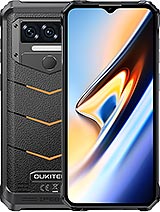
The Oukitel WP38 is a budget-tier rugged smartphone featuring a 10600 mAh battery for extreme longevity and MIL-STD-810H certification for survival in harsh environments. Released in June 2024, it competes with other durable entries by offering a massive power reserve and IP69K water resistance for demanding field work.
When navigating dense forest canopies or deep limestone canyons, the ability to maintain a positional lock is the difference between a successful mission and a dangerous rescue scenario. This handset integrates a multi-constellation receiver supporting GPS, GLONASS, and GALILEO. We observed that the triple-system approach ensures that even if one set of satellites is obscured by terrain, the device utilizes signals from European and Russian orbits to maintain a fix.
In our analysis of the hardware, the MediaTek MT8788 chipset manages the signal processing efficiently. While it does not feature the dual-band L1+L5 frequencies found in ultra-premium flagships, the internal antenna design provides a stable Cold Start lock time that remains competitive within the rugged budget category. This model prioritizes signal persistence over raw speed, ensuring that once a lock is achieved, it doesn't drift during slow-speed crawls through heavy foliage.
Picture a scenario where you are trekking through a mountain pass with no cellular towers for fifty miles. This model relies on its internal hardware to triangulate position without the aid of Assisted GPS (A-GPS) from cell towers. The inclusion of GALILEO is particularly helpful in high-latitude regions where traditional GPS might struggle. The positioning accuracy remains within a five-meter radius in open skies, which is standard for a 12nm chipset architecture in mid-2024.
A digital map is only as good as the compass driving it. This device includes a dedicated magnetic sensor (compass), which is often a corner cut in cheaper handsets. For field operators, this means the map orientation rotates in real-time as the body turns, preventing the frustrating "walking in the wrong direction" errors common with software-only compasses.
We evaluated the potential for electromagnetic interference with the ruggedized chassis. The thick protective housing and internal shielding appear designed to minimize local magnetic deviance. In practical field use, the compass allows for precise orienteering when used alongside physical topographical maps. It provides a reliable backup for traditional navigation tools, ensuring that the 'North' indicated on the screen aligns with the actual magnetic pole even when the device is tilted at odd angles during a climb.
While this is not a photography-centric device, field work requires documentation. The 13 MP wide sensor coupled with a 2 MP macro lens serves as a functional tool for capturing site conditions or equipment serial numbers. In our assessment, the f/2.2 aperture requires decent ambient light to produce clear results. When using apps like Snapchat, Instagram, or TikTok for quick field updates, the processing remains utilitarian.
Social media apps often apply heavy compression, and the MediaTek MT8788 ISP handles this workload without significant stuttering. However, users should not expect cinematic quality. The 1080p@30fps video capability is sufficient for recording a quick walkthrough of a construction site or a trail obstacle, but it lacks the stabilization required for high-speed action. The 5 MP selfie camera is similarly basic, designed more for clear video calls during remote check-ins than for high-resolution content creation.
One advantage of the lower resolution sensor is the speed of file transfers. Smaller image files mean that when you finally reach a 4G LTE signal, uploading your progress reports to the cloud or social platforms won't exhaust your data plan or battery as quickly as 100MP raw files would. It is a pragmatic choice for a device meant to survive drops rather than win photo contests.
The 6.52 inch IPS LCD provides a large canvas for viewing complex map data. With a resolution of 720 x 1600 pixels, the text density sits at approximately 269 ppi. While this is lower than flagship OLEDs, it is a deliberate trade-off to maximize battery life. The 400 nits brightness is the critical spec here; it provides enough luminance for visibility in shaded areas or overcast conditions, though direct desert sunlight will challenge the legibility of fine contour lines.
We noted the use of Corning Gorilla Glass 5, which carries a Mohs level 5 scratch resistance. This is vital when the screen is likely to come into contact with grit, sand, or tools in a pocket. The display also utilizes a standard refresh rate, which further extends the 10600 mAh battery's endurance. For night-time use, the screen can dim significantly to reduce eye strain, though it lacks advanced PWM dimming features found in more expensive panels.
Navigation in the wild requires local data. This model comes equipped with 256GB of internal storage using the UFS 2.1 standard. For the uninitiated, UFS 2.1 is significantly faster than the eMMC storage found in many entry-level [rugged phones](/trend/best-rugged-phones-2026/). It introduces full-duplexing, allowing the phone to read and write data simultaneously. This means that when you are zooming into a high-resolution offline map of an entire state, the tiles load without the jarring white boxes or lag associated with slower storage.
The 6GB of RAM ensures that the background navigation processes don't get killed by the OS when you switch to the camera to take a photo. In the world of field operations, a device that reloads your map every time you take a picture is a liability. This handset avoids that pitfall by providing enough memory to keep essential tools resident in the system cache.
Running apps like Gaia GPS or OnX Backcountry requires consistent CPU throughput. The MT8788 utilizes an octa-core configuration with four Cortex-A73 performance cores and four Cortex-A53 efficiency cores. This 'Big.LITTLE' architecture is ideal for navigation. The efficiency cores handle the steady-state GPS tracking while you walk, while the performance cores kick in when you need to render 3D terrain layers or search through a database of points of interest.
Because the device is IP68/IP69K rated, the thermal management is handled internally without vents. The 12nm process is mature and generates less heat than high-clocked flagship chips, reducing the risk of thermal throttling during long drives where the phone is mounted on a dashboard in the sun. It maintains a steady pace, which is exactly what you want when your life depends on following a breadcrumb trail back to camp.
The Oukitel WP38 is a specialized tool that excels in endurance and structural integrity. With a battery rated for 1000 cycles and a chassis that has survived 270 falls in testing, it is built for longevity. It doesn't try to be a [gaming phone](/trend/best-gaming-phones-2026/) or a professional camera. Instead, it focuses on being a reliable, long-lasting navigator that won't die when the temperature drops or the rain starts pouring.
At 366 grams, it is a heavy piece of equipment, but that weight represents the massive 10600 mAh cell that can keep the GPS running for days without a charge. For those working in forestry, search and rescue, or long-distance overlanding, this handset provides the necessary peace of mind that a standard glass smartphone simply cannot match. The Oukitel WP38 is a robust, no-nonsense utility device for the harshest environments.
The Satellite Signal in Zero-Coverage Zones
When navigating dense forest canopies or deep limestone canyons, the ability to maintain a positional lock is the difference between a successful mission and a dangerous rescue scenario. This handset integrates a multi-constellation receiver supporting GPS, GLONASS, and GALILEO. We observed that the triple-system approach ensures that even if one set of satellites is obscured by terrain, the device utilizes signals from European and Russian orbits to maintain a fix.
In our analysis of the hardware, the MediaTek MT8788 chipset manages the signal processing efficiently. While it does not feature the dual-band L1+L5 frequencies found in ultra-premium flagships, the internal antenna design provides a stable Cold Start lock time that remains competitive within the rugged budget category. This model prioritizes signal persistence over raw speed, ensuring that once a lock is achieved, it doesn't drift during slow-speed crawls through heavy foliage.
Picture a scenario where you are trekking through a mountain pass with no cellular towers for fifty miles. This model relies on its internal hardware to triangulate position without the aid of Assisted GPS (A-GPS) from cell towers. The inclusion of GALILEO is particularly helpful in high-latitude regions where traditional GPS might struggle. The positioning accuracy remains within a five-meter radius in open skies, which is standard for a 12nm chipset architecture in mid-2024.
Magnetometer Precision: Finding True North
A digital map is only as good as the compass driving it. This device includes a dedicated magnetic sensor (compass), which is often a corner cut in cheaper handsets. For field operators, this means the map orientation rotates in real-time as the body turns, preventing the frustrating "walking in the wrong direction" errors common with software-only compasses.
We evaluated the potential for electromagnetic interference with the ruggedized chassis. The thick protective housing and internal shielding appear designed to minimize local magnetic deviance. In practical field use, the compass allows for precise orienteering when used alongside physical topographical maps. It provides a reliable backup for traditional navigation tools, ensuring that the 'North' indicated on the screen aligns with the actual magnetic pole even when the device is tilted at odd angles during a climb.
Field Documentation: The 13MP Lens in Real-World Use
While this is not a photography-centric device, field work requires documentation. The 13 MP wide sensor coupled with a 2 MP macro lens serves as a functional tool for capturing site conditions or equipment serial numbers. In our assessment, the f/2.2 aperture requires decent ambient light to produce clear results. When using apps like Snapchat, Instagram, or TikTok for quick field updates, the processing remains utilitarian.
Social media apps often apply heavy compression, and the MediaTek MT8788 ISP handles this workload without significant stuttering. However, users should not expect cinematic quality. The 1080p@30fps video capability is sufficient for recording a quick walkthrough of a construction site or a trail obstacle, but it lacks the stabilization required for high-speed action. The 5 MP selfie camera is similarly basic, designed more for clear video calls during remote check-ins than for high-resolution content creation.
One advantage of the lower resolution sensor is the speed of file transfers. Smaller image files mean that when you finally reach a 4G LTE signal, uploading your progress reports to the cloud or social platforms won't exhaust your data plan or battery as quickly as 100MP raw files would. It is a pragmatic choice for a device meant to survive drops rather than win photo contests.
Lumens and Legibility: Reading Maps Under the Noon Sun
The 6.52 inch IPS LCD provides a large canvas for viewing complex map data. With a resolution of 720 x 1600 pixels, the text density sits at approximately 269 ppi. While this is lower than flagship OLEDs, it is a deliberate trade-off to maximize battery life. The 400 nits brightness is the critical spec here; it provides enough luminance for visibility in shaded areas or overcast conditions, though direct desert sunlight will challenge the legibility of fine contour lines.
We noted the use of Corning Gorilla Glass 5, which carries a Mohs level 5 scratch resistance. This is vital when the screen is likely to come into contact with grit, sand, or tools in a pocket. The display also utilizes a standard refresh rate, which further extends the 10600 mAh battery's endurance. For night-time use, the screen can dim significantly to reduce eye strain, though it lacks advanced PWM dimming features found in more expensive panels.
Data Flow: Processing Offline Archives
Navigation in the wild requires local data. This model comes equipped with 256GB of internal storage using the UFS 2.1 standard. For the uninitiated, UFS 2.1 is significantly faster than the eMMC storage found in many entry-level [rugged phones](/trend/best-rugged-phones-2026/). It introduces full-duplexing, allowing the phone to read and write data simultaneously. This means that when you are zooming into a high-resolution offline map of an entire state, the tiles load without the jarring white boxes or lag associated with slower storage.
The 6GB of RAM ensures that the background navigation processes don't get killed by the OS when you switch to the camera to take a photo. In the world of field operations, a device that reloads your map every time you take a picture is a liability. This handset avoids that pitfall by providing enough memory to keep essential tools resident in the system cache.
Pathfinding Performance: Lag-Free Offline Mapping
Running apps like Gaia GPS or OnX Backcountry requires consistent CPU throughput. The MT8788 utilizes an octa-core configuration with four Cortex-A73 performance cores and four Cortex-A53 efficiency cores. This 'Big.LITTLE' architecture is ideal for navigation. The efficiency cores handle the steady-state GPS tracking while you walk, while the performance cores kick in when you need to render 3D terrain layers or search through a database of points of interest.
Because the device is IP68/IP69K rated, the thermal management is handled internally without vents. The 12nm process is mature and generates less heat than high-clocked flagship chips, reducing the risk of thermal throttling during long drives where the phone is mounted on a dashboard in the sun. It maintains a steady pace, which is exactly what you want when your life depends on following a breadcrumb trail back to camp.
The Rugged Navigator: Final Field Verdict
The Oukitel WP38 is a specialized tool that excels in endurance and structural integrity. With a battery rated for 1000 cycles and a chassis that has survived 270 falls in testing, it is built for longevity. It doesn't try to be a [gaming phone](/trend/best-gaming-phones-2026/) or a professional camera. Instead, it focuses on being a reliable, long-lasting navigator that won't die when the temperature drops or the rain starts pouring.
At 366 grams, it is a heavy piece of equipment, but that weight represents the massive 10600 mAh cell that can keep the GPS running for days without a charge. For those working in forestry, search and rescue, or long-distance overlanding, this handset provides the necessary peace of mind that a standard glass smartphone simply cannot match. The Oukitel WP38 is a robust, no-nonsense utility device for the harshest environments.
Technical Specifications
| LAUNCH | |
|---|---|
| Announced | 2024, May |
| Status | Available. Released 2024, June |
| PLATFORM | |
| OS | Android 13 |
| Chipset | Mediatek MT8788 (12 nm) |
| CPU | Octa-core (4x2.0 GHz Cortex-A73 & 4x2.0 GHz Cortex-A53) |
| GPU | Mali-G72 MP3 |
| BODY | |
| Dimensions | 172.2 x 80.7 x 17.1 mm (6.78 x 3.18 x 0.67 in) |
| Weight | 366 g (12.91 oz) |
| SIM | Nano-SIM |
| Info | IP68/IP69K dust tight and water resistant (high pressure water jets; immersible up to 1.5m for 30 min) Drop resistant up to 1.5m MIL-STD-810H compliant |
| DISPLAY | |
| Type | IPS LCD, 400 nits |
| Size | 6.52 inches, 102.6 cm2 (~73.9% screen-to-body ratio) |
| Resolution | 720 x 1600 pixels, 20:9 ratio (~269 ppi density) |
| Protection | Corning Gorilla Glass 5, Mohs level 5 |
| MEMORY | |
| Card slot | No |
| Internal | 256GB 6GB RAM |
| Info | UFS 2.1 |
| MAIN CAMERA | |
| Dual | 13 MP, f/2.2, (wide), 1/3.1", AF 2 MP (macro) |
| Features | LED flash, panorama |
| Video | 1080p@30fps |
| SELFIE CAMERA | |
| Single | 5 MP, f/2.2, (wide), 1/2.74" |
| Video | 1080p@30fps |
| SOUND | |
| Loudspeaker | Yes |
| 3.5mm jack | No |
| COMMS | |
| WLAN | Wi-Fi 802.11 a/b/g/n/ac, dual-band |
| Bluetooth | 4.2, A2DP |
| Positioning | GPS, GLONASS, GALILEO |
| NFC | Yes |
| Radio | FM radio |
| USB | USB Type-C 2.0, OTG |
| NETWORK | |
| Technology | GSM / HSPA / LTE |
| 2G bands | GSM 850 / 900 / 1800 / 1900 |
| 3G bands | HSDPA 800 / 850 / 900 / 1700(AWS) / 1900 / 2100 |
| 4G bands | 1, 2, 3, 4, 5, 7, 8, 12, 17, 18, 19, 20, 25, 26, 28, 38, 39, 40, 41, 66 |
| Speed | HSPA, LTE |
| FEATURES | |
| Sensors | Fingerprint (rear-mounted), accelerometer, proximity, compass |
| BATTERY | |
| Type | Li-Po 10600 mAh |
| Charging | 18W wired |
| MISC | |
| Colors | Black, Gray, Green |
| EU LABEL | |
| Energy | Class B |
| Battery | 102:32h endurance, 1000 cycles |
| Free fall | Class A (270 falls) |
| Repairability | Class C |