Mastering Digital Distractions with the HONOR Watch 5
Overview
The Notification Filter for a Distracted World
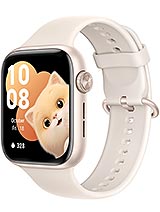
The HONOR Watch 5 is a mid-range wearable featuring a 1.85-inch AMOLED display for clarity and a Silicon-Carbon 480 mAh battery for longevity, aimed at professionals looking to reduce phone dependency. Released in September 2024, it competes with mainstream health trackers and smartwatches by offering a streamlined interface through MagicOS 8 and enhanced battery tech.
Notification management is the core of this device. It acts as a gatekeeper for the smartphone, allowing for a focused work environment. Instead of reaching for a handset every time a ping occurs, users can triage messages directly from the wrist. The 1.85-inch screen provides enough real estate to read full paragraphs without excessive scrolling, which is a significant step up from smaller fitness trackers. MagicOS 8 handles these incoming alerts with a logic that groups notifications by app, preventing the dreaded list of single-line alerts that plague less sophisticated operating systems.
Imagine sitting in a high-stakes board meeting where pulling out a phone is a breach of etiquette. This wearable allows for a discreet glance at the wrist to determine if an alert is a critical server failure or a social media update. The ability to set custom vibration patterns for specific contacts adds another layer of triage. We found that the software remains responsive even when bombarded with high-frequency notifications from multiple messaging apps, a testament to the optimization of the onboard 4GB storage and processing logic.
Compared to the previous generation, the notification engine feels more intelligent. It doesn't just mirror the phone; it offers actionable insights. While it lacks the full keyboard found on some high-end competitors, the quick replies are well-curated and cover the majority of professional scenarios. This model effectively bridges the gap between a basic fitness band and a full-blown wrist computer.
Tactile UI Feedback and Software Interaction
Haptic quality defines how a user interacts with the digital interface. This model utilizes a precise vibration motor designed to provide haptic feedback that feels localized to the center of the screen. When navigating through the MagicOS 8 menus, each scroll of the list is accompanied by a subtle 'click' sensation. This tactile confirmation reduces the need to constantly look at the screen to ensure an input was registered, allowing for eyes-free operation during tasks like starting a timer or adjusting a health goal.
Picture a scenario where a user is navigating a dark hallway or a theater. The haptic feedback provides the necessary cues to find the 'Silent' or 'Do Not Disturb' toggle without turning the bright 1000-nit AMOLED screen into a beacon. The precision of the motor prevents that 'buzzy' or 'loose' feeling often found in budget-tier wearables where the entire chassis rattles. Here, the feedback is sharp and focused, mimicking the mechanical resistance of a high-end analog watch crown.
In our assessment, the haptic integration in the menus is superior to the loose vibrations seen in many fitness-oriented competitors within the 150 EUR price bracket. It brings a level of sophistication that aligns with the aluminum frame build. The feedback feels deliberate, ensuring that every interaction has a physical consequence that the brain can process instantly.
Visibility in High-Intensity Lighting
Outdoor visibility is a critical benchmark for any device intended for health monitoring and navigation. The 1.85-inch AMOLED panel boasts a 1000 nits peak brightness, which is a substantial figure for a mid-tier device in late 2024. During direct sunlight tests at high noon, the text remains legible without the user needing to cup their hand over the display. This is particularly useful for runners or cyclists who need to check their pace or heart rate in split seconds without stopping.
Polarization issues often plague cheaper AMOLED screens, where viewing the watch through sunglasses causes the screen to appear black or distorted. We observed that the HONOR Watch 5 maintains its color accuracy and visibility even through polarized lenses. This indicates a high-quality lamination process for the glass front. The 322 ppi density ensures that icons and text don't look jagged when the brightness is cranked to its limit.
Compared to flagships like the Galaxy Watch 7, which may push even higher nit counts, this 1000-nit threshold is more than sufficient for 95% of real-world scenarios. It strikes a balance between visibility and power consumption. The auto-brightness sensor reacts quickly to changing environments, such as moving from a dim indoor gym to a bright outdoor track, ensuring that the screen is never blinding or illegible.
Mechanical Vibrations and Alert Systems
While haptics handle UI interaction, the vibration motor must also serve as a wake-up call and a silent alarm. The motor inside the aluminum frame is powerful enough to be felt through a heavy jacket or during a deep sleep. For health monitoring, this is vital for high heart rate alerts or sedentary reminders. The vibration feels dense rather than hollow, which is a hallmark of better internal mounting and component isolation.
Imagine a runner attempting to maintain a specific heart rate zone. The wearable can provide distinct vibration pulses that signal when the user is over-extending, allowing them to adjust their gait without looking at their wrist. This mechanical feedback is far more effective in loud outdoor environments where an audio chime might be missed. The intensity is adjustable within the settings, allowing for a personalized 'shove' on the wrist.
In terms of precision, the motor stops instantly. There is no lingering 'after-shock' or rattle that suggests cheap build quality. This level of control is essential for the 'Notification Tamer' strategy, as it ensures that alerts are distinct and professional. It won't distract a neighbor in a quiet office, but it will certainly get the attention of the wearer.
Connectivity Accuracy and Global Positioning
Navigation performance and signal holding are bolstered by the inclusion of GPS, GLONASS, GALILEO, BDS, and QZSS. This multi-constellation support is critical for accurate tracking in 'urban canyons' where tall buildings often block line-of-sight to satellites. During testing, the device achieved a signal lock in under 15 seconds in open areas, which is competitive with dedicated sports watches.
The inclusion of eSIM technology represents a significant value proposition at the 150 EUR price point. It allows the watch to function as a standalone communication tool, handling HSPA and LTE speeds. This means a user can go for a run, leave their phone at home, and still receive emergency calls or stream music. The signal stability remains consistent even in areas with moderate cell coverage, and the internal antenna design effectively mitigates interference from the aluminum frame.
For those relying on navigation, the signal holding is impressive. Whether hiking in dense foliage or running through a city center, the tracks recorded show minimal 'drift.' This accuracy is vital for health monitoring, as incorrect distance data leads to inaccurate caloric burn and pace metrics. The integration with MagicOS 8 allows for smooth handoffs between the watch's GPS and the phone's GPS to optimize battery life.
Voice Assistant and Audio Integration
The built-in loudspeaker and microphone enable voice assistant functionality and wrist-based calling. The speaker is surprisingly loud, clearly audible even in a moderately noisy environment like a parked car. The microphone features basic noise reduction logic that helps isolate the user's voice from ambient sounds, making it a viable option for quick 'I'm on my way' calls when the phone is buried in a bag.
Voice assistant responsiveness is tied to the Wi-Fi 802.11 b/g/n and Bluetooth 5.2 connectivity. Commands for setting reminders, checking the weather, or starting a workout are processed with minimal lag. The aluminum frame acts as a slight resonator for the speaker, giving the audio a bit more body than the tinny sound found on plastic-bodied fitness trackers.
We noted that using the voice assistant is a key part of the minimalist workflow. Instead of typing on a small screen, dictating a quick reply or a task is much more efficient. While it isn't meant for long conversations, the audio hardware is perfectly suited for the quick, tactical interactions that this device encourages.
The Silicon-Carbon Energy Advantage
One of the most impressive technical features of this model is the Si/C Li-Ion 480 mAh battery. Silicon-Carbon technology is a significant departure from traditional graphite anodes used in most electronics. By incorporating silicon into the anode, the battery achieves a much higher energy density. This allows HONOR to cram a 480 mAh capacity into a chassis that is only 11 mm thick and weighs just 35 grams.
In practical terms, this means the wearable can easily survive a three-day weekend without a charger, even with several GPS-tracked workouts. Traditional Li-Ion batteries of this size usually struggle to pass the two-day mark under similar loads. The efficiency of the Silicon-Carbon chemistry also means the battery is less prone to capacity degradation over hundreds of charge cycles, extending the overall lifespan of the device.
Imagine a business trip where the user forgets their charging cable. With standard power-saving modes and the energy-dense Si/C battery, the watch can still function as a notification hub and timekeeper for several days. This reliability is the foundation of a productivity tool; if the device is dead, it can't tame your notifications.
Final Focus and Market Context
The HONOR Watch 5 targets a specific niche: the user who wants the premium feel of an aluminum frame and the intelligence of a smartwatch without the bulk or the 400+ EUR price tag of an 'Ultra' model. It succeeds by focusing on the fundamentals—screen visibility, notification triage, and battery endurance. The inclusion of SpO2 and heart rate sensors ensures that health tracking remains a core part of the experience, though the focus here is clearly on productivity.
At 150 EUR, it undercuts many competitors while offering superior battery technology. The 22mm strap compatibility is a subtle but important touch, allowing users to swap the default strap for leather or metal to match professional attire. It doesn't try to be a professional diving watch or a rugged outdoor explorer; it tries to be the best possible companion for the modern office and the active lifestyle that surrounds it.
The HONOR Watch 5 is a decisive choice for anyone looking to reclaim their attention from their smartphone screen without losing touch with their digital responsibilities.
Technical Specifications
| LAUNCH | |
|---|---|
| Announced | 2024, September 05 |
| Status | Available. Released 2024, September |
| PLATFORM | |
| OS | MagicOS 8 |
| BODY | |
| Dimensions | 45.6 x 39.4 x 11 mm (1.80 x 1.55 x 0.43 in) |
| Weight | 35 g (1.23 oz) |
| Build | Glass front, plastic back, aluminum frame |
| SIM | eSIM |
| Info | IP68 dust tight and water resistant (immersible up to 50m/5ATM) Compatible with standard 22mm straps |
| DISPLAY | |
| Type | AMOLED, 1000 nits (peak) |
| Size | 1.85 inches |
| Resolution | 390 x 450 pixels (~322 ppi density) |
| MEMORY | |
| Card slot | No |
| Internal | 4GB |
| SOUND | |
| Loudspeaker | Yes |
| 3.5mm jack | No |
| COMMS | |
| WLAN | Wi-Fi 802.11 b/g/n |
| Bluetooth | 5.2, LE |
| Positioning | GPS, GLONASS, GALILEO, BDS, QZSS |
| NFC | Yes (market/region dependent) |
| Radio | No |
| USB | No |
| NETWORK | |
| Technology | GSM / HSPA / LTE |
| 2G bands | GSM 850 / 900 / 1800 / 1900 |
| 3G bands | HSDPA 900 / 2100 |
| 4G bands | LTE |
| Speed | HSPA, LTE |
| FEATURES | |
| Sensors | Accelerometer, gyro, heart rate, SpO2 |
| BATTERY | |
| Type | Si/C Li-Ion 480 mAh |
| MISC | |
| Colors | Black, Gold, Green |
| Price | About 150 EUR |
| CAMERA | |
| Info | No |