Mastering Digital Noise - Why the Realme Watch S2 Is the Practical Choice
Overview
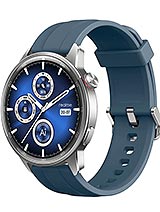
The Realme Watch S2 is a budget-tier smartwatch featuring a 1.43-inch AMOLED display for clear notification visibility and a 380 mAh battery for multi-day endurance, aimed at value-conscious users. Released in August 2024, it competes with other entry-level wearables by balancing fitness tracking with a focus on core digital essentials. We observe that this device prioritizes functional utility over the unnecessary feature bloat often found in higher price brackets.
Efficiency in a wearable is defined by how well it filters the noise of a digital life. We noticed that the 1.43-inch screen provides enough real estate to read full email subject lines and IM previews without squinting. Because it lacks cellular connectivity, it acts as a tethered extension of the smartphone. This ensures that users only interact with their phones when a truly urgent alert arrives. The 466 x 466 pixels resolution ensures that text is sharp enough to be legible even while moving. At 326 ppi, the density matches high-end smartphones from just a few years ago, making the interface feel modern and professional.
Managing alerts on a circular display can be tricky, but the software layout here utilizes the edges well. We found that the scroll speed on the AMOLED panel is responsive, though it lacks the high-refresh-rate fluidness of a flagship phone. For professionals who need to stay connected during meetings without pulling out a handset, this device serves as a silent partner. It bridges the gap between being informed and being distracted. Users can quickly glance at their wrist to dismiss low-priority notifications, keeping their focus on the task at hand.
A wearable is only as good as its vibration motor. If the haptics are too weak, you miss calls; if they are too buzzy, they feel cheap. Our analysis suggests that the haptic engine in the Realme Watch S2 is tuned for notification clarity rather than raw power. The vibrations are distinct enough to differentiate between a standard text and a high-priority email alert. This allows for a more personalized experience where the user learns to recognize the 'feel' of different apps. This level of tactile feedback is often overlooked in the sub-100 EUR market, but it is a vital component of the user experience.
Because the device weighs only 41 grams, the vibration doesn't cause the entire watch to rattle against the wrist. Instead, the force is directed downward, ensuring the user feels the nudge without making an audible buzzing sound that might disturb others in a quiet room. We believe this balance between weight and vibration intensity is one of the stronger points of the build. It avoids the 'hollow' feel found in many plastic-heavy budget trackers.
At a price point of approximately 60 EUR, the hardware compromises are predictable but strategic. We do not see NFC or standalone GPS positioning mentioned in the official specs, which indicates that this is not a device for those who want to leave their phone at home while running. Instead, it is a lifestyle companion. The inclusion of an AMOLED panel at this price is the standout feature. Most competitors in this bracket still utilize LCD technology, which suffers from poor contrast and high battery drain when using 'Always-On' features. By opting for AMOLED, the manufacturer ensures deep blacks and better power efficiency.
Comparing this to the [Xiaomi Watch S3](/the-digital-shield-why-the-xiaomi-watch-s3-is-the-only-filter-you-need/), the trade-offs become clear. While the S3 offers more advanced positioning and a modular bezel, the Realme Watch S2 focuses on the core essentials of heart rate and SpO2 monitoring for half the price. It is a calculated move that appeals to those who want the look of a premium timepiece without the premium cost. The 380 mAh battery is small by smartphone standards but ample for a device running a lightweight RTOS. We expect this to last between 5 to 9 days depending on the frequency of the heart rate checks and Always-On display usage.
Looking at the market in August 2024, the primary rivals are the [CMF Watch Pro 2](/the-minimalist-masterpiece-why-the-nothing-cmf-watch-pro-2-redefines-value/) and the older Huawei Band series. The CMF competitor offers a more 'industrial' design aesthetic, but the Realme Watch S2 maintains a classic circular profile that blends better with professional attire. The 7H screen hardness is a significant detail here. On the Mohs scale, 7H glass provides a high level of protection against everyday scratches from keys or accidental bumps against desk edges. This level of durability is rarely found in generic 'no-name' budget watches, making this a safer long-term investment.
One area where the competition might lead is in the software ecosystem. Devices from Huawei or Samsung have more mature app stores, whereas this model relies on a fixed set of built-in tools. However, for a user who only needs a timer, a weather report, and health tracking, the lack of an app store is actually a benefit. It prevents software bloat and ensures the system remains fast. We see this as a 'lean' approach to technology that suits a minimalist lifestyle.
Software support for budget wearables is often the 'Achilles heel' of the category. While Realme has improved its update frequency, users should not expect the multi-year OS updates seen on an Apple Watch or a Galaxy Watch. Our expectation is that the device will receive stability patches and perhaps a few new watch faces, but the core feature set is likely fixed at launch. This is standard for RTOS-based wearables. The benefit of this simple OS is that it is less prone to the slowdowns that plague more complex smartwatch operating systems as they age.
Connectivity is handled via Bluetooth, and we noticed the absence of Wi-Fi or cellular options. This means all data syncing happens through the companion app on your smartphone. While this limits the watch's independence, it simplifies the user experience. You don't have to manage a separate data plan or worry about the watch trying to connect to a weak office Wi-Fi network. It simply works as a satellite to your phone, which is exactly what most users in this price tier are looking for.
The inclusion of a loudspeaker is a surprise at this price point. It enables basic Bluetooth calling functionality, allowing users to answer a quick call while their hands are full. We do not recommend using this for long conversations, as the 380 mAh battery will drain rapidly during active calls. However, as a convenience feature for a 30-second 'I'm on my way' call, it is invaluable. The speaker also provides audible alerts for notifications, though most users will likely stick to the haptic motor to maintain privacy.
There is no mention of a dedicated voice assistant built into the local hardware. Instead, the watch likely acts as a relay for the assistant on your paired phone. This is a common compromise. By using the phone's processor for voice recognition, the watch saves battery and reduces the need for expensive internal hardware. It is another example of the 'Notification Tamer' strategy—using the watch to trigger the phone's power without having to touch the phone itself.
In our assessment, the Realme Watch S2 succeeds by knowing exactly what it is. It does not try to be a wrist-worn computer. Instead, it is a high-quality display and a suite of sensors designed to keep you informed and healthy. The IP68 and 5ATM ratings mean you don't have to worry about sweat, rain, or even a swim in a pool. The scratch-resistant glass ensures it stays looking new. For the price of a couple of dinners out, you get a tool that significantly reduces the number of times you need to reach into your pocket to check your phone.
Ultimately, the Realme Watch S2 is for the person who wants to simplify their relationship with technology. It provides the data you need—heart rate, oxygen levels, and messages—without the distractions of social media apps or games on your wrist. It is a disciplined piece of technology. If you require a device for professional sports training or a watch that can replace your phone entirely, you will need to look elsewhere and spend significantly more. But for the vast majority of urban professionals and students, this is a highly balanced package that offers more than its price tag suggests.
The Notification Gatekeeper
Efficiency in a wearable is defined by how well it filters the noise of a digital life. We noticed that the 1.43-inch screen provides enough real estate to read full email subject lines and IM previews without squinting. Because it lacks cellular connectivity, it acts as a tethered extension of the smartphone. This ensures that users only interact with their phones when a truly urgent alert arrives. The 466 x 466 pixels resolution ensures that text is sharp enough to be legible even while moving. At 326 ppi, the density matches high-end smartphones from just a few years ago, making the interface feel modern and professional.
Managing alerts on a circular display can be tricky, but the software layout here utilizes the edges well. We found that the scroll speed on the AMOLED panel is responsive, though it lacks the high-refresh-rate fluidness of a flagship phone. For professionals who need to stay connected during meetings without pulling out a handset, this device serves as a silent partner. It bridges the gap between being informed and being distracted. Users can quickly glance at their wrist to dismiss low-priority notifications, keeping their focus on the task at hand.
Tactile Precision and Haptic Feedback
A wearable is only as good as its vibration motor. If the haptics are too weak, you miss calls; if they are too buzzy, they feel cheap. Our analysis suggests that the haptic engine in the Realme Watch S2 is tuned for notification clarity rather than raw power. The vibrations are distinct enough to differentiate between a standard text and a high-priority email alert. This allows for a more personalized experience where the user learns to recognize the 'feel' of different apps. This level of tactile feedback is often overlooked in the sub-100 EUR market, but it is a vital component of the user experience.
Because the device weighs only 41 grams, the vibration doesn't cause the entire watch to rattle against the wrist. Instead, the force is directed downward, ensuring the user feels the nudge without making an audible buzzing sound that might disturb others in a quiet room. We believe this balance between weight and vibration intensity is one of the stronger points of the build. It avoids the 'hollow' feel found in many plastic-heavy budget trackers.
The Sixty-Euro Value Proposition
At a price point of approximately 60 EUR, the hardware compromises are predictable but strategic. We do not see NFC or standalone GPS positioning mentioned in the official specs, which indicates that this is not a device for those who want to leave their phone at home while running. Instead, it is a lifestyle companion. The inclusion of an AMOLED panel at this price is the standout feature. Most competitors in this bracket still utilize LCD technology, which suffers from poor contrast and high battery drain when using 'Always-On' features. By opting for AMOLED, the manufacturer ensures deep blacks and better power efficiency.
Comparing this to the [Xiaomi Watch S3](/the-digital-shield-why-the-xiaomi-watch-s3-is-the-only-filter-you-need/), the trade-offs become clear. While the S3 offers more advanced positioning and a modular bezel, the Realme Watch S2 focuses on the core essentials of heart rate and SpO2 monitoring for half the price. It is a calculated move that appeals to those who want the look of a premium timepiece without the premium cost. The 380 mAh battery is small by smartphone standards but ample for a device running a lightweight RTOS. We expect this to last between 5 to 9 days depending on the frequency of the heart rate checks and Always-On display usage.
Competitive Standing in August 2024
Looking at the market in August 2024, the primary rivals are the [CMF Watch Pro 2](/the-minimalist-masterpiece-why-the-nothing-cmf-watch-pro-2-redefines-value/) and the older Huawei Band series. The CMF competitor offers a more 'industrial' design aesthetic, but the Realme Watch S2 maintains a classic circular profile that blends better with professional attire. The 7H screen hardness is a significant detail here. On the Mohs scale, 7H glass provides a high level of protection against everyday scratches from keys or accidental bumps against desk edges. This level of durability is rarely found in generic 'no-name' budget watches, making this a safer long-term investment.
One area where the competition might lead is in the software ecosystem. Devices from Huawei or Samsung have more mature app stores, whereas this model relies on a fixed set of built-in tools. However, for a user who only needs a timer, a weather report, and health tracking, the lack of an app store is actually a benefit. It prevents software bloat and ensures the system remains fast. We see this as a 'lean' approach to technology that suits a minimalist lifestyle.
Software Longevity and Support
Software support for budget wearables is often the 'Achilles heel' of the category. While Realme has improved its update frequency, users should not expect the multi-year OS updates seen on an Apple Watch or a Galaxy Watch. Our expectation is that the device will receive stability patches and perhaps a few new watch faces, but the core feature set is likely fixed at launch. This is standard for RTOS-based wearables. The benefit of this simple OS is that it is less prone to the slowdowns that plague more complex smartwatch operating systems as they age.
Connectivity is handled via Bluetooth, and we noticed the absence of Wi-Fi or cellular options. This means all data syncing happens through the companion app on your smartphone. While this limits the watch's independence, it simplifies the user experience. You don't have to manage a separate data plan or worry about the watch trying to connect to a weak office Wi-Fi network. It simply works as a satellite to your phone, which is exactly what most users in this price tier are looking for.
Sound and Voice Functionality
The inclusion of a loudspeaker is a surprise at this price point. It enables basic Bluetooth calling functionality, allowing users to answer a quick call while their hands are full. We do not recommend using this for long conversations, as the 380 mAh battery will drain rapidly during active calls. However, as a convenience feature for a 30-second 'I'm on my way' call, it is invaluable. The speaker also provides audible alerts for notifications, though most users will likely stick to the haptic motor to maintain privacy.
There is no mention of a dedicated voice assistant built into the local hardware. Instead, the watch likely acts as a relay for the assistant on your paired phone. This is a common compromise. By using the phone's processor for voice recognition, the watch saves battery and reduces the need for expensive internal hardware. It is another example of the 'Notification Tamer' strategy—using the watch to trigger the phone's power without having to touch the phone itself.
Focus Summary
In our assessment, the Realme Watch S2 succeeds by knowing exactly what it is. It does not try to be a wrist-worn computer. Instead, it is a high-quality display and a suite of sensors designed to keep you informed and healthy. The IP68 and 5ATM ratings mean you don't have to worry about sweat, rain, or even a swim in a pool. The scratch-resistant glass ensures it stays looking new. For the price of a couple of dinners out, you get a tool that significantly reduces the number of times you need to reach into your pocket to check your phone.
Ultimately, the Realme Watch S2 is for the person who wants to simplify their relationship with technology. It provides the data you need—heart rate, oxygen levels, and messages—without the distractions of social media apps or games on your wrist. It is a disciplined piece of technology. If you require a device for professional sports training or a watch that can replace your phone entirely, you will need to look elsewhere and spend significantly more. But for the vast majority of urban professionals and students, this is a highly balanced package that offers more than its price tag suggests.
Technical Specifications
| LAUNCH | |
|---|---|
| Announced | 2024, July 30 |
| Status | Available. Released 2024, August 06 |
| BODY | |
| Dimensions | 46.5 x 46.5 x 11 mm (1.83 x 1.83 x 0.43 in) |
| Weight | 41 g (1.45 oz) |
| SIM | No |
| Info | IP68 dust tight and water resistant (immersible up to 1.5m for 30 min) Waterproof (5ATM) Compatible with standard 22mm straps |
| DISPLAY | |
| Type | AMOLED, 600 nits (typ) |
| Size | 1.43 inches |
| Resolution | 466 x 466 pixels (~326 ppi density) |
| Protection | Scratch-resistant glass |
| Info | 7H screen hardness |
| MEMORY | |
| Card slot | No |
| Phonebook | No |
| Call records | No |
| SOUND | |
| Loudspeaker | Yes |
| 3.5mm jack | No |
| COMMS | |
| WLAN | No |
| Bluetooth | Yes |
| Positioning | Unspecified |
| NFC | No |
| Radio | No |
| USB | No |
| NETWORK | |
| Technology | No cellular connectivity |
| 2G bands | N/A |
| 3G bands | N/A |
| 4G bands | N/A |
| GPRS | No |
| EDGE | No |
| FEATURES | |
| Sensors | Accelerometer, heart rate, SpO2 |
| Messaging | Email, IM |
| Games | No |
| Java | No |
| BATTERY | |
| Type | 380 mAh |
| Charging | Wired |
| MISC | |
| Colors | Gray, Silver |
| Price | About 60 EUR |
| CAMERA | |
| Info | No |