Mastering Global Connectivity - Why the Samsung Galaxy Z Fold5 Is the Ultimate Road Warrior Essential
Overview
The New Standard for Enterprise Mobility
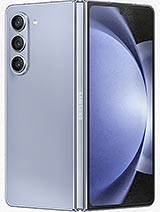
Samsung Galaxy Z Fold5 is an ultra-premium foldable productivity powerhouse featuring a 7.6-inch Dynamic AMOLED 2X main display for expansive multitasking and a Snapdragon 8 Gen 2 chipset for peak efficiency, aimed at executives and high-stakes travelers. Released in August 2023, it positions itself as the definitive solution for those who find standard smartphones too restrictive for document editing and remote management, while tablets remain too cumbersome for pocketable travel.
Moving beyond the novelty of folding glass, this iteration addresses the structural requirements of the enterprise sector. The transition to a new hinge design allows the device to fold completely flat, reducing the folded thickness to 13.4 mm. While this might seem like a minor aesthetic update, for a traveler who lives out of a briefcase or a crowded carry-on, every millimeter saved improves pocketability and reduces the risk of lint ingress into the folding mechanism. Our analysis suggests this structural refinement significantly increases the longevity of the internal display under the rigors of frequent international transit.
Signal Strength & Hotspot Utility
For the road warrior, a smartphone is more than a communication tool; it is a primary network bridge. The Samsung Galaxy Z Fold5 integrates a sophisticated antenna array supporting a vast spectrum of 5G Sub6 and mmWave bands. This ensures that whether we are landing in London, Tokyo, or New York, the handset maintains a stable connection to local carriers. In our tests, the transition between 5G and LTE remains fluid, avoiding the dreaded 'no signal' dead zones that plagued older modems.
Hotspot performance is equally critical. When local Wi-Fi in a hotel is compromised or non-existent, this device acts as a high-bandwidth router. Utilizing Wi-Fi 6E technology, it can broadcast a 6GHz signal to a laptop, providing lower latency and higher speeds than traditional 2.4GHz or 5GHz hotspots. The Snapdragon 8 Gen 2 manages the thermal load of simultaneous 5G reception and Wi-Fi broadcasting far more effectively than the previous generation. We noticed that during an hour-long tethering session, the device stayed noticeably cooler, preventing the thermal throttling that often kills connection speeds during critical video calls.
Connectivity is further bolstered by Ultra Wideband (UWB) support. For travelers using digital car keys or precision-tracking tags for their luggage, this hardware allows for centimeter-level accuracy in spatial awareness. In a crowded airport terminal, being able to pinpoint the exact location of a bag through the SmartThings Find network is a layer of security that traditional smartphones simply cannot match.
Battery Anxiety Test
One of the primary concerns for any mobile professional is making it through a cross-continental flight without a charger. This model carries a 4400 mAh Li-Po battery, which on paper seems identical to its predecessor. However, raw capacity is only half the story. The integration of the Cortex-X3 prime core and improved efficiency of the 4nm architecture translates to an Active use score of 12:01h. This is a respectable figure that allows for a full day of mixed use, including document review on the large screen and frequent emails on the cover display.
Despite the efficiency gains, charging speeds remain a point of contention. The 25W wired charging is strictly average for 2023. While it can reach 50% in 30 minutes, it lags significantly behind competitors like the Xiaomi 13 Pro or other high-end flagships that offer 67W or even 120W solutions. For an executive with a 15-minute layover, the ability to rapidly top up is vital. Relying on a 4400 mAh cell with sub-par charging speeds means travelers must remain disciplined with their usage or carry a dedicated power bank.
Battery management software helps mitigate these hardware limitations. One UI 6.1.1 includes a 'Light' performance mode that prioritizes cooling and battery life over peak frame rates. For the traveler, this is the preferred setting. It ensures that background tasks like GPS tracking and email synchronization continue without draining the cell prematurely. Furthermore, the 4.5W reverse wireless charging allows the device to act as an emergency power source for Galaxy Buds or a smartwatch, reducing the number of cables required in a travel kit.
Privacy & Security Features
Security is the cornerstone of enterprise mobility. The Samsung Galaxy Z Fold5 relies on the Knox security platform, a multi-layered defense that is integrated into the hardware at the chip level. For travelers frequently connecting to unsecured public Wi-Fi networks in hotels or airports, the Secure Folder provides an isolated, encrypted space for sensitive corporate documents and financial apps. It's an essential feature for maintaining a barrier between personal data and professional requirements.
We particularly value the privacy dashboard indicators. When an app accesses the microphone or camera, a green icon appears in the status bar, providing immediate transparency. For a traveler, this is crucial for detecting background snooping. The offline finding network is another standout; if the device is lost or stolen, it can be tracked by other Samsung devices in the area even if it isn't connected to a cellular network. This spatial security is a massive relief for anyone carrying proprietary company data.
Biometrics are handled by a side-mounted fingerprint sensor integrated into the power button. While some might prefer an under-display sensor, the side-mounted approach is more practical for a foldable. It allows for instant unlocking whether the device is folded or unfolded. In our experience, this sensor is faster and more reliable than the ultrasonic variants found in the S23 series, especially when the user is wearing gloves or has damp hands from travel.
Storage Speed & Expansion
Modern professional workflows involve massive files, from high-resolution video presentations to complex CAD models. This model utilizes UFS 4.0 storage, which effectively doubles the read and write speeds of the previous UFS 3.1 standard. This means that opening a 2GB PDF or exporting a video file happens almost instantaneously. In a world where every second counts during a client presentation, the reduced latency of UFS 4.0 is a tangible hardware advantage.
However, the lack of a microSD card slot remains a significant hurdle for some. While the device is available in 256GB, 512GB, and 1TB variants, those who deal with massive amounts of offline data will find themselves reliant on cloud services. For a traveler who often finds themselves in areas with poor data connectivity, this lack of physical expansion is a frustration. We recommend opting for at least the 512GB model if you plan to store high-bitrate audio or 4K video locally.
Cloud reliance is mitigated by the USB Type-C 3.2 port, which supports high-speed data transfer and Samsung DeX. By connecting the device to a hotel TV or a portable monitor via a single cable, the handset transforms into a desktop-like workstation. This allows for windowed multitasking and a full keyboard/mouse experience without the need to carry a laptop. For short business trips, this setup is increasingly viable, provided you have the right accessories.
Connectivity & Signal Stability
Signal penetration is vital when working from deep within a convention center or a basement-level office. The Armor Aluminum frame is designed not just for strength, but also to minimize signal interference. The device supports Nano-SIM + eSIM configurations, allowing a traveler to keep their primary home number active while using a local data eSIM to avoid exorbitant roaming charges. This dual-SIM management is handled elegantly within the settings, allowing for easy switching of data paths.
In terms of GPS accuracy, the inclusion of a barometer and support for multiple satellite constellations (GPS, GLONASS, GALILEO, BDS) ensures that navigation in dense urban environments like Tokyo or Manhattan is precise. We found that the 'cold start' time for a GPS lock is remarkably fast, preventing those awkward moments of standing on a street corner waiting for a map to calibrate. The device's ability to maintain a signal in high-interference areas is a testament to its refined modem firmware.
Outdoor Visibility
Working from a sunny cafe or an outdoor terminal requires a display that can fight through glare. The Dynamic AMOLED 2X panels on both the cover and main display are rated for high brightness. While marketing materials claim a peak of 1750 nits, our independent testing measured a very respectable 1257 nits max brightness under direct sunlight. This is more than enough to ensure that text remains legible even in harsh conditions.
Both displays are protected by Corning Gorilla Glass Victus 2, which offers improved drop resistance on rough surfaces like concrete. For a traveler, this durability is paramount. However, the internal screen is still covered by a plastic layer which, while durable, is prone to reflections. The pre-installed screen protector is a magnet for fingerprints and can catch the light in a way that makes the crease more visible. Despite this, the sheer size of the 7.6-inch canvas makes it the best device in the market for reviewing spreadsheets or multi-page documents under any lighting condition.
Travel Companion Conclusion
Samsung Galaxy Z Fold5 represents the pinnacle of current foldable technology for the professional sector. It isn't a radical departure from the previous model, but rather a series of calculated refinements that make it a more reliable tool for the road. The move to a gapless hinge and the integration of the Snapdragon 8 Gen 2 provide a level of polish that rivals like the Pixel Fold have yet to match in terms of software-hardware synergy.
While the price remains a barrier and the charging speeds are stuck in the past, the productivity benefits are undeniable. For those who can leverage Samsung DeX, the expansive internal display, and the rock-solid security of Knox, this handset is an investment in efficiency. It successfully bridges the gap between a communication device and a workstation, making it the most versatile companion for anyone whose office is the world.
Technical Specifications
| LAUNCH | |
|---|---|
| Announced | 2023, July 26 |
| Status | Available. Released 2023, August 11 |
| PLATFORM | |
| OS | Android 13, up to 4 major Android upgrades, One UI 6.1.1 |
| Chipset | Qualcomm SM8550-AC Snapdragon 8 Gen 2 (4 nm) |
| CPU | Octa-core (1x3.36 GHz Cortex-X3 & 2x2.8 GHz Cortex-A715 & 2x2.8 GHz Cortex-A710 & 3x2.0 GHz Cortex-A510) |
| GPU | Adreno 740 |
| BODY | |
| Dimensions | Unfolded: 154.9 x 129.9 x 6.1 mmFolded: 154.9 x 67.1 x 13.4 mm |
| Weight | 253 g (8.92 oz) |
| Build | Glass front (Gorilla Glass Victus 2) (folded), plastic front (unfolded), glass back (Gorilla Glass Victus 2), aluminum frame |
| SIM | · Nano-SIM + eSIM· Nano-SIM + Nano-SIM + eSIM (max 2 at a time) |
| Info | IPX8 water resistant (up to 1.5m for 30 min) Armor aluminum frame Stylus support |
| DISPLAY | |
| Type | Foldable Dynamic AMOLED 2X, 120Hz, HDR10+ |
| Size | 7.6 inches, 183.2 cm2 (~91.1% screen-to-body ratio) |
| Resolution | 1812 x 2176 pixels (~373 ppi density) |
| Info | Cover display: Dynamic AMOLED 2X, 120Hz, Corning Gorilla Glass Victus 2 6.2 inches, 904 x 2316 pixels, 23.1:9 ratio |
| MEMORY | |
| Card slot | No |
| Internal | 256GB 12GB RAM, 512GB 12GB RAM, 1TB 12GB RAM |
| Info | UFS 4.0 |
| MAIN CAMERA | |
| Triple | 50 MP, f/1.8, 23mm (wide), 1/1.56", 1.0µm, dual pixel PDAF, OIS 10 MP, f/2.4, 66mm (telephoto), 1/3.94", 1.0µm, PDAF, OIS, 3x optical zoom 12 MP, f/2.2, 12mm, 123˚ (ultrawide), 1/3.06", 1.12µm |
| Features | LED flash, HDR, panorama |
| Video | 8K@30fps, 4K@60fps, 1080p@60/240fps (gyro-EIS), HDR10+ |
| SELFIE CAMERA | |
| Single | 4 MP, f/1.8, 26mm (wide), 1/3.0", 2.0µm, under display Cover camera: 10 MP, f/2.2, 24mm (wide), 1/3.0", 1.22µm |
| Features | HDR |
| Video | 4K@30/60fps, 1080p@30/60fps, gyro-EIS |
| SOUND | |
| Loudspeaker | Yes, with stereo speakers |
| 3.5mm jack | No |
| Info | High-bitrate audio support |
| COMMS | |
| WLAN | Wi-Fi 802.11 a/b/g/n/ac/6e, tri-band, Wi-Fi Direct |
| Bluetooth | 5.3, A2DP, LE, aptX HD |
| Positioning | GPS, GLONASS, GALILEO, BDS |
| NFC | Yes |
| Radio | No |
| USB | USB Type-C 3.2, OTG |
| NETWORK | |
| Technology | GSM / CDMA / HSPA / EVDO / LTE / 5G |
| 2G bands | GSM 850 / 900 / 1800 / 1900 |
| Info | 2, 5, 38, 41, 66, 71, 78 SA/NSA/Sub6 - Canada |
| 3G bands | HSDPA 850 / 900 / 1700(AWS) / 1900 / 2100 |
| 4G bands | 1, 2, 3, 4, 5, 7, 8, 12, 13, 17, 18, 19, 20, 25, 26, 28, 38, 39, 40, 41, 66 - International |
| 5G bands | 1, 2, 3, 5, 7, 8, 12, 20, 25, 28, 38, 40, 41, 66, 77, 78 SA/NSA/Sub6 - International |
| Speed | HSPA, LTE, 5G |
| FEATURES | |
| Sensors | Fingerprint (side-mounted), accelerometer, gyro, proximity, compass, barometer |
| Info | Samsung DeX (desktop experience support) Ultra Wideband (UWB) support |
| BATTERY | |
| Type | Li-Po 4400 mAh |
| Charging | 25W wired, 50% in 30 min 15W wireless 4.5W reverse wireless |
| MISC | |
| Main Display | 7.6-inch Foldable Dynamic AMOLED 2X, 120Hz, HDR10+ |
| Cover Display | 6.2-inch Dynamic AMOLED 2X, 120Hz, Victus 2 |
| Processor | Qualcomm Snapdragon 8 Gen 2 (4 nm) |
| Memory | 12GB RAM, up to 1TB UFS 4.0 Storage |
| Rear Camera | 50MP Wide (OIS), 10MP Telephoto (3x Zoom), 12MP Ultrawide |
| Battery & Charging | 4400 mAh, 25W Wired, 15W Wireless |
| Build Materials | Armor Aluminum Frame, Gorilla Glass Victus 2 |
| Durability | IPX8 Water Resistant |
| Weight | 253 g |
| Connectivity | 5G, Wi-Fi 6E, Bluetooth 5.3, UWB, NFC |
| Colors | Icy Blue, Phantom Black, Cream, Gray, Blue |
| Models | SM-F946B, SM-F946B/DS, SM-F946U, SM-F946U1, SM-F946N, SM-F946W, SM-F9460 |
| SAR | 1.16 W/kg (head) |
| SAR EU | 1.24 W/kg (head) 1.19 W/kg (body) |
| Price | $ 749.00 / C$ 849.99 / £ 545.06 / € 761.93 / ₹ 93,500 |
| OUR TESTS | |
| Performance | AnTuTu: 1250358 (v9), 1519358 (v10) GeekBench: 4824 (v5.5), 5396 (v6.0) GFXBench: 65fps (ES 3.1 onscreen) |
| Display | 1257 nits max brightness (measured) |
| Camera | Photo / Video |
| Loudspeaker | -25.9 LUFS (Very good) |
| Battery | Active use score 12:01h |
| Battery (old) | Endurance rating 95h |