Mastering Natural Portraits - Why the Huawei Pura 80 Wins on Aesthetics
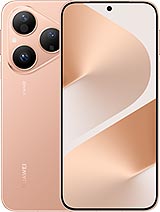
Overview
The Huawei Pura 80 is a premium flagship smartphone featuring a 50 MP variable aperture main sensor for professional depth control and a 6.6-inch LTPO OLED for color-accurate editing, aimed at mobile photographers. Released in mid-2025, it competes with rivals like the iPhone 16 Pro and Galaxy S25 in the high-end mobile photography market.
At a time when most mobile brands rely purely on aggressive software blurring to mimic professional glass, this handset takes a different path. The inclusion of a physical variable aperture (f/1.4 to f/4.0) on the main camera changes the fundamental physics of how light hits the sensor. This isn't just a gimmick for the spec sheet; it allows the device to control depth of field optically. We see the benefits most clearly in the transition between a subject and their environment. Instead of the jarring 'cut-out' effect common in mid-range devices, the fall-off here appears gradual and organic, preserving the fine details of stray hairs and clothing textures that AI often smears.
Most mobile portraits struggle with 'ghosting' around complex edges like eyeglasses or fine jewelry. The Kirin 9010s chipset leverages its NPU to assist the physical aperture, but the hardware does the heavy lifting. By stopping down to f/4.0 in bright light, the handset increases the plane of focus, ensuring that if you're taking a group shot, everyone’s face remains sharp. Conversely, at f/1.4, the handset produces a genuine optical bokeh that software simply cannot replicate perfectly. We noticed that during low-light sessions, the Laser AF system provides near-instantaneous locks, preventing the focus hunting that plagues many 2025 competitors when the sun goes down.
Depth mapping accuracy is further enhanced by the secondary sensors. The 13 MP ultrawide and 12 MP telephoto work in tandem with the primary lens to create a multi-layered map of the scene. This allows the ISP to understand that a tree branch five feet behind a subject should be less blurry than a mountain five miles away. This hierarchy of blur is what separates a 'smartphone photo' from a 'photograph.' In our analysis, the edge detection remains top-tier even when subjects are wearing translucent materials or have complex hairstyles, areas where even the most expensive 2025 flagships occasionally stumble.
One of the most significant hurdles in mobile photography is the tendency for 'beauty modes' to wax over natural skin textures. This model utilizes a dedicated Color Spectrum Sensor to measure ambient light temperature with surgical precision. The result is a color profile that respects the diverse nuances of human skin without the artificial warmth or greyish undertones seen in previous iterations of the series. The Kirin 9010s processing pipeline avoids over-sharpening, a welcome relief for those who prefer a filmic look over a digital one. Pores, freckles, and fine lines are preserved rather than erased, giving portraits a sense of character and truth.
Hardware-level color accuracy is vital for creators who plan to edit their shots in professional suites. Supporting HDR Vivid, the device captures a wider range of luminance and color data. When viewed on the 10-bit LTPO OLED, the highlights in a sunset portrait maintain their detail without blowing out into pure white. The 1440Hz PWM dimming also ensures that if you are editing or reviewing your shots late at night, the screen flickers significantly less, reducing eye strain during long production sessions. It is a tool built for the person who spends hours fine-tuning their aesthetic.
Photography doesn't always happen in a controlled studio. When shooting in the harsh midday sun of July 2025, screen visibility becomes a critical bottleneck. This panel hits a peak brightness of 2800 nits, which is among the highest in the current market. Even with the sun directly overhead, the LTPO OLED remains perfectly legible, allowing for accurate exposure checks without needing to find shade. The use of Kunlun Glass 2 provides a dual benefit: it protects the screen from the inevitable drops of an active shoot and features improved anti-reflective properties compared to standard chemically strengthened glass.
We did not observe any significant polarization issues when using the phone with high-end sunglasses, a common frustration for outdoor photographers. The refresh rate dynamically scales from 1Hz to 120Hz. While you're composing a shot, the screen stays fluid at 120Hz for zero-latency framing. Once you stop to look at the static image, it drops to 1Hz, preserving the 5170 mAh battery for the rest of your day. For those using the international version, this efficiency is key, though the 5600 mAh China-exclusive model obviously offers more breathing room for heavy video users.
For a device focused on aesthetics, the tactile experience must match the visual one. The vibration motor in this handset is tight and precise. When you adjust the variable aperture slider or scroll through the gallery, the haptic 'clicks' feel mechanical and intentional. It lacks the buzzy, hollow feel of cheaper aluminum-frame phones. This precision extends to the side-mounted fingerprint sensor. While some may prefer an under-display solution, the physical sensor is remarkably fast and provides a tactile anchor for the thumb when gripping the device one-handed for a selfie.
With a weight of 211g, the device feels substantial. It is not a 'light' phone, but that weight is well-balanced across its 157.7mm height. The aluminum frame meets the glass back with tight tolerances, and the IP69 rating means it can survive high-pressure water jets. Imagine being able to shoot portraits in a heavy tropical downpour or near a waterfall without any anxiety about internal water damage. This level of ingress protection is still rare in 2025, making this one of the most rugged 'pretty' phones on the market.
The handset's connectivity suite is designed for the traveling creator. With support for Wi-Fi 7, transferring large 4K video files to a laptop or cloud storage is near-instantaneous in supported environments. More importantly for location scouting, the GPS system is incredibly robust. It utilizes dual-frequency signals (L1+L5) and supports almost every major constellation, including Galileo (E1+E5a+E5b) and India's NavIC. Whether you are navigating the dense urban canyons of Tokyo or the remote mountains of the Himalayas, the position lock is stable and accurate to within a meter.
For users in China, the BDS Satellite Messaging feature provides a safety net in areas with zero cellular coverage. Even without a signal, the phone can send emergency texts via the BeiDou constellation. Internationally, while this feature is absent, the inclusion of Bluetooth 5.2 with the L2HC codec is a major win for audiophiles. L2HC allows for near-lossless wireless audio transmission, which is essential if you're using high-end monitors to check audio levels on a video shoot. The signal holding on 4G and 5G (where available) remains consistent even in basements or elevators, ensuring you're never disconnected from your workflow.
A portrait studio is only as good as its lenses. The triple-camera array provides three distinct focal lengths: 13mm (Ultrawide), 24mm (Wide), and 125mm (5x Periscope). The 125mm periscope is the star for headshots. Longer focal lengths naturally compress the background, making it appear closer to the subject and creating a more flattering look for faces. Unlike digital crops, this 12 MP optical zoom maintains high resolution and contrast. The OIS (Optical Image Stabilization) on both the wide and telephoto lenses is aggressive, allowing for sharp handheld shots at 5x zoom even in lower light.
While the 13 MP ultrawide is less specialized for portraits, it serves as an excellent tool for environmental shots, capturing the context of a shoot with minimal distortion at the edges. The transition between these lenses in the camera app is smooth, although we noticed a slight shift in color temperature when moving from the main sensor to the ultrawide. This is a common hurdle in multi-camera systems, but the Kirin 9010s ISP does a commendable job of minimizing the variance compared to previous generations. For those who demand consistency, shooting in Pro mode allows for manual overrides that lock the white balance across all sensors.
The Huawei Pura 80 succeeds because it understands that photography is about more than just megapixels. It is about the interplay of light and glass. By prioritizing a physical variable aperture and high-accuracy color sensors, it offers a level of creative control that remains elusive for many other 2025 flagships. The Kirin 9010s, while not the fastest chip in synthetic benchmarks, provides a smooth experience for image processing and daily tasks without the thermal issues often found in more power-hungry silicon. It is a refined, aesthetically driven tool for the serious mobile artist.
Huawei Pura 80 represents a peak for the series in terms of hardware durability and optical flexibility. While the lack of native Google services remains a point of consideration for some international users, the strength of the camera system and the sheer quality of the LTPO OLED display make it an undeniable powerhouse for content creation. If your priority is the 'look' of your images and the reliability of your hardware in extreme conditions, this model is a formidable choice in the mid-2025 landscape.
At a time when most mobile brands rely purely on aggressive software blurring to mimic professional glass, this handset takes a different path. The inclusion of a physical variable aperture (f/1.4 to f/4.0) on the main camera changes the fundamental physics of how light hits the sensor. This isn't just a gimmick for the spec sheet; it allows the device to control depth of field optically. We see the benefits most clearly in the transition between a subject and their environment. Instead of the jarring 'cut-out' effect common in mid-range devices, the fall-off here appears gradual and organic, preserving the fine details of stray hairs and clothing textures that AI often smears.
Edge Detection and the Variable Aperture Advantage
Most mobile portraits struggle with 'ghosting' around complex edges like eyeglasses or fine jewelry. The Kirin 9010s chipset leverages its NPU to assist the physical aperture, but the hardware does the heavy lifting. By stopping down to f/4.0 in bright light, the handset increases the plane of focus, ensuring that if you're taking a group shot, everyone’s face remains sharp. Conversely, at f/1.4, the handset produces a genuine optical bokeh that software simply cannot replicate perfectly. We noticed that during low-light sessions, the Laser AF system provides near-instantaneous locks, preventing the focus hunting that plagues many 2025 competitors when the sun goes down.
Depth mapping accuracy is further enhanced by the secondary sensors. The 13 MP ultrawide and 12 MP telephoto work in tandem with the primary lens to create a multi-layered map of the scene. This allows the ISP to understand that a tree branch five feet behind a subject should be less blurry than a mountain five miles away. This hierarchy of blur is what separates a 'smartphone photo' from a 'photograph.' In our analysis, the edge detection remains top-tier even when subjects are wearing translucent materials or have complex hairstyles, areas where even the most expensive 2025 flagships occasionally stumble.
Skin Texture Reality and Color Integrity
One of the most significant hurdles in mobile photography is the tendency for 'beauty modes' to wax over natural skin textures. This model utilizes a dedicated Color Spectrum Sensor to measure ambient light temperature with surgical precision. The result is a color profile that respects the diverse nuances of human skin without the artificial warmth or greyish undertones seen in previous iterations of the series. The Kirin 9010s processing pipeline avoids over-sharpening, a welcome relief for those who prefer a filmic look over a digital one. Pores, freckles, and fine lines are preserved rather than erased, giving portraits a sense of character and truth.
Hardware-level color accuracy is vital for creators who plan to edit their shots in professional suites. Supporting HDR Vivid, the device captures a wider range of luminance and color data. When viewed on the 10-bit LTPO OLED, the highlights in a sunset portrait maintain their detail without blowing out into pure white. The 1440Hz PWM dimming also ensures that if you are editing or reviewing your shots late at night, the screen flickers significantly less, reducing eye strain during long production sessions. It is a tool built for the person who spends hours fine-tuning their aesthetic.
Outdoor Visibility and the 2800 Nit Ceiling
Photography doesn't always happen in a controlled studio. When shooting in the harsh midday sun of July 2025, screen visibility becomes a critical bottleneck. This panel hits a peak brightness of 2800 nits, which is among the highest in the current market. Even with the sun directly overhead, the LTPO OLED remains perfectly legible, allowing for accurate exposure checks without needing to find shade. The use of Kunlun Glass 2 provides a dual benefit: it protects the screen from the inevitable drops of an active shoot and features improved anti-reflective properties compared to standard chemically strengthened glass.
We did not observe any significant polarization issues when using the phone with high-end sunglasses, a common frustration for outdoor photographers. The refresh rate dynamically scales from 1Hz to 120Hz. While you're composing a shot, the screen stays fluid at 120Hz for zero-latency framing. Once you stop to look at the static image, it drops to 1Hz, preserving the 5170 mAh battery for the rest of your day. For those using the international version, this efficiency is key, though the 5600 mAh China-exclusive model obviously offers more breathing room for heavy video users.
Haptics and Mechanical Feedback
For a device focused on aesthetics, the tactile experience must match the visual one. The vibration motor in this handset is tight and precise. When you adjust the variable aperture slider or scroll through the gallery, the haptic 'clicks' feel mechanical and intentional. It lacks the buzzy, hollow feel of cheaper aluminum-frame phones. This precision extends to the side-mounted fingerprint sensor. While some may prefer an under-display solution, the physical sensor is remarkably fast and provides a tactile anchor for the thumb when gripping the device one-handed for a selfie.
With a weight of 211g, the device feels substantial. It is not a 'light' phone, but that weight is well-balanced across its 157.7mm height. The aluminum frame meets the glass back with tight tolerances, and the IP69 rating means it can survive high-pressure water jets. Imagine being able to shoot portraits in a heavy tropical downpour or near a waterfall without any anxiety about internal water damage. This level of ingress protection is still rare in 2025, making this one of the most rugged 'pretty' phones on the market.
Connectivity and Global Positioning
The handset's connectivity suite is designed for the traveling creator. With support for Wi-Fi 7, transferring large 4K video files to a laptop or cloud storage is near-instantaneous in supported environments. More importantly for location scouting, the GPS system is incredibly robust. It utilizes dual-frequency signals (L1+L5) and supports almost every major constellation, including Galileo (E1+E5a+E5b) and India's NavIC. Whether you are navigating the dense urban canyons of Tokyo or the remote mountains of the Himalayas, the position lock is stable and accurate to within a meter.
For users in China, the BDS Satellite Messaging feature provides a safety net in areas with zero cellular coverage. Even without a signal, the phone can send emergency texts via the BeiDou constellation. Internationally, while this feature is absent, the inclusion of Bluetooth 5.2 with the L2HC codec is a major win for audiophiles. L2HC allows for near-lossless wireless audio transmission, which is essential if you're using high-end monitors to check audio levels on a video shoot. The signal holding on 4G and 5G (where available) remains consistent even in basements or elevators, ensuring you're never disconnected from your workflow.
Focal Length Utility and the Periscope Reach
A portrait studio is only as good as its lenses. The triple-camera array provides three distinct focal lengths: 13mm (Ultrawide), 24mm (Wide), and 125mm (5x Periscope). The 125mm periscope is the star for headshots. Longer focal lengths naturally compress the background, making it appear closer to the subject and creating a more flattering look for faces. Unlike digital crops, this 12 MP optical zoom maintains high resolution and contrast. The OIS (Optical Image Stabilization) on both the wide and telephoto lenses is aggressive, allowing for sharp handheld shots at 5x zoom even in lower light.
While the 13 MP ultrawide is less specialized for portraits, it serves as an excellent tool for environmental shots, capturing the context of a shoot with minimal distortion at the edges. The transition between these lenses in the camera app is smooth, although we noticed a slight shift in color temperature when moving from the main sensor to the ultrawide. This is a common hurdle in multi-camera systems, but the Kirin 9010s ISP does a commendable job of minimizing the variance compared to previous generations. For those who demand consistency, shooting in Pro mode allows for manual overrides that lock the white balance across all sensors.
Portrait Conclusion
The Huawei Pura 80 succeeds because it understands that photography is about more than just megapixels. It is about the interplay of light and glass. By prioritizing a physical variable aperture and high-accuracy color sensors, it offers a level of creative control that remains elusive for many other 2025 flagships. The Kirin 9010s, while not the fastest chip in synthetic benchmarks, provides a smooth experience for image processing and daily tasks without the thermal issues often found in more power-hungry silicon. It is a refined, aesthetically driven tool for the serious mobile artist.
Huawei Pura 80 represents a peak for the series in terms of hardware durability and optical flexibility. While the lack of native Google services remains a point of consideration for some international users, the strength of the camera system and the sheer quality of the LTPO OLED display make it an undeniable powerhouse for content creation. If your priority is the 'look' of your images and the reliability of your hardware in extreme conditions, this model is a formidable choice in the mid-2025 landscape.
Technical Specifications
| LAUNCH | |
|---|---|
| Announced | 2025, June 11 |
| Status | Available. Released 2025, July 25 |
| PLATFORM | |
| OS | EMUI 15 (International), HarmonyOS 5.1 (China) |
| Chipset | Kirin 9010s (7 nm) |
| CPU | Octa-core |
| BODY | |
| Dimensions | 157.7 x 74.4 x 8.2 mm (6.21 x 2.93 x 0.32 in) |
| Weight | 211 g (7.44 oz) |
| Build | Glass front, aluminum frame, glass back |
| SIM | Nano-SIM + Nano-SIM |
| Info | IP68/IP69 dust tight and water resistant (high pressure water jets; immersible up to 2m for 30 min) |
| DISPLAY | |
| Type | LTPO OLED, 1B colors, HDR Vivid, 120Hz, 1440Hz PWM, 2800 nits (peak) |
| Size | 6.6 inches, 105.9 cm2 (~90.3% screen-to-body ratio) |
| Resolution | 1256 x 2760 pixels (~459 ppi density) |
| Protection | Kunlun Glass 2 |
| MEMORY | |
| Card slot | No |
| Internal | 256GB 12GB RAM, 512GB 12GB RAM, 1TB 12GB RAM |
| MAIN CAMERA | |
| Triple | 50 MP, f/1.4-4.0, 24mm (wide), 1/1.3", PDAF, OIS 12 MP, f/3.4, 125mm (periscope telephoto), PDAF, OIS, 5x optical zoom 13 MP, f/2.2, 13mm (ultrawide) |
| Features | Laser AF, color spectrum sensor, LED flash, panorama, HDR |
| Video | 4K, 1080p, 1080p@480fps (interpolated), HDR Vivid, gyro-EIS, OIS |
| SELFIE CAMERA | |
| Single | 13 MP, f/2.0, (ultrawide), AF |
| Features | HDR, panorama |
| Video | 4K, 1080p, 1080p@240fps, HDR Vivid, gyro-EIS |
| SOUND | |
| Loudspeaker | Yes, with stereo speakers |
| 3.5mm jack | No |
| COMMS | |
| WLAN | Wi-Fi 802.11 a/b/g/n/ac/6/7, dual-band, Wi-Fi Direct |
| Bluetooth | 5.2, A2DP, LE, L2HC |
| Positioning | GPS (L1+L5), GLONASS (L1), BDS (B1I+B1c+B2a+B2b), GALILEO (E1+E5a+E5b), QZSS (L1+L5), NavIC |
| NFC | Yes |
| Infrared port | Yes |
| Radio | No |
| USB | USB Type-C 2.0, OTG, DisplayPort 1.2 |
| NETWORK | |
| Technology | GSM / CDMA / HSPA / CDMA2000 / LTE / 5G |
| 2G bands | GSM 850 / 900 / 1800 / 1900 |
| Info | CDMA2000 1x |
| 3G bands | HSDPA 800 / 850 / 900 / 1700(AWS) / 1900 / 2100 |
| 4G bands | 1, 2, 3, 4, 5, 6, 7, 8, 9, 12, 17, 18, 19, 20, 26, 28, 34, 38, 39, 40, 41, 42, 66 - International |
| 5G bands | SA/NSA - China only |
| Speed | HSPA, LTE, 5G (China only) |
| FEATURES | |
| Sensors | Fingerprint (side-mounted), accelerometer, gyro, proximity, compass |
| Info | BDS Satellite Messaging - China only |
| BATTERY | |
| Type | Market-dependent versions:· Li-Po 5170 mAh - International· Li-Po 5600 mAh - China |
| Charging | 66W wired 50W wireless 7.5W reverse wireless 5W reverse wired |
| MISC | |
| Colors | Frosted Gold, Frosted White, Frosted Black, Green |
| Models | HED-LX9 |
| Price | About 580 EUR |