Maximizing Every Cent With the Blackview Color 8 Storage Giant
Overview
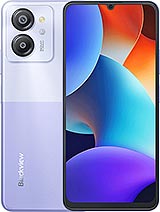
Blackview Color 8 is a budget-tier smartphone featuring 256GB of internal storage for massive media libraries and a 6000 mAh battery for extreme endurance, aimed at users who value utility over luxury. Released in January 2024, it enters a market where storage is usually the first casualty of cost-cutting. This handset targets the specific niche of users who require high capacity without the flagship price tag.
When purchasing the Blackview Color 8, we must address the depreciation curve immediately. Budget-tier devices from smaller manufacturers do not hold value like Samsung or Apple counterparts. Historically, 4G-only devices in this price bracket lose approximately 60% of their market value within the first twelve months. Because it lacks 5G connectivity, its long-term resale potential is further limited as 5G networks become the global standard throughout 2024.
From a purely economic perspective, we view this device as a 'sunk cost' utility. You should not buy this phone with the intention of trading it in for a newer model next year. Instead, calculate its value based on a three-year lifecycle. At roughly 150 EUR, the cost of ownership breaks down to approximately 4 EUR per month over three years. If the hardware survives that duration, the investment is technically sound for basic communication and massive local storage.
Blackview has established a reputation in the [rugged phone](/trend/best-rugged-phones-2026/) sector, but the 'Color' series represents their foray into lifestyle aesthetics. The build features a 214g weight, which is substantial. This weight is primarily a result of the massive battery cells packed inside. While the chassis is likely plastic, the 167.8 x 77.4 x 9.1 mm dimensions suggest a robust, if bulky, presence in the hand. For those accustomed to slim flagships, this handset will feel thick and utilitarian.
Reliability for smaller brands often hinges on software optimization. This model runs Doke OS 4.0 based on Android 13. In our analysis of the specs, the Unisoc Tiger T616 chipset provides sufficient power for daily tasks, but we remain skeptical about long-term software support. Do not expect Android 15 or 16. This is a static software experience designed to perform basic functions reliably rather than evolve over time.
Equipped with a 50 MP wide sensor, the hardware suggests high-resolution potential. However, in the context of apps like Instagram, TikTok, and Snapchat, the hardware is only half the story. The Unisoc Tiger T616 features a basic Image Signal Processor (ISP). When recording video for social media stories, users should expect noticeable compression and a lack of sophisticated stabilization. At 1080p@30fps, the output is functional for casual sharing but will lack the sharpness of mid-range competitors.
In low-light scenarios, the 1/2.76-inch sensor size is a significant bottleneck. Small sensors struggle to capture light, leading to digital noise and 'muddy' textures in night shots. If your primary goal is high-quality content creation, this device is not the tool for you. However, for a student or a small business owner needing to take clear photos of receipts or documents in broad daylight, the 50MP sensor provides enough detail for professional utility.
We must discuss the 720 x 1600 resolution on a 6.75-inch screen. This results in a pixel density of approximately 260 ppi. To the discerning eye, text will appear slightly softer than on a 1080p panel. For media consumption, the 20:9 ratio is excellent for cinematic content, but the HD+ limitation means you cannot fully utilize the 1080p or 4K streams available on YouTube or Netflix. The screen will downscale them, losing fine detail.
Outdoor legibility is rated at 450 nits. This is a standard entry-level brightness. In direct midday sunlight, users will likely struggle to read the display comfortably. It is designed for indoor use or overcast conditions. On a positive note, the 90Hz refresh rate is a welcome addition at this price. It makes scrolling through long spreadsheets or social feeds feel significantly smoother than the 60Hz panels found on older budget models.
The standout feature is undoubtedly the 256GB of internal storage paired with 8GB of RAM. This is an aggressive value proposition for January 2024. Most competitors at 150 EUR offer 64GB or 128GB. The high capacity allows users to store thousands of high-resolution photos or dozens of full-length movies for offline viewing. This makes the phone an excellent choice for commuters or travelers who lack consistent data access.
While the storage is plentiful, the read/write speeds will likely be eMMC 5.1 or basic UFS, meaning large file transfers will take time. However, the inclusion of a dedicated microSDXC slot means you do not have to choose between a second SIM card and extra storage. You can expand the device even further, which is a rarity in the modern market. The 8GB RAM is also generous, providing enough headroom for the Mali-G57 MP1 GPU to handle multiple background apps without aggressive task killing.
A 6000 mAh battery is massive. For a user with moderate habits, this is easily a two-day phone. The low-resolution 720p screen and efficient Cortex-A55 cores within the Unisoc Tiger T616 contribute to very low idle drain. You could likely go on a weekend trip and forget your charger without major anxiety. This is the primary selling point for the 'Value Hunter'—the luxury of not being tethered to a wall outlet.
However, the 18W wired charging is a massive bottleneck for a battery of this size. Charging from 0% to 100% will likely take over two and a half hours. In a world where [mid-range phones](/trend/best-mid-range-phones-2026/) are hitting 33W or 67W, 18W feels antiquated. You must adopt a strategy of overnight charging. This device is not designed for quick 'top-ups' before heading out; it requires a disciplined charging schedule to manage its high capacity.
The Blackview Color 8 is a specialized tool for the budget-conscious consumer. It prioritizes the quantity of storage and battery life over the quality of the screen and the speed of the processor. It is a workhorse, not a showpiece. If you view a smartphone as a digital filing cabinet and an endurance tool, it offers more value than almost any other brand in the 150 EUR bracket. If you view it as a media consumption device or a gaming machine, the low ppi and entry-level GPU will disappoint.
We recommend this handset for users who need a reliable secondary phone, a first device for a student who needs to store educational videos, or for professionals in the field who need long-lasting battery life and local data storage without 5G requirements. The lack of NFC is a notable omission for those in urban areas relying on digital payments, so factor that into your financial workflow before committing to this purchase.
The Financial Reality of the Resale Market
When purchasing the Blackview Color 8, we must address the depreciation curve immediately. Budget-tier devices from smaller manufacturers do not hold value like Samsung or Apple counterparts. Historically, 4G-only devices in this price bracket lose approximately 60% of their market value within the first twelve months. Because it lacks 5G connectivity, its long-term resale potential is further limited as 5G networks become the global standard throughout 2024.
From a purely economic perspective, we view this device as a 'sunk cost' utility. You should not buy this phone with the intention of trading it in for a newer model next year. Instead, calculate its value based on a three-year lifecycle. At roughly 150 EUR, the cost of ownership breaks down to approximately 4 EUR per month over three years. If the hardware survives that duration, the investment is technically sound for basic communication and massive local storage.
Assessing Brand Reliability and Build Quality
Blackview has established a reputation in the [rugged phone](/trend/best-rugged-phones-2026/) sector, but the 'Color' series represents their foray into lifestyle aesthetics. The build features a 214g weight, which is substantial. This weight is primarily a result of the massive battery cells packed inside. While the chassis is likely plastic, the 167.8 x 77.4 x 9.1 mm dimensions suggest a robust, if bulky, presence in the hand. For those accustomed to slim flagships, this handset will feel thick and utilitarian.
Reliability for smaller brands often hinges on software optimization. This model runs Doke OS 4.0 based on Android 13. In our analysis of the specs, the Unisoc Tiger T616 chipset provides sufficient power for daily tasks, but we remain skeptical about long-term software support. Do not expect Android 15 or 16. This is a static software experience designed to perform basic functions reliably rather than evolve over time.
The Social Media Camera Reality Check
Equipped with a 50 MP wide sensor, the hardware suggests high-resolution potential. However, in the context of apps like Instagram, TikTok, and Snapchat, the hardware is only half the story. The Unisoc Tiger T616 features a basic Image Signal Processor (ISP). When recording video for social media stories, users should expect noticeable compression and a lack of sophisticated stabilization. At 1080p@30fps, the output is functional for casual sharing but will lack the sharpness of mid-range competitors.
In low-light scenarios, the 1/2.76-inch sensor size is a significant bottleneck. Small sensors struggle to capture light, leading to digital noise and 'muddy' textures in night shots. If your primary goal is high-quality content creation, this device is not the tool for you. However, for a student or a small business owner needing to take clear photos of receipts or documents in broad daylight, the 50MP sensor provides enough detail for professional utility.
Screen Visibility and Visual Compromises
We must discuss the 720 x 1600 resolution on a 6.75-inch screen. This results in a pixel density of approximately 260 ppi. To the discerning eye, text will appear slightly softer than on a 1080p panel. For media consumption, the 20:9 ratio is excellent for cinematic content, but the HD+ limitation means you cannot fully utilize the 1080p or 4K streams available on YouTube or Netflix. The screen will downscale them, losing fine detail.
Outdoor legibility is rated at 450 nits. This is a standard entry-level brightness. In direct midday sunlight, users will likely struggle to read the display comfortably. It is designed for indoor use or overcast conditions. On a positive note, the 90Hz refresh rate is a welcome addition at this price. It makes scrolling through long spreadsheets or social feeds feel significantly smoother than the 60Hz panels found on older budget models.
Storage Performance and Media Handling
The standout feature is undoubtedly the 256GB of internal storage paired with 8GB of RAM. This is an aggressive value proposition for January 2024. Most competitors at 150 EUR offer 64GB or 128GB. The high capacity allows users to store thousands of high-resolution photos or dozens of full-length movies for offline viewing. This makes the phone an excellent choice for commuters or travelers who lack consistent data access.
While the storage is plentiful, the read/write speeds will likely be eMMC 5.1 or basic UFS, meaning large file transfers will take time. However, the inclusion of a dedicated microSDXC slot means you do not have to choose between a second SIM card and extra storage. You can expand the device even further, which is a rarity in the modern market. The 8GB RAM is also generous, providing enough headroom for the Mali-G57 MP1 GPU to handle multiple background apps without aggressive task killing.
Battery Endurance and Charging Bottlenecks
A 6000 mAh battery is massive. For a user with moderate habits, this is easily a two-day phone. The low-resolution 720p screen and efficient Cortex-A55 cores within the Unisoc Tiger T616 contribute to very low idle drain. You could likely go on a weekend trip and forget your charger without major anxiety. This is the primary selling point for the 'Value Hunter'—the luxury of not being tethered to a wall outlet.
However, the 18W wired charging is a massive bottleneck for a battery of this size. Charging from 0% to 100% will likely take over two and a half hours. In a world where [mid-range phones](/trend/best-mid-range-phones-2026/) are hitting 33W or 67W, 18W feels antiquated. You must adopt a strategy of overnight charging. This device is not designed for quick 'top-ups' before heading out; it requires a disciplined charging schedule to manage its high capacity.
Final Investment Summary
The Blackview Color 8 is a specialized tool for the budget-conscious consumer. It prioritizes the quantity of storage and battery life over the quality of the screen and the speed of the processor. It is a workhorse, not a showpiece. If you view a smartphone as a digital filing cabinet and an endurance tool, it offers more value than almost any other brand in the 150 EUR bracket. If you view it as a media consumption device or a gaming machine, the low ppi and entry-level GPU will disappoint.
We recommend this handset for users who need a reliable secondary phone, a first device for a student who needs to store educational videos, or for professionals in the field who need long-lasting battery life and local data storage without 5G requirements. The lack of NFC is a notable omission for those in urban areas relying on digital payments, so factor that into your financial workflow before committing to this purchase.
Technical Specifications
| LAUNCH | |
|---|---|
| Announced | 2024, January |
| Status | Available. Released 2024, January |
| PLATFORM | |
| OS | Android 13, Doke OS 4.0 |
| Chipset | Unisoc Tiger T616 (12 nm) |
| CPU | Octa-core (2x2.0 GHz Cortex-A75 & 6x1.8 GHz Cortex-A55) |
| GPU | Mali-G57 MP1 |
| BODY | |
| Dimensions | 167.8 x 77.4 x 9.1 mm (6.61 x 3.05 x 0.36 in) |
| Weight | 214 g (7.55 oz) |
| SIM | Nano-SIM + Nano-SIM |
| DISPLAY | |
| Type | IPS LCD, 90Hz, 450 nits (typ) |
| Size | 6.75 inches, 110.0 cm2 (~84.7% screen-to-body ratio) |
| Resolution | 720 x 1600 pixels, 20:9 ratio (~260 ppi density) |
| MEMORY | |
| Card slot | microSDXC (dedicated slot) |
| Internal | 256GB 8GB RAM |
| MAIN CAMERA | |
| Dual | 50 MP, (wide), 1/2.76, 0.64µm, PDAF Secondary unspecified camera |
| Features | LED flash, HDR, panorama |
| Video | 1080p@30fps |
| SELFIE CAMERA | |
| Single | 8 MP, (wide), 1/4.0, 1.12µm |
| Video | 1080p@30fps |
| SOUND | |
| Loudspeaker | Yes |
| 3.5mm jack | Yes |
| COMMS | |
| WLAN | Wi-Fi 802.11 a/b/g/n/ac, dual-band |
| Bluetooth | 5.0, A2DP, LE |
| Positioning | GPS, GLONASS, GALILEO, BDS |
| NFC | No |
| Radio | FM radio |
| USB | USB Type-C, OTG |
| NETWORK | |
| Technology | GSM / HSPA / LTE |
| 2G bands | GSM 850 / 900 / 1800 / 1900 |
| 3G bands | HSDPA 900 / 2100 - International |
| Info | 1, 2, 3, 4, 5, 7, 8, 12, 17, 20, 26, 28, 66 - USA |
| 4G bands | 1, 3, 7, 8, 19, 20, 28, 40, 41 - International |
| Speed | HSPA, LTE |
| FEATURES | |
| Sensors | Fingerprint (side-mounted), accelerometer, proximity |
| BATTERY | |
| Type | 6000 mAh |
| Charging | 18W wired |
| MISC | |
| Colors | Ash Gray, Ripple Blue, Wisteria Purple |
| Price | About 150 EUR |