Maximizing Every Cent With the UMIDIGI C1 Plus - The Budget Battery Beast
Overview
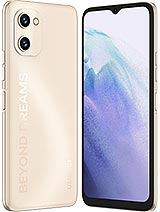
The UMIDIGI C1 Plus is an entry-level smartphone designed for users seeking maximum battery life on a strict budget, featuring a 5150 mAh battery for multi-day use and Android 13 for modern software compatibility. Released in early 2023, it competes with ultra-affordable handsets by prioritizing essential connectivity and longevity over raw processing power.
In the hyper-competitive entry-level market of January 2023, manufacturers often struggle to balance software longevity with hardware costs. This handset attempts to solve that equation by shipping with a relatively recent operating system, which is a rare find in the sub-$100 price bracket where many rivals are still stuck on Android 11 or 12. We look at this through the lens of total cost of ownership; a phone that stays relevant for an extra year due to its software version represents a better long-term investment for the price-sensitive buyer.
When we analyze the internal components, the Mediatek MT8766 chipset stands out as the primary cost-saving measure. This is a Quad-core 1.5 GHz Cortex-A53 processor, an architecture that prioritizes power efficiency over speed. For those unfamiliar with mobile architecture, the Cortex-A53 is an older, reliable design used primarily for basic tasks like texting, light web browsing, and voice calls. While it won't break any speed records, it consumes very little power, which pairs excellently with the large internal cell.
Imagine a student who needs a device that lasts through a full day of lectures and evening study sessions without needing a wall outlet. This device is built for exactly that scenario. The 5150 mAh capacity is roughly 10-15% larger than the industry standard for this price tier, which usually hovers around 4500 mAh. However, the trade-off is in the charging speed. With only 10W wired charging, refueling this massive tank from zero to 100% is a multi-hour commitment. We recommend charging it overnight to avoid the frustration of waiting by an outlet during the day.
Comparing this to the Redmi A1 or the Infinix Smart series, the hardware proposition is clear. While those brands might offer slightly better brand recognition, this model counters with 3GB of RAM and 32GB of eMMC 5.1 storage. In 2023, 2GB of RAM is barely enough to keep the system UI running smoothly; that extra 1GB here provides a much-needed buffer for background apps and prevents the aggressive app-closing behavior seen in cheaper competitors.
No [budget phone](/trend/best-budget-phones-2026/) is without compromises, and the display is the first place we see the budget reality set in. The 6.52-inch IPS LCD offers a resolution of 720 x 1600 pixels. At this size, the pixel density is approximately 269 ppi. This means that if you look closely, you can see individual pixels, and text won't look as sharp as it does on a 1080p panel. For the target demographic—seniors or those looking for a secondary work phone—this is a functional sacrifice rather than a dealbreaker.
Physical materials also reflect the price point. With a weight of 192 grams, the handset has a noticeable heft that implies a solid build, though it likely relies heavily on polycarbonate. The dimensions of 164.2 x 76.4 x 8.8 mm make it a large device that usually requires two hands for comfortable navigation. One surprising inclusion is the side-mounted fingerprint sensor, which is typically more ergonomic and faster than the rear-mounted sensors found on other budget devices from late 2022.
Connectivity is another area of careful balance. It supports dual-band Wi-Fi (802.11 b/g/n/ac), meaning it can connect to both 2.4GHz and 5GHz networks. This is a critical feature often missing from ultra-budget phones, which are frequently limited to the more crowded 2.4GHz band. Having 5GHz support ensures more stable data speeds in crowded environments like apartment buildings or cafes. However, the lack of NFC means no contactless payments, a feature that is becoming more common but remains a luxury in this specific tier.
The PowerVR GE8300 GPU is designed for UI fluidity and very light casual gaming. If you are looking to play Genshin Impact or PUBG Mobile at high settings, this is not the device for you. In our analysis of similar hardware configurations, these heavy titles will likely struggle to maintain 20 frames per second even on the lowest settings. However, for casual titles like Candy Crush, Subway Surfers, or basic educational apps, the performance is perfectly adequate.
Thermal management is rarely an issue for a quad-core processor clocked at 1.5 GHz. Because the chip doesn't draw much power, it generates very little heat. Even during a 45-minute video call—one of the most demanding tasks for a budget phone—the chassis should remain cool to the touch. This stability is a significant advantage over more powerful budget chips that might throttle or become uncomfortable to hold during extended use.
App load times will be noticeably slower than flagship devices due to the eMMC 5.1 storage. Unlike the UFS storage found in [mid-range phones](/trend/best-mid-range-phones-2026/), eMMC 5.1 is essentially a soldered SD card. It handles reading and writing data at a pace that feels "leisurely." Users should expect a 2-3 second delay when opening heavy apps like Facebook or Instagram. It's a test of patience, but for the price, it's the standard market reality in January 2023.
The camera system consists of a 13 MP wide lens and an auxiliary sensor. In the budget world, a secondary lens is often used primarily for depth data to assist with software-based portrait mode. The main 13MP sensor features an f/2.2 aperture, which is a standard specification for capturing daylight photos. Without high-end optics or advanced image signaling processors (ISP), this camera is best suited for utilitarian purposes: scanning documents, taking photos of grocery lists, or capturing well-lit outdoor scenes.
Low-light performance will be the primary struggle. Small sensors with narrow apertures require a lot of light to produce a clear image. At night, expect significant grain and a loss of detail. The Dual-LED flash helps illuminate close-up subjects, but it won't save a landscape shot at dusk. For video, the 1080p at 30fps capability is fine for quick clips to send over WhatsApp, but the lack of electronic stabilization means your footage will look shaky if you're moving while filming.
The 5 MP selfie camera is housed in a waterdrop notch. It's functional for video calls, though the 720p video limit means you won't look particularly sharp on the other end. Again, context is key: this is a tool for communication, not a content creation suite.
Shipping with Android 13 is the UMIDIGI C1 Plus's greatest competitive advantage. In early 2023, many budget brands are still clearing out stock of Android 11 or 12 devices. Having the latest software out of the box means better security features, refined notification management, and better compatibility with the latest versions of apps from the Play Store.
We must note that UMIDIGI is not known for frequent, multi-year software updates. While you start at a higher baseline with Android 13, you should not expect to receive Android 14 or 15 in the future. For a value hunter, the strategy here is to buy the device with the newest software possible today and run it until the hardware eventually fatigues. The inclusion of a 3.5mm headphone jack and a USB Type-C port ensures that your existing accessories will work without needing expensive adapters.
This device occupies a specific niche for the pragmatic buyer. It isn't trying to be a flagship killer; it's trying to be a reliable communication tool that doesn't die before the sun goes down. The combination of a massive battery, modern Android version, and Type-C charging makes it a forward-looking choice for the absolute lowest price bracket.
If you can find an extra $50 in your budget, you might find devices with significantly better Octa-core processors like the Helio G85, which would offer a much smoother experience. But if your budget is hard-capped and your priorities are battery life and basic connectivity, this is a rational choice. The UMIDIGI C1 Plus delivers exactly what is promised: a basic, modern smartphone experience at a price that respects your wallet.
In the hyper-competitive entry-level market of January 2023, manufacturers often struggle to balance software longevity with hardware costs. This handset attempts to solve that equation by shipping with a relatively recent operating system, which is a rare find in the sub-$100 price bracket where many rivals are still stuck on Android 11 or 12. We look at this through the lens of total cost of ownership; a phone that stays relevant for an extra year due to its software version represents a better long-term investment for the price-sensitive buyer.
The Economics of an Entry-Level Powerhouse
When we analyze the internal components, the Mediatek MT8766 chipset stands out as the primary cost-saving measure. This is a Quad-core 1.5 GHz Cortex-A53 processor, an architecture that prioritizes power efficiency over speed. For those unfamiliar with mobile architecture, the Cortex-A53 is an older, reliable design used primarily for basic tasks like texting, light web browsing, and voice calls. While it won't break any speed records, it consumes very little power, which pairs excellently with the large internal cell.
Imagine a student who needs a device that lasts through a full day of lectures and evening study sessions without needing a wall outlet. This device is built for exactly that scenario. The 5150 mAh capacity is roughly 10-15% larger than the industry standard for this price tier, which usually hovers around 4500 mAh. However, the trade-off is in the charging speed. With only 10W wired charging, refueling this massive tank from zero to 100% is a multi-hour commitment. We recommend charging it overnight to avoid the frustration of waiting by an outlet during the day.
Comparing this to the Redmi A1 or the Infinix Smart series, the hardware proposition is clear. While those brands might offer slightly better brand recognition, this model counters with 3GB of RAM and 32GB of eMMC 5.1 storage. In 2023, 2GB of RAM is barely enough to keep the system UI running smoothly; that extra 1GB here provides a much-needed buffer for background apps and prevents the aggressive app-closing behavior seen in cheaper competitors.
Where Did They Cut Corners?
No [budget phone](/trend/best-budget-phones-2026/) is without compromises, and the display is the first place we see the budget reality set in. The 6.52-inch IPS LCD offers a resolution of 720 x 1600 pixels. At this size, the pixel density is approximately 269 ppi. This means that if you look closely, you can see individual pixels, and text won't look as sharp as it does on a 1080p panel. For the target demographic—seniors or those looking for a secondary work phone—this is a functional sacrifice rather than a dealbreaker.
Physical materials also reflect the price point. With a weight of 192 grams, the handset has a noticeable heft that implies a solid build, though it likely relies heavily on polycarbonate. The dimensions of 164.2 x 76.4 x 8.8 mm make it a large device that usually requires two hands for comfortable navigation. One surprising inclusion is the side-mounted fingerprint sensor, which is typically more ergonomic and faster than the rear-mounted sensors found on other budget devices from late 2022.
Connectivity is another area of careful balance. It supports dual-band Wi-Fi (802.11 b/g/n/ac), meaning it can connect to both 2.4GHz and 5GHz networks. This is a critical feature often missing from ultra-budget phones, which are frequently limited to the more crowded 2.4GHz band. Having 5GHz support ensures more stable data speeds in crowded environments like apartment buildings or cafes. However, the lack of NFC means no contactless payments, a feature that is becoming more common but remains a luxury in this specific tier.
Performance and Gaming Reality Check
The PowerVR GE8300 GPU is designed for UI fluidity and very light casual gaming. If you are looking to play Genshin Impact or PUBG Mobile at high settings, this is not the device for you. In our analysis of similar hardware configurations, these heavy titles will likely struggle to maintain 20 frames per second even on the lowest settings. However, for casual titles like Candy Crush, Subway Surfers, or basic educational apps, the performance is perfectly adequate.
Thermal management is rarely an issue for a quad-core processor clocked at 1.5 GHz. Because the chip doesn't draw much power, it generates very little heat. Even during a 45-minute video call—one of the most demanding tasks for a budget phone—the chassis should remain cool to the touch. This stability is a significant advantage over more powerful budget chips that might throttle or become uncomfortable to hold during extended use.
App load times will be noticeably slower than flagship devices due to the eMMC 5.1 storage. Unlike the UFS storage found in [mid-range phones](/trend/best-mid-range-phones-2026/), eMMC 5.1 is essentially a soldered SD card. It handles reading and writing data at a pace that feels "leisurely." Users should expect a 2-3 second delay when opening heavy apps like Facebook or Instagram. It's a test of patience, but for the price, it's the standard market reality in January 2023.
Photography Potential
The camera system consists of a 13 MP wide lens and an auxiliary sensor. In the budget world, a secondary lens is often used primarily for depth data to assist with software-based portrait mode. The main 13MP sensor features an f/2.2 aperture, which is a standard specification for capturing daylight photos. Without high-end optics or advanced image signaling processors (ISP), this camera is best suited for utilitarian purposes: scanning documents, taking photos of grocery lists, or capturing well-lit outdoor scenes.
Low-light performance will be the primary struggle. Small sensors with narrow apertures require a lot of light to produce a clear image. At night, expect significant grain and a loss of detail. The Dual-LED flash helps illuminate close-up subjects, but it won't save a landscape shot at dusk. For video, the 1080p at 30fps capability is fine for quick clips to send over WhatsApp, but the lack of electronic stabilization means your footage will look shaky if you're moving while filming.
The 5 MP selfie camera is housed in a waterdrop notch. It's functional for video calls, though the 720p video limit means you won't look particularly sharp on the other end. Again, context is key: this is a tool for communication, not a content creation suite.
Software and Long-Term Support
Shipping with Android 13 is the UMIDIGI C1 Plus's greatest competitive advantage. In early 2023, many budget brands are still clearing out stock of Android 11 or 12 devices. Having the latest software out of the box means better security features, refined notification management, and better compatibility with the latest versions of apps from the Play Store.
We must note that UMIDIGI is not known for frequent, multi-year software updates. While you start at a higher baseline with Android 13, you should not expect to receive Android 14 or 15 in the future. For a value hunter, the strategy here is to buy the device with the newest software possible today and run it until the hardware eventually fatigues. The inclusion of a 3.5mm headphone jack and a USB Type-C port ensures that your existing accessories will work without needing expensive adapters.
Final Verdict for the Value Hunter
This device occupies a specific niche for the pragmatic buyer. It isn't trying to be a flagship killer; it's trying to be a reliable communication tool that doesn't die before the sun goes down. The combination of a massive battery, modern Android version, and Type-C charging makes it a forward-looking choice for the absolute lowest price bracket.
If you can find an extra $50 in your budget, you might find devices with significantly better Octa-core processors like the Helio G85, which would offer a much smoother experience. But if your budget is hard-capped and your priorities are battery life and basic connectivity, this is a rational choice. The UMIDIGI C1 Plus delivers exactly what is promised: a basic, modern smartphone experience at a price that respects your wallet.
Technical Specifications
| LAUNCH | |
|---|---|
| Announced | 2023 |
| Status | Available. Released 2023 |
| PLATFORM | |
| OS | Android 13 |
| Chipset | Mediatek MT8766 |
| CPU | Quad-core 1.5 GHz Cortex-A53 |
| GPU | PowerVR GE8300 |
| BODY | |
| Dimensions | 164.2 x 76.4 x 8.8 mm (6.46 x 3.01 x 0.35 in) |
| Weight | 192 g (6.77 oz) |
| SIM | Nano-SIM + Nano-SIM |
| DISPLAY | |
| Type | IPS LCD |
| Size | 6.52 inches, 102.6 cm2 (~81.8% screen-to-body ratio) |
| Resolution | 720 x 1600 pixels, 20:9 ratio (~269 ppi density) |
| MEMORY | |
| Card slot | microSDXC (uses shared SIM slot) |
| Internal | 32GB 3GB RAM |
| Info | eMMC 5.1 |
| MAIN CAMERA | |
| Dual | 13 MP, f/2.2, (wide), AF Auxiliary lens |
| Features | Dual-LED flash |
| Video | 1080p@30fps |
| SELFIE CAMERA | |
| Single | 5 MP, f/2.2, (wide) |
| Video | 720p@30fps |
| SOUND | |
| Loudspeaker | Yes |
| 3.5mm jack | Yes |
| COMMS | |
| WLAN | Wi-Fi 802.11 b/g/n/ac, dual-band, Wi-Fi Direct |
| Bluetooth | 4.2, A2DP |
| Positioning | GPS, GLONASS, GALILEO, BDS |
| NFC | No |
| Radio | No |
| USB | USB Type-C, OTG |
| NETWORK | |
| Technology | GSM / HSPA / LTE |
| 2G bands | GSM 850 / 900 / 1800 / 1900 |
| 3G bands | HSDPA 850 / 900 / 1700(AWS) / 1900 / 2100 |
| 4G bands | 1, 2, 3, 4, 5, 7, 8, 12, 17, 20, 28, 38, 40, 41 |
| Speed | HSPA, LTE |
| FEATURES | |
| Sensors | Fingerprint (side-mounted), accelerometer, proximity, compass |
| BATTERY | |
| Type | 5150 mAh |
| Charging | 10W wired |
| MISC | |
| Colors | Starry Black, Sunglow Gold |