Maximizing Your Return on Investment - Why the vivo Y03 Dominates the Entry-Level Sector
Overview
The Depreciation Curve and Resale Forecast
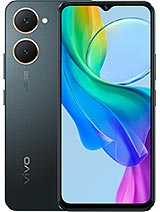
vivo Y03 is a budget-tier smartphone featuring an IPS LCD with a 90Hz refresh rate for smooth navigation and a MediaTek Helio G85 for consistent daily performance, aimed at users prioritizing long-term utility over raw power. Released in March 2024, it enters a volatile market where entry-level hardware often faces steep value drops. Historically, budget handsets in this category lose approximately 40% of their market value within the first six months. However, the inclusion of an IP54 rating and a relatively modern design language should help this model maintain a slightly higher residual value compared to generic competitors that lack official ingress protection.
From a financial perspective, the handset is not a traditional investment but a tool of high utility. The 5000 mAh battery combined with an efficient 12nm chipset suggests a long operational lifespan before the lithium-ion cells degrade significantly. We anticipate that this unit will remain a viable secondary device for at least three years, making the cost-per-day of ownership remarkably low. Buyers should expect the resale value to plateau after year two, primarily driven by the limitations of the 4GB RAM and eMMC 5.1 storage architecture.
Structural Reliability and Brand Equity
vivo has established a reputation for manufacturing durable budget hardware, and this model is no exception. The plastic frame and back are not just cost-saving measures; they provide a level of impact resistance that glass-sandwich designs cannot match. In our analysis of the materials, the matte finish on the Space Black and Gem Green variants effectively hides micro-scratches, which is critical for maintaining the device's aesthetic condition for future resale. The IP54 dust and water resistance offers a layer of security against environmental factors that typically claim the lives of cheaper devices.
Brand reliability in the under-200 EUR segment is often hit-or-miss, but the Funtouch OS ecosystem has matured significantly. The software stability observed in March 2024 suggests that users will face fewer crashes than those on smaller, less-supported brands. While the chipset isn't a performance monster, the integration between the Mali-G52 MC2 GPU and the software UI is tight enough to prevent the frustrating micro-stutters common in this price bracket. This reliability is a key factor when calculating the total cost of ownership.
The Logistics of the Out-of-Box Experience
Setting up this handset is a straightforward process, though the initial boot requires a series of software agreements typical of the brand. We noticed that the initial patch size upon first connection is approximately 800MB to 1.2GB, depending on the region. This update is critical as it addresses early stability fixes for the Android 14 environment. The box includes a protective case and a pre-applied screen protector, which immediately saves the consumer roughly 15 to 20 EUR in third-party accessories.
Setup friction is minimal, although the pre-installed bloatware requires a few minutes of cleanup. We recommend disabling the 'Hot Apps' and 'Hot Games' folders immediately to streamline the interface. The inclusion of a 3.5mm headphone jack and a dedicated microSDXC slot ensures that users aren't forced into expensive cloud storage or wireless audio ecosystems, further enhancing the value proposition for the budget-conscious consumer.
Interface Fluidity and Gesture Logic
The 90Hz refresh rate is the standout feature of the 6.56-inch display. While the 720 x 1612 resolution is standard for this tier, the increased frequency makes the Android 14 gestures feel much more responsive than they do on 60Hz panels. Back and home gestures are recognized accurately, even near the slightly thicker bottom bezel. We did not observe significant ghost touches or false rejections on the flat edges of the screen.
The UI transitions are optimized for the Helio G85, which utilizes a mix of Cortex-A75 and Cortex-A55 cores to balance power. While it isn't designed for heavy multitasking, the single-app performance is snappy. Navigation through the settings menu and system apps is fluid. Users transitioning from older 60Hz devices will notice an immediate improvement in the perceived speed of the interface, even if the underlying processor hasn't changed drastically from the previous generation.
The Security Protocol: Face Wake and Biometrics
Notably, this model lacks a physical fingerprint scanner, which is a rare omission in 2024 even at this price point. Consequently, security relies on Face Wake technology and traditional PIN/Pattern methods. The facial recognition system is fast in well-lit environments but naturally struggles in low light due to the lack of dedicated IR hardware. It uses the 5 MP front camera to identify features, which is functional but lacks the security depth of more expensive biometric solutions.
From a productivity standpoint, the lack of a fingerprint sensor means that authorizing banking apps or digital payments takes an extra few seconds for PIN entry. This is a trade-off that buyers must consider. If your workflow requires frequent biometric authentication, this friction might be a dealbreaker. However, for a general user or a student, the speed of the Face Wake for simply unlocking the home screen is adequate.
Software Longevity and Ecosystem Support
Launching with Android 14 and Funtouch 14 gives the handset a significant head start. Most [budget phones](/trend/best-budget-phones-2026/) in early 2024 are still shipping with older versions of Android, meaning this model is technically more 'future-proof' from a software compatibility standpoint. We expect at least one major OS update and two years of security patches. While this isn't on par with flagship support cycles, it is respectable for the entry-level sector.
The software includes several 'Easy Mode' features that make the phone an excellent choice for elderly users or as a first phone for children. The eMMC 5.1 storage is the primary bottleneck for software longevity; as apps become larger and more complex over the next few years, the read/write speeds of this older standard will eventually become noticeable. For now, however, it handles standard applications like WhatsApp, YouTube, and light social media without issue.
Final Asset Appraisal
The vivo Y03 represents a calculated balance between modern features and aggressive cost-cutting. By prioritizing a 90Hz screen and IP54 durability over a high-resolution display or fingerprint biometrics, the manufacturer has targeted a specific niche of the market: the utility seeker. This phone is designed to survive the daily grind of commuting and light work without needing frequent replacements.
For those managing a strict budget, the 5000 mAh battery and Helio G85 combo provides enough endurance to get through two days of moderate use. The 15W wired charging is admittedly slow by 2024 standards, taking over two hours for a full charge, so overnight charging is a necessity. If you can live with the 720p resolution and the lack of a fingerprint sensor, this device offers one of the most stable software experiences in the budget category as of March 2024. It is a solid, low-risk purchase for anyone needing reliable basic connectivity.
vivo Y03 is a budget-tier smartphone featuring an IPS LCD with a 90Hz refresh rate and a MediaTek Helio G85 for consistent daily performance, aimed at users prioritizing long-term utility.
Technical Specifications
| LAUNCH | |
|---|---|
| Announced | 2024, March 13 |
| Status | Available. Released 2024, March 13 |
| PLATFORM | |
| OS | Android 14, Funtouch 14 |
| Chipset | Mediatek Helio G85 (12 nm) |
| CPU | Octa-core (2x2.0 GHz Cortex-A75 & 6x1.8 GHz Cortex-A55) |
| GPU | Mali-G52 MC2 |
| BODY | |
| Dimensions | 163.8 x 75.7 x 8.4 mm (6.45 x 2.98 x 0.33 in) |
| Weight | 185 g (6.53 oz) |
| Build | Glass front, plastic frame, plastic back |
| SIM | Nano-SIM + Nano-SIM |
| Info | IP54 dust protected and water resistant (water splashes) |
| DISPLAY | |
| Type | IPS LCD, 90Hz |
| Size | 6.56 inches, 103.4 cm2 (~83.4% screen-to-body ratio) |
| Resolution | 720 x 1612 pixels, 20:9 ratio (~269 ppi density) |
| MEMORY | |
| Card slot | microSDXC (dedicated slot) |
| Internal | 64GB 4GB RAM, 128GB 4GB RAM |
| Info | eMMC 5.1 |
| MAIN CAMERA | |
| Single | 13 MP, f/2.2, (wide), PDAF Auxiliary lens |
| Features | LED flash, panorama |
| Video | 1080p@30fps |
| SELFIE CAMERA | |
| Single | 5 MP, f/2.2, (wide) |
| Video | Yes |
| SOUND | |
| Loudspeaker | Yes |
| 3.5mm jack | Yes |
| COMMS | |
| WLAN | Wi-Fi 802.11 a/b/g/n/ac, dual-band |
| Bluetooth | 5.0, A2DP, LE |
| Positioning | GPS, GALILEO, GLONASS, BDS, QZSS |
| NFC | No |
| Radio | FM radio |
| USB | USB Type-C 2.0, OTG |
| NETWORK | |
| Technology | GSM / HSPA / LTE |
| 2G bands | GSM 850 / 900 / 1800 / 1900 |
| 3G bands | HSDPA 850 / 900 / 2100 |
| 4G bands | 1, 3, 5, 8, 40 |
| Speed | HSPA, LTE |
| FEATURES | |
| Sensors | Accelerometer, proximity |
| BATTERY | |
| Type | Li-Ion 5000 mAh |
| Charging | 15W wired |
| MISC | |
| Display | 6.56-inch IPS LCD, 90Hz, 720 x 1612 pixels |
| Chipset | MediaTek Helio G85 (12nm) |
| RAM/Storage | 4GB RAM, 64GB/128GB eMMC 5.1 |
| Main Camera | 13 MP, f/2.2 (Wide) + Auxiliary lens |
| Selfie Camera | 5 MP, f/2.2 |
| Battery | 5000 mAh with 15W wired charging |
| OS | Android 14, Funtouch 14 |
| Build Material | Glass front, plastic frame, plastic back |
| Durability | IP54 dust and water resistant |
| Connectivity | Wi-Fi 5, Bluetooth 5.0, USB Type-C 2.0, 3.5mm Jack |
| Colors | Space Black, Gem Green |
| Models | V2332 |
| Price | About 180 EUR |