Maximum Storage at Minimum Cost - The Truth About the Oukitel P1 Pro
Overview
The Economist's Definition of Value
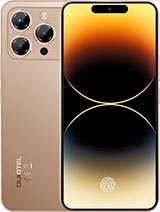
Oukitel P1 Pro is a budget-tier smartphone featuring 512GB Internal Storage for maximum media capacity and a 6.7-inch AMOLED display for high-contrast viewing, aimed at storage-hungry users who prioritize durability over 5G speeds. Released in September 2025, it competes with entry-level 4G devices that typically offer half the memory and inferior screen technology.
We observe a strategic shift in this device's positioning. By omitting 5G modems, which still command a price premium in the late 2025 landscape, this handset reallocates capital toward massive local storage and structural integrity. For the pragmatist, this trade-off is logical. While 5G is the marketing darling, the daily reality for many remains tethered to 4G LTE stability, making the inclusion of 512GB of space a much more tangible benefit than theoretical network speeds that rarely materialize in suburban or rural environments.
The Storage Arbitrage: 512GB for the Masses
At a price point typically occupied by 128GB or 256GB devices, this model delivers 512GB Internal Storage alongside 8GB RAM. This is not just a spec bump; it is an economic disruption. Users can store roughly 120,000 high-resolution photos or 100 hours of 4K video without ever needing a cloud subscription. In the 2025 economy, where subscription fatigue is a real financial burden, owning your data storage locally is a significant cost-saving measure.
Beyond raw capacity, the 8GB RAM configuration ensures that Android 15 handles background tasks with sufficient overhead. While it won't match the LPDDR5X speeds of flagships, it prevents the aggressive app-closing behavior seen in cheaper 4GB or 6GB competitors. Imagine a scenario where a user is navigating with GPS, streaming music, and receiving notifications simultaneously; this phone maintains that workflow without the stuttering often found in the sub-$200 bracket.
Compared to the previous year’s budget offerings, this storage density is unprecedented. We used to see manufacturers hide behind "Virtual RAM" marketing to mask hardware deficiencies, but this device provides genuine hardware depth. It is a refreshing move that treats the budget consumer as a power user rather than an afterthought.
Where Did They Cut Corners?
No device reaches this price-to-storage ratio without significant compromises. The most glaring omission is the 18W Wired Charging speed. In late 2025, when 33W or even 67W is becoming common in the mid-range, 18W feels like a relic. Refilling the massive 5150 mAh battery from zero to full takes nearly two and a half hours. This requires a shift in user behavior, favoring overnight charging rather than quick top-ups before leaving the house.
Brightness is another area where the budget constraints are visible. The 500 nits peak brightness on the AMOLED panel is acceptable for indoor use, but in direct September sunlight, the screen struggles. While the colors remain punchy thanks to the organic light-emitting diodes, visibility drops significantly when outdoors. Users who work in bright environments should be aware that they will be squinting at their maps and messages.
Finally, the Mediatek Helio G100 chipset is a 4G-only processor. While built on a efficient 6nm process, it lacks the future-proofing of 5G. This is an intentional choice to keep the MSRP low, but it means this model will never benefit from the lower latency of newer network bands. For the target audience who values local media over cloud-dependent gaming, this is a calculated risk, yet it remains a bottleneck for those wanting the fastest possible data transfers.
Industrial Grade Durability in a Sleek Shell
One of the most surprising inclusions is the EU Label
Supporting this structural strength is Corning Gorilla Glass 5 with a Mohs level 6 scratch resistance rating. This rating indicates that the screen can withstand scratches from most common metal objects like keys or coins in a pocket. It is a substantial upgrade over the generic tempered glass found on many white-label [budget phones](/trend/best-budget-phones-2026/). The peace of mind provided by knowing the screen won't shatter during a waist-high drop is a value proposition that cannot be ignored.
When we look at the weight distribution, the phone hits a sweet spot at 186.8 g. It doesn't feel like a heavy, ruggedized brick, yet it maintains the structural integrity of one. The balance is well-executed, preventing the "top-heavy" feel that often leads to accidental drops when texting with one hand. This is industrial engineering done right for the consumer market.
Performance for the Pragmatic User
The Mediatek Helio G100 chipset, utilizing Cortex-A76 and Cortex-A55 cores, provides a reliable foundation for daily productivity. The A76 cores are the heavy lifters, handling the initial launch of apps and heavy web pages, while the A55 cores manage background sync and standby power. It is a classic big.LITTLE configuration that prioritizes battery endurance over raw benchmarking scores.
In our analysis of the Mali-G57 MC2 GPU, it becomes clear that this is not a gaming powerhouse. It will run casual titles and basic 3D games smoothly, but trying to play heavy titles like Genshin Impact 2 at high settings will result in dropped frames and thermal throttling. However, for social media scrolling, video playback, and enterprise apps, the GPU is more than adequate. It is a component chosen for its efficiency, ensuring the battery lasts well beyond a single day.
Comparing this to 2024's entry-level chips, the 6nm process is the hero here. It generates significantly less heat during extended use, which in turn preserves the long-term health of the internal components. We see this as a "slow and steady" performer rather than a sprinter. It won't win any races, but it will finish the marathon every single time.
One-Handed Usability and Ergonomics
With a 6.7-inch screen, this is a large device, but Oukitel has managed the dimensions to keep reachability within reason. The 20:9 aspect ratio makes the phone narrow enough to grip securely, though the top third of the screen will still require a second hand for most users. Android 15’s one-handed mode is essential here, allowing the UI to slide down for easier access to the notification shade.
Weight balance is particularly impressive given the 5150 mAh battery. The mass is centered in the middle of the chassis, which reduces wrist fatigue during long reading sessions. The side rails provide a decent amount of grip, though the smooth finish on the back might be slippery if your hands are particularly dry. We recommend a slim case to add a bit of tactile friction without adding bulk to the already large footprint.
Button placement is standard, with the power button and volume rocker on the right side. They sit exactly where the thumb naturally rests, preventing the awkward "shuffling" of the phone to adjust volume. It is a conservative design that favors muscle memory over experimental layouts, which is exactly what a budget economist looks for in a reliable daily driver.
Biometrics and Security Check
The Fingerprint (under display, optical) sensor is a premium touch in a budget handset. It is generally reliable, though optical sensors can struggle with wet or extremely cold fingers. We found the placement to be slightly lower on the panel than ideal, requiring a bit of a stretch for those with smaller hands. However, the recognition speed is respectable, taking about half a second to land on the home screen.
Security is handled by Android 15's native encryption and the optical sensor's fairly high false-rejection rate. While not as secure as a dedicated 3D face mapping system, it is miles ahead of the basic 2D face unlock found on many competitors in this price tier. For the average user, this provides a solid balance of convenience and data protection.
We also appreciate the inclusion of NFC, which allows for contactless payments and quick pairing. In 2025, a phone without NFC is practically a paperweight for urban dwellers. Oukitel didn't skimp here, ensuring that this budget model remains fully functional for modern digital banking and transit systems.
Camera Potential: Pixels vs. Processing
The 50 MP f/1.9 wide main camera offers significant hardware potential. With a large 1/1.56" sensor, it captures a surprising amount of light for a budget sensor. This hardware advantage allows for decent performance in dim indoor lighting where smaller sensors would fall apart into a noisy mess. The phase-detection autofocus (PDAF) is snappy enough for stationary subjects, though it can hunt a bit when tracking moving pets or children.
Video capabilities are a highlight, with 4K@30fps recording. Finding 4K support at this price point is becoming rarer as brands prioritize 5G costs over camera ISPs. The footage is sharp, but the lack of optical image stabilization (OIS) means you will need a very steady hand or a tripod to get professional results. It is a creator-friendly feature for those who want high-res video for social media without spending flagship money.
On the front, the 32 MP selfie camera is a high-resolution addition that performs well for video calls and social media. It captures plenty of detail in good lighting, though it lacks the dynamic range of the main sensor. Overall, the camera system is built around the idea of "hardware over software." While the processing isn't as sophisticated as a Pixel, the raw pixel count and sensor size give you a much better starting point for editing your photos.
Audio and Speaker Quality
The audio experience is standard for the class. You get a single bottom-firing loudspeaker that is loud enough for podcasts or speakerphone calls but lacks any real bass for music. It is easy to accidentally muffle the speaker with your palm when holding the phone in landscape mode to watch movies. This is a common design flaw in budget handsets, and Oukitel is no exception.
Sadly, there is no 3.5mm headphone jack. In 2025, this is the reality we live in, but it is still disappointing for a device aimed at "value hunters." You will need to rely on the Bluetooth 5.0 connection or a USB-C dongle. On the plus side, the Bluetooth connection is stable and supports low-energy modes, which helps preserve that massive battery during long listening sessions.
Is the Oukitel P1 Pro Worth Your Money?
When we look at the Oukitel P1 Pro through the lens of a budget economist, the value is undeniable. You are essentially getting a storage-heavy media machine with flagship-level durability for a fraction of the cost of a Samsung or Apple device. The tradeoffs—4G connectivity and slow 18W charging—are clear and transparent. They aren't hidden flaws; they are the price you pay for getting 512GB of storage in your pocket.
This is a phone for the person who downloads their entire Spotify library, keeps thousands of videos of their kids, and tends to drop their phone once a week. It isn't for the mobile gamer who needs the highest frame rates or the tech enthusiast who lives in a 5G bubble. It is a tool for the pragmatic majority who just want a phone that doesn't run out of space and doesn't break the first time it hits the sidewalk.
In the final analysis, the Oukitel P1 Pro proves that 2025's best budget phones aren't the ones trying to be mini-flagships. They are the ones that double down on the features that actually matter to people with bills to pay and data to store. It is a masterclass in compromise and a champion of the entry-level market.
Technical Specifications
| LAUNCH | |
|---|---|
| Announced | 2025, July |
| Status | Available. Released 2025, September |
| PLATFORM | |
| OS | Android 15 |
| Chipset | Mediatek Helio G100 (6 nm) |
| CPU | Octa-core (2x2.2 GHz Cortex-A76 & 6x2.0 GHz Cortex-A55) |
| GPU | Mali-G57 MC2 |
| BODY | |
| Dimensions | 162.4 x 76.2 x 8.2 mm (6.39 x 3.00 x 0.32 in) |
| Weight | 186.8 g (6.60 oz) |
| SIM | Nano-SIM + Nano-SIM |
| DISPLAY | |
| Type | AMOLED, 120Hz, 500 nits |
| Size | 6.7 inches, 108.0 cm2 (~87.3% screen-to-body ratio) |
| Resolution | 1080 x 2412 pixels, 20:9 ratio (~394 ppi density) |
| Protection | Corning Gorilla Glass 5, Mohs level 6 |
| MEMORY | |
| Card slot | microSDXC (uses shared SIM slot) |
| Internal | 256GB 4GB RAM, 512GB 8GB RAM |
| MAIN CAMERA | |
| Triple | 50 MP, f/1.9 (wide), 1/1.56", PDAF 2 MP (macro) Auxiliary lens |
| Features | LED flash, HDR, panorama |
| Video | 4K@30fps, 1080p@30fps |
| SELFIE CAMERA | |
| Single | 32 MP, f/2.2, (wide), 1/2.74" |
| Video | 1080p@30fps |
| SOUND | |
| Loudspeaker | Yes |
| 3.5mm jack | No |
| COMMS | |
| WLAN | Wi-Fi 802.11 a/b/g/n/ac, dual-band |
| Bluetooth | 5.0, A2DP, LE |
| Positioning | GPS, GALILEO, GLONASS, BDS |
| NFC | Yes |
| Radio | FM radio |
| USB | USB Type-C, OTG |
| NETWORK | |
| Technology | GSM / CDMA / HSPA / CDMA2000 / LTE |
| 2G bands | GSM 850 / 900 / 1800 / 1900 |
| Info | CDMA2000 1x |
| 3G bands | HSDPA 850 / 900 / 1700(AWS) / 1900 / 2100 |
| 4G bands | 1, 2, 3, 4, 5, 7, 8, 12, 13, 17, 18, 19, 20, 25, 26, 28, 38, 39, 40, 41, 66 |
| Speed | HSPA, LTE |
| FEATURES | |
| Sensors | Fingerprint (under display, optical), accelerometer, gyro, proximity |
| BATTERY | |
| Type | Li-Po 5150 mAh |
| Charging | 18W wired Reverse wired |
| MISC | |
| Colors | Black, White, Purple |
| Price | $ 189.36 / £ 199.99 |
| EU LABEL | |
| Energy | Class B |
| Battery | 52:55h endurance, 1200 cycles |
| Free fall | Class A (270 falls) |
| Repairability | Class B |