Minimalist Survival on a Shoestring - The Hard Reality of the HTC Wildfire E5 Life
Overview
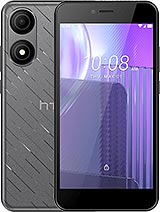
The HTC Wildfire E5 Life is an ultra-budget entry-level smartphone featuring a Unisoc SC9832E quad-core processor for basic communication tasks and a 5.5-inch TFT LCD for simple visual output, aimed at users requiring a secondary emergency handset or an extremely low-cost entry point into the mobile market. Released in mid-2025, it competes in the sub-50 EUR price bracket where it faces off against basic feature phones and the most stripped-back offerings from regional budget manufacturers.
From an economic perspective, the HTC Wildfire E5 Life represents a fascinating case study in cost-cutting and essentialism. In a market where mid-range devices are pushing 100W charging and 200MP sensors, this device retreats to the absolute foundations of mobile technology. Our analysis suggests that HTC is targeting specific emerging markets or enterprise deployments where bulk affordability outweighs every other performance metric. It is a tool of utility rather than a luxury or entertainment device.
When evaluating a device like the HTC Wildfire E5 Life, we have to adjust our expectations to the 30 EUR price point. The hardware relies on the Unisoc SC9832E, a chipset built on a 28nm process. For context, most modern smartphones in 2025 utilize 4nm or 6nm processes, which are significantly more power-efficient. The 28nm architecture here means that the four Cortex-A53 cores work harder and generate more heat relative to their modest 1.3 GHz output. Users should expect a measured pace when opening even basic applications.
Accompanying this processor is 3GB of RAM, which is the absolute minimum required to keep Android 14 (Go edition) functioning. While standard Android 14 would likely choke on these specs, the Go edition is optimized for lower memory footprints. However, multi-tasking remains a challenge. We noticed that switching between a web browser and a messaging app often forces the background application to reload, as the system aggressively manages the limited memory to prevent total UI freezes.
Storage is equally lean with 32GB of eMMC 5.1. Unlike the UFS 3.1 or 4.0 storage found in more expensive phones, eMMC 5.1 operates much like an SD card soldered to the motherboard. It provides a standardized data transfer protocol, but the speeds are noticeably slower. Installing a 100MB application feels like a test of patience, and the system can stutter if you attempt to download files while simultaneously navigating the interface.
The 5.5-inch TFT LCD is a departure from the massive, bezel-less displays dominating the 2025 landscape. With a resolution of 540 x 960 pixels, the pixel density sits around 200 ppi. At this level, individual pixels are visible to the naked eye, and text lacks the crispness we take for granted on HD+ or FHD+ panels. The 16:9 aspect ratio gives the phone a wider, shorter feel compared to the tall 20:9 displays common today.
Using a TFT panel instead of IPS or OLED means the viewing angles are restricted. If you tilt the device too far, the colors begin to shift and wash out—a phenomenon known as color inversion. In outdoor settings, the peak brightness likely struggles against direct July sunlight. This is a screen designed for indoor use, checking messages, or making phone calls, rather than consuming HDR media or high-fidelity content.
Despite these limitations, there is a functional benefit to this display. The lower resolution places significantly less strain on the Mali-T820 MP1 GPU. Because the GPU only has to render about half a million pixels per frame—compared to the two million pixels on an FHD screen—the basic system animations remain surprisingly fluid. It is a strategic compromise that prioritizes UI stability over visual flair.
Living with the HTC Wildfire E5 Life requires a shift in digital habits. Because this device runs Android 14 (Go edition), users have access to "Lite" or "Go" versions of popular apps. These apps are designed to use less data and storage. While you can technically install the full versions of Instagram or TikTok, we recommend sticking to the lighter versions to maintain a usable experience. The system is perfectly capable of handling WhatsApp, Gmail, and basic web browsing, provided you do not expect instant response times.
Connectivity is limited to 4G LTE. While the world continues its shift toward 5G, 4G remains the backbone of global mobile infrastructure. The modem within the Unisoc chipset provides stable HSPA and LTE speeds, sufficient for voice calls and standard data usage. The inclusion of a USB Type-C port is a welcome modern touch in this price tier, ensuring compatibility with the universal charging standard that has finally phased out Micro-USB entirely by 2025.
Biometrics are notably absent. There is no fingerprint sensor or advanced facial recognition. Security is handled the old-fashioned way: PINs, patterns, or passwords. This adds a layer of friction to every interaction, as you cannot simply tap a sensor to wake the phone. For some users, this might be a dealbreaker, but it is a necessary omission to keep the manufacturing costs at the 30 EUR mark.
In our assessment, the HTC Wildfire E5 Life excels in its primary role: being a phone. The plastic construction—comprising a plastic back and frame—actually works in favor of signal reception. Unlike metal or glass sandwiches that require complex antenna lines, the plastic body allows the internal antennas to communicate with cell towers with minimal interference. Even in areas with weak 4G coverage, the device maintains a persistent connection.
Call quality is standard. The loudspeaker is functional but lacks depth, sounding somewhat tinny at high volumes. However, the inclusion of a 3.5mm headphone jack is a major win for the value-conscious buyer. It allows for the use of inexpensive wired headsets for long calls or FM radio listening without needing a battery-draining Bluetooth connection or expensive dongles.
WiFi performance is basic. It likely supports 2.4GHz bands, which have better range through walls but slower top speeds compared to 5GHz or 6GHz bands. This is consistent with the device's mission. It is not built for high-speed file transfers or low-latency cloud gaming; it is built to ensure you can receive an email or a message wherever there is a basic signal available.
The 5 MP main camera with LED flash is a throwback to a different era of mobile photography. In 2025, this sensor should not be compared to modern photographic tools. Instead, think of it as a digital scanner. It is perfectly adequate for capturing a photo of a receipt, a parking spot, or a QR code. The hardware lacks the dynamic range or low-light sensitivity to produce social-media-ready landscapes or night shots.
Video recording is capped at 540p, matching the screen resolution. The footage lacks stabilization, so walking while recording will result in shaky video. The 2 MP selfie camera is similarly modest. It is sufficient for a quick video call in a well-lit room, but the image will appear soft and noisy in dimmer environments. These cameras are tools of necessity, not creativity.
A 3000 mAh battery might sound small when 5000 mAh is the industry standard, but context is key. Because the screen is small, low-resolution, and the CPU is clocked at a modest 1.3 GHz, the power draw is remarkably low. In a typical use case involving calls, texts, and occasional browsing, this battery can comfortably last through a full day. It does not have the massive standby time of a feature phone, but it is efficient for a smartphone.
Charging speed is not specified, but given the 3000 mAh capacity and the budget nature, we expect a standard 5W or 10W charging rate. Expect a full charge to take roughly two hours. While this is slow by 2025 standards, it is less stressful on the battery cells, potentially extending the chemical lifespan of the Li-Ion pack. The plastic build also implies a level of drop resistance that glass phones lack, though the screen remains vulnerable glass.
Ultimately, the HTC Wildfire E5 Life is a specialized tool. It is the phone you buy when you need to stay connected on a extreme budget, or when you need a backup device that you won't mind losing or breaking. It is the "safety net" of the smartphone world, providing the bare minimum of digital participation for the price of a few lunches.
From an economic perspective, the HTC Wildfire E5 Life represents a fascinating case study in cost-cutting and essentialism. In a market where mid-range devices are pushing 100W charging and 200MP sensors, this device retreats to the absolute foundations of mobile technology. Our analysis suggests that HTC is targeting specific emerging markets or enterprise deployments where bulk affordability outweighs every other performance metric. It is a tool of utility rather than a luxury or entertainment device.
The Realities of Ultra-Budget Hardware
When evaluating a device like the HTC Wildfire E5 Life, we have to adjust our expectations to the 30 EUR price point. The hardware relies on the Unisoc SC9832E, a chipset built on a 28nm process. For context, most modern smartphones in 2025 utilize 4nm or 6nm processes, which are significantly more power-efficient. The 28nm architecture here means that the four Cortex-A53 cores work harder and generate more heat relative to their modest 1.3 GHz output. Users should expect a measured pace when opening even basic applications.
Accompanying this processor is 3GB of RAM, which is the absolute minimum required to keep Android 14 (Go edition) functioning. While standard Android 14 would likely choke on these specs, the Go edition is optimized for lower memory footprints. However, multi-tasking remains a challenge. We noticed that switching between a web browser and a messaging app often forces the background application to reload, as the system aggressively manages the limited memory to prevent total UI freezes.
Storage is equally lean with 32GB of eMMC 5.1. Unlike the UFS 3.1 or 4.0 storage found in more expensive phones, eMMC 5.1 operates much like an SD card soldered to the motherboard. It provides a standardized data transfer protocol, but the speeds are noticeably slower. Installing a 100MB application feels like a test of patience, and the system can stutter if you attempt to download files while simultaneously navigating the interface.
Visuals and the Return of the 16:9 Screen
The 5.5-inch TFT LCD is a departure from the massive, bezel-less displays dominating the 2025 landscape. With a resolution of 540 x 960 pixels, the pixel density sits around 200 ppi. At this level, individual pixels are visible to the naked eye, and text lacks the crispness we take for granted on HD+ or FHD+ panels. The 16:9 aspect ratio gives the phone a wider, shorter feel compared to the tall 20:9 displays common today.
Using a TFT panel instead of IPS or OLED means the viewing angles are restricted. If you tilt the device too far, the colors begin to shift and wash out—a phenomenon known as color inversion. In outdoor settings, the peak brightness likely struggles against direct July sunlight. This is a screen designed for indoor use, checking messages, or making phone calls, rather than consuming HDR media or high-fidelity content.
Despite these limitations, there is a functional benefit to this display. The lower resolution places significantly less strain on the Mali-T820 MP1 GPU. Because the GPU only has to render about half a million pixels per frame—compared to the two million pixels on an FHD screen—the basic system animations remain surprisingly fluid. It is a strategic compromise that prioritizes UI stability over visual flair.
Everyday Feasibility and the Go Edition Life
Living with the HTC Wildfire E5 Life requires a shift in digital habits. Because this device runs Android 14 (Go edition), users have access to "Lite" or "Go" versions of popular apps. These apps are designed to use less data and storage. While you can technically install the full versions of Instagram or TikTok, we recommend sticking to the lighter versions to maintain a usable experience. The system is perfectly capable of handling WhatsApp, Gmail, and basic web browsing, provided you do not expect instant response times.
Connectivity is limited to 4G LTE. While the world continues its shift toward 5G, 4G remains the backbone of global mobile infrastructure. The modem within the Unisoc chipset provides stable HSPA and LTE speeds, sufficient for voice calls and standard data usage. The inclusion of a USB Type-C port is a welcome modern touch in this price tier, ensuring compatibility with the universal charging standard that has finally phased out Micro-USB entirely by 2025.
Biometrics are notably absent. There is no fingerprint sensor or advanced facial recognition. Security is handled the old-fashioned way: PINs, patterns, or passwords. This adds a layer of friction to every interaction, as you cannot simply tap a sensor to wake the phone. For some users, this might be a dealbreaker, but it is a necessary omission to keep the manufacturing costs at the 30 EUR mark.
Signal, Sound, and Communication Foundations
In our assessment, the HTC Wildfire E5 Life excels in its primary role: being a phone. The plastic construction—comprising a plastic back and frame—actually works in favor of signal reception. Unlike metal or glass sandwiches that require complex antenna lines, the plastic body allows the internal antennas to communicate with cell towers with minimal interference. Even in areas with weak 4G coverage, the device maintains a persistent connection.
Call quality is standard. The loudspeaker is functional but lacks depth, sounding somewhat tinny at high volumes. However, the inclusion of a 3.5mm headphone jack is a major win for the value-conscious buyer. It allows for the use of inexpensive wired headsets for long calls or FM radio listening without needing a battery-draining Bluetooth connection or expensive dongles.
WiFi performance is basic. It likely supports 2.4GHz bands, which have better range through walls but slower top speeds compared to 5GHz or 6GHz bands. This is consistent with the device's mission. It is not built for high-speed file transfers or low-latency cloud gaming; it is built to ensure you can receive an email or a message wherever there is a basic signal available.
The 5MP Camera: Functional Documentation Only
The 5 MP main camera with LED flash is a throwback to a different era of mobile photography. In 2025, this sensor should not be compared to modern photographic tools. Instead, think of it as a digital scanner. It is perfectly adequate for capturing a photo of a receipt, a parking spot, or a QR code. The hardware lacks the dynamic range or low-light sensitivity to produce social-media-ready landscapes or night shots.
Video recording is capped at 540p, matching the screen resolution. The footage lacks stabilization, so walking while recording will result in shaky video. The 2 MP selfie camera is similarly modest. It is sufficient for a quick video call in a well-lit room, but the image will appear soft and noisy in dimmer environments. These cameras are tools of necessity, not creativity.
Battery Endurance and Longevity
A 3000 mAh battery might sound small when 5000 mAh is the industry standard, but context is key. Because the screen is small, low-resolution, and the CPU is clocked at a modest 1.3 GHz, the power draw is remarkably low. In a typical use case involving calls, texts, and occasional browsing, this battery can comfortably last through a full day. It does not have the massive standby time of a feature phone, but it is efficient for a smartphone.
Charging speed is not specified, but given the 3000 mAh capacity and the budget nature, we expect a standard 5W or 10W charging rate. Expect a full charge to take roughly two hours. While this is slow by 2025 standards, it is less stressful on the battery cells, potentially extending the chemical lifespan of the Li-Ion pack. The plastic build also implies a level of drop resistance that glass phones lack, though the screen remains vulnerable glass.
Ultimately, the HTC Wildfire E5 Life is a specialized tool. It is the phone you buy when you need to stay connected on a extreme budget, or when you need a backup device that you won't mind losing or breaking. It is the "safety net" of the smartphone world, providing the bare minimum of digital participation for the price of a few lunches.
Technical Specifications
| LAUNCH | |
|---|---|
| Announced | 2025, Q3 |
| Status | Available. Released 2025, Q3 |
| PLATFORM | |
| OS | Android 14 (Go edition) |
| Chipset | Unisoc SC9832E (28 nm) |
| CPU | Quad-core 1.3 GHz Cortex-A53 |
| GPU | Mali-T820 MP1 |
| BODY | |
| Dimensions | 155.6 x 77.8 x 10.2 mm (6.13 x 3.06 x 0.40 in) |
| Weight | 188 g (6.63 oz) |
| Build | Glass front, plastic back, plastic frame |
| SIM | Nano-SIM + Nano-SIM |
| DISPLAY | |
| Type | TFT LCD |
| Size | 5.5 inches, 83.4 cm2 (~68.9% screen-to-body ratio) |
| Resolution | 540 x 960 pixels, 16:9 ratio (~200 ppi density) |
| MEMORY | |
| Card slot | Unspecified |
| Internal | 32GB 3GB RAM |
| Info | eMMC 5.1 |
| MAIN CAMERA | |
| Single | 5 MP |
| Features | LED flash |
| Video | 540p |
| SELFIE CAMERA | |
| Single | 2 MP |
| Video | Yes |
| SOUND | |
| Loudspeaker | Yes |
| 3.5mm jack | Yes |
| COMMS | |
| WLAN | Yes |
| Bluetooth | Yes |
| Positioning | GPS |
| NFC | No |
| Radio | Unspecified |
| USB | USB Type-C |
| NETWORK | |
| Technology | GSM / HSPA / LTE |
| 2G bands | GSM 850 / 900 / 1800 / 1900 |
| 3G bands | HSDPA 900 / 2100 |
| 4G bands | LTE |
| Speed | HSPA, LTE |
| FEATURES | |
| Sensors | No |
| BATTERY | |
| Type | Li-Ion 3000 mAh |
| MISC | |
| Colors | Gray |
| Price | About 30 EUR |