More Storage Than Your Flagship - The Cubot P80 Disrupts the Entry Level Market
Overview
The Cubot P80 is an entry-level smartphone designed for power users on a budget, featuring a massive 256GB of internal storage for endless media and an 8GB RAM configuration for smooth multitasking. Released in early 2023, it competes with the [Samsung Galaxy A14](/the-samsung-galaxy-a14-a-calculated-financial-move-for-smart-buyers/) and the Redmi Note 12, aiming to provide flagship-level capacity at a fraction of the cost.
When we look at the landscape of early 2023, the entry-level segment is usually defined by compromises. Most manufacturers offer 64GB or perhaps 128GB if you pay a premium. This handset ignores that convention entirely. By shipping with 256GB as a standard, it targets the digital hoarder—the user who refuses to rely on cloud storage or who lives in areas where data costs remain prohibitive. The inclusion of 8GB of physical RAM is equally aggressive. While competitors like the Galaxy A14 often start at 4GB, this model doubles that, ensuring that background processes don't constantly kill active applications.
At a price point hovering around 160 EUR, the device finds itself in a strange middle ground. It lacks the brand recognition of a Xiaomi or a Samsung, but the hardware-to-price ratio is almost impossible to ignore. We see this as a tactical strike against the established players, forcing a conversation about why 'value' brands can offer four times the storage of a base iPhone 14 for a fifth of the price. It is a pragmatic tool for students and gig workers who need local file storage above all else.
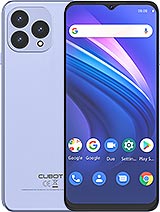
The visual identity of the device clearly takes inspiration from higher-end aesthetics, specifically the triple-lens arrangement found on modern flagships. The flat-edge design and the light purple, pink, and blue color options suggest a youthful target demographic. While the 217g weight is substantial, it contributes to a sense of structural integrity that many hollow-feeling plastic phones in this price bracket lack. The dimensions of 165.8 x 75.8 x 9.8 mm make it a large device, likely requiring two-handed use for most people.
The 6.58-inch IPS LCD occupies the front, utilizing a waterdrop notch for the selfie camera. While hole-punch designs are becoming more common in mid-range tiers, the notch remains standard for the budget sector in early 2023. The bezels are noticeable, particularly the 'chin' at the bottom, which is typical for LCD-equipped phones. However, the move to a 1080p resolution (FHD+) is a major win. Many budget rivals still cling to 720p panels, making the 401 ppi density here a standout feature for crisp text and clear video playback.
Shipping with Android 13 out of the box is a significant advantage. This ensures the device is current with the latest security protocols and UI features from Google. The software skin is remarkably clean, leaning toward a 'Stock' experience that avoids the heavy, resource-intensive overlays found in MIUI or One UI. This lean approach is necessary for the Mediatek chipset to maintain responsiveness. However, the long-term outlook for updates is the elephant in the room. Historically, smaller brands struggle to provide multi-year OS upgrades, so buyers should view this as an Android 13 device for its entire lifespan rather than expecting Android 14 or 15.
Despite the lack of a heavy skin, we must monitor how the system handles the 8GB of RAM. In our analysis of similar hardware, Android 13’s improved memory management pairs well with this much overhead. Users can expect to switch between social media, a web browser with twenty tabs, and a navigation app without the stuttering typically associated with sub-200 EUR phones. The longevity of the device will depend largely on the durability of the eMMC or UFS storage over time as it fills up.
One of the most refreshing aspects of the handset is the relative lack of pre-installed junk. Unlike budget offerings from major carriers that come loaded with trial games and redundant utility apps, this model keeps the experience focused on Google’s core suite. Users can uninstall most of the non-essential applications, freeing up even more of that massive 256GB partition. For those who need even more, the hybrid SIM slot supports microSDXC expansion, though we recommend using a high-speed card to avoid bottlenecking the system.
Speaking of bottlenecks, the storage speed is where the 'budget' nature reveals itself. While 256GB is a large number, the internal hardware likely utilizes UFS 2.1 or high-end eMMC. This means app installation and large file transfers won't match the blistering speeds of a flagship's UFS 3.1 or 4.0. For the average user, this translates to an extra few seconds when loading a heavy game like Genshin Impact, but for daily tasks like opening WhatsApp or Instagram, the difference remains negligible. The 8GB of RAM acts as a buffer here, keeping frequently used data in fast memory.
The Mediatek MT8788V/WA chipset powers the experience. This octa-core processor utilizes four Cortex-A73 performance cores and four Cortex-A53 efficiency cores, all clocked at 2.0 GHz. This is a veteran architecture, originally designed for mid-to-high-end tablets, which means it handles multitasking and media consumption with ease. However, the Mali-G72 MP3 GPU is showing its age. Mobile gamers will find that high-fidelity titles require low-to-medium settings to maintain playable frame rates. For productivity and social scrolling, the chip is perfectly adequate.
Thermal management appears stable given the thicker 9.8mm chassis. This extra volume allows for better heat dissipation than ultra-thin [budget phones](/trend/best-budget-phones-2026/) that throttle within ten minutes of heavy use. During prolonged GPS navigation or video streaming, the device maintains its clock speeds without the back becoming uncomfortably warm. It is a reliable workhorse, even if it lacks the 'snap' of the newer 6nm or 4nm chips found in the 400 EUR segment.
The 48MP main sensor is the star of the camera array. With Phase Detection Auto Focus (PDAF), it has the hardware potential to capture sharp images in daylight with decent dynamic range. At this price point, the image processing is usually the limiting factor. The ISP (Image Signal Processor) in the MT8788 must work hard to resolve the data from a 48MP sensor, which can lead to a slight delay between pressing the shutter and the photo being saved. We advise users to keep a steady hand, especially in indoor lighting where the f/1.8 aperture (if applicable) has to compensate for the lack of OIS.
The supporting cast includes a 2MP macro lens and a 0.3MP sensor. In the professional view of our team, these are largely present for marketing 'triple camera' stickers. The 0.3MP sensor, in particular, offers almost no functional value in 2023. However, the 24MP selfie camera is a genuine surprise. Most budget phones settle for 8MP or 13MP. The higher resolution here provides better detail for video calls and social media posts, making it a strong choice for the 'front-camera-first' generation.
With a 5200mAh battery, the device is built for endurance. Given the power-efficient 60Hz LCD and the mid-range chipset, this is easily a two-day phone for light users. Even power users will struggle to drain this in a single day. The 5200mAh capacity is slightly above the industry standard 5000mAh, giving it that extra bit of headroom for long commutes or travel. Charging is handled via USB Type-C, which is now the mandatory standard we expect to see.
Connectivity features are surprisingly robust for a budget device. The inclusion of NFC is a major highlight, allowing for contactless payments via Google Wallet—a feature often stripped out of budget phones in North American and some European markets. The side-mounted fingerprint sensor is integrated into the power button, offering a more natural and faster unlock experience than the cheap under-display optical sensors found in some low-end OLED phones. It is a pragmatic, well-rounded package that prioritizes utility over gimmicks.
In the final analysis, the Cubot P80 succeeds by identifying a specific pain point—lack of storage—and solving it with brute force. It doesn't try to be the thinnest or the fastest; it tries to be the most capable vault for your digital life. For those tired of 'Storage Full' notifications but unwilling to spend 800 EUR on a flagship, this model represents a sensible, high-capacity alternative.
Market Positioning and Value Proposition
When we look at the landscape of early 2023, the entry-level segment is usually defined by compromises. Most manufacturers offer 64GB or perhaps 128GB if you pay a premium. This handset ignores that convention entirely. By shipping with 256GB as a standard, it targets the digital hoarder—the user who refuses to rely on cloud storage or who lives in areas where data costs remain prohibitive. The inclusion of 8GB of physical RAM is equally aggressive. While competitors like the Galaxy A14 often start at 4GB, this model doubles that, ensuring that background processes don't constantly kill active applications.
At a price point hovering around 160 EUR, the device finds itself in a strange middle ground. It lacks the brand recognition of a Xiaomi or a Samsung, but the hardware-to-price ratio is almost impossible to ignore. We see this as a tactical strike against the established players, forcing a conversation about why 'value' brands can offer four times the storage of a base iPhone 14 for a fifth of the price. It is a pragmatic tool for students and gig workers who need local file storage above all else.
Design Evolution and Physical Presence
The visual identity of the device clearly takes inspiration from higher-end aesthetics, specifically the triple-lens arrangement found on modern flagships. The flat-edge design and the light purple, pink, and blue color options suggest a youthful target demographic. While the 217g weight is substantial, it contributes to a sense of structural integrity that many hollow-feeling plastic phones in this price bracket lack. The dimensions of 165.8 x 75.8 x 9.8 mm make it a large device, likely requiring two-handed use for most people.
The 6.58-inch IPS LCD occupies the front, utilizing a waterdrop notch for the selfie camera. While hole-punch designs are becoming more common in mid-range tiers, the notch remains standard for the budget sector in early 2023. The bezels are noticeable, particularly the 'chin' at the bottom, which is typical for LCD-equipped phones. However, the move to a 1080p resolution (FHD+) is a major win. Many budget rivals still cling to 720p panels, making the 401 ppi density here a standout feature for crisp text and clear video playback.
Software Longevity and the Android 13 Experience
Shipping with Android 13 out of the box is a significant advantage. This ensures the device is current with the latest security protocols and UI features from Google. The software skin is remarkably clean, leaning toward a 'Stock' experience that avoids the heavy, resource-intensive overlays found in MIUI or One UI. This lean approach is necessary for the Mediatek chipset to maintain responsiveness. However, the long-term outlook for updates is the elephant in the room. Historically, smaller brands struggle to provide multi-year OS upgrades, so buyers should view this as an Android 13 device for its entire lifespan rather than expecting Android 14 or 15.
Despite the lack of a heavy skin, we must monitor how the system handles the 8GB of RAM. In our analysis of similar hardware, Android 13’s improved memory management pairs well with this much overhead. Users can expect to switch between social media, a web browser with twenty tabs, and a navigation app without the stuttering typically associated with sub-200 EUR phones. The longevity of the device will depend largely on the durability of the eMMC or UFS storage over time as it fills up.
Bloatware and Storage Speed Reality
One of the most refreshing aspects of the handset is the relative lack of pre-installed junk. Unlike budget offerings from major carriers that come loaded with trial games and redundant utility apps, this model keeps the experience focused on Google’s core suite. Users can uninstall most of the non-essential applications, freeing up even more of that massive 256GB partition. For those who need even more, the hybrid SIM slot supports microSDXC expansion, though we recommend using a high-speed card to avoid bottlenecking the system.
Speaking of bottlenecks, the storage speed is where the 'budget' nature reveals itself. While 256GB is a large number, the internal hardware likely utilizes UFS 2.1 or high-end eMMC. This means app installation and large file transfers won't match the blistering speeds of a flagship's UFS 3.1 or 4.0. For the average user, this translates to an extra few seconds when loading a heavy game like Genshin Impact, but for daily tasks like opening WhatsApp or Instagram, the difference remains negligible. The 8GB of RAM acts as a buffer here, keeping frequently used data in fast memory.
Performance and the Mediatek Heart
The Mediatek MT8788V/WA chipset powers the experience. This octa-core processor utilizes four Cortex-A73 performance cores and four Cortex-A53 efficiency cores, all clocked at 2.0 GHz. This is a veteran architecture, originally designed for mid-to-high-end tablets, which means it handles multitasking and media consumption with ease. However, the Mali-G72 MP3 GPU is showing its age. Mobile gamers will find that high-fidelity titles require low-to-medium settings to maintain playable frame rates. For productivity and social scrolling, the chip is perfectly adequate.
Thermal management appears stable given the thicker 9.8mm chassis. This extra volume allows for better heat dissipation than ultra-thin [budget phones](/trend/best-budget-phones-2026/) that throttle within ten minutes of heavy use. During prolonged GPS navigation or video streaming, the device maintains its clock speeds without the back becoming uncomfortably warm. It is a reliable workhorse, even if it lacks the 'snap' of the newer 6nm or 4nm chips found in the 400 EUR segment.
Imaging Hardware Potential
The 48MP main sensor is the star of the camera array. With Phase Detection Auto Focus (PDAF), it has the hardware potential to capture sharp images in daylight with decent dynamic range. At this price point, the image processing is usually the limiting factor. The ISP (Image Signal Processor) in the MT8788 must work hard to resolve the data from a 48MP sensor, which can lead to a slight delay between pressing the shutter and the photo being saved. We advise users to keep a steady hand, especially in indoor lighting where the f/1.8 aperture (if applicable) has to compensate for the lack of OIS.
The supporting cast includes a 2MP macro lens and a 0.3MP sensor. In the professional view of our team, these are largely present for marketing 'triple camera' stickers. The 0.3MP sensor, in particular, offers almost no functional value in 2023. However, the 24MP selfie camera is a genuine surprise. Most budget phones settle for 8MP or 13MP. The higher resolution here provides better detail for video calls and social media posts, making it a strong choice for the 'front-camera-first' generation.
Endurance and Daily Utility
With a 5200mAh battery, the device is built for endurance. Given the power-efficient 60Hz LCD and the mid-range chipset, this is easily a two-day phone for light users. Even power users will struggle to drain this in a single day. The 5200mAh capacity is slightly above the industry standard 5000mAh, giving it that extra bit of headroom for long commutes or travel. Charging is handled via USB Type-C, which is now the mandatory standard we expect to see.
Connectivity features are surprisingly robust for a budget device. The inclusion of NFC is a major highlight, allowing for contactless payments via Google Wallet—a feature often stripped out of budget phones in North American and some European markets. The side-mounted fingerprint sensor is integrated into the power button, offering a more natural and faster unlock experience than the cheap under-display optical sensors found in some low-end OLED phones. It is a pragmatic, well-rounded package that prioritizes utility over gimmicks.
In the final analysis, the Cubot P80 succeeds by identifying a specific pain point—lack of storage—and solving it with brute force. It doesn't try to be the thinnest or the fastest; it tries to be the most capable vault for your digital life. For those tired of 'Storage Full' notifications but unwilling to spend 800 EUR on a flagship, this model represents a sensible, high-capacity alternative.
Technical Specifications
| LAUNCH | |
|---|---|
| Announced | 2023 |
| Status | Available. Released 2023 |
| PLATFORM | |
| OS | Android 13 |
| Chipset | Mediatek MT8788V/WA |
| CPU | Octa-core (4x2.0 GHz Cortex-A73 & 4x2.0 GHz Cortex-A53) |
| BODY | |
| Dimensions | 165.8 x 75.8 x 9.8 mm (6.53 x 2.98 x 0.39 in) |
| Weight | 217 g (7.65 oz) |
| SIM | Nano-SIM + Nano-SIM |
| DISPLAY | |
| Type | IPS LCD |
| Size | 6.58 inches, 104.3 cm2 (~83.0% screen-to-body ratio) |
| Resolution | 1080 x 2408 pixels, 20:9 ratio (~401 ppi density) |
| MEMORY | |
| Card slot | microSDXC (uses shared SIM slot) |
| Internal | 256GB 8GB RAM, 512GB 8GB RAM |
| MAIN CAMERA | |
| Triple | 48 MP, (wide), PDAF 2 MP (macro) 0.3 MP |
| Features | LED flash |
| Video | Yes |
| SELFIE CAMERA | |
| Single | 24 MP |
| Video | Yes |
| SOUND | |
| Loudspeaker | Yes |
| 3.5mm jack | Unspecified |
| COMMS | |
| WLAN | Wi-Fi 802.11 a/b/g/n/ac, dual-band |
| Bluetooth | 4.2, A2DP |
| Positioning | GPS, GLONASS, GALILEO |
| NFC | Yes |
| Radio | Unspecified |
| USB | USB Type-C, OTG |
| NETWORK | |
| Technology | GSM / HSPA / LTE |
| 2G bands | GSM 850 / 900 / 1800 / 1900 |
| 3G bands | HSDPA 800 / 850 / 900 / 1700(AWS) / 1900 / 2100 |
| 4G bands | 1, 2, 3, 4, 5, 7, 8, 12, 13, 17, 18, 19, 20, 26, 28, 38, 39, 40, 41, 66 |
| Speed | HSPA, LTE |
| FEATURES | |
| Sensors | Fingerprint (side-mounted), accelerometer, gyro, proximity, compass |
| BATTERY | |
| Type | 5200 mAh |
| MISC | |
| Colors | Black, Blue, Purple, Pink, Light Blue |
| Price | About 160 EUR |