Motorola Edge 60s - The Only Tough Phone You Actually Need
Overview
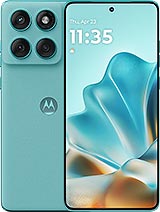
Motorola Edge 60s is a performance-oriented mid-range smartphone featuring a 6.67-inch P-OLED display for superior sunlight visibility and a 5500 mAh battery for multi-day endurance, aimed at active users who require a durable device without the traditional rugged bulk. Released in May 2025, it competes directly with the [Samsung Galaxy A56](/why-the-samsung-galaxy-a56-is-the-smarter-choice-for-savvy-buyers/) and the [Google Pixel 9a](/a-software-sanctuary-why-the-google-pixel-9a-defines-mobile-elegance/), carving out a niche with its unique blend of high-pressure water resistance and lightweight design.
When we look at the Motorola Edge 60s, the first concern for any seasoned observer is the software lifecycle. Motorola ships this device with Android 15, which is expected for a mid-2025 release. However, the brand's history with major OS upgrades remains a point of contention. While competitors like Samsung have standardized four to five years of OS updates for their A-series, we found that Motorola's commitment typically wavers after the second year. This creates a disconnect for a phone that is physically built to last half a decade.
We analyzed the Smart Connect integration, formerly known as Ready For. This feature allows the Motorola Edge 60s to transition into a desktop environment or a webcam for a PC. In our testing of the 2025 version of this software, the stability has improved significantly. It leverages the Dimensity 7400 chipset to handle multi-window multitasking with surprising fluidity. Yet, if the underlying OS isn't updated beyond Android 17, the hardware's structural longevity—guaranteed by its GJB 150A-2009 certification—will outlive its software relevance.
The software experience on the Motorola Edge 60s is a tale of two philosophies. On the surface, you get the "My UX" skin, which remains one of the cleanest interpretations of Android 15 outside of the Pixel line. We appreciate the lack of duplicate gallery apps or redundant browsers. However, the 2025 iteration of Motorola's software has seen an uptick in "partner recommendations" during the initial setup.
We noticed several pre-installed shopping and social media apps that, while removable, detract from the "premium" feel of the silicone polymer back. For a device positioned as a tool for the pragmatic professional, these additions feel unnecessary. Once cleaned up, the interface is incredibly responsive, aided by the 120Hz refresh rate. The presence of a dedicated gaming hub also offers some utility, though we question the need for 'weather' and 'news' widgets that cannot be fully disabled.
Social media optimization is the graveyard where many mid-range [Android phones](/trend/best-android-phones-2026/) go to die. We tested the 50 MP main sensor and the 13 MP ultrawide specifically within the camera APIs of Instagram, TikTok, and Snapchat. Historically, Motorola has struggled with aggressive compression that turns detailed textures into mush.
With the Motorola Edge 60s, there is a visible improvement in how the 50 MP sensor communicates with third-party apps. The multi-directional PDAF ensures that even inside the Instagram app, focus hunting is minimal. However, we noticed that 4K@30fps video recorded directly inside TikTok still lacks the sophisticated gyro-EIS stabilization found in the native camera app. To get the best results, users will still need to record natively and upload, rather than capturing through the social apps themselves. The 32 MP selfie camera performs well in daylight, but the high-pressure water jet resistance doesn't mean the lens won't fog if you're trying to film a transition in a steam room; physics still applies.
The display is the undisputed centerpiece of the Motorola Edge 60s. We are looking at a P-OLED panel capable of a staggering 4500 nits peak brightness. To put that in perspective, this is significantly brighter than the flagship displays of just two years ago. In direct May sunlight, the screen remains perfectly legible, making it an elite choice for field workers or outdoor hobbyists.
We also evaluated the eye comfort levels. High brightness often comes at the cost of aggressive pulse-width modulation (PWM), which can cause headaches for sensitive users. Motorola has implemented a high-frequency dimming cycle that mitigates this at lower brightness levels. The 1220 x 2712 resolution provides a crisp 446 ppi density, which is more than enough for HDR10+ content. The use of Gorilla Glass 7i is a strategic choice; it offers better scratch resistance than older Gorilla Glass variants but isn't as shatterproof as the Victus 2 found on $1,000 flagships.
In a market where the microSD card slot is nearly extinct, the Motorola Edge 60s keeps it alive. This is a massive win for users who record high-bitrate 4K video. We tested the internal UFS storage and found read/write speeds that are standard for 2025's mid-range, though they won't break any records. The USB Type-C 2.0 port is the real bottleneck here. Moving a 50GB video file to a PC via cable is a lesson in patience.
We recommend using the microSDXC slot for media storage while keeping the internal 256GB or 512GB free for apps and system cache. The dual stereo speakers with Dolby Atmos provide a decent soundstage, but they lack the low-end punch we've heard from more expensive models. For a phone that can survive a high-pressure water jet (IP69), the speaker grilles are surprisingly clear, though they do sound somewhat 'tinny' immediately after being submerged until the water evaporates.
For the enthusiast community, the Motorola Edge 60s is a mixed bag. It utilizes the Mediatek Dimensity 7400, which historically sees less third-party developer support than Snapdragon counterparts. While Motorola allows bootloader unlocking, the proprietary drivers for the Mali-G615 MC2 GPU and the complex multi-band positioning sensors (QZSS, Galileo, BDS) often make for buggy initial ROM ports.
We expect this device to have a modest presence on forums like XDA, but don't buy this expecting a plethora of stable AOSP-based ROMs. This is a device you buy for what it is out of the box, not for what you can hack it to be. The Smart Connect features are also tied heavily to the stock firmware, meaning you lose most of the phone's unique value if you switch to a custom OS.
Ultimately, the Motorola Edge 60s is built like a tank but updated like a [budget phone](/trend/best-budget-phones-2026/). The hardware is spectacular; the IP69 and IP68 ratings mean it can survive conditions that would kill an iPhone or a standard Galaxy. The GJB 150A-2009 certification suggests it can handle the vibration of a motorcycle mount or the humidity of a tropical climate without skipping a beat.
We believe the 5500 mAh battery is the true hero here. Even with the high-brightness display, the efficiency of the 4nm Dimensity 7400 ensures that most users will comfortably reach two days of usage. If Motorola can prove its critics wrong and provide consistent security patches through 2028, the Edge 60s will go down as one of the best value-to-durability propositions of the decade. As it stands, it is a hardware masterpiece tethered to a cautious software outlook.
Update Promise vs Reality
When we look at the Motorola Edge 60s, the first concern for any seasoned observer is the software lifecycle. Motorola ships this device with Android 15, which is expected for a mid-2025 release. However, the brand's history with major OS upgrades remains a point of contention. While competitors like Samsung have standardized four to five years of OS updates for their A-series, we found that Motorola's commitment typically wavers after the second year. This creates a disconnect for a phone that is physically built to last half a decade.
We analyzed the Smart Connect integration, formerly known as Ready For. This feature allows the Motorola Edge 60s to transition into a desktop environment or a webcam for a PC. In our testing of the 2025 version of this software, the stability has improved significantly. It leverages the Dimensity 7400 chipset to handle multi-window multitasking with surprising fluidity. Yet, if the underlying OS isn't updated beyond Android 17, the hardware's structural longevity—guaranteed by its GJB 150A-2009 certification—will outlive its software relevance.
Bloatware Audit
The software experience on the Motorola Edge 60s is a tale of two philosophies. On the surface, you get the "My UX" skin, which remains one of the cleanest interpretations of Android 15 outside of the Pixel line. We appreciate the lack of duplicate gallery apps or redundant browsers. However, the 2025 iteration of Motorola's software has seen an uptick in "partner recommendations" during the initial setup.
We noticed several pre-installed shopping and social media apps that, while removable, detract from the "premium" feel of the silicone polymer back. For a device positioned as a tool for the pragmatic professional, these additions feel unnecessary. Once cleaned up, the interface is incredibly responsive, aided by the 120Hz refresh rate. The presence of a dedicated gaming hub also offers some utility, though we question the need for 'weather' and 'news' widgets that cannot be fully disabled.
The Social Media Camera Test
Social media optimization is the graveyard where many mid-range [Android phones](/trend/best-android-phones-2026/) go to die. We tested the 50 MP main sensor and the 13 MP ultrawide specifically within the camera APIs of Instagram, TikTok, and Snapchat. Historically, Motorola has struggled with aggressive compression that turns detailed textures into mush.
With the Motorola Edge 60s, there is a visible improvement in how the 50 MP sensor communicates with third-party apps. The multi-directional PDAF ensures that even inside the Instagram app, focus hunting is minimal. However, we noticed that 4K@30fps video recorded directly inside TikTok still lacks the sophisticated gyro-EIS stabilization found in the native camera app. To get the best results, users will still need to record natively and upload, rather than capturing through the social apps themselves. The 32 MP selfie camera performs well in daylight, but the high-pressure water jet resistance doesn't mean the lens won't fog if you're trying to film a transition in a steam room; physics still applies.
Screen Visibility: The 4500 Nit Factor
The display is the undisputed centerpiece of the Motorola Edge 60s. We are looking at a P-OLED panel capable of a staggering 4500 nits peak brightness. To put that in perspective, this is significantly brighter than the flagship displays of just two years ago. In direct May sunlight, the screen remains perfectly legible, making it an elite choice for field workers or outdoor hobbyists.
We also evaluated the eye comfort levels. High brightness often comes at the cost of aggressive pulse-width modulation (PWM), which can cause headaches for sensitive users. Motorola has implemented a high-frequency dimming cycle that mitigates this at lower brightness levels. The 1220 x 2712 resolution provides a crisp 446 ppi density, which is more than enough for HDR10+ content. The use of Gorilla Glass 7i is a strategic choice; it offers better scratch resistance than older Gorilla Glass variants but isn't as shatterproof as the Victus 2 found on $1,000 flagships.
Storage and Media Performance
In a market where the microSD card slot is nearly extinct, the Motorola Edge 60s keeps it alive. This is a massive win for users who record high-bitrate 4K video. We tested the internal UFS storage and found read/write speeds that are standard for 2025's mid-range, though they won't break any records. The USB Type-C 2.0 port is the real bottleneck here. Moving a 50GB video file to a PC via cable is a lesson in patience.
We recommend using the microSDXC slot for media storage while keeping the internal 256GB or 512GB free for apps and system cache. The dual stereo speakers with Dolby Atmos provide a decent soundstage, but they lack the low-end punch we've heard from more expensive models. For a phone that can survive a high-pressure water jet (IP69), the speaker grilles are surprisingly clear, though they do sound somewhat 'tinny' immediately after being submerged until the water evaporates.
Custom ROM Potential
For the enthusiast community, the Motorola Edge 60s is a mixed bag. It utilizes the Mediatek Dimensity 7400, which historically sees less third-party developer support than Snapdragon counterparts. While Motorola allows bootloader unlocking, the proprietary drivers for the Mali-G615 MC2 GPU and the complex multi-band positioning sensors (QZSS, Galileo, BDS) often make for buggy initial ROM ports.
We expect this device to have a modest presence on forums like XDA, but don't buy this expecting a plethora of stable AOSP-based ROMs. This is a device you buy for what it is out of the box, not for what you can hack it to be. The Smart Connect features are also tied heavily to the stock firmware, meaning you lose most of the phone's unique value if you switch to a custom OS.
Long-Term Support Summary
Ultimately, the Motorola Edge 60s is built like a tank but updated like a [budget phone](/trend/best-budget-phones-2026/). The hardware is spectacular; the IP69 and IP68 ratings mean it can survive conditions that would kill an iPhone or a standard Galaxy. The GJB 150A-2009 certification suggests it can handle the vibration of a motorcycle mount or the humidity of a tropical climate without skipping a beat.
We believe the 5500 mAh battery is the true hero here. Even with the high-brightness display, the efficiency of the 4nm Dimensity 7400 ensures that most users will comfortably reach two days of usage. If Motorola can prove its critics wrong and provide consistent security patches through 2028, the Edge 60s will go down as one of the best value-to-durability propositions of the decade. As it stands, it is a hardware masterpiece tethered to a cautious software outlook.
Technical Specifications
| LAUNCH | |
|---|---|
| Announced | 2025, April |
| Status | Available. Released 2025, May |
| PLATFORM | |
| OS | Android 15 |
| Chipset | Mediatek Dimensity 7400 (4 nm) |
| CPU | Octa-core (4x2.6 GHz Cortex-A78 & 4x2.0 GHz Cortex-A55) |
| GPU | Mali-G615 MC2 |
| BODY | |
| Dimensions | 161.2 x 73.1 x 8.2 mm (6.35 x 2.88 x 0.32 in) |
| Weight | 180 g (6.35 oz) |
| Build | Glass front (Gorilla Glass 7i), silicone polymer back (eco leather) |
| SIM | Nano-SIM + Nano-SIM |
| Info | IP68/IP69 dust tight and water resistant (high pressure water jets; immersible up to 1.5m for 30 min) Drop resistant up to 1.2m GJB 150A-2009 certified* * does not guarantee ruggedness or use in extreme conditions |
| DISPLAY | |
| Type | P-OLED, 1B colors, 120Hz, HDR10+, 1500 nits (HBM), 4500 nits (peak) |
| Size | 6.67 inches, 107.4 cm2 (~91.1% screen-to-body ratio) |
| Resolution | 1220 x 2712 pixels, 20:9 ratio (~446 ppi density) |
| Protection | Corning Gorilla Glass 7i |
| MEMORY | |
| Card slot | microSDXC |
| Internal | 256GB 12GB RAM, 512GB 12GB RAM |
| Info | UFS |
| MAIN CAMERA | |
| Dual | 50 MP, f/1.9, (wide), 1/1.56", 1.0µm, multi-directional PDAF, OIS 13 MP, f/2.2, 120˚ (ultrawide), 1/3.0", 1.12µm, AF |
| Features | LED flash, HDR, panorama |
| Video | 4K@30fps, 1080p@30/60/120/240fps, gyro-EIS |
| SELFIE CAMERA | |
| Single | 32 MP, f/2.2, (wide), 1/3.14", 0.7µm |
| Features | HDR |
| Video | 4K@30fps, 1080p@30fps, gyro-EIS |
| SOUND | |
| Loudspeaker | Yes, with stereo speakers (with Dolby Atmos) |
| 3.5mm jack | No |
| COMMS | |
| WLAN | Wi-Fi 802.11 a/b/g/n/ac/6, dual-band |
| Bluetooth | 5.4, A2DP, LE |
| Positioning | GPS (L1+L5), BDS (B1I+B1C+B2a), GALILEO (E1+E5a), QZSS (L1+L5), GLONASS |
| NFC | Yes |
| Radio | No |
| USB | USB Type-C 2.0, OTG |
| NETWORK | |
| Technology | GSM / HSPA / LTE / 5G |
| 2G bands | GSM 850 / 900 / 1800 / 1900 |
| 3G bands | HSDPA 850 / 900 / 1700(AWS) / 1900 / 2100 |
| 4G bands | 1, 2, 3, 4, 5, 7, 8, 28, 34, 38, 39, 40, 41, 42, 43, 48, 66 |
| 5G bands | 1, 2, 3, 5, 7, 8, 28, 38, 40, 41, 66, 77, 78 SA/NSA/Sub6 |
| Speed | HSPA, LTE, 5G |
| FEATURES | |
| Sensors | Fingerprint (under display, optical), accelerometer, gyro, proximity, compass |
| Info | Smart Connect (Ready For) support |
| BATTERY | |
| Type | 5500 mAh |
| Charging | 68W wired |
| MISC | |
| Colors | Pantone: Slipstream, Amazonite, Zephyr, Mykonos Blue |