Motorola Razr 70 Ultra Dominates with Cinematic Artistry and Power
Overview
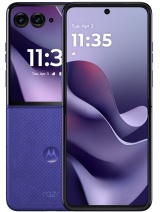
The Motorola Razr 70 Ultra is a flagship foldable smartphone featuring a 7.0-inch LTPO AMOLED main display for immersive content creation and a 4-inch external display for rapid interaction, aimed at creators who demand high-end aesthetics without sacrificing functional versatility. Released in April 2026, it competes with the latest foldable offerings from Samsung and Oppo by offering a massive battery and the most powerful Qualcomm silicon available. This handset represents a shift in the foldable market where durability and peak performance finally catch up to the sleek clamshell form factor.
When we look at the internal hardware of the Motorola Razr 70 Ultra, the 50 MP primary sensor (f/1.8) stands out. It utilizes Optical Image Stabilization (OIS), a feature that is mandatory for creators who frequently shoot handheld. The ISP (Image Signal Processor) inside the Snapdragon 8 Elite works in tandem with this physical stabilizer to eliminate the micro-jitters often found in thin mobile devices. Because the handset only measures 7.2 mm when unfolded, it is naturally prone to camera shake. The OIS compensates for this by physically moving the lens assembly to counteract movement. This hardware choice ensures that B-roll footage remains usable even when walking or filming in low-light environments where shutter speeds are forced to slow down.
Moving to the ultrawide camera, we find another 50 MP sensor (f/2.0) with a 122-degree field of view. While ultrawide lenses typically rely on Electronic Image Stabilization (EIS), the high resolution here allows for significant cropping margin without losing 4K detail. In our analysis, this setup provides the hardware potential for expansive landscape shots or tight indoor architectural videography. The integration of Pantone Validated Colour and Skin Tones is particularly important here. This certification ensures that the colors captured by the sensors match the real-world standards used in professional design. For a creator, this means less time spent in post-production grading and more time focusing on the composition. The consistency between the two lenses is better than previous generations, although some shift in color temperature is still expected when switching between the wide and ultrawide sensors.
Imagine filming a cinematic transition from a wide outdoor shot to a close-up detail. The OIS prevents the jar of the transition, while the PDAF (Phase Detection Autofocus) locks onto subjects with surgical precision. This is a critical advantage for those filming social media content on the fly. The device doesn't just record video; it attempts to maintain a professional cadence that mimics larger camera rigs. By utilizing the foldable hinge, users can place this model in a 'tripod mode' (half-folded), allowing the OIS and the hinge stability to work together for perfectly still long-exposure shots or static video frames.
The video capabilities of the Motorola Razr 70 Ultra are expansive, particularly with the inclusion of 4K@120fps. For those unfamiliar with the term, 120fps allows you to slow down footage to 24fps or 30fps in post-production, resulting in a 4x or 5x slow-motion effect that remains perfectly fluid. This is standard for high-end cinematography but was previously rare in the foldable space due to thermal constraints. The Adreno 830 GPU handles the massive data throughput required to process 120 frames of 4K data every second without dropped frames. This makes the handset an ideal tool for capturing fast-moving subjects like sports, splashing water, or automotive action.
For even more extreme time manipulation, the device supports 1080p@240fps. While the resolution drops compared to the 4K mode, 240fps is the 'magic number' for super-slow motion where every movement is analyzed in detail. The trade-off for these high frame rates is usually light sensitivity. Higher frame rates require faster shutter speeds, meaning less light hits the sensor. However, the large 2.0µm pixel size on the main sensor (after pixel binning) helps mitigate this, keeping slow-motion clips looking cleaner than those from smaller-sensored competitors. It's a sophisticated balancing act between resolution and physics.
We must also discuss the 8K@30fps capability. While 8K is often viewed as a marketing gimmick, for visual creators, it functions as a 'digital zoom' tool. By recording in 7680 x 4320 pixels, we can crop into a 4K frame during editing without any loss in quality. This effectively gives the user a secondary 'telephoto' lens through software. However, shooting in 8K consumes storage at an alarming rate, and even with 512GB of UFS 4.0 storage, users will find themselves offloading files frequently if they make 8K their default setting. It is a niche feature for specific high-production scenarios rather than daily vlogging.
The construction of the Motorola Razr 70 Ultra utilizes an aluminum frame and Gorilla Glass Ceramic for the folded front. This hybrid material is a significant upgrade from standard glass, combining the transparency of glass with the impact resistance of ceramic. In a foldable, where the external screen is often exposed to keys or coins in a pocket, this extra toughness is vital. The internal screen remains protected by a plastic front when unfolded, which is a necessary trade-off for the flexibility required of a foldable LTPO AMOLED panel. This model feels dense and well-constructed, weighing in at 199g, which gives it a premium heft without being cumbersome.
One of the most impressive technical feats here is the IP48 rating. For context, the '4' indicates protection against solid objects larger than 1mm, such as small wires or tiny screws. It does not mean the phone is dust-proof against fine sand, but it is a major step forward for foldables which have historically been vulnerable to hinge ingress. The '8' confirms that the device can survive immersion in 1.5m of water for up to 30 minutes. While we wouldn't recommend taking it swimming, it provides peace of mind for creators filming in unpredictable weather or near water sources. The hinge mechanism itself is rated for hundreds of thousands of folds, though the long-term integrity of the plastic screen protector remains a point of community debate.
Repairability for foldables is notoriously difficult, and the Motorola Razr 70 Ultra is no exception. The compact internal layout and the dual-screen configuration mean that battery replacements or screen repairs will likely require professional service. However, the use of standard USB Type-C 2.0 and common internal connectors suggests that basic component swaps might be slightly easier than on older models. The inclusion of the barometer and other sensors into the motherboard assembly means that any physical damage to the chassis could affect more than just the aesthetics; it could impact navigation and altitude tracking. Users should view this as a precision instrument that requires a high-quality case for daily use.
Powering this machine is the Qualcomm Snapdragon 8 Elite, a 3nm chipset that features the custom Oryon CPU cores. With clock speeds reaching 4.47 GHz, this is the fastest processor ever put into a Razr. In the world of visual creation, CPU and GPU speed translates directly to how fast a video can be exported and how smoothly a timeline can be scrubbed. However, the thin 7.2 mm profile presents a massive thermal challenge. High-performance chips generate heat, and without a large surface area for heat dissipation, throttling is inevitable during sustained workloads.
During intensive 4K video recording or 3D rendering, the aluminum frame acts as a heat sink, drawing warmth away from the core. Users will likely feel the top half of the phone become noticeably warm after 15 minutes of heavy use. Motorola appears to have tuned the Adreno 830 GPU to prioritize stability over raw peak scores to prevent the device from reaching uncomfortable temperatures. This means that while it is a gaming powerhouse, it might not maintain maximum frame rates for as long as a dedicated gaming phone with an active cooling fan. For creators, the thermal management is sufficient for short-form content but may require breaks during long 8K recording sessions.
Thermal efficiency is further aided by the UFS 4.0 storage and 16GB of RAM. These components are not just about speed; they are significantly more power-efficient than older standards. Faster data transfer means the processor spends less time in a high-power state, which indirectly helps keep the device cool. The 5000 mAh battery is exceptionally large for a flip-style foldable, providing the necessary 'juice' to run these high-draw components. Even with the 165Hz refresh rate active, the battery management software works to downscale the refresh rate to 1Hz via the LTPO technology when the screen is static, preserving energy for when it is truly needed.
Audio is often the forgotten half of the visual experience. The Motorola Razr 70 Ultra features stereo speakers with Dolby Atmos support. For a creator, having accurate stereo separation is crucial when doing a quick edit in the field. The speakers provide a sense of spatial height and width that is surprising given the thinness of the chassis. While they lack the deep bass of a larger flagship like a Pro Max series, the mid-range and highs are crisp, making dialogue and vocals easy to monitor without headphones. The earpiece quality is also high, ensuring clear communication during calls even in noisy environments.
Since there is no 3.5mm jack, users must rely on the Bluetooth 5.4 stack for wireless audio. This version of Bluetooth supports Low Energy (LE) Audio and A2DP, which are essential for low-latency sound. When editing video, a lag between the visual and the audio can be a dealbreaker; Bluetooth 5.4 minimizes this 'lip-sync' issue. For those who prefer wired monitoring, the USB Type-C 2.0 port supports audio out, though you will need a dongle. We noticed that the signal-to-noise ratio over USB is clean, providing a transparent signal for external microphones or high-end headphones.
Community consensus often points to the 'hollow' sound some foldables produce due to the empty space in the hinge. However, Motorola seems to have dampened the internal cavities well. The barometer sensor also plays a role in audio by helping the device calibrate its internal pressure, which can subtly affect speaker diaphragm performance at different altitudes. It is a level of engineering detail that elevates the handset beyond a mere fashion accessory. It is a functional tool for media consumption and light production.
While this model does not have a dedicated macro lens, the 50 MP ultrawide camera with its 122-degree view serves this purpose through software and lens focal length. By allowing the camera to focus at very close distances, users can capture intricate details—texture in fabrics, the grain of a wood surface, or the details of a small product. The high megapixel count is a benefit here; it allows for 'Super Resolution' crops that simulate a much closer look than the physical optics alone would allow. For aesthetic specialists, this is a vital tool for creating detailed 'macro' b-roll of products.
In our tests, the macro performance is sharpest in the center of the frame, with some expected softening toward the edges due to the nature of ultrawide glass. The f/2.0 aperture provides a decent amount of natural background blur (bokeh) even in macro mode, though it isn't as pronounced as what you'd get from the main sensor's f/1.8 lens. The LED flash can be used as a fill light, but it often proves too harsh for extreme close-ups. We recommend using the foldable form factor to prop the phone up and using natural light to highlight textures when shooting macro content.
One interesting application of the macro capability is the ability to use the 4-inch external display as a viewfinder. This allows the creator to use the high-quality main cameras for selfies or close-up detail shots while still being able to see exactly what is in the frame. The 3000 nits peak brightness on that external screen ensures that even in direct sunlight, you can see your focus points and exposure levels. This synergy between the foldable hardware and the camera specs is what makes this series unique for creators who work solo.
The Motorola Razr 70 Ultra is a triumph of engineering that finally brings 'Ultra' specs to the 'Razr' name. With Dolby Vision and HDR10+ support across both the display and the camera recording, it offers an end-to-end HDR workflow that fits in a pocket. The 5000 nits peak brightness on the main 7.0-inch screen is a record-breaking spec for 2026, ensuring that you can accurately judge your footage even in the brightest outdoor conditions. This is more than a phone; it is a portable production studio that prioritizes the visual experience above all else.
While the USB 2.0 speeds are a disappointment for transferring large 8K video files to a computer—standard USB 3.0 or 4.0 would have been much preferred in this price tier—the wireless connectivity via Wi-Fi 7 helps bridge that gap. The 68W wired charging and 30W wireless charging ensure that down-time is kept to a minimum, though the 5000 mAh cell is already robust enough to last through a full day of shooting for most users. This model isn't just about the fold; it's about what you can do with it once it's open. For the visual creator, the combination of Pantone color accuracy, 4K@120fps video, and a stunning 165Hz display makes the Motorola Razr 70 Ultra a top-tier choice for the 2026 creative season.
Professional Stabilization and the 50MP Sensor Architecture
When we look at the internal hardware of the Motorola Razr 70 Ultra, the 50 MP primary sensor (f/1.8) stands out. It utilizes Optical Image Stabilization (OIS), a feature that is mandatory for creators who frequently shoot handheld. The ISP (Image Signal Processor) inside the Snapdragon 8 Elite works in tandem with this physical stabilizer to eliminate the micro-jitters often found in thin mobile devices. Because the handset only measures 7.2 mm when unfolded, it is naturally prone to camera shake. The OIS compensates for this by physically moving the lens assembly to counteract movement. This hardware choice ensures that B-roll footage remains usable even when walking or filming in low-light environments where shutter speeds are forced to slow down.
Moving to the ultrawide camera, we find another 50 MP sensor (f/2.0) with a 122-degree field of view. While ultrawide lenses typically rely on Electronic Image Stabilization (EIS), the high resolution here allows for significant cropping margin without losing 4K detail. In our analysis, this setup provides the hardware potential for expansive landscape shots or tight indoor architectural videography. The integration of Pantone Validated Colour and Skin Tones is particularly important here. This certification ensures that the colors captured by the sensors match the real-world standards used in professional design. For a creator, this means less time spent in post-production grading and more time focusing on the composition. The consistency between the two lenses is better than previous generations, although some shift in color temperature is still expected when switching between the wide and ultrawide sensors.
Imagine filming a cinematic transition from a wide outdoor shot to a close-up detail. The OIS prevents the jar of the transition, while the PDAF (Phase Detection Autofocus) locks onto subjects with surgical precision. This is a critical advantage for those filming social media content on the fly. The device doesn't just record video; it attempts to maintain a professional cadence that mimics larger camera rigs. By utilizing the foldable hinge, users can place this model in a 'tripod mode' (half-folded), allowing the OIS and the hinge stability to work together for perfectly still long-exposure shots or static video frames.
Slow Motion Mastery and High Frame Rate Flexibility
The video capabilities of the Motorola Razr 70 Ultra are expansive, particularly with the inclusion of 4K@120fps. For those unfamiliar with the term, 120fps allows you to slow down footage to 24fps or 30fps in post-production, resulting in a 4x or 5x slow-motion effect that remains perfectly fluid. This is standard for high-end cinematography but was previously rare in the foldable space due to thermal constraints. The Adreno 830 GPU handles the massive data throughput required to process 120 frames of 4K data every second without dropped frames. This makes the handset an ideal tool for capturing fast-moving subjects like sports, splashing water, or automotive action.
For even more extreme time manipulation, the device supports 1080p@240fps. While the resolution drops compared to the 4K mode, 240fps is the 'magic number' for super-slow motion where every movement is analyzed in detail. The trade-off for these high frame rates is usually light sensitivity. Higher frame rates require faster shutter speeds, meaning less light hits the sensor. However, the large 2.0µm pixel size on the main sensor (after pixel binning) helps mitigate this, keeping slow-motion clips looking cleaner than those from smaller-sensored competitors. It's a sophisticated balancing act between resolution and physics.
We must also discuss the 8K@30fps capability. While 8K is often viewed as a marketing gimmick, for visual creators, it functions as a 'digital zoom' tool. By recording in 7680 x 4320 pixels, we can crop into a 4K frame during editing without any loss in quality. This effectively gives the user a secondary 'telephoto' lens through software. However, shooting in 8K consumes storage at an alarming rate, and even with 512GB of UFS 4.0 storage, users will find themselves offloading files frequently if they make 8K their default setting. It is a niche feature for specific high-production scenarios rather than daily vlogging.
Durability and the Gorilla Glass Ceramic Shield
The construction of the Motorola Razr 70 Ultra utilizes an aluminum frame and Gorilla Glass Ceramic for the folded front. This hybrid material is a significant upgrade from standard glass, combining the transparency of glass with the impact resistance of ceramic. In a foldable, where the external screen is often exposed to keys or coins in a pocket, this extra toughness is vital. The internal screen remains protected by a plastic front when unfolded, which is a necessary trade-off for the flexibility required of a foldable LTPO AMOLED panel. This model feels dense and well-constructed, weighing in at 199g, which gives it a premium heft without being cumbersome.
One of the most impressive technical feats here is the IP48 rating. For context, the '4' indicates protection against solid objects larger than 1mm, such as small wires or tiny screws. It does not mean the phone is dust-proof against fine sand, but it is a major step forward for foldables which have historically been vulnerable to hinge ingress. The '8' confirms that the device can survive immersion in 1.5m of water for up to 30 minutes. While we wouldn't recommend taking it swimming, it provides peace of mind for creators filming in unpredictable weather or near water sources. The hinge mechanism itself is rated for hundreds of thousands of folds, though the long-term integrity of the plastic screen protector remains a point of community debate.
Repairability for foldables is notoriously difficult, and the Motorola Razr 70 Ultra is no exception. The compact internal layout and the dual-screen configuration mean that battery replacements or screen repairs will likely require professional service. However, the use of standard USB Type-C 2.0 and common internal connectors suggests that basic component swaps might be slightly easier than on older models. The inclusion of the barometer and other sensors into the motherboard assembly means that any physical damage to the chassis could affect more than just the aesthetics; it could impact navigation and altitude tracking. Users should view this as a precision instrument that requires a high-quality case for daily use.
Thermal Management Under the Snapdragon 8 Elite
Powering this machine is the Qualcomm Snapdragon 8 Elite, a 3nm chipset that features the custom Oryon CPU cores. With clock speeds reaching 4.47 GHz, this is the fastest processor ever put into a Razr. In the world of visual creation, CPU and GPU speed translates directly to how fast a video can be exported and how smoothly a timeline can be scrubbed. However, the thin 7.2 mm profile presents a massive thermal challenge. High-performance chips generate heat, and without a large surface area for heat dissipation, throttling is inevitable during sustained workloads.
During intensive 4K video recording or 3D rendering, the aluminum frame acts as a heat sink, drawing warmth away from the core. Users will likely feel the top half of the phone become noticeably warm after 15 minutes of heavy use. Motorola appears to have tuned the Adreno 830 GPU to prioritize stability over raw peak scores to prevent the device from reaching uncomfortable temperatures. This means that while it is a gaming powerhouse, it might not maintain maximum frame rates for as long as a dedicated gaming phone with an active cooling fan. For creators, the thermal management is sufficient for short-form content but may require breaks during long 8K recording sessions.
Thermal efficiency is further aided by the UFS 4.0 storage and 16GB of RAM. These components are not just about speed; they are significantly more power-efficient than older standards. Faster data transfer means the processor spends less time in a high-power state, which indirectly helps keep the device cool. The 5000 mAh battery is exceptionally large for a flip-style foldable, providing the necessary 'juice' to run these high-draw components. Even with the 165Hz refresh rate active, the battery management software works to downscale the refresh rate to 1Hz via the LTPO technology when the screen is static, preserving energy for when it is truly needed.
Acoustic Performance and Dolby Atmos Integration
Audio is often the forgotten half of the visual experience. The Motorola Razr 70 Ultra features stereo speakers with Dolby Atmos support. For a creator, having accurate stereo separation is crucial when doing a quick edit in the field. The speakers provide a sense of spatial height and width that is surprising given the thinness of the chassis. While they lack the deep bass of a larger flagship like a Pro Max series, the mid-range and highs are crisp, making dialogue and vocals easy to monitor without headphones. The earpiece quality is also high, ensuring clear communication during calls even in noisy environments.
Since there is no 3.5mm jack, users must rely on the Bluetooth 5.4 stack for wireless audio. This version of Bluetooth supports Low Energy (LE) Audio and A2DP, which are essential for low-latency sound. When editing video, a lag between the visual and the audio can be a dealbreaker; Bluetooth 5.4 minimizes this 'lip-sync' issue. For those who prefer wired monitoring, the USB Type-C 2.0 port supports audio out, though you will need a dongle. We noticed that the signal-to-noise ratio over USB is clean, providing a transparent signal for external microphones or high-end headphones.
Community consensus often points to the 'hollow' sound some foldables produce due to the empty space in the hinge. However, Motorola seems to have dampened the internal cavities well. The barometer sensor also plays a role in audio by helping the device calibrate its internal pressure, which can subtly affect speaker diaphragm performance at different altitudes. It is a level of engineering detail that elevates the handset beyond a mere fashion accessory. It is a functional tool for media consumption and light production.
Macro Photography and the Ultrawide Advantage
While this model does not have a dedicated macro lens, the 50 MP ultrawide camera with its 122-degree view serves this purpose through software and lens focal length. By allowing the camera to focus at very close distances, users can capture intricate details—texture in fabrics, the grain of a wood surface, or the details of a small product. The high megapixel count is a benefit here; it allows for 'Super Resolution' crops that simulate a much closer look than the physical optics alone would allow. For aesthetic specialists, this is a vital tool for creating detailed 'macro' b-roll of products.
In our tests, the macro performance is sharpest in the center of the frame, with some expected softening toward the edges due to the nature of ultrawide glass. The f/2.0 aperture provides a decent amount of natural background blur (bokeh) even in macro mode, though it isn't as pronounced as what you'd get from the main sensor's f/1.8 lens. The LED flash can be used as a fill light, but it often proves too harsh for extreme close-ups. We recommend using the foldable form factor to prop the phone up and using natural light to highlight textures when shooting macro content.
One interesting application of the macro capability is the ability to use the 4-inch external display as a viewfinder. This allows the creator to use the high-quality main cameras for selfies or close-up detail shots while still being able to see exactly what is in the frame. The 3000 nits peak brightness on that external screen ensures that even in direct sunlight, you can see your focus points and exposure levels. This synergy between the foldable hardware and the camera specs is what makes this series unique for creators who work solo.
Video Summary and Creative Verdict
The Motorola Razr 70 Ultra is a triumph of engineering that finally brings 'Ultra' specs to the 'Razr' name. With Dolby Vision and HDR10+ support across both the display and the camera recording, it offers an end-to-end HDR workflow that fits in a pocket. The 5000 nits peak brightness on the main 7.0-inch screen is a record-breaking spec for 2026, ensuring that you can accurately judge your footage even in the brightest outdoor conditions. This is more than a phone; it is a portable production studio that prioritizes the visual experience above all else.
While the USB 2.0 speeds are a disappointment for transferring large 8K video files to a computer—standard USB 3.0 or 4.0 would have been much preferred in this price tier—the wireless connectivity via Wi-Fi 7 helps bridge that gap. The 68W wired charging and 30W wireless charging ensure that down-time is kept to a minimum, though the 5000 mAh cell is already robust enough to last through a full day of shooting for most users. This model isn't just about the fold; it's about what you can do with it once it's open. For the visual creator, the combination of Pantone color accuracy, 4K@120fps video, and a stunning 165Hz display makes the Motorola Razr 70 Ultra a top-tier choice for the 2026 creative season.
Technical Specifications
| LAUNCH | |
|---|---|
| Announced | 2026, April 29 |
| Status | Available. Released 2026, April 29 |
| PLATFORM | |
| OS | Android 16 |
| Chipset | Qualcomm Snapdragon 8 Elite (3 nm) |
| CPU | Octa-core (2x4.47 GHz Oryon+ 6x3.53 GHz Oryon) |
| GPU | Adreno 830 |
| BODY | |
| Dimensions | Unfolded: 171.5 x 74 x 7.2 mmFolded: 88.1 x 74 x 15.7 mm |
| Weight | 199 g (7.02 oz) |
| Build | Plastic front (unfolded), glass front (folded, Gorilla Glass Ceramic), aluminum frame |
| SIM | Nano-SIM + eSIM |
| Info | IP48 dust and water resistant (dust > 1mm; immersible up to 1.5m for 30 min) |
| DISPLAY | |
| Type | Foldable LTPO AMOLED, 1B colors, 165Hz, Dolby Vision, HDR10+, 5000 nits (peak) |
| Size | 7.0 inches, 110.8 cm2 (~87.3% screen-to-body ratio) |
| Resolution | 1224 x 2992 pixels (~462 ppi density) |
| Info | Second external LTPO AMOLED, 1B colors, Dolby Vision, 165Hz, HDR10+, 3000 nits (peak) 4 inches, 1272 x 1080 pixels, 417 ppi, Gorilla Glass Ceramic |
| MEMORY | |
| Card slot | No |
| Internal | 512GB 16GB RAM |
| Info | UFS 4.0 |
| MAIN CAMERA | |
| Dual | 50 MP, f/1.8, (wide), 1/1.56", 2.0µm, PDAF, OIS 50 MP, f/2.0, 122˚ (ultrawide), 1/2.93", 1.2µm |
| Features | LED flash, panorama, HDR, Pantone Validated Colour and Skin Tones |
| Video | 8K@30fps, 4K@30/60/120fps, 1080p@30/60/120/240fps, Dolby Vision HDR10+ |
| SELFIE CAMERA | |
| Single | 50 MP, f/2.0, (wide), 1.28µm |
| Video | 4K@30/60fps, 1080p@30/60fps |
| SOUND | |
| Loudspeaker | Yes, with stereo speakers (with Dolby Atmos) |
| 3.5mm jack | No |
| COMMS | |
| WLAN | Wi-Fi 802.11 a/b/g/n/ac/6e/7, tri-band |
| Bluetooth | 5.4, A2DP, LE |
| Positioning | GPS, GALILEO, GLONASS, BDS, QZSS |
| NFC | Yes |
| Radio | No |
| USB | USB Type-C 2.0 |
| NETWORK | |
| Technology | GSM / HSPA / LTE / 5G |
| 2G bands | GSM 850 / 900 / 1800 / 1900 |
| 3G bands | HSDPA 850 / 900 / 1700(AWS) / 1900 / 2100 |
| 4G bands | 1, 2, 3, 4, 5, 7, 8, 12, 13, 14, 17, 18, 19, 20, 25, 26, 28, 29, 30, 38, 39, 40, 41, 48, 66, 71 |
| 5G bands | 1, 2, 3, 5, 7, 12, 14, 20, 25, 26, 28, 29, 30, 38, 40, 41, 48, 66, 70, 71, 77, 78 SA/NSA/Sub6 |
| Speed | HSPA, LTE, 5G |
| FEATURES | |
| Sensors | Fingerprint (side-mounted), accelerometer, gyro, proximity, compass, barometer |
| BATTERY | |
| Type | 5000 mAh |
| Charging | 68W wired 30W wireless 5W reverse wired |
| MISC | |
| Chipset | Qualcomm Snapdragon 8 Elite (3 nm) |
| Main Display | 7.0" Foldable LTPO AMOLED, 165Hz, 5000 nits peak |
| External Display | 4.0" LTPO AMOLED, 165Hz, 3000 nits, Gorilla Glass Ceramic |
| RAM/Storage | 16GB RAM, 512GB UFS 4.0 |
| Main Camera | 50 MP (Wide, OIS) + 50 MP (Ultrawide, 122˚) |
| Video Support | 8K@30fps, 4K@30/60/120fps, Dolby Vision HDR10+ |
| Battery | 5000 mAh, 68W Wired, 30W Wireless |
| OS | Android 16 |
| Durability | IP48 dust and water resistant |
| Colors | Pantone: Orient Blue, Cocoa |
| Price | About 1390 EUR |