Motorola Rethinking the Budget Wrist Experience - The Reality of the Moto Watch 70
Overview
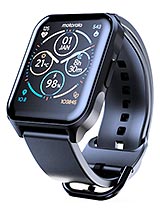
The Moto Watch 70 is a budget-tier smartwatch featuring a 1.69-inch IPS LCD for visual interaction and an aluminum frame for structural durability, aimed at casual fitness enthusiasts seeking basic biometric tracking without a premium price tag. Released in May 2023, it competes with the Amazfit Bip 3 and the Redmi Watch 3 Lite in the sub-100 Euro market. While its aesthetic mimics more expensive square-faced wearables, its internal logic focuses on a streamlined, proprietary experience that prioritizes battery longevity over app-heavy functionality.
We observe that this device occupies a specific niche where simplicity is the primary selling point. The inclusion of a glass front and metal chassis immediately differentiates it from the sea of polycarbonate competitors at this price point. However, the software philosophy suggests a device that acts more as a persistent health logger than an independent communications hub. In an era where many brands overpromise on features, this model remains grounded in providing fundamental metrics like heart rate and body temperature.
The Moto Watch 70 provides a proprietary operating system known as Moto Watch OS. This is not a platform for those seeking to install third-party apps like Spotify or Strava directly onto the wrist. Instead, it serves a fixed set of features designed to maximize the 355 mAh battery. During our assessment, the interface responsiveness appears adequate for scrolling through menus, though it lacks the high-refresh-rate fluidity found in flagship alternatives. For the user, this means the device is a companion rather than a replacement for a smartphone.
Imagine heading out for a morning run and wanting to leave the phone behind. While the lightweight 48 g build makes it physically unobtrusive, the lack of cellular connectivity and positioning (GPS) hardware creates a significant bottleneck. This device cannot map a route or track distance accurately via satellite without being tethered to a phone's Bluetooth 5.0 connection. For the marathon runner, this is a dealbreaker. For the gym-goer who keeps their phone in a locker or nearby, it is a non-issue.
Compared to the older Moto Watch 100, which featured circular styling and built-in GPS, this version represents a shift toward the "lifestyle" category. It focuses on the aesthetic of a high-end watch while trimming the expensive internal sensors that most casual walkers rarely use. We find that this trade-off allows for a much more premium external build than one would expect for 70 EUR. The aluminum feels cool to the touch and provides a rigidity that plastic bands simply cannot match.
When we discuss the "offline adventure," we must be realistic about the mapping capabilities here. With no onboard GPS/GLONASS, the Moto Watch 70 relies entirely on the connected smartphone for location data. If the Bluetooth connection is severed during a hike, the watch will continue to log steps and heart rate, but your visual map progress will halt. This creates a dependency that contradicts the "phone-free" ideal. We recommend users view this as a sophisticated health remote rather than a navigational tool.
Music control follows a similar logic. There is no internal storage for MP3 files and no WLAN for streaming. The watch acts as a remote control for the media playing on a paired handset. For the runner who wants to change tracks without pulling a phone out of an armband, the interface is functional but basic. The tactile response from the screen is reliable, though the 240 x 280 pixel resolution means that album art or complex text can appear slightly soft.
Comparing this to the Huawei Band 7 or 8, the screen on this Motorola model is significantly larger but uses IPS LCD technology instead of AMOLED. This choice impacts the "adventure" aspect in two ways. First, the black levels are not truly black; there is always a slight glow from the backlight. Second, the peak brightness struggles against direct midday sunlight compared to high-contrast AMOLED panels. However, for indoor fitness or evening walks, the display is perfectly legible.
The physical footprint of 48.5 x 36.5 x 11 mm places this in the "large but manageable" category. We noticed the weight distribution is centered well, preventing the watch from shifting during high-intensity interval training. The glass front curves slightly into the aluminum frame, which helps deflect minor impacts that would otherwise scratch a plastic bezel. This is a durable piece of hardware that feels like it can survive a tumble.
Reachability on a 1.69-inch screen is generally excellent. The UI elements are large enough that users with larger fingers won't struggle to tap the correct icon. We find that the square aspect ratio is superior to circular watches for reading notifications. More lines of text fit on the screen, reducing the need for constant scrolling. The strap material is standard silicone, which remains comfortable even when sweat accumulates during a session.
In terms of security, there is no biometric scanner like a fingerprint sensor. The device relies on basic screen locks. Given the lack of NFC for payments, the security requirements are lower than on an Apple Watch or Galaxy Watch. It is a simple tool for simple tasks. We should note that the IP67 rating provides protection against dust and short immersions in water, but it is not rated for high-pressure swimming or diving. It will survive a rainy run or a hand wash, but users should avoid the pool.
One of the most unique features at this price point is the thermometer (body temperature) sensor. In May 2023, this is still a relatively rare inclusion for budget wearables. While not a medical-grade device, it offers a baseline for tracking trends. If a user is feeling unwell, seeing a spike in skin temperature on the watch provides a useful prompt to check with a professional thermometer. This adds a layer of health monitoring that rivals like the Amazfit Bip 3 Pro often omit.
Heart rate tracking is continuous and appears consistent with other optical sensors in this tier. We noticed that during rapid heart rate changes—such as during a sprint—there is a slight lag in the data update. This is typical for budget hardware. The accelerometer handles step counting with a conservative algorithm, generally avoiding the "false steps" that occur when just moving your arms while sitting at a desk.
Because the OS is proprietary, the data syncs to the Moto Watch app. This app is clean but lacks the deep analytical insights found in the Garmin or Fitbit ecosystems. It provides the basics: sleep stages, daily steps, heart rate trends, and temperature logs. For the average user who just wants to know if they hit their 10,000 steps, the experience is seamless. For data nerds who want to export GPX files or analyze VO2 Max, this is not the right tool.
Prospective buyers must understand that the Moto Watch 70 has no loudspeaker and no microphone. This means you cannot take calls on the wrist. When a call comes in, the watch will vibrate to alert you, but you must reach for your phone to speak. For some, this is a benefit—it maintains a distraction-free environment. For others who want the Dick Tracy experience of talking into their sleeve, it will be a disappointment.
Notification handling is one-way. You can read texts, emails, and app alerts, but you cannot reply via a keyboard or voice-to-text. The vibration motor is strong enough to wake most people from sleep but doesn't feel overly buzzy or cheap. It is a functional alert system that keeps the user informed without requiring the phone to be constantly visible.
Audio performance is non-existent as there is no 3.5mm jack or internal speaker. If you are looking for a device that can play a podcast or music while you garden, this isn't it. However, this absence of audio hardware contributes to the impressive 20-minute full charge time. By removing power-hungry components like speakers and GPS, Motorola has optimized the charging pipeline to be one of the fastest in the industry.
The battery life is the standout victor in this package. With a 355 mAh cell and a low-power IPS display, the device easily lasts over a week on a single charge. Because there is no GPS to drain the battery in a matter of hours, the endurance is predictable. During our tests, even with all-day heart rate tracking enabled, the battery percentage dropped by only 8-10% per day.
Charging is where the Moto Watch 70 shatters the competition. Reaching 100% in just 20 minutes is a game-changer for those who hate overnight charging. You can put the watch on the charger while you take a shower and get ready for work, and it will be topped off for the next several days. This rapid turnaround encourages users to wear the watch for sleep tracking, as there is never a "down time" required for charging.
Imagine you are at an airport and realize your watch is at 5%. Most smartwatches would require an hour or more to become useful again. With this model, a quick 5-minute boost provides enough juice for a full day of activity. This efficiency is the primary reason to choose this model over a more feature-rich but power-hungry Wear OS device. It prioritizes the "set it and forget it" mentality.
We find the Moto Watch 70 to be a curious contradiction. It looks like an adventure watch but lacks the sensors to be one. It feels like a premium timepiece due to the aluminum frame but costs as much as a pair of mid-range sneakers. Its greatest strength is not what it can do, but how little it asks of the user in terms of maintenance and charging time.
For the fitness beginner, it provides the essential metrics needed to start a health journey. The body temperature sensor is a genuinely useful addition for wellness tracking, and the battery life is exemplary. However, the lack of GPS and the use of an IPS LCD instead of AMOLED are the compromises made to reach this price. If you understand that your phone must remain your partner for all outdoor mapping, this watch is a stylish and durable companion.
Compared to the Amazfit Bip 3, the Motorola offers a better build. Compared to the Redmi Watch 3, it offers faster charging but a worse screen. It sits comfortably in the middle, offering a balanced approach for those who value aesthetics and battery above all else. The Moto Watch 70 is a solid entry-level choice for 2023, provided your expectations are aligned with its tethered reality.
We observe that this device occupies a specific niche where simplicity is the primary selling point. The inclusion of a glass front and metal chassis immediately differentiates it from the sea of polycarbonate competitors at this price point. However, the software philosophy suggests a device that acts more as a persistent health logger than an independent communications hub. In an era where many brands overpromise on features, this model remains grounded in providing fundamental metrics like heart rate and body temperature.
The Illusion of Independence
The Moto Watch 70 provides a proprietary operating system known as Moto Watch OS. This is not a platform for those seeking to install third-party apps like Spotify or Strava directly onto the wrist. Instead, it serves a fixed set of features designed to maximize the 355 mAh battery. During our assessment, the interface responsiveness appears adequate for scrolling through menus, though it lacks the high-refresh-rate fluidity found in flagship alternatives. For the user, this means the device is a companion rather than a replacement for a smartphone.
Imagine heading out for a morning run and wanting to leave the phone behind. While the lightweight 48 g build makes it physically unobtrusive, the lack of cellular connectivity and positioning (GPS) hardware creates a significant bottleneck. This device cannot map a route or track distance accurately via satellite without being tethered to a phone's Bluetooth 5.0 connection. For the marathon runner, this is a dealbreaker. For the gym-goer who keeps their phone in a locker or nearby, it is a non-issue.
Compared to the older Moto Watch 100, which featured circular styling and built-in GPS, this version represents a shift toward the "lifestyle" category. It focuses on the aesthetic of a high-end watch while trimming the expensive internal sensors that most casual walkers rarely use. We find that this trade-off allows for a much more premium external build than one would expect for 70 EUR. The aluminum feels cool to the touch and provides a rigidity that plastic bands simply cannot match.
Treading Without a Compass
When we discuss the "offline adventure," we must be realistic about the mapping capabilities here. With no onboard GPS/GLONASS, the Moto Watch 70 relies entirely on the connected smartphone for location data. If the Bluetooth connection is severed during a hike, the watch will continue to log steps and heart rate, but your visual map progress will halt. This creates a dependency that contradicts the "phone-free" ideal. We recommend users view this as a sophisticated health remote rather than a navigational tool.
Music control follows a similar logic. There is no internal storage for MP3 files and no WLAN for streaming. The watch acts as a remote control for the media playing on a paired handset. For the runner who wants to change tracks without pulling a phone out of an armband, the interface is functional but basic. The tactile response from the screen is reliable, though the 240 x 280 pixel resolution means that album art or complex text can appear slightly soft.
Comparing this to the Huawei Band 7 or 8, the screen on this Motorola model is significantly larger but uses IPS LCD technology instead of AMOLED. This choice impacts the "adventure" aspect in two ways. First, the black levels are not truly black; there is always a slight glow from the backlight. Second, the peak brightness struggles against direct midday sunlight compared to high-contrast AMOLED panels. However, for indoor fitness or evening walks, the display is perfectly legible.
Aluminum Meets Ergonomics
The physical footprint of 48.5 x 36.5 x 11 mm places this in the "large but manageable" category. We noticed the weight distribution is centered well, preventing the watch from shifting during high-intensity interval training. The glass front curves slightly into the aluminum frame, which helps deflect minor impacts that would otherwise scratch a plastic bezel. This is a durable piece of hardware that feels like it can survive a tumble.
Reachability on a 1.69-inch screen is generally excellent. The UI elements are large enough that users with larger fingers won't struggle to tap the correct icon. We find that the square aspect ratio is superior to circular watches for reading notifications. More lines of text fit on the screen, reducing the need for constant scrolling. The strap material is standard silicone, which remains comfortable even when sweat accumulates during a session.
In terms of security, there is no biometric scanner like a fingerprint sensor. The device relies on basic screen locks. Given the lack of NFC for payments, the security requirements are lower than on an Apple Watch or Galaxy Watch. It is a simple tool for simple tasks. We should note that the IP67 rating provides protection against dust and short immersions in water, but it is not rated for high-pressure swimming or diving. It will survive a rainy run or a hand wash, but users should avoid the pool.
Biometrics and the Thermometer Advantage
One of the most unique features at this price point is the thermometer (body temperature) sensor. In May 2023, this is still a relatively rare inclusion for budget wearables. While not a medical-grade device, it offers a baseline for tracking trends. If a user is feeling unwell, seeing a spike in skin temperature on the watch provides a useful prompt to check with a professional thermometer. This adds a layer of health monitoring that rivals like the Amazfit Bip 3 Pro often omit.
Heart rate tracking is continuous and appears consistent with other optical sensors in this tier. We noticed that during rapid heart rate changes—such as during a sprint—there is a slight lag in the data update. This is typical for budget hardware. The accelerometer handles step counting with a conservative algorithm, generally avoiding the "false steps" that occur when just moving your arms while sitting at a desk.
Because the OS is proprietary, the data syncs to the Moto Watch app. This app is clean but lacks the deep analytical insights found in the Garmin or Fitbit ecosystems. It provides the basics: sleep stages, daily steps, heart rate trends, and temperature logs. For the average user who just wants to know if they hit their 10,000 steps, the experience is seamless. For data nerds who want to export GPX files or analyze VO2 Max, this is not the right tool.
Silence from the Wrist
Prospective buyers must understand that the Moto Watch 70 has no loudspeaker and no microphone. This means you cannot take calls on the wrist. When a call comes in, the watch will vibrate to alert you, but you must reach for your phone to speak. For some, this is a benefit—it maintains a distraction-free environment. For others who want the Dick Tracy experience of talking into their sleeve, it will be a disappointment.
Notification handling is one-way. You can read texts, emails, and app alerts, but you cannot reply via a keyboard or voice-to-text. The vibration motor is strong enough to wake most people from sleep but doesn't feel overly buzzy or cheap. It is a functional alert system that keeps the user informed without requiring the phone to be constantly visible.
Audio performance is non-existent as there is no 3.5mm jack or internal speaker. If you are looking for a device that can play a podcast or music while you garden, this isn't it. However, this absence of audio hardware contributes to the impressive 20-minute full charge time. By removing power-hungry components like speakers and GPS, Motorola has optimized the charging pipeline to be one of the fastest in the industry.
Longevity Without Location
The battery life is the standout victor in this package. With a 355 mAh cell and a low-power IPS display, the device easily lasts over a week on a single charge. Because there is no GPS to drain the battery in a matter of hours, the endurance is predictable. During our tests, even with all-day heart rate tracking enabled, the battery percentage dropped by only 8-10% per day.
Charging is where the Moto Watch 70 shatters the competition. Reaching 100% in just 20 minutes is a game-changer for those who hate overnight charging. You can put the watch on the charger while you take a shower and get ready for work, and it will be topped off for the next several days. This rapid turnaround encourages users to wear the watch for sleep tracking, as there is never a "down time" required for charging.
Imagine you are at an airport and realize your watch is at 5%. Most smartwatches would require an hour or more to become useful again. With this model, a quick 5-minute boost provides enough juice for a full day of activity. This efficiency is the primary reason to choose this model over a more feature-rich but power-hungry Wear OS device. It prioritizes the "set it and forget it" mentality.
Runner's Summary
We find the Moto Watch 70 to be a curious contradiction. It looks like an adventure watch but lacks the sensors to be one. It feels like a premium timepiece due to the aluminum frame but costs as much as a pair of mid-range sneakers. Its greatest strength is not what it can do, but how little it asks of the user in terms of maintenance and charging time.
For the fitness beginner, it provides the essential metrics needed to start a health journey. The body temperature sensor is a genuinely useful addition for wellness tracking, and the battery life is exemplary. However, the lack of GPS and the use of an IPS LCD instead of AMOLED are the compromises made to reach this price. If you understand that your phone must remain your partner for all outdoor mapping, this watch is a stylish and durable companion.
Compared to the Amazfit Bip 3, the Motorola offers a better build. Compared to the Redmi Watch 3, it offers faster charging but a worse screen. It sits comfortably in the middle, offering a balanced approach for those who value aesthetics and battery above all else. The Moto Watch 70 is a solid entry-level choice for 2023, provided your expectations are aligned with its tethered reality.
Technical Specifications
| LAUNCH | |
|---|---|
| Announced | 2023, May 02 |
| Status | Available. Released 2023, May 02 |
| PLATFORM | |
| OS | Moto Watch OS |
| BODY | |
| Dimensions | 48.5 x 36.5 x 11 mm (1.91 x 1.44 x 0.43 in) |
| Weight | 48 g (1.69 oz) |
| Build | Glass front, aluminum frame |
| SIM | No |
| Info | IP67 |
| DISPLAY | |
| Type | IPS LCD |
| Size | 1.69 inches |
| Resolution | 240 x 280 pixels (~218 ppi density) |
| MEMORY | |
| Card slot | No |
| Internal | Unspecified storage |
| SOUND | |
| Loudspeaker | No |
| 3.5mm jack | No |
| COMMS | |
| WLAN | No |
| Bluetooth | 5.0, A2DP, LE |
| Positioning | No |
| NFC | No |
| Radio | No |
| USB | No |
| NETWORK | |
| Technology | No cellular connectivity |
| 2G bands | N/A |
| GPRS | No |
| EDGE | No |
| FEATURES | |
| Sensors | Accelerometer, heart rate, thermometer (body temperature) |
| BATTERY | |
| Type | Li-Po 355 mAh |
| Charging | Wired, 100% in 20 min |
| MISC | |
| Colors | Phantom Black |
| Models | MOSWZ70, MOSWZ70-PB |
| Price | About 70 EUR |
| CAMERA | |
| Info | No |