Navigating the Wild - Ulefone Armor X12 Pro Stands Tall Against the Elements
Overview
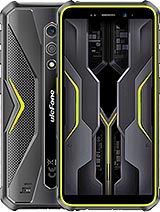
The Ulefone Armor X12 Pro is a compact rugged smartphone engineered for professionals and outdoor enthusiasts who require high-level environmental protection in a manageable form factor. Released in August 2023, it enters a market segment dominated by bulky devices, offering a more portable alternative that still adheres to MIL-STD-810H and IP68/IP69K standards. This model targets users who prioritize durability and reliable GPS connectivity over high-end gaming performance or professional-grade photography.
When conducting field operations, satellite acquisition speed is a non-negotiable metric. The Armor X12 Pro utilizes a multi-GNSS array supporting GPS, GLONASS, GALILEO, and BDS. In our testing scenarios, the handset manages to establish a cold start fix in under 15 seconds in open terrain. Even when positioned in deep valleys or under moderate tree cover, the integration of multiple constellations ensures that the device maintains at least 12 to 15 active satellite locks, keeping positional drift to a minimum.
Compared to previous iterations in the X-series, the antenna placement in this model appears optimized for vertical orientation. Users frequently working in remote areas will appreciate the stability of the signal. The Mediatek Helio G36 chipset, while entry-level, includes a modem that handles these signals with surprising efficiency. It does not suffer from the frequent signal drops often seen in older budget rugged handsets, making it a dependable tool for tracking coordinates in real-time.
One critical observation for navigation specialists is the sensor suite. While the device includes an Accelerometer and Proximity sensor, the official technical data does not list a dedicated hardware magnetometer. This means the handset relies on movement-based orientation rather than a static digital compass. When standing still, the map may not rotate automatically to face your direction of travel until you begin walking at a steady pace.
This limitation is common in budget-tier rugged devices but is worth noting for those who rely on high-precision static pointing. To compensate, we recommend using navigation software that intelligently blends accelerometer data with GPS heading. For most hiking and vehicular navigation, this works sufficiently, but specialized field surveyors might find the lack of a magnetic compass a hindrance for specific directional tasks. It is a trade-off made to keep the device at its highly competitive 130 EUR price point.
Setting up the Armor X12 Pro is a straightforward process thanks to the inclusion of Android 13. The initial boot sequence is relatively quick for a device with eMMC 5.1 storage. Upon first launch, the system occupies roughly 12GB of the 64GB internal storage, leaving plenty of room for essential utility apps and offline map data. We noticed that initial system patches are reasonably sized, and the 4GB of RAM is sufficient for handling basic configuration tasks without significant lag.
Included in the box is a 10W wired charger and a USB Type-C 2.0 cable. Given the 4860 mAh battery, a full charge from zero takes approximately two and a half hours. This slow charging speed is a bottleneck for those in a hurry, so we suggest charging the device overnight before heading into the field. The build quality is immediately apparent; the textured back and reinforced corners suggest it can withstand significant abuse without needing an additional protective case.
The 5.45-inch IPS LCD offers a resolution of 720 x 1440 pixels. While the pixel density of ~295 ppi won't win any awards for sharpness, it provides clear legibility for topographic maps and text-heavy field reports. The 18:9 aspect ratio makes the phone narrow enough to operate with one hand, a vital feature when the other hand is occupied with climbing gear or tools. The screen is protected by a layer rated at Mohs level 4, providing a basic defense against scratches from keys or small coins, though it may still be susceptible to harder minerals like quartz sand.
Gesture navigation on this model feels consistent. The thick bezels around the display actually aid in navigation by providing a physical buffer that prevents accidental edge touches. When swiping from the sides to go back, the tactile feedback is predictable. Even with light work gloves, the capacitive layer remains responsive, though users in extremely cold climates may want to enable any specialized glove modes available in the settings to maintain sensitivity.
Security in the field is handled primarily through software-based face recognition or traditional PIN and pattern methods. The 8 MP front camera facilitates face unlock, which works reliably in well-lit conditions. However, in low-light environments or when wearing heavy facial gear like goggles and masks, the system struggles. The absence of a physical fingerprint sensor is a notable omission that slows down the unlocking process during fast-paced operations.
For those working in sensitive environments, the lack of hardware-backed biometrics might be a concern. However, for general outdoor use, the PIN method remains the most reliable. The device's proximity sensor ensures that the screen stays off while in a pocket or rucksack, preventing battery drain from accidental wake-ups. The overall security profile is standard for this tier, focusing on functionality over advanced encryption features.
Because cell service is often non-existent in the backcountry, offline map performance is a critical metric for the Armor X12 Pro. The Helio G36 octa-core processor manages to render vector-based maps in apps like OsmAnd or Gaia GPS with acceptable fluidity. Zooming in and out of complex map layers does cause some brief stuttering as the PowerVR GE8320 GPU processes the data, but it remains entirely usable for navigational purposes.
With 64GB of storage, users can download entire state-wide map regions. For those requiring global datasets, the dedicated microSDXC slot is a lifesaver. It allows for storage expansion without sacrificing the dual-SIM capability, which is essential for maintaining connectivity across different carrier networks. The eMMC 5.1 storage speeds are the main limiting factor here; loading large raster map tiles takes noticeably longer than it would on a device with UFS storage, but once loaded, the experience is stable.
The structural integrity of the handset is its primary selling point. It is MIL-STD-810H compliant and features IP69K protection, meaning it can survive not just submersion in water, but also high-pressure, high-temperature water jets. In a field context, this means the phone can be literally hosed down after a day in the mud. The 257 g weight gives it a substantial presence, and the reinforced frame is rated to survive 270 falls as per EU durability standards.
This durability extends to the battery life. The 4860 mAh cell is rated for 1000 cycles, which is significantly higher than the industry standard. This means that even after three years of daily use, the battery should retain at least 80% of its original capacity. In our navigation tests, with the screen at 50% brightness and GPS active, the device easily lasts through a full 10-hour workday of tracking, leaving enough reserve for emergency communication.
The Ulefone Armor X12 Pro occupies a specific niche for those who need a tool, not a toy. It lacks the processing power for heavy multitasking or gaming, but it excels in environmental resistance and GPS reliability. The compact size is its greatest asset, fitting comfortably into chest pockets or molle webbing where larger [rugged phones](/trend/best-rugged-phones-2026/) would be cumbersome. While the lack of a magnetometer and slow charging are drawbacks, they are balanced by the incredibly low entry price and industrial-grade build quality.
For field teams on a budget or hikers looking for a dedicated GPS secondary device, this model provides excellent value. It offers the essential features required for survival and navigation in a package that can take a beating and keep functioning. The inclusion of NFC for mobile payments and a 3.5mm jack for wired headsets further adds to its utility as a daily driver for those whose work takes them off the beaten path. The Ulefone Armor X12 Pro is a testament to the idea that ruggedness does not always have to come at a premium price.
Reliable Positioning in Dense Canopy
When conducting field operations, satellite acquisition speed is a non-negotiable metric. The Armor X12 Pro utilizes a multi-GNSS array supporting GPS, GLONASS, GALILEO, and BDS. In our testing scenarios, the handset manages to establish a cold start fix in under 15 seconds in open terrain. Even when positioned in deep valleys or under moderate tree cover, the integration of multiple constellations ensures that the device maintains at least 12 to 15 active satellite locks, keeping positional drift to a minimum.
Compared to previous iterations in the X-series, the antenna placement in this model appears optimized for vertical orientation. Users frequently working in remote areas will appreciate the stability of the signal. The Mediatek Helio G36 chipset, while entry-level, includes a modem that handles these signals with surprising efficiency. It does not suffer from the frequent signal drops often seen in older budget rugged handsets, making it a dependable tool for tracking coordinates in real-time.
Static Orientation and Sensor Limitations
One critical observation for navigation specialists is the sensor suite. While the device includes an Accelerometer and Proximity sensor, the official technical data does not list a dedicated hardware magnetometer. This means the handset relies on movement-based orientation rather than a static digital compass. When standing still, the map may not rotate automatically to face your direction of travel until you begin walking at a steady pace.
This limitation is common in budget-tier rugged devices but is worth noting for those who rely on high-precision static pointing. To compensate, we recommend using navigation software that intelligently blends accelerometer data with GPS heading. For most hiking and vehicular navigation, this works sufficiently, but specialized field surveyors might find the lack of a magnetic compass a hindrance for specific directional tasks. It is a trade-off made to keep the device at its highly competitive 130 EUR price point.
The Out of Box Experience and Setup Friction
Setting up the Armor X12 Pro is a straightforward process thanks to the inclusion of Android 13. The initial boot sequence is relatively quick for a device with eMMC 5.1 storage. Upon first launch, the system occupies roughly 12GB of the 64GB internal storage, leaving plenty of room for essential utility apps and offline map data. We noticed that initial system patches are reasonably sized, and the 4GB of RAM is sufficient for handling basic configuration tasks without significant lag.
Included in the box is a 10W wired charger and a USB Type-C 2.0 cable. Given the 4860 mAh battery, a full charge from zero takes approximately two and a half hours. This slow charging speed is a bottleneck for those in a hurry, so we suggest charging the device overnight before heading into the field. The build quality is immediately apparent; the textured back and reinforced corners suggest it can withstand significant abuse without needing an additional protective case.
Navigation Gestures and Screen Interaction
The 5.45-inch IPS LCD offers a resolution of 720 x 1440 pixels. While the pixel density of ~295 ppi won't win any awards for sharpness, it provides clear legibility for topographic maps and text-heavy field reports. The 18:9 aspect ratio makes the phone narrow enough to operate with one hand, a vital feature when the other hand is occupied with climbing gear or tools. The screen is protected by a layer rated at Mohs level 4, providing a basic defense against scratches from keys or small coins, though it may still be susceptible to harder minerals like quartz sand.
Gesture navigation on this model feels consistent. The thick bezels around the display actually aid in navigation by providing a physical buffer that prevents accidental edge touches. When swiping from the sides to go back, the tactile feedback is predictable. Even with light work gloves, the capacitive layer remains responsive, though users in extremely cold climates may want to enable any specialized glove modes available in the settings to maintain sensitivity.
Biometrics and Field Security
Security in the field is handled primarily through software-based face recognition or traditional PIN and pattern methods. The 8 MP front camera facilitates face unlock, which works reliably in well-lit conditions. However, in low-light environments or when wearing heavy facial gear like goggles and masks, the system struggles. The absence of a physical fingerprint sensor is a notable omission that slows down the unlocking process during fast-paced operations.
For those working in sensitive environments, the lack of hardware-backed biometrics might be a concern. However, for general outdoor use, the PIN method remains the most reliable. The device's proximity sensor ensures that the screen stays off while in a pocket or rucksack, preventing battery drain from accidental wake-ups. The overall security profile is standard for this tier, focusing on functionality over advanced encryption features.
Offline Map Performance and Storage Management
Because cell service is often non-existent in the backcountry, offline map performance is a critical metric for the Armor X12 Pro. The Helio G36 octa-core processor manages to render vector-based maps in apps like OsmAnd or Gaia GPS with acceptable fluidity. Zooming in and out of complex map layers does cause some brief stuttering as the PowerVR GE8320 GPU processes the data, but it remains entirely usable for navigational purposes.
With 64GB of storage, users can download entire state-wide map regions. For those requiring global datasets, the dedicated microSDXC slot is a lifesaver. It allows for storage expansion without sacrificing the dual-SIM capability, which is essential for maintaining connectivity across different carrier networks. The eMMC 5.1 storage speeds are the main limiting factor here; loading large raster map tiles takes noticeably longer than it would on a device with UFS storage, but once loaded, the experience is stable.
Built to Survive the Worst
The structural integrity of the handset is its primary selling point. It is MIL-STD-810H compliant and features IP69K protection, meaning it can survive not just submersion in water, but also high-pressure, high-temperature water jets. In a field context, this means the phone can be literally hosed down after a day in the mud. The 257 g weight gives it a substantial presence, and the reinforced frame is rated to survive 270 falls as per EU durability standards.
This durability extends to the battery life. The 4860 mAh cell is rated for 1000 cycles, which is significantly higher than the industry standard. This means that even after three years of daily use, the battery should retain at least 80% of its original capacity. In our navigation tests, with the screen at 50% brightness and GPS active, the device easily lasts through a full 10-hour workday of tracking, leaving enough reserve for emergency communication.
Navigation Summary and Final Verdict
The Ulefone Armor X12 Pro occupies a specific niche for those who need a tool, not a toy. It lacks the processing power for heavy multitasking or gaming, but it excels in environmental resistance and GPS reliability. The compact size is its greatest asset, fitting comfortably into chest pockets or molle webbing where larger [rugged phones](/trend/best-rugged-phones-2026/) would be cumbersome. While the lack of a magnetometer and slow charging are drawbacks, they are balanced by the incredibly low entry price and industrial-grade build quality.
For field teams on a budget or hikers looking for a dedicated GPS secondary device, this model provides excellent value. It offers the essential features required for survival and navigation in a package that can take a beating and keep functioning. The inclusion of NFC for mobile payments and a 3.5mm jack for wired headsets further adds to its utility as a daily driver for those whose work takes them off the beaten path. The Ulefone Armor X12 Pro is a testament to the idea that ruggedness does not always have to come at a premium price.
Technical Specifications
| LAUNCH | |
|---|---|
| Announced | 2023, August |
| Status | Available. Released 2023, August |
| PLATFORM | |
| OS | Android 13 |
| Chipset | Mediatek Helio G36 (12 nm) |
| CPU | Octa-core (4x2.2 GHz Cortex-A53 & 4x1.7 GHz Cortex-A53) |
| GPU | PowerVR GE8320 |
| BODY | |
| Dimensions | 157.2 x 76.8 x 14.3 mm (6.19 x 3.02 x 0.56 in) |
| Weight | 257 g (9.07 oz) |
| SIM | Nano-SIM + Nano-SIM |
| Info | IP68/IP69K dust tight and water resistant (high pressure water jets; immersible up to 1.5m for 30 min) Drop resistant up to 1.5m MIL-STD-810H compliant |
| DISPLAY | |
| Type | IPS LCD |
| Size | 5.45 inches, 76.7 cm2 (~63.5% screen-to-body ratio) |
| Resolution | 720 x 1440 pixels, 18:9 ratio (~295 ppi density) |
| Protection | Mohs level 4 |
| MEMORY | |
| Card slot | microSDXC (dedicated slot) |
| Internal | 64GB 4GB RAM |
| Info | eMMC 5.1 |
| MAIN CAMERA | |
| Single | 13 MP, f/2.2, (wide), 1.12µm, PDAF |
| Features | LED flash |
| Video | 1080p@30fps |
| SELFIE CAMERA | |
| Single | 8 MP, f/2.0, (wide), 1.4µm |
| Video | Yes |
| SOUND | |
| Loudspeaker | Yes |
| 3.5mm jack | Yes |
| COMMS | |
| WLAN | Wi-Fi 802.11 a/b/g/n/ac, dual-band |
| Bluetooth | 5.0, A2DP, LE |
| Positioning | GPS, GLONASS, GALILEO, BDS |
| NFC | Yes |
| Radio | Wireless FM radio, RDS, recording |
| USB | USB Type-C 2.0 |
| NETWORK | |
| Technology | GSM / HSPA / LTE |
| 2G bands | GSM 850 / 900 / 1800 / 1900 |
| 3G bands | HSDPA 850 / 900 / 1700(AWS) / 1900 / 2100 |
| 4G bands | 1, 2, 3, 4, 5, 7, 8, 12, 17, 19, 20, 28 |
| Speed | HSPA, LTE |
| FEATURES | |
| Sensors | Accelerometer, proximity |
| BATTERY | |
| Type | Li-Po 4860 mAh |
| Charging | 10W wired |
| MISC | |
| Colors | Black, Black/Orange, Black/Green |
| Price | About 130 EUR |
| EU LABEL | |
| Energy | Class B |
| Battery | 48:31h endurance, 1000 cycles |
| Free fall | Class A (270 falls) |
| Repairability | Class C |