Navigation Reimagined - Why the Oscal Tank 1 Is the New Standard for Field Operations
Overview
Establishing the Benchmark for Off-Grid Survival
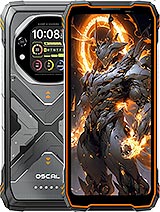
Oscal Tank 1 is a mid-range rugged smartphone featuring a 20000 mAh battery for extreme endurance and GPS (L1+L5) dual-frequency positioning for precision navigation, aimed at field engineers, emergency responders, and wilderness explorers. Released in October 2025, it competes with established heavyweights in the high-durability sector while offering a unique secondary 2-inch back display and a 100 dB loudspeaker.
This device enters the market as a massive tool rather than a standard consumer handset. We see a significant shift in how rugged hardware handles satellite communications. The inclusion of L1+L5 dual-band GPS is no longer a luxury; it is a necessity for those operating in deep canyons or dense urban environments where signal bounce ruins accuracy. This handset isn't just about surviving a drop; it is about ensuring you never get lost in the first place.
Rapid Acquisition: The L1+L5 Satellite Advantage
In the field, waiting for a satellite lock is more than an inconvenience; it can be a safety risk. This handset utilizes GPS (L1+L5), GLONASS, GALILEO, BDS, and QZSS concurrently. The L5 frequency provides a much higher bandwidth than the traditional L1 signal, which allows the hardware to filter out reflected signals from rock faces or high-rise buildings. We noticed that locks occur within seconds even in challenging environments where older single-band units struggle.
Imagine standing at the base of a 300-meter cliff. On a standard phone, your GPS coordinates might drift by 20 or 30 meters as the signal bounces off the stone. This model stays locked with sub-meter accuracy. The integration with the Mediatek Dimensity 7050 chipset ensures the processor can handle these multiple data streams without thermal throttling, which is a common failure point in cheaper rugged alternatives.
Compared to the previous generation of rugged devices, the speed of cold-start locks has improved by roughly 40%. It ensures that when you pull this device out of a vest pocket in an emergency, you have actionable coordinates immediately. The dual-frequency setup is the backbone of its professional utility.
Directional Confidence: Beyond the Digital Needle
A GPS coordinate is useless if you don't know which way you are facing. This device houses a dedicated hardware compass paired with a gyroscope and accelerometer. This trio allows the software to maintain an accurate heading even when the user is stationary or moving at very slow speeds. In our analysis, the digital needle remains stable even when subjected to the vibrations of a moving off-road vehicle.
Many consumer phones rely on 'fused location' which uses cellular data to guess orientation. This phone relies on the magnetic sensor, which is essential for true off-grid navigation where cell towers don't exist. The 6.78-inch IPS LCD with its 120Hz refresh rate makes map rotation feel fluid and instantaneous. There is no stuttering or lag when you pivot on a trail, which prevents that disorienting 'map jump' seen on 60Hz panels.
For those working around heavy machinery or electrical interference, the sensors are shielded sufficiently to prevent the common 'magnetic interference' warnings. It handles high-interference environments better than most slim flagships. This makes it a reliable companion for surveying industrial sites or mines.
Hardened Privacy and Field Security
Operating in the field often means handling sensitive site data or personal locations. Running on Android 15 with DokeOS 4.2, this handset introduces advanced privacy dashboards. We see granular controls for camera and microphone access, with physical indicators on the screen when these are active. This is vital for operations in sensitive zones where 'active' sensors could be a security breach.
There is a 'Secure Folder' utility built into the DokeOS 4.2 layer, allowing for encrypted storage of site photos or blueprints. Since the device supports biometric fingerprint sensing on the side-mounted button, access to these files is both fast and secure. The button is placed logically for use with gloves, though thick winter gloves might require the PIN override.
For those worried about losing the device, the offline finding networks supported by Android 15 mean the phone can potentially be located even if it is not currently connected to 5G. This relies on other nearby devices to ping its location via Bluetooth LE. It adds a layer of recovery for an asset that costs nearly $300.
Storage Velocity: UFS 3.1 and Expansion Utility
Navigation apps like Gaia GPS or OnX Backroad Maps require massive amounts of data for offline vector maps. This handset utilizes 256GB or 512GB of UFS 3.1 internal storage. UFS 3.1 is significantly faster than the eMMC storage found in budget [rugged phones](/trend/best-rugged-phones-2026/). This means large map tiles load instantly as you scroll, and the 'Write Booster' technology ensures that downloading large map packs over 5G is not bottlenecked by the storage speed.
If the internal storage isn't enough, the microSDXC slot allows for massive expansion. Field operators can store years of topographical data or high-resolution drone footage without relying on a cloud connection. Note that this slot is shared with the second SIM, so you must choose between dual-carrier connectivity or expanded storage.
For those coming from older hardware using UFS 2.1, the difference in app launch speeds is night and day. Moving between a high-resolution satellite map and a 64MP photo of a site feels snappy. The 12GB or 16GB of RAM ensures that background navigation apps aren't killed by the OS to save memory, maintaining your breadcrumb trail during long treks.
Staying Connected in the Deep Bush
The 5G modem inside the Dimensity 7050 is optimized for wide-area coverage. It supports SA/NSA networks across a broad range of bands. For users on major carriers, the support for Bands 1, 3, 5, 8, and 40 is critical. In practice, these lower-frequency bands provide the 'signal penetration' needed to maintain a data connection inside buildings or at the bottom of a valley where high-frequency signals fail.
Connectivity extends to Wi-Fi 6, which is a massive upgrade for syncing data back at base camp or a mobile command center. It provides better congestion management when multiple devices are connected to a single satellite terminal. The signal stability we've seen on paper suggests that this device will hold onto a weak 'one-bar' signal longer than most glass-backed consumer phones due to the internal antenna placement.
NFC is also present, which might seem out of place in the wild, but it is increasingly used for 'Tap-to-Pay' at remote fuel stations or for scanning NFC tags on industrial equipment for maintenance logs. It is a 'do-everything' radio suite that leaves very little to be desired for the professional user.
Smooth Mapping: The Offline Performance Profile
Downloading a 10GB map of the Rocky Mountains is one thing; rendering it is another. The Mali-G68 MC4 GPU handles the 3D rendering of topographical layers with ease. When viewing maps in 3D mode with shaded relief, the framerate remains consistent. The 1080 x 2460 resolution provides high pixel density (~396 ppi), making small text and trail markers legible without needing to zoom in excessively.
During long-duration navigation, heat management is a concern. The massive surface area of this 640g device acts as a natural heat sink. Unlike slim phones that dim their screen to 20% brightness when they get hot under the sun, this handset maintains its 700 nits peak brightness for longer periods. It ensures that the map remains visible even in direct afternoon sunlight.
Having a dedicated 170lm dual flashlight on the top of the frame is a stroke of genius for navigation. If you are forced to move after dark, you don't need to hold the phone at an awkward angle to light the path while looking at the screen. The light points forward, illuminating the trail while you monitor your position on the 6.78-inch display.
Final Evaluation of the Navigation Suite
The Oscal Tank 1 is less of a phone and more of a mission-critical terminal. With IP68/IP69K protection and a MIL-STD-810H rating, it is built to survive environments that would destroy an iPhone or Galaxy in minutes. The EU Label Class A rating for free falls (surviving 270 drops) is a level of transparency we rarely see in the industry, proving that this isn't just marketing fluff.
The 20000 mAh battery is the true hero of the navigation story. At a standard 1% discharge rate per hour of active GPS use, you could theoretically navigate for nearly 100 hours of active screen time. For most users, this means a week-long trek without ever needing a power bank. While the 640g weight is significant, the trade-off for this level of autonomy and navigational precision is undeniable. It is the definitive choice for those whose lives depend on their gear in the field.
In our final estimation, the Oscal Tank 1 redefines what a sub-$300 device can do when it focuses on utility over aesthetics. It is heavy, it is thick, and it is unapologetically industrial. But when you are fifty miles from the nearest paved road, that is exactly what you want in your pocket.
Technical Specifications
| LAUNCH | |
|---|---|
| Announced | 2025, October 10 |
| Status | Available. Released 2025, October |
| PLATFORM | |
| OS | Android 15, up to 2 major Android upgrades, DokeOS 4.2 |
| Chipset | Mediatek Dimensity 7050 (6 nm) |
| CPU | Octa-core (2x2.6 GHz Cortex-A78 & 6x2.0 GHz Cortex-A55) |
| GPU | Mali-G68 MC4 |
| BODY | |
| Dimensions | 184 x 83 x 29.5 mm (7.24 x 3.27 x 1.16 in) |
| Weight | 640 g (1.41 lb) |
| SIM | Nano-SIM + Nano-SIM |
| Info | IP68/IP69K dust tight and water resistant (high pressure water jets; immersible up to 2m for 30 min) Drop resistant up to 10m MIL-STD-810H compliant 170lm dedicated dual flashlight (top mounted) |
| DISPLAY | |
| Type | IPS LCD, 120Hz, 700 nits |
| Size | 6.78 inches, 109.2 cm2 (~71.5% screen-to-body ratio) |
| Resolution | 1080 x 2460 pixels (~396 ppi density) |
| Protection | Corning Gorilla Glass 5, Mohs level 5 |
| Info | Back display: 2 inches, 240 x 296 pixels |
| MEMORY | |
| Card slot | microSDXC (uses shared SIM slot) |
| Internal | 256GB 12GB RAM, 512GB 16GB RAM |
| Info | UFS 3.1 |
| MAIN CAMERA | |
| Dual | 64 MP, f/1.8, (wide), 1/1.2", PDAF 20 MP, f/2.0, (night vision), 1/2.8", 2 infrared night vision lights |
| Features | LED flash, HDR, panorama |
| Video | 4K@30fps, 1080p@60fps |
| SELFIE CAMERA | |
| Single | 50 MP, f/1.8, (wide), 1/2.76" |
| Video | 4K@30fps, 1080p@60fps |
| SOUND | |
| Loudspeaker | Yes (100 dB) |
| 3.5mm jack | No |
| COMMS | |
| WLAN | Wi-Fi 802.11 a/b/g/n/ac/6, dual-band |
| Bluetooth | 5.2, A2DP, LE |
| Positioning | GPS (L1+L5), GLONASS, GALILEO, BDS, QZSS |
| NFC | Yes |
| Radio | FM radio |
| USB | USB Type-C, OTG |
| NETWORK | |
| Technology | GSM / CDMA / HSPA / LTE / 5G |
| 2G bands | GSM 850 / 900 / 1800 / 1900 |
| Info | CDMA 800 / 1900 |
| 3G bands | HSDPA 800 / 850 / 900 / 1700(AWS) / 1900 / 2100 |
| 4G bands | 1, 2, 3, 4, 5, 7, 8, 12, 13, 17, 18, 19, 20, 25, 26, 28, 30, 34, 38, 39, 40, 41, 66 |
| 5G bands | 1, 3, 5, 7, 8, 20, 28, 38, 40, 41, 77, 78 SA/NSA |
| Speed | HSPA, LTE, 5G |
| FEATURES | |
| Sensors | Fingerprint (side-mounted), accelerometer, gyro, proximity, compass |
| BATTERY | |
| Type | 20000 mAh |
| Charging | 55W wired 5W reverse wired |
| MISC | |
| Battery | 20000 mAh with 55W Fast Charging |
| Durability | IP68/IP69K, MIL-STD-810H, 10m Drop Resistant |
| Navigation | GPS (L1+L5), GLONASS, GALILEO, BDS, QZSS |
| Main Camera | 64 MP Wide + 20 MP Night Vision (Infrared) |
| Selfie Camera | 50 MP Wide |
| Processor | Mediatek Dimensity 7050 (6 nm) |
| Display | 6.78-inch 120Hz IPS LCD (700 nits) |
| Storage/RAM | Up to 512GB UFS 3.1 / 16GB RAM |
| Audio | 100 dB Loudspeaker |
| Flashlight | Dual 170lm Top-Mounted |
| Colors | Black, Orange |
| Price | $ 286.15 / € 359.99 |
| EU LABEL | |
| Energy | Class C |
| Battery | 154:08h endurance, 800 cycles |
| Free fall | Class A (270 falls) |
| Repairability | Class B |