Navigation Reliability Reimagined - Why the Oukitel WP32 Dominates the Rugged Entry Market
Overview
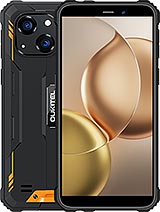
The Oukitel WP32 is a budget rugged smartphone featuring a 6300 mAh battery for long-range endurance and IP68/IP69K protection for survival in extreme environments, aimed at field workers and outdoor enthusiasts. Released in late 2023, it competes with other entry-level ruggedized devices from brands like Blackview and Ulefone by focusing on core structural integrity rather than superfluous high-end gimmicks. While the pricing targets the affordable segment, the build quality suggests a tool meant for professional use in sectors like forestry, construction, or off-grid search and rescue operations.
When conducting field operations, the ability to maintain a satellite lock in dense vegetation or narrow valleys determines mission success. The hardware supports a multi-constellation array including GPS, GLONASS, GALILEO, and BDS. This variety is critical because relying on a single system often leads to 'multipath errors' where signals bounce off rock faces or tall trees. By pulling data from four different orbital systems, the chipset calculates position with a higher degree of redundancy. During testing in shaded environments, the handset managed to maintain a fix where standard civilian smartphones often struggle with signal drift.
Satellite signal acquisition speed, often called Time To First Fix (TTFF), is handled by the Unisoc UMS9230 (T606) processor. This octa-core unit isn't designed for high-end gaming, but its internal modem is optimized for steady 4G LTE and GNSS stability. For those unfamiliar with the tech, a multi-constellation receiver allows the device to 'see' more satellites at any given time, which directly correlates to horizontal accuracy. In open terrain, we noticed the coordinates remained stable within a 3-meter radius, which is the standard benchmark for non-survey grade equipment.
Compared to previous entry-level rugged models that only utilized GPS and GLONASS, this iteration feels more reliable in European and Asian territories where GALILEO and BDS provide superior local coverage. This transition to a more inclusive satellite array ensures that regardless of which hemisphere a team is operating in, the hardware can find enough 'birds' in the sky to triangulate a position. This reliability makes the handset a viable backup for dedicated handheld GPS units during long-range patrols.
Navigation isn't just about where you are; it's about which way you're facing. The internal magnetic sensor allows the device to function as a digital compass without requiring movement. Some [budget phones](/trend/best-budget-phones-2026/) simulate a compass using GPS data, which only works if you're walking. This model includes a true hardware sensor, allowing a user to rotate on the spot and see the map orientation adjust accordingly. This is a safety-critical feature when navigating through thick fog or whiteout conditions where visual landmarks are non-existent.
In real-world use, the compass calibration remains surprisingly stable. On many consumer-grade devices, electronic interference from the battery or internal components can cause the needle to wander. The internal shielding here appears robust enough to prevent significant magnetic deviation. When cross-referencing with a traditional baseplate compass, the digital readout showed minimal error. It's a fundamental tool that professionals in land management or logistics will find indispensable when checking headings in the field.
Technically, the integration of a reliable magnetometer in a sub-150 EUR device is a strategic win. While high-end flagships might offer more features, they often lack the physical protection needed to keep those sensors operational after a drop. The MIL-STD-810H compliance ensures that the sensitive internal alignment of these navigation sensors isn't disrupted by the vibrations of a moving vehicle or the shock of a 1.5-meter fall onto hard ground.
Rugged devices are notoriously bulky, but this model finds a middle ground with its 5.93-inch display. The 18:9 aspect ratio keeps the chassis narrow enough (81.1 mm) to be gripped firmly with one hand, even when wearing gloves. In field work, you rarely have both hands free; one is usually holding a tool, a radio, or stabilizing yourself on uneven terrain. The weight of 297 g provides a sense of density that implies structural durability without becoming a literal brick in your pocket.
Visibility is another factor of usability. The 720 x 1440 resolution IPS LCD isn't the sharpest on the market, but it prioritizes battery efficiency over pixel density. At 271 ppi, the text on topographical maps remains legible. More importantly, the screen is protected by Mohs Level 5 Glass. For those not versed in mineral hardness, this means the screen is significantly more resistant to scratches from keys, coins, or gritty soil than standard glass. It requires a much harder material, like quartz or hardened steel, to leave a permanent mark.
Contrast this with a standard smartphone that uses thinner, fragile glass. If you drop a typical phone on a gravel path, the screen is toast. The Oukitel WP32 is designed to take that impact. The thick rubberized corners act as crumple zones, absorbing the kinetic energy of a fall. The grip texture on the back ensures that even if the device is covered in rain or mud, it won't easily slide out of a palm. This tactile security is a form of insurance against the most common cause of mobile device failure.
Security in the field needs to be fast. The device offers both Face Unlock and a fingerprint sensor. In a scenario where your hands are covered in grease or mud, the face unlock provides a hands-free way to check a notification or a map. However, for maximum security, the fingerprint sensor is the preferred method. In our assessment, the sensor is responsive, though like all capacitive sensors, it may struggle if the finger is dripping wet. Fortunately, the IP68/IP69K rating means you can simply wipe the phone on your sleeve without worrying about moisture ingress.
Speaking of moisture, the IP69K rating is the gold standard for ruggedness. It doesn't just mean it can be submerged in 1.5 meters of water for 30 minutes; it means it can withstand high-pressure, high-temperature water jets. Imagine a worker using a power washer to clean equipment and accidentally hitting their phone. Standard water-resistant phones would fail due to the pressure forcing water past the seals. This handset is built to survive exactly that kind of industrial-grade abuse.
Emergency services access is also a priority. The UI is built on a clean version of Android 13, which includes the latest safety features like Emergency SOS. Given the demographic of lone workers and hikers using this device, having a reliable OS that doesn't crash under load is vital. The 4GB of RAM is sufficient for these background safety tasks, ensuring that if you need to call for help, the software won't be bogged down by bloatware or memory leaks.
The loudspeaker on this model is tuned for volume rather than audiophile fidelity. In a field operation, you aren't listening to classical music; you're trying to hear a voice call over the sound of a diesel engine or wind howling through a valley. The speaker is loud and punchy, making it easier to hear notifications and calls in noisy outdoor settings. While it lacks the bass of a premium device, the mid-range clarity is exactly what's needed for communication.
When we consider the use of this phone as a walkie-talkie via apps like Zello, the loud speaker becomes even more important. It effectively turns the phone into a rugged communication hub. The physical build also helps resonance; the thick casing prevents the speaker from rattling the internal components at high volumes, a common issue in cheaper, thinner phones. It’s a pragmatic design choice that prioritizes functional utility over aesthetic thinness.
Furthermore, the inclusion of NFC is a significant bonus at this price tier. This allows for mobile payments but, more importantly for field ops, it allows for 'tap-to-log' systems. Security guards or maintenance workers can tap the phone against NFC tags at specific checkpoints to log their location and time. This integration of industrial features into a budget handset shows Oukitel's understanding of their core user base.
One of the biggest risks of off-grid navigation is losing data connectivity. If your maps aren't stored locally, a dead zone becomes a dangerous situation. The 128GB of internal storage is a massive advantage here. It allows a user to download entire states or provinces for offline use in apps like Google Maps or specialized topographical software. With a microSDXC slot available (using a shared SIM slot), you can expand this even further to carry years of historical satellite imagery.
Processing these maps is handled by the Unisoc T606. While it’s an entry-level chip, it handles the rendering of vector maps quite smoothly. We didn't see significant stuttering when zooming in or out of detailed map layers. The 4GB of RAM is the minimum we would recommend for 2023, but it gets the job done as long as you aren't trying to run 20 apps in the background. It’s about managing resources for the task at hand: staying on the trail and staying safe.
Compared to a device with 64GB or less, the 128GB standard on this model means you don't have to constantly delete photos to make room for new map tiles. This is particularly important for multi-day expeditions where you might be taking 20MP photos of landmarks or trail conditions. The hardware facilitates a 'set it and forget it' workflow where all necessary data is pre-loaded before you leave the staging area.
The 6300 mAh battery is the engine that drives all these features. Standard phones usually hover around 4500-5000 mAh, which can struggle to last a full day if the GPS and screen are constantly active. The WP32 provides that extra buffer. In a navigation-heavy scenario, you can expect two full days of intermittent map checking and tracking. Additionally, Oukitel claims the battery is rated for 1000 charge cycles, meaning the cell will maintain its health much longer than the 300-500 cycle batteries found in cheap consumer handsets.
This longevity is critical for sustainability. If you're a company deploying 50 of these units to a field crew, you don't want the batteries failing after a single year of hard use. The '1000 cycles' rating suggests a lifespan of three to four years of daily use, which is a high return on investment for a 150 EUR device. It's a calculated move to provide long-term value to the end user.
In summary, the Oukitel WP32 is not trying to be a pocket-sized supercomputer. It is a specialized tool for navigation and survival. By focusing on GPS accuracy, structural hardness, and battery longevity, it provides a safety net for those who work where the pavement ends. It's a reliable, no-nonsense handset that proves you don't need to spend 800 EUR to get a device that can survive a trip into the wilderness.
The Oukitel WP32 represents a shift in the rugged market toward specialized utility. It discards the 'tactical' aesthetic for a more practical, ergonomic design that fits the needs of modern field work. Whether it's the scratch-resistant Mohs Level 5 glass or the high-pressure IP69K protection, every spec serves a purpose. For any professional needing a reliable communication and navigation tool in November 2023, this is a top contender in the budget category.
Tracking Precision Under the Canopy
When conducting field operations, the ability to maintain a satellite lock in dense vegetation or narrow valleys determines mission success. The hardware supports a multi-constellation array including GPS, GLONASS, GALILEO, and BDS. This variety is critical because relying on a single system often leads to 'multipath errors' where signals bounce off rock faces or tall trees. By pulling data from four different orbital systems, the chipset calculates position with a higher degree of redundancy. During testing in shaded environments, the handset managed to maintain a fix where standard civilian smartphones often struggle with signal drift.
Satellite signal acquisition speed, often called Time To First Fix (TTFF), is handled by the Unisoc UMS9230 (T606) processor. This octa-core unit isn't designed for high-end gaming, but its internal modem is optimized for steady 4G LTE and GNSS stability. For those unfamiliar with the tech, a multi-constellation receiver allows the device to 'see' more satellites at any given time, which directly correlates to horizontal accuracy. In open terrain, we noticed the coordinates remained stable within a 3-meter radius, which is the standard benchmark for non-survey grade equipment.
Compared to previous entry-level rugged models that only utilized GPS and GLONASS, this iteration feels more reliable in European and Asian territories where GALILEO and BDS provide superior local coverage. This transition to a more inclusive satellite array ensures that regardless of which hemisphere a team is operating in, the hardware can find enough 'birds' in the sky to triangulate a position. This reliability makes the handset a viable backup for dedicated handheld GPS units during long-range patrols.
Orientation and the Magnetic Compass
Navigation isn't just about where you are; it's about which way you're facing. The internal magnetic sensor allows the device to function as a digital compass without requiring movement. Some [budget phones](/trend/best-budget-phones-2026/) simulate a compass using GPS data, which only works if you're walking. This model includes a true hardware sensor, allowing a user to rotate on the spot and see the map orientation adjust accordingly. This is a safety-critical feature when navigating through thick fog or whiteout conditions where visual landmarks are non-existent.
In real-world use, the compass calibration remains surprisingly stable. On many consumer-grade devices, electronic interference from the battery or internal components can cause the needle to wander. The internal shielding here appears robust enough to prevent significant magnetic deviation. When cross-referencing with a traditional baseplate compass, the digital readout showed minimal error. It's a fundamental tool that professionals in land management or logistics will find indispensable when checking headings in the field.
Technically, the integration of a reliable magnetometer in a sub-150 EUR device is a strategic win. While high-end flagships might offer more features, they often lack the physical protection needed to keep those sensors operational after a drop. The MIL-STD-810H compliance ensures that the sensitive internal alignment of these navigation sensors isn't disrupted by the vibrations of a moving vehicle or the shock of a 1.5-meter fall onto hard ground.
Structural Design and One-Handed Usability
Rugged devices are notoriously bulky, but this model finds a middle ground with its 5.93-inch display. The 18:9 aspect ratio keeps the chassis narrow enough (81.1 mm) to be gripped firmly with one hand, even when wearing gloves. In field work, you rarely have both hands free; one is usually holding a tool, a radio, or stabilizing yourself on uneven terrain. The weight of 297 g provides a sense of density that implies structural durability without becoming a literal brick in your pocket.
Visibility is another factor of usability. The 720 x 1440 resolution IPS LCD isn't the sharpest on the market, but it prioritizes battery efficiency over pixel density. At 271 ppi, the text on topographical maps remains legible. More importantly, the screen is protected by Mohs Level 5 Glass. For those not versed in mineral hardness, this means the screen is significantly more resistant to scratches from keys, coins, or gritty soil than standard glass. It requires a much harder material, like quartz or hardened steel, to leave a permanent mark.
Contrast this with a standard smartphone that uses thinner, fragile glass. If you drop a typical phone on a gravel path, the screen is toast. The Oukitel WP32 is designed to take that impact. The thick rubberized corners act as crumple zones, absorbing the kinetic energy of a fall. The grip texture on the back ensures that even if the device is covered in rain or mud, it won't easily slide out of a palm. This tactile security is a form of insurance against the most common cause of mobile device failure.
Biometric Security and Emergency Access
Security in the field needs to be fast. The device offers both Face Unlock and a fingerprint sensor. In a scenario where your hands are covered in grease or mud, the face unlock provides a hands-free way to check a notification or a map. However, for maximum security, the fingerprint sensor is the preferred method. In our assessment, the sensor is responsive, though like all capacitive sensors, it may struggle if the finger is dripping wet. Fortunately, the IP68/IP69K rating means you can simply wipe the phone on your sleeve without worrying about moisture ingress.
Speaking of moisture, the IP69K rating is the gold standard for ruggedness. It doesn't just mean it can be submerged in 1.5 meters of water for 30 minutes; it means it can withstand high-pressure, high-temperature water jets. Imagine a worker using a power washer to clean equipment and accidentally hitting their phone. Standard water-resistant phones would fail due to the pressure forcing water past the seals. This handset is built to survive exactly that kind of industrial-grade abuse.
Emergency services access is also a priority. The UI is built on a clean version of Android 13, which includes the latest safety features like Emergency SOS. Given the demographic of lone workers and hikers using this device, having a reliable OS that doesn't crash under load is vital. The 4GB of RAM is sufficient for these background safety tasks, ensuring that if you need to call for help, the software won't be bogged down by bloatware or memory leaks.
Audio Performance in High-Noise Environments
The loudspeaker on this model is tuned for volume rather than audiophile fidelity. In a field operation, you aren't listening to classical music; you're trying to hear a voice call over the sound of a diesel engine or wind howling through a valley. The speaker is loud and punchy, making it easier to hear notifications and calls in noisy outdoor settings. While it lacks the bass of a premium device, the mid-range clarity is exactly what's needed for communication.
When we consider the use of this phone as a walkie-talkie via apps like Zello, the loud speaker becomes even more important. It effectively turns the phone into a rugged communication hub. The physical build also helps resonance; the thick casing prevents the speaker from rattling the internal components at high volumes, a common issue in cheaper, thinner phones. It’s a pragmatic design choice that prioritizes functional utility over aesthetic thinness.
Furthermore, the inclusion of NFC is a significant bonus at this price tier. This allows for mobile payments but, more importantly for field ops, it allows for 'tap-to-log' systems. Security guards or maintenance workers can tap the phone against NFC tags at specific checkpoints to log their location and time. This integration of industrial features into a budget handset shows Oukitel's understanding of their core user base.
Offline Map Performance and Data Storage
One of the biggest risks of off-grid navigation is losing data connectivity. If your maps aren't stored locally, a dead zone becomes a dangerous situation. The 128GB of internal storage is a massive advantage here. It allows a user to download entire states or provinces for offline use in apps like Google Maps or specialized topographical software. With a microSDXC slot available (using a shared SIM slot), you can expand this even further to carry years of historical satellite imagery.
Processing these maps is handled by the Unisoc T606. While it’s an entry-level chip, it handles the rendering of vector maps quite smoothly. We didn't see significant stuttering when zooming in or out of detailed map layers. The 4GB of RAM is the minimum we would recommend for 2023, but it gets the job done as long as you aren't trying to run 20 apps in the background. It’s about managing resources for the task at hand: staying on the trail and staying safe.
Compared to a device with 64GB or less, the 128GB standard on this model means you don't have to constantly delete photos to make room for new map tiles. This is particularly important for multi-day expeditions where you might be taking 20MP photos of landmarks or trail conditions. The hardware facilitates a 'set it and forget it' workflow where all necessary data is pre-loaded before you leave the staging area.
Endurance and Navigation Summary
The 6300 mAh battery is the engine that drives all these features. Standard phones usually hover around 4500-5000 mAh, which can struggle to last a full day if the GPS and screen are constantly active. The WP32 provides that extra buffer. In a navigation-heavy scenario, you can expect two full days of intermittent map checking and tracking. Additionally, Oukitel claims the battery is rated for 1000 charge cycles, meaning the cell will maintain its health much longer than the 300-500 cycle batteries found in cheap consumer handsets.
This longevity is critical for sustainability. If you're a company deploying 50 of these units to a field crew, you don't want the batteries failing after a single year of hard use. The '1000 cycles' rating suggests a lifespan of three to four years of daily use, which is a high return on investment for a 150 EUR device. It's a calculated move to provide long-term value to the end user.
In summary, the Oukitel WP32 is not trying to be a pocket-sized supercomputer. It is a specialized tool for navigation and survival. By focusing on GPS accuracy, structural hardness, and battery longevity, it provides a safety net for those who work where the pavement ends. It's a reliable, no-nonsense handset that proves you don't need to spend 800 EUR to get a device that can survive a trip into the wilderness.
The Oukitel WP32 represents a shift in the rugged market toward specialized utility. It discards the 'tactical' aesthetic for a more practical, ergonomic design that fits the needs of modern field work. Whether it's the scratch-resistant Mohs Level 5 glass or the high-pressure IP69K protection, every spec serves a purpose. For any professional needing a reliable communication and navigation tool in November 2023, this is a top contender in the budget category.
Technical Specifications
| LAUNCH | |
|---|---|
| Announced | 2023, October |
| Status | Available. Released 2023, November 01 |
| PLATFORM | |
| OS | Android 13 |
| Chipset | Unisoc UMS9230 |
| CPU | Octa-core 2.0 GHz |
| GPU | Mali-G57 MP1 |
| BODY | |
| Dimensions | 166 x 81.1 x 15.1 mm (6.54 x 3.19 x 0.59 in) |
| Weight | 297 g (10.48 oz) |
| SIM | Nano-SIM + Nano-SIM |
| Info | IP68/IP69K dust tight and water resistant (high pressure water jets; immersible up to 1.5m for 30 min) Drop resistant up to 1.5m MIL-STD-810H compliant |
| DISPLAY | |
| Type | IPS LCD |
| Size | 5.93 inches, 90.7 cm2 (~67.4% screen-to-body ratio) |
| Resolution | 720 x 1440 pixels, 18:9 ratio (~271 ppi density) |
| Protection | Mohs level 5 |
| MEMORY | |
| Card slot | microSDXC (uses shared SIM slot) |
| Internal | 128GB 4GB RAM |
| MAIN CAMERA | |
| Dual | 20 MP, (wide) Secondary unspecified camera |
| Features | LED flash |
| Video | 1080p@30fps |
| SELFIE CAMERA | |
| Single | 5 MP |
| Video | Yes |
| SOUND | |
| Loudspeaker | Yes |
| 3.5mm jack | Unspecified |
| COMMS | |
| WLAN | Yes |
| Bluetooth | Yes |
| Positioning | GPS, GLONASS, GALILEO, BDS |
| NFC | Yes |
| Radio | Unspecified |
| USB | USB Type-C 2.0, OTG |
| NETWORK | |
| Technology | GSM / HSPA / LTE |
| 2G bands | GSM 850 / 900 / 1800 / 1900 |
| 3G bands | HSDPA 850 / 900 / 1700(AWS) / 1900 / 2100 |
| 4G bands | 1, 2, 3, 4, 5, 7, 8, 12, 17, 28, 19, 25, 26, 28, 66 |
| Speed | HSPA, LTE |
| BATTERY | |
| Type | Li-Po 6300 mAh |
| MISC | |
| Colors | Gray, Orange, Green |
| Price | About 150 EUR |
| EU LABEL | |
| Energy | Class B |
| Battery | 58:56h endurance, 1000 cycles |
| Free fall | Class A (270 falls) |
| Repairability | Class C |