Nokia Analog Utility Reborn - Why the HMD 110 Power Is an Essential Backup in the Digital Age
Overview
The Mechanical Resilience of the T9 Keypad
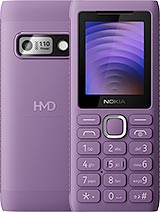
The HMD 110 Power is an ultra-budget feature phone featuring a 1750 mAh removable battery for extreme standby times and a 2.0-inch TFT display for basic navigation, aimed at users seeking a distraction-free secondary device or an emergency backup. Released in February 2026, it competes with dwindling legacy stocks of 2G-only handsets in a market increasingly dominated by basic 4G smart-feature phones. This model serves those who prioritize physical buttons over liquid-smooth glass transitions.
The tactile feedback of the keypad is the primary interface between the user and the software. Unlike the haptic vibration motors found in flagship smartphones that simulate a click through electromagnetic pulses, this handset relies on actual mechanical domes. When pressing a key, there is a distinct, physical travel that provides immediate confirmation of input. This is particularly useful for users with visual impairments or those wearing gloves, where a touchscreen would fail entirely. The 117.7 x 50 x 14.2 mm dimensions allow the thumb to reach every corner of the keypad without shifting the grip, a ergonomics-first approach that modern 6.8-inch screens have long abandoned.
We noticed the material choice for the buttons feels like a hardened polycarbonate. This implies a long-term durability that won't see the letters rub off after six months of heavy texting. Compared to the older 110 models, the 'Power' variant seems to have slightly more spacing between the keys, reducing the frequency of double-presses. For those who grew up in the T9 era, the sensory experience of 'typing by feel' remains faster for simple SMS tasks than navigating a glass keyboard under direct sunlight.
Acoustic Clarity and the Wireless FM Revolution
Sound on this device is prioritized through a rear-firing loudspeaker that focuses on vocal frequencies. While it lacks the stereo separation of high-end multimedia devices, it excels in making ringtones audible in noisy environments. The 3.5mm jack remains a staple here, allowing for the use of any standard wired headphones. This is a critical inclusion for users who still rely on local MP3 collections stored on a microSDHC card.
The wireless FM radio is the standout sensory feature. Most devices require a wired headset to act as an antenna, but the HMD 110 Power integrates the antenna into the chassis. This allows the user to listen to live broadcasts directly through the loudspeaker. In emergency situations where mobile networks might be congested or down, this analog fallback is a literal lifeline. The sound profile is crisp for talk radio, though it lacks the bass response required for high-fidelity music. It is a utilitarian audio experience designed for clarity and reliability.
Compared to modern smartphones that hide FM radio features behind data-hungry streaming apps, this implementation is a breath of fresh air. There is no buffering, no subscription, and no tracking. The volume steps are granular enough to find a comfortable level for bedside listening or outdoor use. The physical act of scanning through frequencies feels nostalgic yet remains incredibly efficient in 2026.
The Offline Fortress and Privacy by Default
In an era of constant surveillance, the HMD 110 Power offers a form of privacy that software-based 'Secure Folders' cannot match. It is fundamentally an offline device. With no WLAN, no Bluetooth, and no Positioning (GPS), the handset generates no location data to be harvested by third-party advertisers. Your movements and digital habits remain entirely invisible to the global data grid. This makes it the ideal 'burn' phone for sensitive travel or simply a weekend digital detox.
The internal software is a closed ecosystem. There is no app store to download malicious software, and the lack of a modern browser means phishing attempts via web links are largely mitigated. While it lacks a fingerprint sensor, the simplicity of a PIN-locked keypad provides sufficient security for basic SMS and call logs. It is a device that puts the user back in control of their connectivity.
Imagine a scenario where you are traveling through a high-risk digital environment. Using a flagship device risks your biometric data and primary accounts. Switching your SIM to this handset provides a literal firewall. The 4 MB RAM ensures the system remains snappy for its intended tasks because it isn't bogged down by background tracking services. It is a 'dumb' phone that behaves smartly by doing less.
Local Media and Storage Speed Realities
Storage on the HMD 110 Power is intentionally lean. The 4 MB of internal storage is barely enough for the operating system and a few dozen contacts. However, the microSDHC slot changes the equation entirely. By adding a 32GB card, the device transforms into a dedicated MP3 player. Transferring files is done via the microUSB port or by physically moving the card, a process that feels delightfully manual in a world of cloud synchronization.
The read speeds from the microSDHC card are sufficient for audio playback and viewing basic QVGA photos. We don't see the lag associated with high-resolution image indexing because the file sizes are so small. It is worth noting that microSDHC is a specialized standard; while it supports up to 32GB, users should not expect it to handle the high-speed UHS-II cards used in professional cameras. It is a modest storage solution for a modest device.
For users who find cloud storage intrusive or expensive, the ability to carry 5,000 songs on a physical card is a major benefit. There are no data charges to listen to your music, and no algorithms telling you what to play next. It is local, private, and permanent. The physical slot is tucked safely behind the 1750 mAh battery, requiring a shutdown to swap cards—a tactile reminder of the 'cold storage' nature of the device.
The 2G Conundrum in a 5G/6G World
Connectivity is where the HMD 110 Power faces its harshest reality. It is a GSM-only device, supporting 900 and 1800 MHz bands. In 2026, many regions have already sunset their 2G networks to make room for 6G spectrum. Before purchasing, users must verify that their local carriers still support GSM standards. Where supported, however, the signal penetration of 2G is often superior inside thick-walled buildings compared to high-frequency 5G signals.
Call quality is functional. It uses the standard EFR (Enhanced Full Rate) codec, which provides clear voice transmission but lacks the wideband 'HD Voice' quality found on VoLTE-capable phones. For a device called 'Power,' the connectivity trade-off is clear: by avoiding the power-hungry modems required for 4G and 5G, it achieves a battery life that modern smartphones can only dream of. We are looking at weeks of standby time rather than hours.
This is a handset for the edges of the network. It is for the hiker who needs a signal in a remote valley where 5G doesn't reach, or the international traveler who needs a cheap roaming device for basic SMS. The dual Mini-SIM setup allows for easy switching between carriers. It is a tool for communication in its most distilled form: the phone call.
Low-Resolution Utility and Screen Texture
The 2.0-inch TFT screen is a study in functional minimalism. With a resolution of 120 x 160 pixels, you can see the individual pixels if you look closely. However, the display is surprisingly bright, making it readable in most lighting conditions. TFT technology doesn't offer the deep blacks of OLED, but it is incredibly power-efficient for displaying static text.
The surface of the screen is a flat, durable plastic rather than tempered glass. While it may pick up micro-scratches more easily than Gorilla Glass, it is much more resistant to shattering if dropped. The texture is smooth, but since there is no touch interaction, fingerprints are less of a concern. You only touch the screen when cleaning it, meaning the oleophobic coating—or lack thereof—is irrelevant to the daily experience.
The UI is designed for this specific resolution. Icons are large and high-contrast, ensuring that even on a small 2-inch canvas, navigation is intuitive. Compared to the 450+ PPI displays we usually review, this 100 PPI density feels like a relic, yet it fulfills its purpose perfectly. It shows you who is calling, what the text says, and which radio station you are tuned to. It doesn't need to do more.
Sensory Conclusion
The HMD 110 Power is a masterclass in purposeful engineering. Every sensory aspect—from the click of the keys to the weight of the 88g chassis—is tuned for utility and endurance. It rejects the 'planned obsolescence' of modern smartphones in favor of a removable battery and a durable plastic build. While it is technically primitive by 2026 standards, it offers a level of reliability and privacy that is becoming increasingly rare.
If you are looking for a device that survives a week-long camping trip or a phone that keeps your digital life private, this is a compelling choice. It isn't trying to be a computer; it's trying to be a phone. And in that specific mission, the HMD 110 Power succeeds where more expensive devices fail. It is a tactile, audible, and resilient reminder that sometimes, less truly is more.
Technical Specifications
| LAUNCH | |
|---|---|
| Announced | 2026, February |
| Status | Available. Released 2026, February |
| BODY | |
| Dimensions | 117.7 x 50 x 14.2 mm (4.63 x 1.97 x 0.56 in) |
| Weight | 88 g (3.10 oz) |
| SIM | Dual SIM (Mini-SIM, dual stand-by) |
| DISPLAY | |
| Type | TFT |
| Size | 2.0 inches, 12.4 cm2 (~21.0% screen-to-body ratio) |
| Resolution | 120 x 160 pixels, 4:3 ratio (~100 ppi density) |
| MEMORY | |
| Card slot | microSDHC |
| Phonebook | Yes |
| Call records | Yes |
| Internal | 4 MB 4 MB RAM |
| MAIN CAMERA | |
| No | QVGA |
| Video | No |
| SELFIE CAMERA | |
| Info | No |
| SOUND | |
| Loudspeaker | Yes |
| 3.5mm jack | Yes |
| COMMS | |
| WLAN | No |
| Bluetooth | No |
| Positioning | No |
| NFC | No |
| Radio | Wireless FM radio |
| USB | microUSB |
| NETWORK | |
| Technology | GSM |
| 2G bands | GSM 900 / 1800 |
| GPRS | Yes |
| EDGE | Yes |
| FEATURES | |
| Messaging | SMS |
| Games | Yes |
| Java | No |
| Info | MP3 player |
| BATTERY | |
| Type | 1750 mAh, removable |
| MISC | |
| Battery | 1750 mAh, removable Li-Ion |
| Display | 2.0-inch TFT, 120 x 160 pixels |
| Network | GSM 900 / 1800 (Dual SIM) |
| Dimensions | 117.7 x 50 x 14.2 mm |
| Weight | 88 g |
| Camera | QVGA Main Camera |
| Storage | 4 MB Internal, microSDHC slot up to 32GB |
| RAM | 4 MB |
| Connectivity | microUSB (charging), 3.5mm Jack |
| Radio | Wireless FM radio |
| Colors | Gray, Blue, Purple |
| Price | About 20 EUR |