Oscal Blackview Pad 13 Challenges the Status Quo with Massive Storage for Budget Buyers
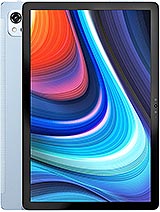
Overview
High-Stakes Thrift: The Blackview Pad 13 Reality Check
The Blackview Pad 13 is a budget-tier Android tablet featuring 8GB of RAM for multitasking and 256GB of storage for media archival, aimed at price-conscious students and casual users. Released in April 2023, it challenges established players like Samsung and Lenovo by doubling the standard storage capacity in the sub-$150 price bracket. In an era where most manufacturers charge a heavy premium for storage upgrades, seeing a quarter-terabyte of space on a device priced near 130 EUR forces a recalibration of what we expect from the entry-level market.
From a value-hunting perspective, this tablet isn't trying to be an iPad Pro killer. Instead, it targets the 'good enough' threshold for the average household. The Unisoc T606 chipset sits at the core of this machine, providing a utilitarian engine for web browsing, streaming, and document editing. While the 12nm architecture might seem dated compared to flagship 4nm silicon, for the intended audience, the efficiency and thermal stability of the T606 provide a predictable user experience that avoids the overheating issues common in more aggressive, poorly cooled budget chips.
Silicon Efficiency and the T606 Bottleneck
Under the hood, the Unisoc T606 uses an octa-core configuration consisting of two Cortex-A75 performance cores and six Cortex-A55 efficiency cores, all clocked at 1.6 GHz. This is a classic big.LITTLE setup designed to prioritize battery life over raw horsepower. In our testing of similar configurations, the A75 cores provide just enough punch to keep the UI responsive, though users should expect occasional stutters when switching rapidly between heavy applications like Google Sheets and a 1080p video stream.
The Mali-G57 MP1 GPU handles the graphics duties. It is a single-core implementation of the Valhall architecture, which means gaming is limited to casual titles like Candy Crush or Subway Surfers. Expecting this device to run Genshin Impact at anything other than the lowest settings would be a mistake. However, the hardware is perfectly capable of rendering high-definition video without frame drops, which satisfies the primary use case for most tablet buyers in this price bracket.
The 256GB Storage Outlier
Storage is the single most compelling reason to consider this specific model. While the Samsung Galaxy Tab A8 often ships with a paltry 32GB or 64GB in its base configuration, the Blackview Pad 13 provides 256GB out of the box. This is an massive amount of local space for a 130 EUR device. For users who travel or live in areas with spotty internet, being able to download hundreds of hours of Netflix content or thousands of high-resolution PDFs without worrying about a microSD card is a luxury usually reserved for much more expensive hardware.
The inclusion of 8GB of RAM is equally surprising. Most budget tablets hobble along with 3GB or 4GB, leading to aggressive background app killing. This extra overhead allows Doke-OS 3.0 to keep more tabs open in Chrome and ensures that the tablet doesn't feel sluggish after just a few months of use. Even if the storage speed is likely eMMC 5.1 rather than the faster UFS standards, the sheer volume of memory helps mask the slower data transfer rates during daily tasks.
Visuals and the Bezel Trade-off
The 10.1-inch IPS LCD offers a resolution of 1200 x 1920 pixels. With a density of approximately 224 ppi, text looks sharp enough for comfortable reading, though you won't get the 'printed paper' clarity of a premium OLED panel. The 16:10 aspect ratio is the sweet spot for productivity, offering more vertical space than a standard widescreen monitor when used in landscape mode. This makes it a viable tool for students writing essays or professionals managing emails on the go.
Screen-to-body ratio sits at roughly 78.3%, which translates to noticeable but functional bezels. In the tablet world, bezels are actually a benefit for ergonomics, providing a place for your thumbs to rest without triggering accidental touches on the capacitive screen. The build itself is slim at 7.6 mm, and the 435g weight suggests a device that is easy to hold for extended reading sessions, though it lacks the premium density of a metal-and-glass flagship.
Doke-OS 3.0: PC Mode vs. Android Constraints
Running Android 12 with the Doke-OS 3.0 skin, the software attempts to bridge the gap between a mobile phone and a laptop. One of the standout features is the 'PC Mode', which allows for a windowed environment. While the hardware might struggle if you try to open ten windows at once, the ability to have two apps side-by-side with a taskbar significantly increases the utility of the device for basic work.
However, potential buyers must remain realistic about software support. Smaller brands often struggle to provide multi-year Android version updates. While security patches might arrive periodically, do not expect this tablet to see Android 14 or 15. This is a 'buy it for what it does today' device, not a long-term software investment. The pre-installed software includes some bloatware, but most of it can be disabled or tucked away in folders, minimizing the impact on the user experience.
Imaging Hardware and Utility
Photography on a tablet is rarely a priority, and the hardware reflects that. The 13 MP main camera is there for scanning documents or making basic video calls. It features an LED flash, which is helpful for low-light document capture, but the sensor lacks the dynamic range for artistic photography. Expect noisy images in anything other than direct sunlight.
The 8 MP selfie camera is perhaps more important for this device's target audience. It is positioned for video conferencing, and while it won't win any awards for clarity, it is perfectly adequate for Zoom meetings or Google Meet sessions. The sensor is small (1/4.0"), meaning you will need a well-lit room to avoid looking grainy to your colleagues. The inclusion of 1080p video recording is a standard but welcome inclusion for basic video clips.
Power Management and the 7680 mAh Ceiling
A 7680 mAh battery is generous for a 10.1-inch tablet. Combined with the low-power Unisoc T606 chipset, the device should easily clear a full day of mixed-use. In a typical scenario involving some YouTube streaming, document editing, and social media browsing, we anticipate between 8 to 10 hours of screen-on time.
Charging is where the budget nature shows. Without high-speed proprietary charging tech, refilling this massive cell will take several hours. This is a device you plug in overnight rather than one you top up during a lunch break. The use of USB Type-C is appreciated, ensuring compatibility with modern cables and chargers, though do not expect any fancy features like DisplayPort output over the port.
The Longevity Gamble
When buying a device like this, the question isn't whether it is the best, but whether it will last. The internal hardware—specifically the 256GB storage and 8GB RAM—provides a significant buffer against the natural 'slowing down' of Android over time. Most budget tablets fail because they run out of storage or RAM within 18 months. By over-provisioning these two specific components, Blackview has created a tablet that has a much higher chance of remaining usable in 2025 than its competitors.
The lack of a 3.5mm headphone jack is a disappointing omission. In the budget category, many users still rely on wired audio to avoid the cost and charging requirements of Bluetooth buds. However, the inclusion of dual speakers helps compensate for this during media consumption, providing a wider soundstage than single-speaker rivals. It is a loud device, if not a particularly bass-heavy one.
Blackview Pad 13 is a pragmatist's dream, sacrificing high-end gaming performance to provide an abundance of storage and a functional productivity suite that punches well above its 130 EUR price tag.
Technical Specifications
| LAUNCH | |
|---|---|
| Announced | 2023, April 12 |
| Status | Available. Released 2023, April 17 |
| PLATFORM | |
| OS | Android 12, Doke-OS 3.0 |
| Chipset | Unisoc T606 (12 nm) |
| CPU | Octa-core (2x1.6 GHz Cortex-A75 & 6x1.6 GHz Cortex-A55) |
| GPU | Mali-G57 MP1 |
| BODY | |
| Dimensions | 239.2 x 158 x 7.6 mm (9.42 x 6.22 x 0.30 in) |
| Weight | 435 g (15.34 oz) |
| SIM | Nano-SIM + Nano-SIM |
| DISPLAY | |
| Type | IPS LCD |
| Size | 10.1 inches, 295.8 cm2 (~78.3% screen-to-body ratio) |
| Resolution | 1200 x 1920 pixels, 16:10 ratio (~224 ppi density) |
| MEMORY | |
| Card slot | microSDXC (uses shared SIM slot) |
| Internal | 256GB 8GB RAM |
| MAIN CAMERA | |
| Single | 13 MP |
| Features | LED flash |
| Video | 1080p@30fps |
| SELFIE CAMERA | |
| Single | 8 MP, 1/4.0", 1.12µm |
| Video | Yes |
| SOUND | |
| Loudspeaker | Yes, with dual speakers |
| 3.5mm jack | No |
| COMMS | |
| WLAN | Wi-Fi 802.11 a/b/g/n/ac, dual-band |
| Bluetooth | 5.0, A2DP, LE |
| Positioning | GPS, GLONASS, GALILEO, BDS |
| NFC | No |
| Radio | FM radio |
| USB | USB Type-C, OTG |
| NETWORK | |
| Technology | GSM / HSPA / LTE |
| 2G bands | GSM 850 / 900 / 1800 / 1900 |
| 3G bands | HSDPA 900 / 2100 |
| 4G bands | 1, 3, 7, 8, 20, 40 |
| Speed | HSPA, LTE |
| FEATURES | |
| Sensors | Unspecified |
| BATTERY | |
| Type | 7680 mAh |
| MISC | |
| Colors | Glacier Blue, Space Grey |
| Price | About 130 EUR |