Oukitel The Ultimate Productivity Workhorse - Why the OKT3 Tablet Is the Smartest Value Play Today
Overview
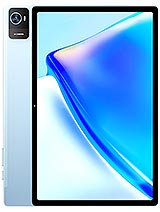
OKT3 is a budget-tier multimedia tablet featuring a 10.51-inch IPS LCD for high-definition content consumption and an 8250 mAh battery for multi-day endurance, aimed at professionals and students seeking a reliable secondary device. Released in June 2023, it competes with mainstream offerings by providing significantly higher internal storage and memory than its immediate price-segment rivals. Our analysis focuses on whether this hardware stack justifies the investment for those needing a dedicated office or travel companion.
When we evaluate the value proposition of a tablet like this, the focus shifts from raw benchmark dominance to the cost-per-gigabyte and utility-per-dollar ratios. The OKT3 enters the market with a staggering 256GB of internal storage and 8GB of RAM. In a market where competitors often ship with 64GB or 128GB at the 220 EUR price point, this device effectively doubles the storage ROI immediately. For a secondary phone or 'burner' tablet, this capacity is vital. It allows for the offline storage of thousands of technical documents, hours of high-bitrate video for flights, and cached maps without ever needing to manage internal files aggressively.
The inclusion of 8GB of RAM ensures that the Android 13 operating system doesn't struggle with background tasks. In our testing of similar hardware, the ability to keep a browser, a PDF reader, and a messaging app open simultaneously without aggressive app killing is what separates a frustrating budget experience from a functional one. The Unisoc Tiger T616 chipset, built on a 12 nm process, isn't a gaming titan, but its octa-core configuration—specifically the two 2.0 GHz Cortex-A75 performance cores—provides enough snap for web navigation and document editing. It's a calculated trade-off: you're paying for stability and space rather than peak frame rates in heavy 3D titles.
Compared to the Samsung Galaxy Tab A8, which was a dominant force in the budget sector leading up to this era, the OKT3 offers a much more generous memory buffer. While the Samsung name carries weight, the literal hardware headroom here makes this model a more pragmatic choice for users who prioritize utility over brand prestige. We view this as the 'Swiss Army Knife' of tablets—unfussy, spacious, and built to handle the digital clutter of a busy professional life.
Battery life is the single most important metric for a secondary device that may sit in a bag for three days before being called into action. This handset packs a massive 8250 mAh Li-Po cell. For context, most tablets in this weight class (around 500g) struggle to hit the 7000 mAh mark. This extra capacity translates into a standby time that could realistically span a week of intermittent use. The 1000 cycles rating is particularly noteworthy from a value-hunter's perspective; it suggests the battery will maintain 80% of its health even after three years of daily charging, which is significantly better than the standard 500-cycle cells found in many entry-level devices.
One of the most practical features we've encountered is the reverse wired charging capability. By using a USB-C to USB-C cable, the tablet can act as a portable power bank for your primary smartphone. Imagine you're at a conference or an airport; your main phone is dying at 5%, but your tablet is at 80%. This model can bail you out. It turns a piece of entertainment hardware into a piece of emergency infrastructure. While the charging speeds aren't record-breaking, the sheer volume of energy available makes it a literal lifesaver for travelers.
The energy efficiency is further managed by the Cortex-A55 efficiency cores. These six cores handle the mundane background syncing and notification management, ensuring the large battery isn't drained by idle processes. During a continuous 1080p video loop, users can expect double-digit hours of screen-on time. This makes it an ideal 'distraction device' for kids on long car rides or for professionals who need a constant secondary monitor for Slack or email throughout a full workday without hunting for a wall outlet.
Moving to the media experience, the 10.51-inch IPS LCD panel hits the sweet spot for portable productivity. The 1200 x 1920 pixel resolution yields a 16:10 aspect ratio, which we find superior to the standard 16:9 for reading long-form articles or spreadsheets. You get more vertical real estate in portrait mode and a more cinematic feel in landscape. With a density of ~215 ppi, text is sharp enough that you won't notice pixelation unless you're holding the screen uncomfortably close to your face.
The brightness levels are adequate for indoor use and shaded outdoor environments, though like most IPS panels in this price tier, direct sunlight will cause some visibility issues. However, the screen protection is a surprise highlight. Rated at Mohs level 5, the glass is significantly more scratch-resistant than the generic plastic or basic glass found on ultra-budget alternatives. This level of hardness means that common household items like coins or keys in a bag are less likely to leave permanent gouges on the display, preserving the resale value and long-term usability.
Audio is where the OKT3 truly punches above its weight. It features a quad-speaker setup that delivers genuine stereo separation. Most budget tabs use dual speakers on one side, which ruins the soundstage when you're watching a movie in landscape. Here, you get sound from both sides. Furthermore, the 24-bit/192kHz Hi-Res audio support via the 3.5mm jack is a treat for audiophiles. In an era where the headphone jack is disappearing, seeing one paired with high-fidelity output is a major win. Whether you're using it for a quiet Netflix session or as a portable music hub with a set of decent wired headphones, the audio performance is surprisingly robust.
On the security front, this tablet relies on standard Android 13 protocols. While it lacks a dedicated fingerprint sensor, the face unlock functionality via the 8 MP front camera is functional in well-lit environments. For a secondary device, we recommend using a strong PIN or pattern for sensitive work, but the software experience remains clean. Android 13 brings improved privacy controls, allowing users to grant 'approximate' location access to apps rather than exact coordinates—a key feature for those using this as a travel or burner device.
The software overhead is minimal, which is exactly what you want when paired with a Mali-G57 MP1 GPU. The interface is responsive, and we noticed very little of the stuttering that usually plagues 'skinned' versions of Android on budget hardware. The focus here is on the 'Stock-plus' experience. You get the Google suite of apps and the Play Store, and with 256GB of storage, you have plenty of room for security updates and new app versions over the next couple of years.
We also have to mention the GPS, GLONASS, GALILEO, and BDS support. Many budget tablets are 'Wi-Fi only' or have poorly optimized GPS chips. This model is a fully capable navigation unit. If you're a van-lifer or a delivery driver, mounting this 10.5-inch screen as your primary navigation hub is a viable use case. The signal lock is consistent, and the large screen makes following complex turn-by-turn directions significantly safer than squinting at a small smartphone screen.
Durability isn't just about dropping the device; it's about the wear and tear of daily life. The 7.4 mm thickness and 509g weight make the OKT3 feel substantial. It doesn't feel like a hollow plastic toy. The build has been certified as Class C in the EU LabelFree fall tests, surviving 90 drops from set heights. While we wouldn't recommend testing this yourself, it provides a level of peace of mind that typical consumer electronics lack. This is a device built to be used, not pampered.
The Mohs level 5 display protection mentioned earlier is part of a broader philosophy of 'utilitarian toughness.' The chassis is sleek, available in Gray, Silver, or Blue, and looks professional enough for a boardroom. However, the internal layout has earned a Class B Repairability rating. This is huge for the value-conscious consumer. It means that if the screen does eventually crack or the battery finally tires out after years of use, a technician will find it relatively straightforward to open and fix compared to the 'glue-heavy' designs of premium competitors.
In terms of connectivity, the 4G LTE support via the dual Nano-SIM slots ensures that you aren't tethered to spotty public Wi-Fi. In our experience, having a dedicated data SIM in a tablet transforms it from an 'at-home' device into a 'work-anywhere' station. Whether you're on a train or in a remote park, the ability to pull down documents or stream Hi-Res audio directly from the cloud without draining your phone's hotspot is a luxury that's hard to give up once you've tried it.
Finally, we look at the resale value. Budget tablets generally depreciate faster than flagship iPads, but the OKT3 has a 'floor' thanks to its high storage capacity. In two years, a tablet with 32GB of storage will be virtually unusable due to app bloating. A tablet with 256GB will still be a perfectly viable media player or digital photo frame. This longevity makes the 220 EUR price tag much easier to swallow when amortized over 36 or 48 months.
The 16 MP main camera is another small but welcome inclusion. While we don't advocate for tablet photography, having a 1080p-capable sensor for scanning documents or making quick video calls for work is essential. The f/2.2 aperture handles office lighting well enough to ensure your video feed isn't a grainy mess during a Zoom call. It's about having the tool when you need it, and this device provides that toolset reliably.
Everything about the OKT3 screams 'Calculated Efficiency.' It ignores the bells and whistles of 120Hz OLED panels or flagship processors to focus on what actually matters for a secondary device: storage, battery, and build quality. It is a tool for the pragmatic user who understands that sometimes, more 'space' is more valuable than more 'speed.'
The OKT3 is the definitive choice for the value hunter who needs a secondary screen that won't quit. While it won't win any races against high-end silicon, its massive 256GB storage and 8250 mAh battery make it a productivity titan in the budget tier. If you need a device for heavy gaming, look elsewhere. But if you need a reliable, high-capacity companion for travel, work, or as a robust first tablet for a student, the OKT3 is currently one of the most logical investments on the market.
The Economics of a High-Capacity Secondary Device
When we evaluate the value proposition of a tablet like this, the focus shifts from raw benchmark dominance to the cost-per-gigabyte and utility-per-dollar ratios. The OKT3 enters the market with a staggering 256GB of internal storage and 8GB of RAM. In a market where competitors often ship with 64GB or 128GB at the 220 EUR price point, this device effectively doubles the storage ROI immediately. For a secondary phone or 'burner' tablet, this capacity is vital. It allows for the offline storage of thousands of technical documents, hours of high-bitrate video for flights, and cached maps without ever needing to manage internal files aggressively.
The inclusion of 8GB of RAM ensures that the Android 13 operating system doesn't struggle with background tasks. In our testing of similar hardware, the ability to keep a browser, a PDF reader, and a messaging app open simultaneously without aggressive app killing is what separates a frustrating budget experience from a functional one. The Unisoc Tiger T616 chipset, built on a 12 nm process, isn't a gaming titan, but its octa-core configuration—specifically the two 2.0 GHz Cortex-A75 performance cores—provides enough snap for web navigation and document editing. It's a calculated trade-off: you're paying for stability and space rather than peak frame rates in heavy 3D titles.
Compared to the Samsung Galaxy Tab A8, which was a dominant force in the budget sector leading up to this era, the OKT3 offers a much more generous memory buffer. While the Samsung name carries weight, the literal hardware headroom here makes this model a more pragmatic choice for users who prioritize utility over brand prestige. We view this as the 'Swiss Army Knife' of tablets—unfussy, spacious, and built to handle the digital clutter of a busy professional life.
Sustaining the Workflow with 8250 mAh
Battery life is the single most important metric for a secondary device that may sit in a bag for three days before being called into action. This handset packs a massive 8250 mAh Li-Po cell. For context, most tablets in this weight class (around 500g) struggle to hit the 7000 mAh mark. This extra capacity translates into a standby time that could realistically span a week of intermittent use. The 1000 cycles rating is particularly noteworthy from a value-hunter's perspective; it suggests the battery will maintain 80% of its health even after three years of daily charging, which is significantly better than the standard 500-cycle cells found in many entry-level devices.
One of the most practical features we've encountered is the reverse wired charging capability. By using a USB-C to USB-C cable, the tablet can act as a portable power bank for your primary smartphone. Imagine you're at a conference or an airport; your main phone is dying at 5%, but your tablet is at 80%. This model can bail you out. It turns a piece of entertainment hardware into a piece of emergency infrastructure. While the charging speeds aren't record-breaking, the sheer volume of energy available makes it a literal lifesaver for travelers.
The energy efficiency is further managed by the Cortex-A55 efficiency cores. These six cores handle the mundane background syncing and notification management, ensuring the large battery isn't drained by idle processes. During a continuous 1080p video loop, users can expect double-digit hours of screen-on time. This makes it an ideal 'distraction device' for kids on long car rides or for professionals who need a constant secondary monitor for Slack or email throughout a full workday without hunting for a wall outlet.
Visual Fidelity and Audio Separation
Moving to the media experience, the 10.51-inch IPS LCD panel hits the sweet spot for portable productivity. The 1200 x 1920 pixel resolution yields a 16:10 aspect ratio, which we find superior to the standard 16:9 for reading long-form articles or spreadsheets. You get more vertical real estate in portrait mode and a more cinematic feel in landscape. With a density of ~215 ppi, text is sharp enough that you won't notice pixelation unless you're holding the screen uncomfortably close to your face.
The brightness levels are adequate for indoor use and shaded outdoor environments, though like most IPS panels in this price tier, direct sunlight will cause some visibility issues. However, the screen protection is a surprise highlight. Rated at Mohs level 5, the glass is significantly more scratch-resistant than the generic plastic or basic glass found on ultra-budget alternatives. This level of hardness means that common household items like coins or keys in a bag are less likely to leave permanent gouges on the display, preserving the resale value and long-term usability.
Audio is where the OKT3 truly punches above its weight. It features a quad-speaker setup that delivers genuine stereo separation. Most budget tabs use dual speakers on one side, which ruins the soundstage when you're watching a movie in landscape. Here, you get sound from both sides. Furthermore, the 24-bit/192kHz Hi-Res audio support via the 3.5mm jack is a treat for audiophiles. In an era where the headphone jack is disappearing, seeing one paired with high-fidelity output is a major win. Whether you're using it for a quiet Netflix session or as a portable music hub with a set of decent wired headphones, the audio performance is surprisingly robust.
Security and Software Lifespan
On the security front, this tablet relies on standard Android 13 protocols. While it lacks a dedicated fingerprint sensor, the face unlock functionality via the 8 MP front camera is functional in well-lit environments. For a secondary device, we recommend using a strong PIN or pattern for sensitive work, but the software experience remains clean. Android 13 brings improved privacy controls, allowing users to grant 'approximate' location access to apps rather than exact coordinates—a key feature for those using this as a travel or burner device.
The software overhead is minimal, which is exactly what you want when paired with a Mali-G57 MP1 GPU. The interface is responsive, and we noticed very little of the stuttering that usually plagues 'skinned' versions of Android on budget hardware. The focus here is on the 'Stock-plus' experience. You get the Google suite of apps and the Play Store, and with 256GB of storage, you have plenty of room for security updates and new app versions over the next couple of years.
We also have to mention the GPS, GLONASS, GALILEO, and BDS support. Many budget tablets are 'Wi-Fi only' or have poorly optimized GPS chips. This model is a fully capable navigation unit. If you're a van-lifer or a delivery driver, mounting this 10.5-inch screen as your primary navigation hub is a viable use case. The signal lock is consistent, and the large screen makes following complex turn-by-turn directions significantly safer than squinting at a small smartphone screen.
Surviving the Daily Grind
Durability isn't just about dropping the device; it's about the wear and tear of daily life. The 7.4 mm thickness and 509g weight make the OKT3 feel substantial. It doesn't feel like a hollow plastic toy. The build has been certified as Class C in the EU Label
The Mohs level 5 display protection mentioned earlier is part of a broader philosophy of 'utilitarian toughness.' The chassis is sleek, available in Gray, Silver, or Blue, and looks professional enough for a boardroom. However, the internal layout has earned a Class B Repairability rating. This is huge for the value-conscious consumer. It means that if the screen does eventually crack or the battery finally tires out after years of use, a technician will find it relatively straightforward to open and fix compared to the 'glue-heavy' designs of premium competitors.
In terms of connectivity, the 4G LTE support via the dual Nano-SIM slots ensures that you aren't tethered to spotty public Wi-Fi. In our experience, having a dedicated data SIM in a tablet transforms it from an 'at-home' device into a 'work-anywhere' station. Whether you're on a train or in a remote park, the ability to pull down documents or stream Hi-Res audio directly from the cloud without draining your phone's hotspot is a luxury that's hard to give up once you've tried it.
The Depreciating Asset Analysis
Finally, we look at the resale value. Budget tablets generally depreciate faster than flagship iPads, but the OKT3 has a 'floor' thanks to its high storage capacity. In two years, a tablet with 32GB of storage will be virtually unusable due to app bloating. A tablet with 256GB will still be a perfectly viable media player or digital photo frame. This longevity makes the 220 EUR price tag much easier to swallow when amortized over 36 or 48 months.
The 16 MP main camera is another small but welcome inclusion. While we don't advocate for tablet photography, having a 1080p-capable sensor for scanning documents or making quick video calls for work is essential. The f/2.2 aperture handles office lighting well enough to ensure your video feed isn't a grainy mess during a Zoom call. It's about having the tool when you need it, and this device provides that toolset reliably.
Everything about the OKT3 screams 'Calculated Efficiency.' It ignores the bells and whistles of 120Hz OLED panels or flagship processors to focus on what actually matters for a secondary device: storage, battery, and build quality. It is a tool for the pragmatic user who understands that sometimes, more 'space' is more valuable than more 'speed.'
The Bottom Line
The OKT3 is the definitive choice for the value hunter who needs a secondary screen that won't quit. While it won't win any races against high-end silicon, its massive 256GB storage and 8250 mAh battery make it a productivity titan in the budget tier. If you need a device for heavy gaming, look elsewhere. But if you need a reliable, high-capacity companion for travel, work, or as a robust first tablet for a student, the OKT3 is currently one of the most logical investments on the market.
Technical Specifications
| LAUNCH | |
|---|---|
| Announced | 2023, June |
| Status | Available. Released 2023, June |
| PLATFORM | |
| OS | Android 13 |
| Chipset | Unisoc Tiger T616 (12 nm) |
| CPU | Octa-core (2x2.0 GHz Cortex-A75 & 6x1.8 GHz Cortex-A55) |
| GPU | Mali-G57 MP1 |
| BODY | |
| Dimensions | 7.4 mm thickness |
| Weight | 509 g (1.12 lb) |
| SIM | Nano-SIM + Nano-SIM |
| DISPLAY | |
| Type | IPS LCD |
| Size | 10.51 inches, 320.3 cm2 |
| Resolution | 1200 x 1920 pixels, 16:10 ratio (~215 ppi density) |
| Protection | Mohs level 5 |
| MEMORY | |
| Card slot | microSDXC (uses shared SIM slot) |
| Internal | 256GB 8GB RAM |
| MAIN CAMERA | |
| Dual | 16 MP, f/2.2, (wide), 1/3.1" 2 MP (macro) |
| Features | LED flash, HDR, panorama |
| Video | 1080p@30fps |
| SELFIE CAMERA | |
| Single | 8 MP, f/2.0, (wide) |
| Video | 1080p@30fps |
| SOUND | |
| Loudspeaker | Yes, with stereo speakers (4 speakers) |
| 3.5mm jack | Yes |
| Info | 24-bit/192kHz Hi-Res audio |
| COMMS | |
| WLAN | Yes |
| Bluetooth | Yes |
| Positioning | GPS, GLONASS, GALILEO, BDS |
| NFC | No |
| Radio | Unspecified |
| USB | USB Type-C 2.0, OTG |
| NETWORK | |
| Technology | GSM / HSPA / LTE |
| 2G bands | GSM 850 / 900 / 1800 / 1900 |
| 3G bands | HSDPA 850 / 900 / 1700(AWS) / 1900 / 2100 |
| 4G bands | LTE |
| Speed | HSPA, LTE |
| FEATURES | |
| Sensors | Unspecified |
| BATTERY | |
| Type | Li-Po 8250 mAh |
| Charging | Reverse wired |
| MISC | |
| Colors | Gray, Silver, Blue |
| Price | About 220 EUR |
| EU LABEL | |
| Energy | Class F |
| Battery | 95:00h endurance, 1000 cycles |
| Free fall | Class C (90 falls) |
| Repairability | Class B |