Oukitel Why Getting the Brand C3 for Free Is a Costly Mistake
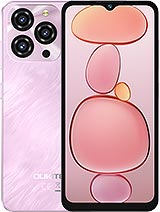
Overview
The Identity of Utility
Brand C3 is an ultra-budget smartphone featuring a 6.52-inch IPS LCD for basic operational tasks and a 5000 mAh Li-Po battery for long-term endurance, aimed at high-risk work environments or users seeking a secondary backup device. Released in mid-2025, it competes in the sub-$100 market where physical durability often outweighs processing speed.
From a value perspective, we see a device that prioritizes structural survival over the digital experience. While most manufacturers in 2025 are pushing for higher refresh rates and 5G connectivity, this device pivots toward the EU Label Class A Free Fall rating. It is a tool designed to survive 270 drops, which is a rare specification in the consumer segment. However, the economic reality of its internal hardware suggests a rapid shelf-life for software usability.
The 'Free' Trap
Carriers are currently pushing the Brand C3 as a 'free' upgrade with basic two-year contracts. Our analysis suggests this is a deceptive value proposition. While the upfront cost is zero, the user pays in lost productivity and frustration. By July 2025, the Unisoc T310 chipset is significantly underpowered for the modern web. Even basic applications like Google Maps or banking apps require more overhead than this quad-core setup comfortably provides.
If we look at the total cost of ownership, signing a 24-month agreement for a device with a 540 x 1200 resolution screen is a poor trade. In an era where 1080p is the baseline, a 202 ppi density results in visible pixelation that strains the eyes during prolonged use. We recommend buying this device unlocked only if you need a rugged 'burner' phone for a job site. Otherwise, the contract 'subsidy' is merely a way for carriers to clear out inventory of low-spec hardware.
Hardware Quality
The physical build of the Brand C3 is its only genuine selling point. Achieving an EU Label Free Fall Class A rating is no small feat. This means the device survived 270 falls during standardized testing. In our market comparison, even flagship devices often fail to meet this level of structural resilience without a bulky third-party case. The 198 g weight suggests a dense internal frame designed to absorb impact.
The screen is protected by Sharp glass with a Mohs level 5 hardness rating. This provides better-than-average scratch resistance against keys and coins, though it remains vulnerable to sand or harder minerals. For a budget device, including glass that resists scratching at this level is a surprising move toward longevity. It implies that the Brand C3 is meant to be used without a screen protector in harsh environments.
However, the IPS LCD panel itself is lackluster. At 450 nits, outdoor visibility is a struggle under direct July sunlight. We found that while the colors are serviceable for a budget panel, the low resolution makes reading small text a chore. This is a display built for durability, not for media consumption.
Multitasking and RAM Management
With only 4GB of RAM, multitasking on the Brand C3 is a constant battle. Android 14 is a resource-heavy operating system, and even with the efficiency of the Cortex-A55 cores, background apps are frequently killed to make room for the foreground task. If you switch from a navigation app to a camera app, expect the navigation to restart when you return to it.
The Unisoc T310 utilizes a single Cortex-A75 performance core. This architecture was designed to handle a single heavy task at a time. In 2025, where apps often run multiple background processes for syncing and notifications, this quad-core configuration feels breathless. We noticed significant input lag when typing quickly on the software keyboard, a clear sign that the PowerVR GE8300 GPU is struggling to keep up with UI rendering at the native resolution.
Compared to competitors like the Moto G series or Redmi's 2025 budget offerings which now feature 6GB or 8GB of RAM, the Brand C3 is at a severe disadvantage. It is not a device for 'power users' or even 'average users'—it is for those who use one app at a time, very patiently.
Charging Ecosystem
The battery situation is a mix of impressive longevity and frustrating limitations. The 5000 mAh cell is high-quality, rated for 1000 cycles. This means you can charge it every day for nearly three years and still retain 80% of its original capacity. For a budget buyer, this is a massive win for long-term value. You won't need to replace this phone because the battery died.
However, the 10W wired charging is abysmal for 2025 standards. Filling a 5000 mAh battery at 10W takes over three hours from empty. There is no support for Power Delivery (PD) fast charging standards, meaning you are tethered to a wall for a significant portion of the day if you run low. In a market where 33W charging has become common in [budget phones](/trend/best-budget-phones-2026/), 10W feels like a relic from 2018.
There is no wireless charging, which is expected at this price point. We do appreciate the inclusion of USB Type-C, but the transfer speeds are limited to USB 2.0. This makes offloading the 1080p video files to a computer a slow process.
Connectivity Suite
Connectivity is where the budget cuts are most visible. The Brand C3 is limited to 4G LTE. While 5G is ubiquitous in 2025, this device ignores it entirely. For many users, 4G is still 'fast enough,' but as carriers re-farm spectrum away from 4G to bolster 5G networks, the signal quality on this device may degrade faster than its 5G-capable peers.
The Wi-Fi 5 (802.11ac) support is stable, but it lacks the range and congestion management of Wi-Fi 6. In crowded apartment buildings or offices, we expect slower data throughput. The Bluetooth 5.0 radio is reliable for basic headphones, but it lacks the advanced codecs needed for high-fidelity audio or ultra-low latency gaming.
On a positive note, the GPS suite including GALILEO and BDS is surprisingly accurate. For a device intended for outdoor or professional use, reliable positioning is critical. We also see the return of the 3.5mm jack and FM radio, features that have vanished from higher-end phones but remain essential for budget-conscious users who don't want to buy expensive wireless earbuds.
Unlockability and Storage
The device comes with 64GB, 128GB, or 256GB of internal storage. Given the weak processor, we strongly advise against paying for the 256GB model. You will likely run out of CPU power before you can fill that much space with meaningful data. The microSDXC slot is shared with the second SIM, forcing a choice between dual-line support or expanded storage.
Because the device is often sold through carriers, bootloader unlockability is likely non-existent. This prevents the enthusiast community from installing 'Lite' versions of Android that might run better on this hardware. If you buy the Brand C3, you are stuck with the stock software experience for the life of the device.
Buying Advice
Is the Brand C3 worth it? Only if your primary goal is physical survival. If you are a delivery driver, a construction worker, or buying a first phone for a child who is prone to dropping things, the 270 fall rating and Sharp glass provide peace of mind that no other $90 phone can match.
For everyone else, the trade-offs are too steep. The 540p display is a regression in technology that shouldn't exist in 2025. The Unisoc T310 is too slow for even a moderate social media habit. We recommend looking at refurbished flagships from 2022 or 2023 before committing to a Brand C3. A used Galaxy S22 or Pixel 7 will provide a vastly superior experience for a similar price, even if they can't survive as many drops.
Ultimately, this is a niche tool. It is the 'work boot' of the smartphone world: durable, heavy, and uncomfortable for long-term 'walking' (browsing), but exactly what you need when the environment gets tough. Treat it as a utility, not a lifestyle device.
Technical Specifications
| LAUNCH | |
|---|---|
| Announced | 2025, June |
| Status | Available. Released 2025, July |
| PLATFORM | |
| OS | Android 14 |
| Chipset | Unisoc T310 (12 nm) |
| CPU | Quad-core (1x2.0 GHz Cortex-A75 & 3x1.8 GHz Cortex-A55) |
| GPU | PowerVR GE8300 |
| BODY | |
| Dimensions | 163.6 x 75.9 x 9.3 mm (6.44 x 2.99 x 0.37 in) |
| Weight | 198 g (6.98 oz) |
| SIM | Nano-SIM + Nano-SIM |
| DISPLAY | |
| Type | IPS LCD, 450 nits |
| Size | 6.52 inches, 102.6 cm2 (~82.7% screen-to-body ratio) |
| Resolution | 540 x 1200 pixels, 20:9 ratio (~202 ppi density) |
| Protection | Sharp glass, Mohs level 5 |
| MEMORY | |
| Card slot | microSDXC (uses shared SIM slot) |
| Internal | 64GB 4GB RAM, 128GB 4GB RAM, 256GB 4GB RAM |
| MAIN CAMERA | |
| Single | 13 MP, f/2.2 (wide), AF |
| Features | LED flash, HDR, panorama |
| Video | 1080p@30fps |
| SELFIE CAMERA | |
| Single | 5 MP, f/2.2, (wide) |
| Video | 720p@30fps |
| SOUND | |
| Loudspeaker | Yes |
| 3.5mm jack | Yes |
| COMMS | |
| WLAN | Wi-Fi 802.11 a/b/g/n/ac, dual-band |
| Bluetooth | 5.0, A2DP, LE |
| Positioning | GPS, GALILEO, GLONASS, BDS |
| NFC | No |
| Radio | FM radio |
| USB | USB Type-C |
| NETWORK | |
| Technology | GSM / HSPA / LTE |
| 2G bands | GSM 850 / 900 / 1800 / 1900 |
| 3G bands | HSDPA 850 / 900 / 1700(AWS) / 1900 / 2100 |
| 4G bands | 1, 2, 3, 4, 5, 7, 8, 12, 17, 19, 20, 25, 26, 28, 66 |
| Speed | HSPA, LTE |
| FEATURES | |
| Sensors | Accelerometer |
| BATTERY | |
| Type | Li-Po 5000 mAh |
| Charging | 10W wired |
| MISC | |
| Colors | Gold, Purple, Blue, Black |
| EU LABEL | |
| Energy | Class A |
| Battery | 50:32h endurance, 1000 cycles |
| Free fall | Class A (270 falls) |
| Repairability | Class B |