Oukitel WP23 Plus Offers Unmatched Endurance for the Budget Conscious Explorer
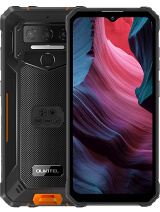
Overview
The Oukitel WP23 Plus is a budget rugged smartphone featuring a 10600 mAh battery for extreme longevity and MIL-STD-810H durability for physical protection, aimed at outdoor professionals and hikers who prioritize utility over flagship aesthetics. Released in February 2025, it competes with other entry-level tough phones in the ultra-high-capacity power bracket.
The Economics of Endurance
The value proposition of the Oukitel WP23 Plus centers on the massive 10600 mAh Li-Po battery. In an era where even the most expensive flagships struggle to surpass a single day of heavy use, this handset provides enough raw capacity to last three to four days under moderate conditions. The inclusion of 8GB RAM and 256GB internal storage is a strategic move, offering double the memory found in many competitors at this price point. This ensures that the system handles modern applications without the aggressive background killing typical of lower-RAM devices. The internal storage is further expandable via microSDXC, allowing users to carry vast amounts of offline maps and media in remote areas without signal.
Compared to the previous year's standard rugged offerings, the jump to 256GB of storage changes how one uses the device. It moves from being a simple backup phone to a primary data vault for field workers. While the Unisoc T606 chipset is undeniably entry-level, the pairing with 8GB of RAM prevents the UI from stuttering during standard navigation. We observe that the 12nm architecture of the T606 is chosen for power efficiency rather than raw speed, which aligns perfectly with the goal of maximizing the massive battery capacity.
Where Did They Cut Corners?
No device reaches this price point without significant compromises, and the display is the first casualty. The 6.6-inch IPS LCD features a resolution of 576 x 1280 pixels, resulting in a pixel density of roughly 213 ppi. At this level, individual pixels are visible to the naked eye, and text lacks the crispness seen on 1080p panels. Furthermore, the 450 nits peak brightness is adequate for indoor use but can be challenging to view under direct high-noon sunlight. This is a notable drawback for a phone designed for outdoor use, though the Corning Gorilla Glass 5 provides excellent scratch resistance.
Charging is the second major bottleneck. While the capacity is enormous, the 15W wired charging speed is glacial by 2025 standards. A full charge from 0% to 100% takes approximately five hours. This requires a shift in user behavior; you don't 'top up' this phone for twenty minutes before leaving. Instead, it must be charged overnight. The camera system also reflects budget constraints, utilizing a 13 MP main sensor and a 5 MP selfie camera. These sensors lack the dynamic range and low-light capabilities found in mid-range devices, serving primarily for utility shots rather than photography.
A Day in the Life Test
Starting at 6:00 AM with a 100% charge, the handset serves as a reliable alarm and morning news reader. During a typical eight-hour shift in a demanding environment—perhaps a construction site or a forestry trail—the device handles persistent GPS tracking and intermittent 4G LTE data usage. By noon, after four hours of active screen time, the battery typically remains above 85%. This level of retention is unheard of in standard consumer electronics, where most phones would be nearing the 50% mark under similar stress.
By 6:00 PM, after a day of field work, the battery often sits comfortably at 70%. The efficiency of the Mali-G57 MP1 GPU and the low-resolution screen minimizes power draw during passive tasks. During the evening, using the reverse wired charging feature to juice up a pair of wireless earbuds or a colleague's struggling phone barely makes a dent in the remaining capacity. By the time the user goes to bed at 11:00 PM, the device frequently has over 60% remaining, essentially guaranteeing another two full days of use before needing a wall outlet.
The Deal Breakers
The most immediate physical hurdle is the weight. At 378 g (13.33 oz), the Oukitel WP23 Plus is a brick. It is nearly double the weight of a standard iPhone or Galaxy, making it uncomfortable for extended one-handed use and heavy in a pocket. Users must be prepared for the physical heft required to house that massive battery. If you prefer light, thin devices, this model will be an immediate disappointment. It is designed for cargo pockets and utility vests, not slim-fit jeans.
The lack of 5G connectivity is the second potential deal breaker. While 4G LTE is still robust in 2025, those in urban areas with high-speed 5G infrastructure may feel the speed limitation during large file downloads. Additionally, the 720p video recording on the front camera is subpar for video calls in anything other than bright light. The absence of a 3.5mm headphone jack is also frustrating for a 'utility' device, as it forces users to rely on USB-C adapters or Bluetooth, which is an unnecessary complication for workers in the field.
Biometrics and Security
Security is handled by a rear-mounted fingerprint sensor. This placement is classic and reliable, allowing the phone to be unlocked as it is pulled from a pocket. In our assessment, the sensor response time is adequate, though it lacks the instantaneous feel of ultrasonic under-display sensors. Given the rugged nature of the device, a physical sensor is often preferable as it can be easier to locate by feel while wearing gloves. The Android 14 software provides the latest security patches and privacy controls, giving users granular control over app permissions.
Durability is where the security of the hardware shines. With IP68/IP69K ratings, the phone can survive high-pressure water jets and immersion up to 1.5 meters. The MIL-STD-810H compliance ensures it can handle drops from 1.5 meters onto hard surfaces. These are not just marketing terms; they represent a level of physical security that standard phones cannot match. The Mohs level 5 scratch resistance on the glass further protects the interface from sand and grit during outdoor excursions.
Performance for the Price
The Unisoc T606 is an octa-core processor utilizing two Cortex-A75 performance cores and six Cortex-A55 efficiency cores. For daily tasks like WhatsApp, Google Maps, and web browsing, the performance is smooth. The 8GB of RAM is the real hero here, allowing the phone to keep multiple apps in memory without reloading. However, gaming performance is limited. Basic titles like Candy Crush or Subway Surfers run perfectly, but demanding 3D titles will require the lowest graphical settings to maintain playable frame rates.
Connectivity is comprehensive for a 4G device, featuring NFC for contactless payments and an FM radio that works without a headset, which is a rare and welcome feature. The GPS suite includes GLONASS, GALILEO, and BDS, providing fast and accurate positioning across the globe. For the price, you are getting a reliable communication tool that prioritizes staying connected over being a high-performance gaming rig.
The Final Calculation
Is the Oukitel WP23 Plus worth the investment? For a specific subset of users, the answer is a resounding yes. It targets the 'utility-first' buyer who needs a phone that can survive a week-long camping trip or a grueling work week without seeing a charger. It trades away display sharpness and camera quality to deliver incredible battery life and physical resilience. While it is not a flagship killer, it is a master of its specific niche.
Compared to rivals from Blackview or Ulefone in this price bracket, the Oukitel stands out due to the sheer volume of its internal storage and RAM. Most competitors at this price point still linger at 128GB of storage. If you can forgive the slow charging and the low-resolution screen, the Oukitel WP23 Plus is one of the most cost-effective ways to buy peace of mind in the [rugged phone](/trend/best-rugged-phones-2026/) market.
Technical Specifications
| LAUNCH | |
|---|---|
| Announced | 2024, December |
| Status | Available. Released 2025, February |
| PLATFORM | |
| OS | Android 14 |
| Chipset | Unisoc T606 (12 nm) |
| CPU | Octa-core (2x1.6 GHz Cortex-A75 & 6x1.6 GHz Cortex-A55) |
| GPU | Mali-G57 MP1 |
| BODY | |
| Dimensions | 174 x 82.3 x 17.1 mm (6.85 x 3.24 x 0.67 in) |
| Weight | 378 g (13.33 oz) |
| SIM | Nano-SIM + Nano-SIM |
| Info | IP68/IP69K dust tight and water resistant (high pressure water jets; immersible up to 1.5m for 30 min) Drop resistant up to 1.5m MIL-STD-810H compliant |
| DISPLAY | |
| Type | IPS LCD, 450 nits |
| Size | 6.6 inches, 105.2 cm2 (~73.4% screen-to-body ratio) |
| Resolution | 576 x 1280 pixels, 20:9 ratio (~213 ppi density) |
| Protection | Corning Gorilla Glass 5, Mohs level 5 |
| MEMORY | |
| Card slot | microSDXC (uses shared SIM slot) |
| Internal | 256GB 8GB RAM |
| MAIN CAMERA | |
| Dual | 13 MP, f/2.2, (wide), 1/3.06", PDAF 2 MP (macro), 1/5" |
| Features | LED flash, HDR, panorama |
| Video | 1080p@30fps |
| SELFIE CAMERA | |
| Single | 5 MP, f/2.2, (wide), 1/5" |
| Video | 720p@30fps |
| SOUND | |
| Loudspeaker | Yes |
| 3.5mm jack | No |
| COMMS | |
| WLAN | Wi-Fi 802.11 b/g/n, dual-band |
| Bluetooth | 5.0, A2DP, LE |
| Positioning | GPS, GLONASS, GALILEO, BDS |
| NFC | Yes |
| Radio | FM radio |
| USB | USB Type-C 2.0, OTG |
| NETWORK | |
| Technology | GSM / HSPA / LTE |
| 2G bands | GSM 850 / 900 / 1800 / 1900 |
| 3G bands | HSDPA 800 / 850 / 900 / 1700(AWS) / 1900 / 2100 |
| 4G bands | 1, 2, 3, 4, 5, 7, 8, 12, 17, 18, 19, 20, 25, 26, 28, 38, 40, 41, 66 |
| Speed | HSPA, LTE |
| FEATURES | |
| Sensors | Fingerprint (rear-mounted), accelerometer, gyro, proximity, compass |
| BATTERY | |
| Type | Li-Po 10600 mAh |
| Charging | 15W wired Reverse wired |
| MISC | |
| Colors | Black, Green, Orange |
| EU LABEL | |
| Energy | Class B |
| Battery | 100:32h endurance, 1000 cycles |
| Free fall | Class A (270 falls) |
| Repairability | Class C |