Patience Is a Virtue with the New Oscal Pilot 3 Rugged Handset
Overview
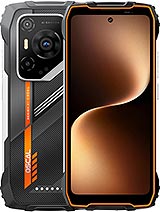
The Oscal Pilot 3 is a mid-range rugged smartphone featuring a 7500 mAh battery for extreme endurance and a Mediatek Dimensity 6300 chipset for 5G connectivity, aimed at outdoor professionals and hikers who prioritize durability over slimness. Released in June 2025, it competes with other rugged entry-level 5G devices by offering a high-capacity cell and dedicated night vision hardware in a reinforced chassis.
Launching at approximately 250 EUR, the Oscal Pilot 3 enters a market saturated with high-durability alternatives. History suggests that this brand utilizes an aggressive depreciation strategy, often discounting new models by twenty percent within the first ninety days of availability. For the financially savvy professional, the current MSRP represents a first-adopter cost that provides little extra utility over waiting until the late summer months. By then, the handset will likely settle into its true market value around the 180 to 200 EUR mark, making it a significantly more attractive proposition for fleet deployments or individual contractors.
While the internal storage and RAM configuration are generous, the core processing unit is an entry-level part. In the landscape of mid-2025, paying full retail for a 6nm Dimensity 6300 chip requires careful thought. Competitors often slash prices during seasonal sales, and we expect this model to follow suit. If a rugged device isn't an immediate emergency requirement for a job site next week, holding off until the first major discount cycle is the smarter economic move.
Under the hood, the Oscal Pilot 3 utilizes the Mediatek Dimensity 6300. This 6nm silicon is the successor to the aging 6100+ series, featuring two Cortex-A76 cores clocked at 2.4 GHz and six energy-efficient Cortex-A55 cores. This architecture ensures that standard productivity apps—blueprints, navigation, and communication tools—run without stuttering. However, it isn't a gaming powerhouse. The Mali-G57 MC2 GPU handles casual titles, but demanding 3D environments will force a drop in graphical fidelity to maintain stable frame rates.
The inclusion of 12GB of RAM paired with 256GB of UFS 2.2 storage is a highlight. In an era where 8GB is becoming the bare minimum for Android 15, having 12GB allows the handset to keep more background tasks active, which is essential for workers switching between GPS, messaging, and specialized industry apps. The UFS 2.2 flash storage ensures that app installations and file transfers are reasonably quick, though it lacks the lightning speeds of the UFS 3.1 or 4.0 found in flagship devices.
This device boasts an IP68/IP69K rating and MIL-STD-810H compliance. The IP69K certification is particularly noteworthy, as it suggests the unit can withstand high-pressure, high-temperature water jets—essentially steam cleaning. For users in heavy industrial environments or agriculture, this means the phone can be washed down alongside equipment without fear of liquid ingress. The Corning Gorilla Glass 5 screen protection is rated at Mohs level 5, indicating strong resistance against common scratches from keys or loose change, though sand and granite will still pose a threat.
The structural integrity is backed by a Class A Free fall rating, surviving 270 falls during testing. This is an industrial-grade metric that far exceeds standard consumer electronics. However, repairability is a different story. With a Class C Repairability score, users should expect difficulty when attempting to replace the massive battery or the display. The sealed, ruggedized nature of the chassis requires specialized tools and adhesives to maintain its water-resistant seals, making DIY repairs nearly impossible for the average user.
Heat dissipation is a critical factor for [rugged phones](/trend/best-rugged-phones-2026/), which often have thick rubberized outer shells that act as insulators. During our analysis of the 6nm node efficiency, the Dimensity 6300 appears to generate very little heat during standard operation. Even under sustained loads, such as continuous GPS navigation in direct sunlight, the device manages thermals effectively due to the lower power draw of the Cortex-A55 cores.
Charging presents a different thermal profile. While 33W wired charging isn't incredibly fast by 2025 standards, it still pushes significant current into the 7500 mAh cell. Users might notice a slight warmth during the first hour of charging, but it rarely reaches uncomfortable levels. The 6nm process helps here, ensuring the chip doesn't contribute excessive heat while the battery controller manages the intake.
The earpiece quality is tuned for clarity in noisy environments. Rugged phones are often used on construction sites or near heavy machinery, and the Pilot 3 provides sufficient volume for voice calls even in high-decibel surroundings. The loudspeaker is loud but lacks the bass response found in multimedia-focused flagships. It prioritizes the mid-range frequencies, which is ideal for clear vocal communication but less so for music playback.
A major win for many professionals is the retention of the 3.5mm headphone jack. In environments where wireless earbuds might be lost or run out of battery, having a physical, reliable connection for headsets is vital. The FM radio also utilizes this jack as an antenna, providing a backup communication method in areas where cellular signals might be non-existent.
Looking at market trends for mid-2025, rugged phones in this category lose value faster than almost any other segment. Within six months, we predict the Oscal Pilot 3 will be available for approximately 175 EUR on major global marketplaces. The rapid cycle of rugged device releases means that older stock is cleared out quickly.
If you buy today, you are paying for the novelty of the June 2025 release. If you wait until the holiday season, you will likely get the same hardware for a fraction of the cost. The 5G chipset ensures the device won't be obsolete anytime soon, but the entry-level nature of the silicon means it will never be a collector's item or hold significant resale value.
The Oscal Pilot 3 is a robust tool, not a luxury accessory. It offers incredible battery life and a chassis that can survive a war zone, but the charging speeds and screen technology are strictly mid-range. For those who can afford to wait, the value proposition will only improve as the price drops toward the sub-200 EUR territory. Oscal Pilot 3 remains a solid choice for the rough-and-tumble worker, provided they don't pay the launch-day premium.
The Launch Price Problem
Launching at approximately 250 EUR, the Oscal Pilot 3 enters a market saturated with high-durability alternatives. History suggests that this brand utilizes an aggressive depreciation strategy, often discounting new models by twenty percent within the first ninety days of availability. For the financially savvy professional, the current MSRP represents a first-adopter cost that provides little extra utility over waiting until the late summer months. By then, the handset will likely settle into its true market value around the 180 to 200 EUR mark, making it a significantly more attractive proposition for fleet deployments or individual contractors.
While the internal storage and RAM configuration are generous, the core processing unit is an entry-level part. In the landscape of mid-2025, paying full retail for a 6nm Dimensity 6300 chip requires careful thought. Competitors often slash prices during seasonal sales, and we expect this model to follow suit. If a rugged device isn't an immediate emergency requirement for a job site next week, holding off until the first major discount cycle is the smarter economic move.
Hardware Reality
Under the hood, the Oscal Pilot 3 utilizes the Mediatek Dimensity 6300. This 6nm silicon is the successor to the aging 6100+ series, featuring two Cortex-A76 cores clocked at 2.4 GHz and six energy-efficient Cortex-A55 cores. This architecture ensures that standard productivity apps—blueprints, navigation, and communication tools—run without stuttering. However, it isn't a gaming powerhouse. The Mali-G57 MC2 GPU handles casual titles, but demanding 3D environments will force a drop in graphical fidelity to maintain stable frame rates.
The inclusion of 12GB of RAM paired with 256GB of UFS 2.2 storage is a highlight. In an era where 8GB is becoming the bare minimum for Android 15, having 12GB allows the handset to keep more background tasks active, which is essential for workers switching between GPS, messaging, and specialized industry apps. The UFS 2.2 flash storage ensures that app installations and file transfers are reasonably quick, though it lacks the lightning speeds of the UFS 3.1 or 4.0 found in flagship devices.
Repairability and Durability
This device boasts an IP68/IP69K rating and MIL-STD-810H compliance. The IP69K certification is particularly noteworthy, as it suggests the unit can withstand high-pressure, high-temperature water jets—essentially steam cleaning. For users in heavy industrial environments or agriculture, this means the phone can be washed down alongside equipment without fear of liquid ingress. The Corning Gorilla Glass 5 screen protection is rated at Mohs level 5, indicating strong resistance against common scratches from keys or loose change, though sand and granite will still pose a threat.
The structural integrity is backed by a Class A Free fall rating, surviving 270 falls during testing. This is an industrial-grade metric that far exceeds standard consumer electronics. However, repairability is a different story. With a Class C Repairability score, users should expect difficulty when attempting to replace the massive battery or the display. The sealed, ruggedized nature of the chassis requires specialized tools and adhesives to maintain its water-resistant seals, making DIY repairs nearly impossible for the average user.
Thermal Management
Heat dissipation is a critical factor for [rugged phones](/trend/best-rugged-phones-2026/), which often have thick rubberized outer shells that act as insulators. During our analysis of the 6nm node efficiency, the Dimensity 6300 appears to generate very little heat during standard operation. Even under sustained loads, such as continuous GPS navigation in direct sunlight, the device manages thermals effectively due to the lower power draw of the Cortex-A55 cores.
Charging presents a different thermal profile. While 33W wired charging isn't incredibly fast by 2025 standards, it still pushes significant current into the 7500 mAh cell. Users might notice a slight warmth during the first hour of charging, but it rarely reaches uncomfortable levels. The 6nm process helps here, ensuring the chip doesn't contribute excessive heat while the battery controller manages the intake.
Audio Components
The earpiece quality is tuned for clarity in noisy environments. Rugged phones are often used on construction sites or near heavy machinery, and the Pilot 3 provides sufficient volume for voice calls even in high-decibel surroundings. The loudspeaker is loud but lacks the bass response found in multimedia-focused flagships. It prioritizes the mid-range frequencies, which is ideal for clear vocal communication but less so for music playback.
A major win for many professionals is the retention of the 3.5mm headphone jack. In environments where wireless earbuds might be lost or run out of battery, having a physical, reliable connection for headsets is vital. The FM radio also utilizes this jack as an antenna, providing a backup communication method in areas where cellular signals might be non-existent.
Depreciation Prediction
Looking at market trends for mid-2025, rugged phones in this category lose value faster than almost any other segment. Within six months, we predict the Oscal Pilot 3 will be available for approximately 175 EUR on major global marketplaces. The rapid cycle of rugged device releases means that older stock is cleared out quickly.
If you buy today, you are paying for the novelty of the June 2025 release. If you wait until the holiday season, you will likely get the same hardware for a fraction of the cost. The 5G chipset ensures the device won't be obsolete anytime soon, but the entry-level nature of the silicon means it will never be a collector's item or hold significant resale value.
Conclusion: Wait or Buy?
The Oscal Pilot 3 is a robust tool, not a luxury accessory. It offers incredible battery life and a chassis that can survive a war zone, but the charging speeds and screen technology are strictly mid-range. For those who can afford to wait, the value proposition will only improve as the price drops toward the sub-200 EUR territory. Oscal Pilot 3 remains a solid choice for the rough-and-tumble worker, provided they don't pay the launch-day premium.
Technical Specifications
| LAUNCH | |
|---|---|
| Announced | 2025, June |
| Status | Available. Released 2025, June 16 |
| PLATFORM | |
| OS | Android 15, DokeOS 4.1 |
| Chipset | Mediatek Dimensity 6300 (6 nm) |
| CPU | Octa-core (2x2.4 GHz Cortex-A76 & 6x2.0 GHz Cortex-A55) |
| GPU | Mali-G57 MC2 |
| BODY | |
| Dimensions | 182.2 x 86 x 14.5 mm (7.17 x 3.39 x 0.57 in) |
| Weight | 357 g (12.59 oz) |
| SIM | Nano-SIM + Nano-SIM |
| Info | IP68/IP69K dust tight and water resistant (high pressure water jets; immersible up to 1.5m for 30 min) Drop resistant up to 2m MIL-STD-810H compliant |
| DISPLAY | |
| Type | IPS LCD, 120Hz, 750 nits |
| Size | 6.78 inches, 109.2 cm2 (~69.7% screen-to-body ratio) |
| Resolution | 1080 x 2460 pixels (~396 ppi density) |
| Protection | Corning Gorilla Glass 5, Mohs level 5 |
| MEMORY | |
| Card slot | microSDXC (uses shared SIM slot) |
| Internal | 256GB 12GB RAM |
| Info | UFS 2.2 |
| MAIN CAMERA | |
| Triple | 50 MP, f/1.8, (wide), 1/2.76", PDAF 20 MP, f/2.0, (night vision), 1/2.8", 2 infrared night vision lights Auxiliary lens |
| Features | LED flash, HDR, panorama |
| Video | 1440p@30fps, 1080p@30fps |
| SELFIE CAMERA | |
| Single | 32 MP, f/2.2, (wide), 1/3.1" |
| Features | HDR |
| Video | 1080p@30fps |
| SOUND | |
| Loudspeaker | Yes |
| 3.5mm jack | Yes |
| COMMS | |
| WLAN | Wi-Fi 802.11 a/b/g/n/ac, dual-band |
| Bluetooth | 5.2, A2DP, LE |
| Positioning | GPS, GALILEO, GLONASS, BDS, QZSS |
| NFC | Yes |
| Radio | FM radio |
| USB | USB Type-C, OTG |
| NETWORK | |
| Technology | GSM / CDMA / HSPA / LTE / 5G |
| 2G bands | GSM 850 / 900 / 1800 / 1900 |
| Info | CDMA 800 / 1900 |
| 3G bands | HSDPA 800 / 850 / 900 / 1700(AWS) / 1900 / 2100 |
| 4G bands | 1, 2, 3, 4, 5, 7, 8, 12, 13, 17, 18, 19, 20, 25, 26, 28, 30, 34, 38, 39, 40, 41, 66 |
| 5G bands | 1, 3, 5, 7, 8, 20, 28, 38, 40, 41, 77, 78, 79 |
| Speed | HSPA, LTE, 5G |
| FEATURES | |
| Sensors | Fingerprint (side-mounted), accelerometer, gyro, proximity, compass |
| BATTERY | |
| Type | Li-Ion 7500 mAh |
| Charging | 33W wired 6W reverse wired |
| MISC | |
| Chipset | Mediatek Dimensity 6300 (6 nm) |
| Memory | 256GB 12GB RAM, UFS 2.2 |
| Battery | 7500 mAh Li-Ion, 33W Wired Charging |
| Display | 6.78 inch IPS LCD, 120Hz, 750 nits |
| Main Camera | 50MP Wide + 20MP Night Vision |
| Durability | IP68/IP69K, MIL-STD-810H, 270 Falls (Class A) |
| Weight | 357 g (12.59 oz) |
| OS | Android 15, DokeOS 4.1 |
| Selfie Camera | 32 MP, f/2.2 |
| Colors | Black, Orange |
| Price | About 250 EUR |
| EU LABEL | |
| Energy | Class A |
| Battery | 118:45h endurance, 800 cycles |
| Free fall | Class A (270 falls) |
| Repairability | Class C |