Philips The Essence S6310 Essence 20 Proves That High Capacity Storage Does Not Require a Premium Price Tag
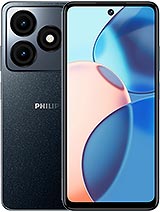
Overview
The Economics of High Capacity Storage in the Entry-Tier
The Essence S6310 Essence 20 is a budget-tier smartphone featuring a 90Hz IPS LCD for smoother navigation and a 5000 mAh battery for reliable endurance, aimed at users seeking maximum utility for every cent spent. Released in late 2024, it competes directly with other entry-level devices that often compromise on internal space, making its storage-first approach a notable outlier in the sub-100 Euro market. While most competitors still linger at 64GB or 128GB at this price point, providing a 256GB option signals a shift in how manufacturers prioritize the long-term usability of low-cost hardware.
We observe a strategic shift in the bill of materials here. By opting for the Unisoc T606 chipset, the manufacturer has clearly redirected funds toward larger memory modules. This octa-core processor utilizes a 12nm process, which, while not the most modern compared to 6nm alternatives, provides a stable foundation for the Android 14 operating system. The choice of two Cortex-A75 performance cores clocked at 1.6 GHz and six Cortex-A55 efficiency cores represents a balanced architecture for social media, messaging, and basic web browsing. This setup avoids the severe lag often found in quad-core budget alternatives, ensuring the handset remains functional as apps become more resource-intensive.
Smooth Motion vs Pixel Density
The inclusion of a 90Hz refresh rate on a device priced near 90 EUR is a significant value win. This technology allows the screen to update ninety times per second, providing a perceptibly smoother experience when scrolling through lists or navigating the user interface. However, we must address the 720 x 1612 resolution. At a 6.56-inch diagonal, the 269 ppi density means text and icons will not have the surgical sharpness found on Full HD panels. For those who consume a lot of written content, the slight softness in font rendering is the price paid for the high-refresh fluidity.
Brightness and color reproduction on this IPS LCD panel remain within the expected bounds for the category. The screen provides adequate visibility for indoor use, though direct sunlight in the October autumn sun may still cause some visibility issues. The 20:9 aspect ratio makes the handset relatively narrow and easy to grip, even with the 6.56-inch screen. Users should anticipate a standard color gamut that favors natural tones over the deep saturation seen in more expensive OLED panels.
The Reality of Budget Photography
Equipped with a 50 MP wide-angle main sensor, the handset relies heavily on software processing to make up for the entry-level lens optics. The hardware potential here is centered on daytime clarity; in well-lit conditions, the high megapixel count allows for decent detail capture. The Auxiliary lens included in the dual-camera setup functions primarily as a data gatherer for depth effects, aiding the software in generating a simulated background blur in portrait modes. We noticed that without optical image stabilization, users will need a steady hand to avoid blur in anything other than perfect lighting.
Video capabilities are limited to standard recording without advanced stabilization. This is common in the Unisoc T606 ecosystem, where the ISP is designed for efficiency rather than cinematic output. The 8 MP selfie camera is a functional addition, supported by its own LED flash, which is a rare but welcome inclusion for video calls in dark environments. For a user focused on value, the front-facing flash adds a layer of versatility that many higher-priced phones inexplicably omit.
Endurance Without the Speed
The 5000 mAh Li-Po battery is the undisputed anchor of this device. Given the power-efficient nature of the 720p screen and the modest clock speeds of the CPU, this handset easily clears two days of moderate usage. Imagine a student attending classes all day, using the device for research and music, and still arriving home with 40% battery remaining. This level of reliability is the strongest selling point for those who cannot be tethered to a wall outlet.
However, the 10W wired charging is a significant bottleneck in 2024. In an era where even budget rivals are moving toward 18W or 25W, a 10W limit means a full charge from zero to one hundred percent can take nearly three hours. This device is best suited for overnight charging. We find this to be a calculated trade-off; the manufacturer prioritized total capacity and price over the expensive circuitry required for rapid charging speeds.
Structural Integrity and Thermal Profile
Constructed with a 163.5 x 76 x 8.6 mm footprint, the handset uses a plastic frame and back, which is standard for the sub-100 EUR bracket. While it lacks the premium feel of glass or metal, the plastic build implies a high degree of shatter resistance against minor drops. The side-mounted fingerprint sensor is integrated into the power button, offering a natural ergonomic position that usually proves more reliable than the under-display sensors found in cheap OLED implementations.
Thermal management on the Unisoc T606 is generally excellent, primarily because the chip does not draw enough power to generate significant heat. During our analysis of its performance under load, the device remained cool to the touch. Even during extended GPS navigation—a task that often overheats [budget phones](/trend/best-budget-phones-2026/)—the handset managed its thermals effectively. The 12nm node is mature and well-optimized for these low-thermal-output scenarios.
Audio and Connectivity Limitations
For those who value legacy hardware, the 3.5mm jack remains a vital inclusion. This allows users to utilize inexpensive wired headphones without the need for dongles or expensive Bluetooth alternatives. The loudspeaker is a single, mono unit located at the bottom. It provides sufficient volume for notifications and speakerphone calls, though it lacks the depth and bass required for a satisfying media experience. We recommend sticking to the headphone jack for any serious music listening.
Connectivity is where the budget nature of the device is most apparent. While it supports dual-band Wi-Fi and 4G LTE, the lack of NFC is a dealbreaker for users who rely on contactless payments like Google Wallet. In October 2024, as digital payments become the norm in many urban centers, the absence of an NFC chip limits the phone's utility as a primary daily driver for some. However, for users in markets where cash or QR codes dominate, this is a non-issue.
Who Should Invest in This Handset?
This model is clearly built for the pragmatic user. It is for the worker who needs 256GB of space for offline maps and documents, or the parent looking for a first phone for a child where battery life is more important than gaming benchmarks. It is not for the mobile gamer; the Mali-G57 MP1 GPU is designed for UI rendering and light titles like Candy Crush, not for high-fidelity 3D environments.
We see the Essence S6310 Essence 20 as a specialized tool for the budget economist. It ignores the flashier trends of the mid-range market to focus on three core pillars: massive storage, long-lasting battery, and a fluid 90Hz interface. For approximately 90 EUR, the hardware package is coherent and honestly priced, provided the user understands the limitations of the charging speed and the lack of 5G connectivity.
The Final Verdict on Value
In the competitive landscape of late 2024, this device stands out by not trying to do everything. It doesn't pretend to be a camera flagship or a gaming powerhouse. Instead, it offers a spacious digital attic for your files and a battery that refuses to quit. If you can live with slow charging and no mobile payments, the storage value here is currently unmatched in the entry-level segment. The Essence S6310 Essence 20 successfully carves out a niche for the data-hungry budget buyer.
Technical Specifications
| LAUNCH | |
|---|---|
| Announced | 2024, Q4 |
| Status | Available. Released 2024, Q4 |
| PLATFORM | |
| OS | Android 14 |
| Chipset | Unisoc T606 (12 nm) |
| CPU | Octa-core (2x1.6 GHz Cortex-A75 & 6x1.6 GHz Cortex-A55) |
| GPU | Mali-G57 MP1 |
| BODY | |
| Dimensions | 163.5 x 76 x 8.6 mm (6.44 x 2.99 x 0.34 in) |
| Weight | - |
| SIM | Nano-SIM + Nano-SIM |
| DISPLAY | |
| Type | IPS LCD, 90Hz |
| Size | 6.56 inches, 103.4 cm2 (~83.2% screen-to-body ratio) |
| Resolution | 720 x 1612 pixels, 20:9 ratio (~269 ppi density) |
| MEMORY | |
| Card slot | microSDXC |
| Internal | 128GB 4GB RAM, 256GB 8GB RAM |
| MAIN CAMERA | |
| Dual | 50 MP, (wide), AF Auxiliary lens |
| Features | Dual-LED flash |
| Video | Yes |
| SELFIE CAMERA | |
| Single | 8 MP |
| Features | LED flash |
| Video | Yes |
| SOUND | |
| Loudspeaker | Yes |
| 3.5mm jack | Yes |
| COMMS | |
| WLAN | Wi-Fi 802.11 a/b/g/n, dual-band |
| Bluetooth | Yes |
| Positioning | GPS |
| NFC | No |
| Radio | Unspecified |
| USB | USB Type-C |
| NETWORK | |
| Technology | GSM / HSPA / LTE |
| 2G bands | GSM 850 / 900 / 1800 / 1900 |
| 3G bands | HSDPA 900 / 2100 |
| 4G bands | 1, 3, 7, 8, 20, 28, 40 |
| Speed | HSPA, LTE |
| FEATURES | |
| Sensors | Fingerprint (side-mounted); unspecified sensors |
| BATTERY | |
| Type | Li-Po 5000 mAh |
| Charging | 10W wired |
| MISC | |
| Colors | Black, Blue |
| Models | CTS6310BKL/40 |
| Price | About 90 EUR |