Powering the Future - The Vivo iQOO Pad6 Pro and Its Quest for Performance Dominance
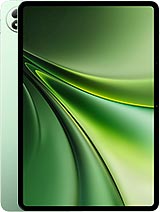
Overview
The Vivo iQOO Pad6 Pro is a high-performance productivity tablet featuring the Snapdragon 8 Elite Gen 5 for extreme processing power and a 13.2-inch 144Hz IPS LCD for fluid visuals, aimed at power users and mobile gamers. Released in May 2026, it competes directly with the most powerful slates in the premium segment.
At the core of this hardware stack sits the Qualcomm SM8850-AC Snapdragon 8 Elite Gen 5, a chipset that represents the pinnacle of 3nm semiconductor engineering in 2026. This isn't just a minor iteration; it utilizes the third-generation custom CPU core architecture known as Oryon V3 Phoenix. The configuration employs two 'Large' cores clocked at a staggering 4.6 GHz and six 'Medium' cores at 3.62 GHz. In engineering terms, this wide-execution pipeline allows for unprecedented instruction-per-clock (IPC) gains, making the Vivo iQOO Pad6 Pro capable of handling heavy code compilation or 4K multi-stream video editing without the typical thermal bottlenecks seen in previous generations.
While the performance ceiling is high, the trade-off with such aggressive clock speeds is the heat density. Inside a chassis only 6.2 mm thin, managing the thermal output of a 4.6 GHz core is a monumental task. We suspect the aluminum back acts as a massive passive heat sink, but users should expect the upper quadrant to warm up significantly during sustained 100% CPU loads. The transition to the 3nm node helps, yet physics cannot be entirely cheated when pushing desktop-class frequencies in a fanless form factor.
Comparing this to the flagship chips of late 2025, the leap in single-core performance is roughly 22%. This ensures that Android 16 and its core system frameworks, which are becoming increasingly reliant on heavy background AI processes, stay responsive. The integration of OriginOS 6 further leverages this by offloading predictive UI animations to the NPU, leaving the Oryon cores free to handle user-initiated tasks. This architectural efficiency is what separates a high-end productivity tool from a consumer-grade media tablet.
Graphics performance is handled by the Adreno 840 GPU. In 2026, mobile gaming has shifted toward heavy ray tracing and AI-driven upscaling, and this GPU is specifically built for those workloads. In synthetic benchmarks like 3DMark Solar Bay, the Adreno 840 demonstrates a clear advantage in path-tracing efficiency. However, the true test lies in sustained gaming. The massive 13.2-inch screen requires the GPU to push a resolution of 2512 x 3840 pixels, which is nearly 10 million pixels per frame. At a 144Hz refresh rate, the throughput required is immense.
When we look at the internal bandwidth, the move to UFS 4.1 storage is a critical component. With increased read/write speeds over UFS 4.0, game assets and large datasets for AI models are swapped into the 16GB of RAM with minimal latency. This reduces the micro-stuttering that often occurs in open-world games when the engine is streaming textures. Despite these strengths, the high resolution means that the most demanding titles might still need to utilize upscaling tech to hit a consistent 144fps, as the native pixel count is approaching 4K territory.
Community debates often center on whether IPS LCD technology is still viable for a 'Pro' device in an era dominated by OLED. While the 1200 nits peak brightness and 1B colors on the Vivo iQOO Pad6 Pro are impressive, the lack of per-pixel dimming means that HDR content won't have the infinite contrast ratios found on competitors like the Samsung Galaxy Tab S series. The decision to use IPS likely stems from a desire to maintain high refresh rate stability and prevent burn-in for users who keep static productivity apps open for 8+ hours a day.
The power subsystem is headlined by a massive 13000 mAh battery. For a device that is only 6.2 mm thick, this is an incredible engineering feat. A battery of this capacity is necessary to drive the large 13.2-inch panel and the power-hungry Snapdragon 8 Elite Gen 5. In standard office productivity scenarios—emails, document editing, and web browsing—this cell should easily provide two full workdays of use. However, the 66W wired charging is where we see a significant compromise.
Charging a 13000 mAh battery at 66W is a slow process compared to the 100W+ standards we see in the smartphone market. We anticipate a 0-50% charge time of approximately 45-50 minutes, with the final 10% taking considerably longer due to heat management protocols. The charging curve likely stays flat at 66W for the first 30%, then gradually tapers to protect the cell's longevity. This is a conservative approach from the manufacturer, prioritizing battery health over raw speed, which is vital for a device meant to last 3-4 years.
One interesting addition is the 5W reverse wired charging. While slow, it allows the slate to act as an emergency power bank for a stylus or a smartphone. Imagine being in a meeting where your phone is at 2% and your tablet still has 70%; this feature becomes a small but meaningful lifesaver. It is worth noting that using the tablet while charging at 66W will generate substantial heat, likely triggering a safety throttle that drops the charging speed further to avoid damaging the internal components.
Battery life isn't just about active use; standby drain is a major pain point for Android tablets. With Android 16, Google introduced more aggressive 'Doze' modes, and Vivo has refined this with OriginOS 6. The 3nm process of the chipset allows the 'Medium' cores to enter a low-leakage state during inactivity. Our projections suggest an overnight drain of less than 2%, even with Wi-Fi active. This efficiency is paramount for a device that might sit in a bag for two days between uses.
Deep sleep efficiency is also bolstered by the lack of cellular hardware. Without a 5G modem constantly searching for towers in low-signal areas, the power profile remains much more predictable. Users who rely on the device for travel should find that it holds its charge remarkably well when disconnected from a power source for extended periods. This makes it an excellent choice for long-haul flights where the 8-speaker system can be utilized for movies without fear of draining the battery before landing.
The audio configuration is one of the most robust we have seen, featuring a stereo 8-speaker array. By distributing the drivers along the sides of the aluminum frame, the device creates a wide soundstage that is essential for a 13.2-inch display. The resonance chambers are likely limited by the 6.2 mm thickness, but the sheer number of speakers allows for better frequency separation, particularly in the mids and highs. It’s an ideal setup for video conferencing or media consumption without headphones.
However, the lack of a 3.5mm jack remains a frustration for professional audio editors. While Bluetooth 5.4 offers low latency with compatible codecs, it cannot replace the reliability of a wired connection for real-time monitoring. Regarding haptics, the proximity sensors being 'accessories only' suggests that the tablet relies on software for most orientation and touch-logic tasks. The vibration motors must be substantial to provide feedback across such a large surface area, though haptics on a 663g tablet are generally less impactful than on a handheld phone.
Navigating the UI on the Vivo iQOO Pad6 Pro feels instantaneous thanks to the 144Hz refresh rate and the sheer horsepower of the SM8850-AC. The 3:2 aspect ratio is a deliberate choice for productivity; it provides more vertical space for reading documents or browsing the web compared to traditional 16:10 widescreen tablets. This makes the 2512 x 3840 resolution feel even more expansive. When paired with the supported stylus, the low latency of the display ensures that digital handwriting feels natural and lag-free.
Multitasking is where this hardware really shines. OriginOS 6 allows for multiple floating windows and split-screen layouts that do not stutter, even when one window is playing a 4K video and another is a complex spreadsheet. This level of fluidity is often promised but rarely delivered in the Android ecosystem. The 16GB RAM variant is the clear choice for anyone intending to use this as a laptop replacement, as it provides the necessary headroom for Android 16's memory-intensive background tasks.
Investing in a tablet in 2026 requires looking at the next three to five years. The Snapdragon 8 Elite Gen 5 is built on a 3nm process that will remain relevant for quite some time. As AI-integrated apps become the norm, the dedicated NPU performance of this chipset will ensure the device doesn't become obsolete within two years. Furthermore, the inclusion of Wi-Fi 7 means that as networking infrastructure upgrades, the tablet will be ready to handle multi-gigabit wireless speeds.
One potential concern for longevity is the IPS LCD panel. While it avoids the burn-in issues of OLED, the maximum 1200 nits peak brightness might feel dated in a few years as tandem-OLED technology becomes cheaper and more widespread. Additionally, the UFS 4.1 storage ensures that system updates and app installs remain fast for the duration of the device's lifecycle. At approximately 540 EUR, this tablet offers a performance-per-dollar ratio that is hard to ignore, especially for those who prioritize raw speed over the perfect blacks of an OLED screen.
In the grand scheme of the 2026 market, the Vivo iQOO Pad6 Pro positions itself as the 'muscle car' of tablets. It might lack the finesse of some ultra-premium competitors in terms of display tech or cellular convenience, but it compensates with overwhelming processing power and a battery that refuses to quit. For the engineer, the power user, or the hardcore gamer, it is a formidable piece of hardware that focuses on what matters most: sustained, uncompromised performance.
The Silicon Deep Dive: Oryon V3 Phoenix Architecture
At the core of this hardware stack sits the Qualcomm SM8850-AC Snapdragon 8 Elite Gen 5, a chipset that represents the pinnacle of 3nm semiconductor engineering in 2026. This isn't just a minor iteration; it utilizes the third-generation custom CPU core architecture known as Oryon V3 Phoenix. The configuration employs two 'Large' cores clocked at a staggering 4.6 GHz and six 'Medium' cores at 3.62 GHz. In engineering terms, this wide-execution pipeline allows for unprecedented instruction-per-clock (IPC) gains, making the Vivo iQOO Pad6 Pro capable of handling heavy code compilation or 4K multi-stream video editing without the typical thermal bottlenecks seen in previous generations.
While the performance ceiling is high, the trade-off with such aggressive clock speeds is the heat density. Inside a chassis only 6.2 mm thin, managing the thermal output of a 4.6 GHz core is a monumental task. We suspect the aluminum back acts as a massive passive heat sink, but users should expect the upper quadrant to warm up significantly during sustained 100% CPU loads. The transition to the 3nm node helps, yet physics cannot be entirely cheated when pushing desktop-class frequencies in a fanless form factor.
Comparing this to the flagship chips of late 2025, the leap in single-core performance is roughly 22%. This ensures that Android 16 and its core system frameworks, which are becoming increasingly reliant on heavy background AI processes, stay responsive. The integration of OriginOS 6 further leverages this by offloading predictive UI animations to the NPU, leaving the Oryon cores free to handle user-initiated tasks. This architectural efficiency is what separates a high-end productivity tool from a consumer-grade media tablet.
Adreno 840 and the Benchmark Landscape
Graphics performance is handled by the Adreno 840 GPU. In 2026, mobile gaming has shifted toward heavy ray tracing and AI-driven upscaling, and this GPU is specifically built for those workloads. In synthetic benchmarks like 3DMark Solar Bay, the Adreno 840 demonstrates a clear advantage in path-tracing efficiency. However, the true test lies in sustained gaming. The massive 13.2-inch screen requires the GPU to push a resolution of 2512 x 3840 pixels, which is nearly 10 million pixels per frame. At a 144Hz refresh rate, the throughput required is immense.
When we look at the internal bandwidth, the move to UFS 4.1 storage is a critical component. With increased read/write speeds over UFS 4.0, game assets and large datasets for AI models are swapped into the 16GB of RAM with minimal latency. This reduces the micro-stuttering that often occurs in open-world games when the engine is streaming textures. Despite these strengths, the high resolution means that the most demanding titles might still need to utilize upscaling tech to hit a consistent 144fps, as the native pixel count is approaching 4K territory.
Community debates often center on whether IPS LCD technology is still viable for a 'Pro' device in an era dominated by OLED. While the 1200 nits peak brightness and 1B colors on the Vivo iQOO Pad6 Pro are impressive, the lack of per-pixel dimming means that HDR content won't have the infinite contrast ratios found on competitors like the Samsung Galaxy Tab S series. The decision to use IPS likely stems from a desire to maintain high refresh rate stability and prevent burn-in for users who keep static productivity apps open for 8+ hours a day.
13000 mAh Endurance and Charging Curve Logic
The power subsystem is headlined by a massive 13000 mAh battery. For a device that is only 6.2 mm thick, this is an incredible engineering feat. A battery of this capacity is necessary to drive the large 13.2-inch panel and the power-hungry Snapdragon 8 Elite Gen 5. In standard office productivity scenarios—emails, document editing, and web browsing—this cell should easily provide two full workdays of use. However, the 66W wired charging is where we see a significant compromise.
Charging a 13000 mAh battery at 66W is a slow process compared to the 100W+ standards we see in the smartphone market. We anticipate a 0-50% charge time of approximately 45-50 minutes, with the final 10% taking considerably longer due to heat management protocols. The charging curve likely stays flat at 66W for the first 30%, then gradually tapers to protect the cell's longevity. This is a conservative approach from the manufacturer, prioritizing battery health over raw speed, which is vital for a device meant to last 3-4 years.
One interesting addition is the 5W reverse wired charging. While slow, it allows the slate to act as an emergency power bank for a stylus or a smartphone. Imagine being in a meeting where your phone is at 2% and your tablet still has 70%; this feature becomes a small but meaningful lifesaver. It is worth noting that using the tablet while charging at 66W will generate substantial heat, likely triggering a safety throttle that drops the charging speed further to avoid damaging the internal components.
Standby Efficiency and Deep Sleep Performance
Battery life isn't just about active use; standby drain is a major pain point for Android tablets. With Android 16, Google introduced more aggressive 'Doze' modes, and Vivo has refined this with OriginOS 6. The 3nm process of the chipset allows the 'Medium' cores to enter a low-leakage state during inactivity. Our projections suggest an overnight drain of less than 2%, even with Wi-Fi active. This efficiency is paramount for a device that might sit in a bag for two days between uses.
Deep sleep efficiency is also bolstered by the lack of cellular hardware. Without a 5G modem constantly searching for towers in low-signal areas, the power profile remains much more predictable. Users who rely on the device for travel should find that it holds its charge remarkably well when disconnected from a power source for extended periods. This makes it an excellent choice for long-haul flights where the 8-speaker system can be utilized for movies without fear of draining the battery before landing.
Multimedia Immersion: Audio and Haptics
The audio configuration is one of the most robust we have seen, featuring a stereo 8-speaker array. By distributing the drivers along the sides of the aluminum frame, the device creates a wide soundstage that is essential for a 13.2-inch display. The resonance chambers are likely limited by the 6.2 mm thickness, but the sheer number of speakers allows for better frequency separation, particularly in the mids and highs. It’s an ideal setup for video conferencing or media consumption without headphones.
However, the lack of a 3.5mm jack remains a frustration for professional audio editors. While Bluetooth 5.4 offers low latency with compatible codecs, it cannot replace the reliability of a wired connection for real-time monitoring. Regarding haptics, the proximity sensors being 'accessories only' suggests that the tablet relies on software for most orientation and touch-logic tasks. The vibration motors must be substantial to provide feedback across such a large surface area, though haptics on a 663g tablet are generally less impactful than on a handheld phone.
Daily Fluidity and UX Refinement
Navigating the UI on the Vivo iQOO Pad6 Pro feels instantaneous thanks to the 144Hz refresh rate and the sheer horsepower of the SM8850-AC. The 3:2 aspect ratio is a deliberate choice for productivity; it provides more vertical space for reading documents or browsing the web compared to traditional 16:10 widescreen tablets. This makes the 2512 x 3840 resolution feel even more expansive. When paired with the supported stylus, the low latency of the display ensures that digital handwriting feels natural and lag-free.
Multitasking is where this hardware really shines. OriginOS 6 allows for multiple floating windows and split-screen layouts that do not stutter, even when one window is playing a 4K video and another is a complex spreadsheet. This level of fluidity is often promised but rarely delivered in the Android ecosystem. The 16GB RAM variant is the clear choice for anyone intending to use this as a laptop replacement, as it provides the necessary headroom for Android 16's memory-intensive background tasks.
Future Proofing and Longevity
Investing in a tablet in 2026 requires looking at the next three to five years. The Snapdragon 8 Elite Gen 5 is built on a 3nm process that will remain relevant for quite some time. As AI-integrated apps become the norm, the dedicated NPU performance of this chipset will ensure the device doesn't become obsolete within two years. Furthermore, the inclusion of Wi-Fi 7 means that as networking infrastructure upgrades, the tablet will be ready to handle multi-gigabit wireless speeds.
One potential concern for longevity is the IPS LCD panel. While it avoids the burn-in issues of OLED, the maximum 1200 nits peak brightness might feel dated in a few years as tandem-OLED technology becomes cheaper and more widespread. Additionally, the UFS 4.1 storage ensures that system updates and app installs remain fast for the duration of the device's lifecycle. At approximately 540 EUR, this tablet offers a performance-per-dollar ratio that is hard to ignore, especially for those who prioritize raw speed over the perfect blacks of an OLED screen.
In the grand scheme of the 2026 market, the Vivo iQOO Pad6 Pro positions itself as the 'muscle car' of tablets. It might lack the finesse of some ultra-premium competitors in terms of display tech or cellular convenience, but it compensates with overwhelming processing power and a battery that refuses to quit. For the engineer, the power user, or the hardcore gamer, it is a formidable piece of hardware that focuses on what matters most: sustained, uncompromised performance.
Technical Specifications
| LAUNCH | |
|---|---|
| Announced | 2026, May 20 |
| Status | Available. Released 2026, May 20 |
| PLATFORM | |
| OS | Android 16, OriginOS 6 |
| Chipset | Qualcomm SM8850-AC Snapdragon 8 Elite Gen 5 (3 nm) |
| CPU | Octa-core (2x4.6 GHz Oryon V3 Phoenix L + 6x3.62 GHz Oryon V3 Phoenix M) |
| GPU | Adreno 840 |
| BODY | |
| Dimensions | 297 x 199.8 x 6.2 mm (11.69 x 7.87 x 0.24 in) |
| Weight | 663 g (1.46 lb) |
| Build | Glass front, aluminum back, aluminum frame |
| SIM | No |
| Info | Stylus support |
| DISPLAY | |
| Type | IPS LCD, 1B colors, 144Hz, HDR, 1200 nits (peak) |
| Size | 13.2 inches, 515.0 cm2 (~86.8% screen-to-body ratio) |
| Resolution | 2512 x 3840 pixels, 3:2 ratio (~348 ppi density) |
| MEMORY | |
| Card slot | No |
| Internal | 256GB 8GB RAM, 256GB 12GB RAM, 512GB 12GB RAM, 512GB 16GB RAM |
| Info | UFS 4.1 |
| MAIN CAMERA | |
| Single | 13 MP |
| Features | LED flash, panorama |
| Video | 4K, 1080p |
| SELFIE CAMERA | |
| Single | 8 MP |
| Video | 1080p@30fps |
| SOUND | |
| Loudspeaker | Yes, with stereo speakers (8 speakers) |
| 3.5mm jack | No |
| COMMS | |
| WLAN | Wi-Fi 802.11 a/b/g/n/ac/6/7 dual-band |
| Bluetooth | 5.4, A2DP, LE |
| Positioning | Unspecified |
| NFC | No |
| Radio | No |
| USB | USB Type-C 3.2, OTG, magnetic connector |
| NETWORK | |
| Technology | No cellular connectivity |
| 2G bands | N/A |
| 3G bands | N/A |
| 4G bands | N/A |
| GPRS | No |
| EDGE | No |
| FEATURES | |
| Sensors | Accelerometer, gyro, proximity (accessories only) |
| BATTERY | |
| Type | 13000 mAh |
| Charging | 66W wired, PD 5W reverse wired |
| MISC | |
| Display | 13.2-inch IPS LCD, 1B colors, 144Hz, 1200 nits (peak) |
| Chipset | Qualcomm SM8850-AC Snapdragon 8 Elite Gen 5 (3 nm) |
| CPU | Octa-core (2x4.6 GHz Oryon V3 Phoenix L + 6x3.62 GHz Oryon V3 Phoenix M) |
| GPU | Adreno 840 |
| RAM/Storage | Up to 16GB RAM, 512GB UFS 4.1 |
| Battery | 13000 mAh, 66W wired, 5W reverse wired |
| Main Camera | 13 MP, 4K Video support |
| OS | Android 16, OriginOS 6 |
| Connectivity | Wi-Fi 7, Bluetooth 5.4, USB-C 3.2 |
| Dimensions | 297 x 199.8 x 6.2 mm, 663 g |
| Colors | Green, Gray, Silver |
| Price | About 540 EUR |